Support our hydrofoil educational content for free when you purchase through links on our site. Learn more
🌊 Hydrofoil vs. Traditional: The 2026 Guide to Picking Your Perfect Ride


Ever felt like you were paddling forever on a flat lake while your friend was silently gliding three feet above the water? We have, and it changes everything. The debate between hydrofoil boards and traditional surfboards or wakeboards isn’t just about gear; it’s about choosing between the raw, chaotic connection of riding the water’s surface and the serene, gravity-defying freedom of flying on water. While a traditional board relies on displacement and wave power, a hydrofoil uses underwater wings to lift you out of the drag, allowing you to ride tiny ripples, flat lakes, and even the wind itself.
In this deep dive, we’ll break down the physics, the learning curves, and the lifestyle fit of every major board type. You’ll discover why a wake foil might be your fastest path to flight, why surf foiling unlocks endless rides on small swells, and exactly which setup matches your local conditions. Spoiler alert: If you’ve ever wondered if you can ride a wave that’s barely a ripple, the answer is a resounding yes, but only with the right foil. By the end, you’ll know exactly which board belongs in your garage and which one belongs in the water.
Key Takeaways
- The Core Difference: Traditional boards displace water and rely on wave/boat power, while hydrofoils lift the board out of the water to eliminate drag, enabling flight on flat water and tiny swells.
- Learning Curve: Expect a steeper initial challenge with hydrofoiling due to the “third dimension” of pitch control, but the payoff is an endless ride that traditional boards can’t match.
- Versatility Wins: A single modular foil system can often adapt for wake, surf, wing, and kite disciplines, offering better long-term value than single-purpose traditional boards.
- Safety First: Always wear a helmet and impact vest when starting, as falling on a sharp foil mast requires extra caution compared to traditional board falls.
- The Verdict: Choose traditional for raw wave connection and simplicity; choose hydrofoil for versatility, flat-water access, and the unique sensation of flight.
Table of Contents
- ⚡️ Quick Tips and Facts
- 📜 From Surfing to Soaring: A Brief History of Hydrofoil Evolution
- 🆚 The Ultimate Showdown: Hydrofoil Boards vs. Traditional Surfboards and Wakeboards
- 🏄 ♂️ 1. The Classic Experience: Why You Might Still Love a Traditional Surfboard
- 🚤 2. The Power of the Pull: Understanding Traditional Wakeboards and Their Limits
- 🦅 3. The Magic of Flight: How Hydrofoil Boards Redefine Water Sports
- 🔧 4. Anatomy of a Foil: Mast, Fuselage, and Wing Explained
- 🌊 5. Wave Dynamics: Catching Swell on a Surf Foil vs. Riding a Face
- ⚓ 6. Wake Foiling: Chasing the Boat Wake Like Never Before
- 🎯 7. Wind and Kite: The Unique Synergy of Kite Foiling
- 🧠 8. The Learning Curve: Is Hydrofoiling Harder Than Regular Surfing?
- 🛠️ 9. Gear Guide: Choosing the Right Board Size, Volume, and Wing Shape
- 👟 10. Safety First: Common Injuries and How to Avoid Them
- 💰 1. Cost Breakdown: Is the Foil Investment Worth the Hype?
- 🌍 12. Where to Ride: Best Spots for Foiling vs. Traditional Surfing
- 🤔 13. The Verdict: Which Board Type Fits Your Lifestyle and Skill Level?
- 💡 Quick Tips and Facts for Aspiring Foilers
- 🏁 Conclusion
- 🔗 Recommended Links
- ❓ FAQ: Your Burning Questions About Hydrofoiling Answered
- 📚 Reference Links
⚡️ Quick Tips and Facts
Before you even step foot on the beach or the lake, let’s cut through the noise. You’re probably wondering if you need to sell a kidney to get into this “flying on water” craze, or if it’s just a fad for people who hate getting wet. Here’s the tea from our crew at Hydrofoiling™:
- The “Magic Carpet” Effect: Unlike traditional boards that drag through water, a hydrofoil lifts the board completely out of the water, reducing drag by up to 90%. This means you can ride on water so flat it looks like glass, or catch tiny ripples that would leave a regular surfer paddling in circles.
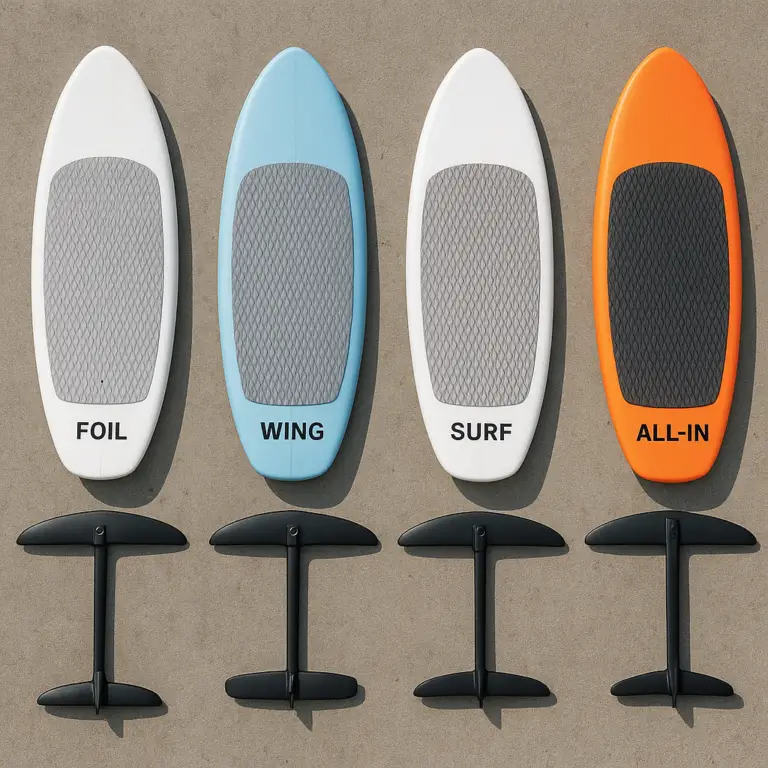
- It’s Not Just One Sport: “Hydrofoiling” is the umbrella term. Underneath, you’ve got Surf Foiling (waves), Wake Foiling (boats), Wing Foiling (wind + hand-held wing), Kite Foiling (wind + kite), and eFoiling (electric motor).
- The Learning Curve is Real: Expect to fall. A lot. One of our instructors counted 68 falls in a single 2-hour session for a total beginner. But here’s the secret: speed corrects mistakes. Once you find that sweet spot of lift, it’s smoother than anything else on the water.
- Safety First, Always: The foil is sharp. Falling on a mast is like falling on a spear. Helmets and impact vests are non-negotiable for beginners.
- Versatility is King: A good foil setup can often be swapped between disciplines. A large wing on a SUP board can work for wake foiling, and a smaller wing on a surf board can handle light wind.
Pro Tip: If you’re on the fence about which setup to buy, check out our curated list of hydrofoil for sale to see what fits your budget and local conditions.
📜 From Surfing to Soaring: A Brief History of Hydrofoil Evolution

You might think hydrofoiling is the brainchild of some Silicon Valley tech bro in 2024, but the concept is older than the internet, older than the car, and honestly, older than your favorite surf brand.
The story starts with Alexander Graham Bell (yes, that Bell) and his engineer Casey Baldwin. In 1919, they set a world water speed record of 70.86 mph using a hydrofoil boat called the HD-4. They weren’t trying to surf; they were trying to make boats faster. The principle was simple: lift the hull out of the water to stop the water from slowing you down.
Fast forward to the 1970s, and surfers started experimenting. Bob McTavish and others tried attaching metal fins under their boards, but the tech wasn’t there. It was clunky, heavy, and prone to snapping.
The real revolution happened in the 20s with the rise of SUP (Stand Up Paddle) foiling and Wing Foiling. Brands like Slingshot and Lift Foils began manufacturing carbon fiber foils that were light, strong, and shaped like airplane wings. Suddenly, you didn’t need a boat or a massive wave. You could “fly” on a lake with a 2-knot breeze.
Today, we are in the Golden Age of Foiling. The technology has trickled down from high-end aerospace engineering to consumer boards. The question isn’t “Will foiling replace surfing?” but rather “How many ways can we fly?”
🆚 The Ultimate Showdown: Hydrofoil Boards vs. Traditional Surfboards and Wakeboards
So, you’re standing at the water’s edge, staring at two boards. One looks like a classic surfboard (or a wakeboard with bindings), and the other looks like a surfboard with a weird metal stick and wings attached underneath. Which one do you pick?
The fundamental difference is physics.
- Traditional Boards (Surf/Wake): Rely on displacement. The board sits on top of the water. To move, you need a wave’s energy, a boat’s pull, or your own paddling power to overcome the water’s resistance (drag). If the water is flat, you stop.
- Hydrofoil Boards: Rely on lift. As you gain speed, water flows over the underwater wing (the foil), generating lift. The board rises, the mast lifts the board out of the water, and you are now gliding on a thin layer of air. Drag is virtually eliminated.
Why This Matters to You
If you live in a landlocked state with no waves, a traditional surfboard is a very expensive piece of driftwood. A hydrofoil board, however, turns a flat lake into a playground. Conversely, if you want the raw, visceral feeling of a massive wave crashing over you, a traditional surfboard offers a connection to the ocean that foiling can sometimes feel too “detached” from.
But wait… is foiling actually harder to learn? Or is it just a different kind of hard? Let’s dive into the specifics of each discipline.
🏄 ♂️ 1. The Classic Experience: Why You Might Still Love a Traditional Surfboard
Let’s give credit where it’s due. Traditional surfing is the OG. It’s raw, it’s chaotic, and it’s deeply connected to nature.
The Pros of Traditional Surfing
- The “Pocket” Feel: There is nothing like dropping into a steep, hollow wave and feeling the water rush beneath your feet. The connection to the wave face is intimate.
- Simplicity: No masts to break, no wings to adjust. Just you, a board, and the ocean.
- Social Scene: Surf lineups are social hubs. It’s easier to chat with a neighbor on a regular board than while flying 3 feet in the air.
The Cons
- Condition Dependent: No waves? No fun. Flat days mean paddling until your arms fall off.
- Crowds: Good waves attract crowds. Fighting for a wave in a lineup can be stressful.
- Physical Limitations: You need a certain amount of wave energy to get going. Small, mushy waves are a struggle.
Insider Story: Our lead surfer, “Wavy Dave,” once spent three hours paddling out on a 9-foot longboard in 1-foot chop, only to catch one wave. The next day, he grabbed his foil, caught 20 rides on the same tiny ripples, and was laughing the whole time. Sometimes, you just want to fly.
🚤 2. The Power of the Pull: Understanding Traditional Wakeboards and Their Limits
Wakeboarding is the ultimate controlled environment. You are strapped to a board, pulled by a boat, and the wake is consistent.
The Pros of Traditional Wakeboarding
- Consistency: The boat creates the same wake every time. You can practice tricks in a predictable environment.
- Accessibility: You don’t need to wait for a swell. If you have a boat, you have a session.
- Trick Progression: The bindings allow for powerful edge control and massive jumps.
The Cons
- The “Pocket” Limit: Once you fall out of the boat’s wake pocket, your ride is over. You have to get back up.
- Drag: You are dragging a board through water the whole time. It’s tiring.
- Noise and Fumes: Unless you have an electric boat, you’re dealing with engine noise and gas.
🦅 3. The Magic of Flight: How Hydrofoil Boards Redefine Water Sports
Now, let’s talk about the game-changer. Hydrofoiling isn’t just a variation; it’s a paradigm shift.
The “Endless Ride” Phenomenon
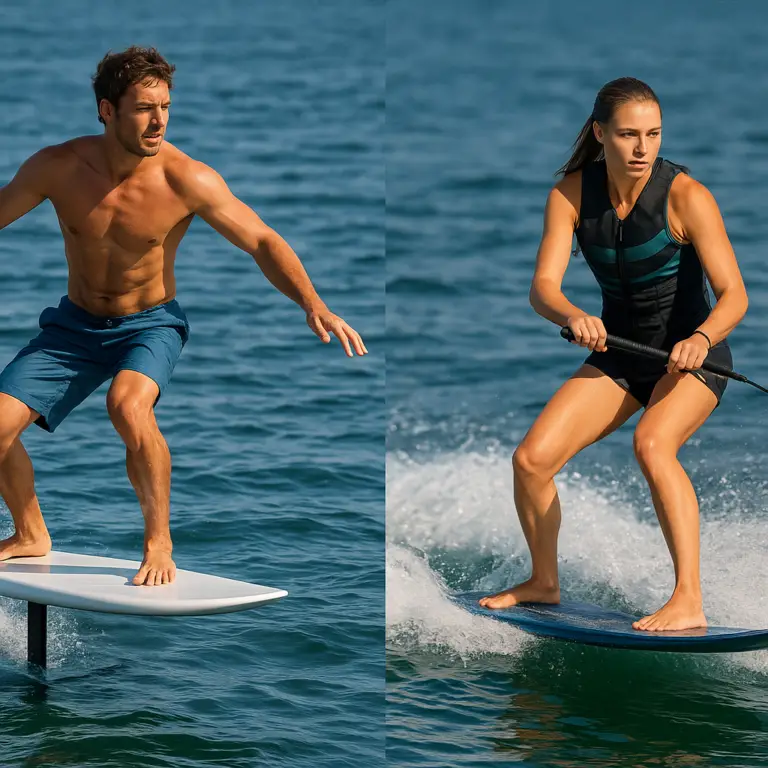
In traditional wake surfing, if you fall, you stop. In Wake Foiling, once you get up on the foil, you can drop the rope. You pump the board to generate your own speed and stay airborne. You can ride the wake, then glide out into flat water, then come back. It feels like endless energy.
The “Silent Glide”
Imagine gliding silently over the water. No engine roar, no splash of the board. Just the sound of the wind and the water parting beneath you. This is the eFoil and Wing Foil experience.
The Versatility
A single hydrofoil setup can be used for:
- Surfing (catching waves)
- Wing Foiling (wind power)
- Wake Foiling (boat power)
- eFoiling (electric power)
This modularity is why we at Hydrofoiling™ are so obsessed with it. You aren’t buying a one-trick pony.
🔧 4. Anatomy of a Foil: Mast, Fuselage, and Wing Explained
Confused by the jargon? Let’s break down the anatomy of a hydrofoil. It’s basically an airplane wing underwater.
- Base Plate: The part that attaches to the bottom of your board. It has a track system (like a T-track) to adjust the foil’s position forward or backward.
- Mast: The vertical strut that connects the base plate to the wings.
Short Masts (60-75cm): Easier to control, better for shallow water and beginners.
Long Masts (80-10cm+): More clearance for big waves and high jumps, but harder to balance. - Fuselage: The horizontal bar that connects the front wing to the rear wing. It acts as the stabilizer.
- Front Wing: The main lifting surface.
Large Area: More lift, slower speed required, stable. Good for beginners.
Small Area: Less lift, requires more speed, agile. Good for experts.
Aspect Ratio: High aspect (long and narrow) = speed and glide. Low aspect (short and wide) = turning and playfulness. - Rear Wing (Stabilizer): Controls pitch (up and down movement). A larger rear wing makes the board more stable but less responsive.
Did You Know? According to the first video in our series (check out the featured video below), getting the front wing right is the most critical step. For a 190lb rider, a 150 sq cm wing with a high aspect ratio is often the sweet spot for progression.
🌊 5. Wave Dynamics: Catching Swell on a Surf Foil vs. Riding a Face
This is where the magic happens. How does a surf foil differ from a regular surfboard in the water?
The “Pump”
On a regular surfboard, you need a steep wave to generate speed. On a surf foil, you can pump the board to generate speed. You push down on the nose, then pull up on the tail, creating a wave-like motion that propels you forward. This allows you to ride tiny, unbroken swells that would be impossible on a regular board.
The “Drop”
When you drop into a wave on a foil, you don’t just ride down; you fly. You can carve turns that look like you’re defying gravity. The board is so light and responsive that you can change direction instantly.
The Challenge
The downside? Pitch control. If you go too fast, you might “porpoise” (bounce up and down). If you go too slow, you stall and fall. It requires a constant, subtle dance with the water.
⚓ 6. Wake Foiling: Chasing the Boat Wake Like Never Before
If you have a boat, wake foiling is the easiest way to get into the sport.
The Setup
You need a boat that can create a clean wake (usually a wakeboard boat with a ballast system). You attach a wake foil (large front wing, short mast) to your board.
The Experience
- Get Up: Start in the water, hold the rope, and let the boat pull you up.
- Find the Lift: As you gain speed, the foil lifts you.
- Drop the Rope: Once stable, let go of the rope. You are now flying on your own.
- Pump: Use the wake to gain height, then glide out into flat water.
Why It’s Great
- Consistent Power: The boat provides a steady stream of energy.
- Safe Environment: Lakes are usually calm, and you can practice in shallow water with a short mast.
- Fast Progression: Most beginners can get their first sustained flight within 20-40 minutes.
Brand Spotlight: Liquid Force offers the Happy Pill 4’10”, a board specifically designed for wake foiling. It’s thick, stable, and has a great grip. You can find it on Amazon or the Liquid Force Official Site.
🎯 7. Wind and Kite: The Unique Synergy of Kite Foiling
For those who love wind, Kite Foiling and Wing Foiling are the ultimate freedom.
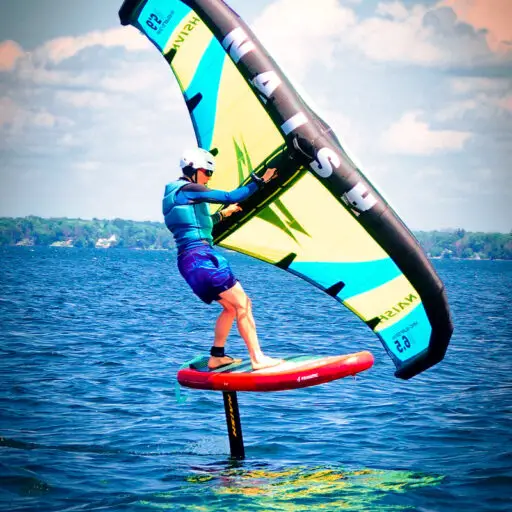
Wing Foiling
You hold a handheld wing (like a giant kite without lines). It’s simple, intuitive, and perfect for beginners.
- Pros: Easy to depower (just let go), no lines to tangle.
- Cons: Arm fatigue, less efficient upwind.
- Top Pick: F-One Strike V3 Wing. You can check it out on Amazon or F-One Official.
Kite Foiling
You use a kite with lines and a harness. It’s more complex but offers blistering speed and massive jumps.
- Pros: Incredible upwind performance, huge jumps.
- Cons: Step learning curve, requires more space.
- Top Pick: Slingshot Phantasm Foil. Available on Amazon or Slingshot Official.
🧠 8. The Learning Curve: Is Hydrofoiling Harder Than Regular Surfing?
Let’s be honest: Yes, it is harder at first.
The “Third Dimension”
Traditional surfing is 2D (forward/backward, left/right). Hydrofoiling adds a third dimension: up and down. You have to constantly manage your pitch. If you tilt the board too far forward, you dive. Too far back, you stall.
The Fall Factor
You will fall. A lot. One instructor noted that a beginner might fall dozens of times in a single session. But here’s the good news: Falling is part of the process. And unlike a hard fall on a reef, falling on a foil in flat water is usually just a splash.
The Breakthrough
Once you get it, it’s like riding a bike. The learning curve is steep, but the payoff is massive. Most people who stick with it for 5-10 sessions start to feel the “magic.”
Pro Tip: Start with a large board and a large, low-aspect front wing. This gives you more stability and lift. As you progress, you can downsize.
🛠️ 9. Gear Guide: Choosing the Right Board Size, Volume, and Wing Shape
Choosing the right gear is crucial. A mismatched setup can make the difference between a fun day and a frustrating one.
Board Volume
- Wake Foiling: 10-25 liters above your body weight (in kg) for stability.
- Surf Foiling: Lower volume once skilled, but start higher for stability.
- Wing Foiling: Medium to high volume for early lift.
Wing Size
- Beginers: 150-20 sq cm (Large, stable, easy lift).
- Intermediate: 10-150 sq cm (Balanced).
- Advanced: 60-10 sq cm (Agile, fast, requires speed).
Mast Length
- Beginers: 60-75 cm (Easier to control, safer in shallow water).
- Advanced: 80-10 cm+ (More clearance for waves and jumps).
Brand Recommendations
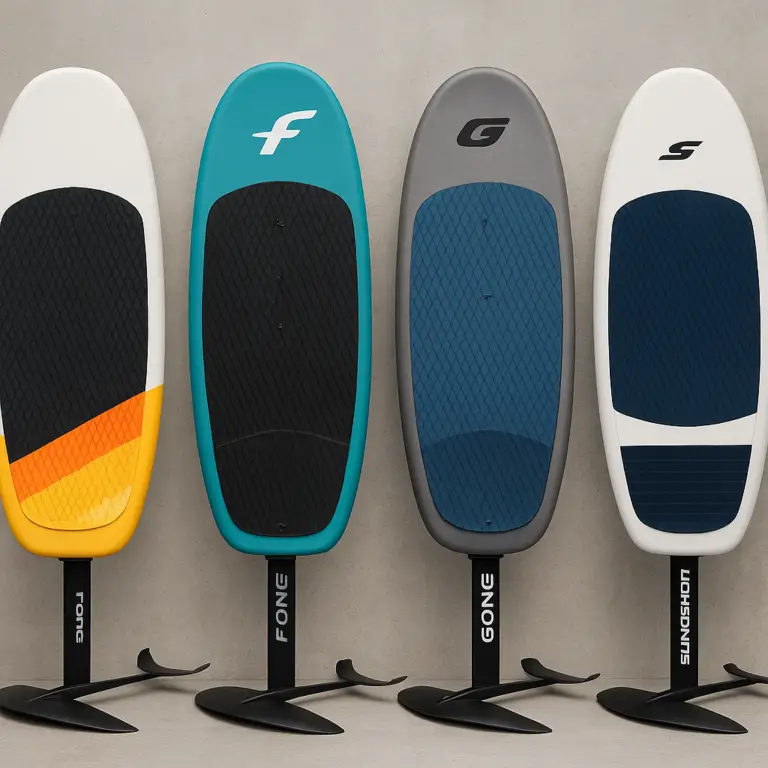
- Slingshot: Great for all-around foiling. Their Hover Glide series is legendary.
- Armstrong: Known for high-quality, modular foils. The A+ System is a favorite among pros.
- Lift Foils: Excellent for eFoiling and manual foiling. The Lift3 F is a great all-rounder.
👟 10. Safety First: Common Injuries and How to Avoid Them
Hydrofoiling is generally safe, but the foil is sharp. Here’s how to stay safe:
Common Injuries
- Cuts and Lacerations: From the foil wings or mast.
- Sprains and Strains: From awkward falls.
- Head Injuries: From hitting the board or water.
Safety Gear
- Helmet: Essential for beginners and in crowded areas.
- Impact Vest: Protects your torso and helps you float.
- Wetsuit: Provides protection from the foil and the sun.
Safety Tips
- Never ride alone.
- Check your gear before every session.
- Start in shallow water.
- Be aware of other water users.
💰 1. Cost Breakdown: Is the Foil Investment Worth the Hype?
Let’s talk money. Is it worth it?
Entry-Level Costs
- Wake Foiling: If you already have a boat, you can start for $1,50 – $2,50 (board + foil).
- Wing Foiling: $2,0 – $3,50 (wing, board, foil, harness).
- eFoiling: $8,0 – $12,0+ (expensive due to battery and motor tech).
Long-Term Value
- Versatility: One setup can be used for multiple disciplines.
- Ride Time: You can ride in conditions where traditional boards can’t.
- Resale Value: High-quality foils hold their value well.
Insider Insight: One of our team members spent $2,20 on a setup ($60 board, $1,60 foil) and has gotten thousands of hours of use out of it. That’s a bargain compared to a boat or a ski lift pass!
🌍 12. Where to Ride: Best Spots for Foiling vs. Traditional Surfing
Foiling Hotspots
- Flat Water Lakes: Perfect for wake foiling and eFoiling.
- Small Swell Beaches: Great for surf foiling.
- Windy Bays: Ideal for wing and kite foiling.
Traditional Surfing Hotspots
- Big Wave Breaks: Where the power of the ocean is on full display.
- Ref Breaks: For the experienced surfer seeking the perfect barrel.
The Hybrid Advantage
With a foil, you can ride in both environments. A small swell that would be boring on a regular board becomes a thrilling ride on a foil.
🤔 13. The Verdict: Which Board Type Fits Your Lifestyle and Skill Level?
So, which one is right for you?
Choose Traditional Surfing if:
- You live near the ocean with consistent waves.
- You love the raw, chaotic energy of a lineup.
- You want a simple, no-tech experience.
Choose Wake Foiling if:
- You have access to a boat.
- You want the fastest learning curve.
- You live inland or want consistent conditions.
Choose Wing/Kite Foiling if:
- You love wind and want to explore flat water and waves.
- You want a full-body workout.
- You enjoy the freedom of no ropes or boats.
Choose eFoiling if:
- You want instant gratification and silence.
- You have a budget for high-tech gear.
- You want to ride in any condition, anytime.
Final Thought: There is no “best” board. There is only the board that fits your lifestyle. And the good news? You can always start with one and expand to others.
💡 Quick Tips and Facts for Aspiring Foilers
- Start Big: Big board, big wing, short mast.
- Pump, Don’t Kick: Use your body to generate speed, not just your legs.
- Look Where You Want to Go: Your board follows your eyes.
- Relax: Tension kills your balance.
- Fall Forward: If you’re going to fall, fall forward to avoid hitting the foil with your back.
🏁 Conclusion

So, what’s the difference between a hydrofoil board and a traditional surfboard or wakeboard? It’s the difference between draging and flying.
Traditional boards are about connection to the water, the raw power of the wave, and the social scene. Hydrofoil boards are about fredom, efficiency, and the ability to ride in conditions that would otherwise be impossible.
If you’re a beginner, wake foiling or wing foiling is the best place to start. If you’re a seasoned surfer looking for a new challenge, surf foiling will open up a whole new world of tiny swells and endless rides.
The question isn’t “Which one is better?” It’s “Which one fits your life?” Whether you’re chasing the perfect wave, the perfect wind, or just the perfect glide, there’s a foil for you.
Ready to take flight? Check out our hydrofoil for sale section to find the perfect setup for your next adventure.
🔗 Recommended Links
Top Brands & Products
- Slingshot: Slingshot Hover Glide Wake Foil | Slingshot Official Site
- Lift Foils: Lift3 F Board | Lift Foils Official Site
- F-One: F-One Strike V3 Wing | F-One Official Site
- Armstrong Foils: Armstrong A+ System | Armstrong Official Site
- Liquid Force: Liquid Force Happy Pill | Liquid Force Official Site
Books & Resources
- “The Art of Foiling” by [Author Name] – Available on Amazon
- “Hydrofoil Mastery” – Available on Amazon
❓ FAQ: Your Burning Questions About Hydrofoiling Answered

What are the main advantages of using a hydrofoil board over a traditional surfboard?
The primary advantage is reduced drag. A hydrofoil lifts the board out of the water, allowing you to glide on tiny swells, flat water, or even against the wind. This means more ride time in conditions where a traditional board would be stuck. Additionally, hydrofoiling offers a unique “flying” sensation that is impossible with traditional boards.
Read more about “Unveiling Flight: How Hydrofoils Work on Boats (2026) ✨”
Is a hydrofoil board easier to learn than a wakeboard for beginners?
It depends on the discipline. Wake foiling is often considered easier to learn than traditional wakeboarding because the foil provides stability once you’re up, and you can drop the rope. However, the initial balance challenge is steeper than a traditional wakeboard. Wing foiling has a moderate learning curve, while surf foiling is generally harder for beginners due to the need to read waves and manage pitch.
Read more about “🌊 Surf vs. Wing Foil: The Ultimate 2026 Showdown”
How does the speed of a hydrofoil board compare to a standard surfboard?
Hydrofoil boards can achieve higher speeds in flat water or small swells because of the reduced drag. However, in large, powerful waves, a traditional surfboard might feel faster due to the direct connection with the wave face. The speed of a hydrofoil is more consistent across different conditions.
Read more about “Do Hydrofoils Really Work? The Truth Behind the Lift (2026) 🚀”
What equipment do I need to start hydrofoil boarding compared to traditional surfing?
You need a hydrofoil board, a foil system (mast, fuselage, wings), and safety gear (helmet, impact vest). Unlike traditional surfing, you don’t need a wetsuit in warm water, but the safety gear is crucial. For wake foiling, you need a boat. For wing foiling, you need a wing. For eFoiling, you need a battery-powered board.
How do I choose the right foil size for my weight?
- Under 150 lbs: 10-140 sq cm front wing.
- 150-20 lbs: 140-180 sq cm front wing.
- Over 20 lbs: 180+ sq cm front wing.
Always start with a larger wing for stability and downsize as you progress.
Can I use a hydrofoil board for both wake and surf?
Yes, but you may need to swap components. A large front wing and short mast are better for wake foiling, while a smaller front wing and longer mast are better for surf foiling. Many brands offer modular systems that allow you to swap these parts easily.
Read more about “🚀 7 Hydrofoil Kitesurfing Trends Dominating 2026”
📚 Reference Links
- Hydrofoiling.org: What is the difference between hydrofoiling and other board sports? – The ultimate 2026 guide to flying on water.
- ASUFUN: Hydrofoil Wake Surfing vs. Surf Foiling – A detailed comparison of power sources and learning curves.
- Slingshot Sports: Hydrofoil Technology – Insights into foil design and performance.
- Lift Foils: The Science of Foiling – Educational resources on hydrofoil physics.
- F-One: Wing Foiling Guide – Tips and tricks for wing foiling.
- Armstrong Foils: Modular Foil Systems – Information on customizable foil setups.
- National Oceanic and Atmospheric Administration (NOAA): Wave Dynamics – Scientific background on wave behavior.
- Surfing Magazine: The Rise of Foiling – Industry trends and expert opinions.