Support our hydrofoil educational content for free when you purchase through links on our site. Learn more
12 Hydrofoil Foil Maintenance Tips to Keep Your Ride Smooth in 2026 🛠️

If you want your hydrofoil to glide like a dream and avoid costly repairs, the secret lies in consistent, smart maintenance. Our top hydrofoil foil maintenance tips will help you protect your gear from saltwater corrosion, cracks, and loose bolts—so you can spend more time flying and less time fixing.
We’ve learned the hard way: ignoring tiny dings or skipping the post-ride rinse can turn your sleek carbon fiber setup into a rusted paperweight. Did you know that 90% of hydrofoil failures are preventable with just a few simple steps? Whether you’re a weekend warrior or a daily rider, these tips will keep your foil performing at its peak.
Ready to keep your foil in prime condition? Let’s dive into the essential maintenance moves that every hydrofoiler should know.
Key Takeaways
- Rinse your foil with fresh water immediately after every session to prevent salt corrosion.
- Regularly inspect for cracks, loose bolts, and delamination to catch problems early.
- Use marine-grade anti-seize and Loctite 243 thread locker on bolts to avoid seizing and loosening.
- Store your foil disassembled in a cool, dry place away from sun exposure to protect materials.
- Invest in proper tools like a torque wrench and microfiber towels for precise maintenance.
- Small dings and scratches matter—repair them quickly to avoid bigger damage.
Table of Contents
- ⚡️ Quick Tips and Facts for Hydrofoil Foil Maintenance
- 🌊 The Evolution of Hydrofoil Foils: From Concept to Care
- 🔧 12 Essential Hydrofoil Foil Maintenance Tips to Keep You Gliding Smoothly
- 1. Rinse with Fresh Water After Every Session
- 2. Inspect for Cracks, Dings, and Delamination
- 3. Tighten All Bolts and Screws Regularly
- 4. Lubricate Moving Parts and Joints
- 5. Store Your Foil Properly to Avoid Warping
- 6. Use Protective Covers During Transport
- 7. Avoid Prolonged Sun Exposure
- 8. Clean and Maintain Your Foil Board Deck
- 9. Check and Replace Worn Foil Blades
- 10. Use Recommended Tools and Products
- 11. Perform Regular Deep Cleaning and Inspection
- 12. Seek Professional Servicing When Needed
- 🛠️ Troubleshooting Common Hydrofoil Foil Issues
- 🔍 How to Choose the Right Maintenance Products for Your Hydrofoil
- 🧰 Essential Tools Every Hydrofoil Rider Should Have
- 🚗 Transporting and Storing Your Hydrofoil: Best Practices
- 💡 Pro Tips from the Hydrofoiling™ Team: Insider Secrets for Longevity
- 📅 Seasonal Maintenance Checklist for Hydrofoil Foils
- 🔗 Recommended Brands and Products for Hydrofoil Maintenance
- 🎥 Video Tutorials and How-To Guides for Hydrofoil Care
- 📚 Further Reading and Community Resources
- 🎯 Conclusion: Keep Your Hydrofoil Foil Flying High
- 🔗 Recommended Links for Hydrofoil Enthusiasts
- ❓ FAQ: Your Hydrofoil Foil Maintenance Questions Answered
- 📖 Reference Links and Sources
⚡️ Quick Tips and Facts for Hydrofoil Foil Maintenance
Welcome to the fast lane of hydrofoil care! Before we plunge into the deep end, here’s a turbo-charged list of must-know facts and quick tips from your Hydrofoiling™ crew, seasoned in salt, sun, and spray.
- Rinse with fresh water immediately after every session to stop salt crystals from grinding your aluminum parts like sandpaper. Source: NOAA corrosion studies
- Use Loctite 243 (Blue) thread locker on bolts to prevent loosening but keep disassembly easy. Avoid red thread locker like the plague. Loctite official
- Apply marine-grade anti-seize (e.g., Tef-Gel) on aluminum threads to prevent galvanic corrosion between aluminum and stainless steel bolts.
- Torque bolts properly: Mast bolts around 15–20 Nm, wing bolts 10–15 Nm. Over-tightening = stripped inserts = expensive repairs.
- Inspect for cracks, delamination, and loose parts before every ride. A tiny ding can snowball into catastrophic failure.
- Store disassembled in a cool, dry place away from direct sun and temperature swings to protect resin and composites.
- Use wing covers or DIY pool noodle guards during transport to avoid dings and scratches.
- Dry thoroughly with microfiber towels—never air dry to prevent trapped moisture causing corrosion.
- Replace worn bolts and damaged wings promptly to maintain safety and performance.
- Keep a maintenance kit handy: torque wrench, thread locker, anti-seize, microfiber towels, epoxy repair kit.
Did you know? Studies show 90% of hydrofoil failures are preventable with a consistent maintenance routine. So, why wait for disaster when a few minutes can save your ride?
For a deep dive into the basics, check out our Hydrofoil Basics category.
🌊 The Evolution of Hydrofoil Foils: From Concept to Care
Hydrofoils have come a long way from the early 20th-century experiments today’s sleek carbon fiber marvels. But with innovation comes responsibility—your foil demands care as sophisticated as its design.
From Wood to Carbon: Materials Matter
- Early foils were wooden, forgiving but heavy.
- Modern foils use carbon fiber, epoxy resin, and high-grade aluminum alloys.
- These materials are lightweight and strong but sensitive to salt, UV, and impact.
Why Maintenance Became Non-Negotiable
- Saltwater is a relentless enemy, causing galvanic corrosion between aluminum masts and stainless steel bolts.
- UV rays degrade epoxy resins and carbon fiber over time.
- Impact damage can cause invisible delamination that weakens wings.
Our Hydrofoiling™ Story
We’ve seen foils last a decade with proper care—and others fail in a season due to neglect. The difference? A solid maintenance routine that respects the foil’s materials and mechanics.
Curious about how to keep your foil flying like new? Stick around—we’re just getting started!
🔧 12 Essential Hydrofoil Foil Maintenance Tips to Keep You Gliding Smoothly
Ready to get your hands dirty? Here are the 12 golden rules from our Hydrofoiling™ team that keep foils in tip-top shape.
1. Rinse with Fresh Water After Every Session
Salt is your foil’s arch-nemesis. The moment you step out of the water:
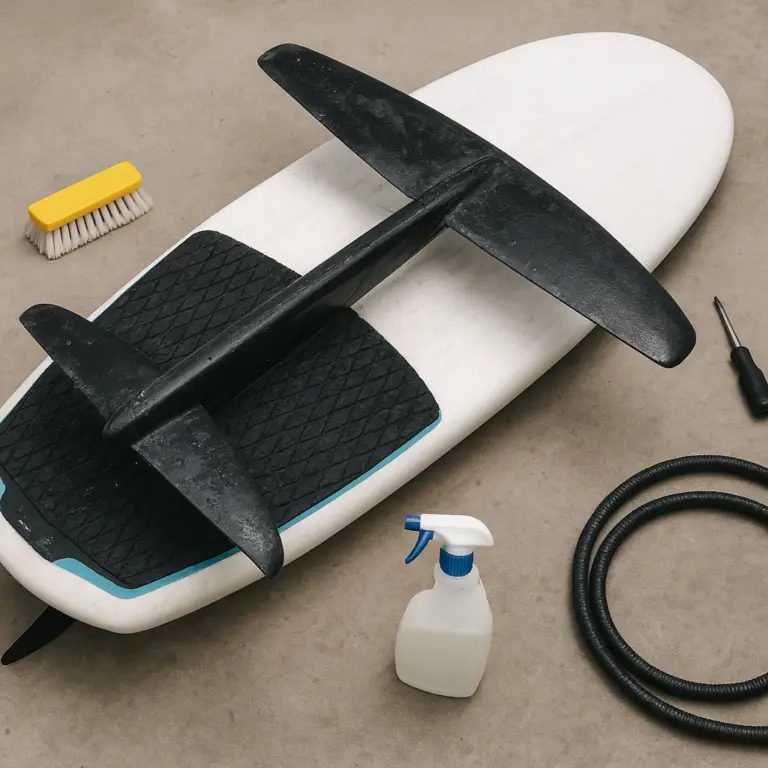
- Rinse the entire foil setup thoroughly with fresh water.
- Focus on connection points, bolts, and threads where salt and sand hide.
- Use a soft brush for stubborn salt deposits.
- Dry immediately with a microfiber towel—never air dry.
Jax, our senior hydrofoiler, once left his foil soaking in saltwater overnight. “The bolts fused solid. I had to soak them in vinegar for 48 hours to get them loose!” Don’t be like Jax.
2. Inspect for Cracks, Dings, and Delamination
Before every ride:
- Run your fingers along the mast and fuselage for hairline cracks or soft spots.
- Check wings for chips, separation of carbon layers, or spiderweb cracks.
- Perform a twist test on the mast and fuselage—there should be zero play.
- Look for white powdery residue (aluminum oxide), a sign of corrosion.
3. Tighten All Bolts and Screws Regularly
Loose bolts = wobling foil = unsafe ride.
- Use a torque wrench to tighten bolts to manufacturer specs:
- Mast bolts: 15–20 Nm
- Wing bolts: 10–15 Nm
- Stop tightening if you feel resistance to avoid stripping inserts.
- Apply Loctite 243 (Blue) thread locker to prevent vibration loosening.
- Avoid red thread locker—it’s permanent and a nightmare to remove.
4. Lubricate Moving Parts and Joints
- Apply a thin layer of marine-grade anti-seize lubricant (e.g., Tef-Gel or Permatex) on aluminum threads before assembly.
- This prevents galvanic corrosion and seizing.
- Reapply grease every few rides in saltwater, or monthly in freshwater.
5. Store Your Foil Properly to Avoid Warping
- Disassemble your foil completely for storage.
- Store in a cool, dry place away from direct sunlight and temperature swings.
- Lay mast and fuselage flat; avoid leaning against walls.
- Use UV-resistant covers or padded board bags.
6. Use Protective Covers During Transport
- Invest in wing covers from brands like Slingshot or Axis.
- Or try the pool noodle hack: slice a pool noodle and tape it around wings.
- Protects from dings, scratches, and accidental impacts.
7. Avoid Prolonged Sun Exposure
- UV rays degrade epoxy and carbon fiber.
- Never leave your foil or board in direct sun for hours.
- Use UV protective sprays or covers if you must.
8. Clean and Maintain Your Foil Board Deck
- Salt and sand can damage deck pads and inserts.
- Rinse and wipe down the deck after every session.
- Check inserts for looseness or damage.
9. Check and Replace Worn Foil Blades
- Inspect leading and trailing edges for chips or cracks.
- Sharp trailing edges can cause cavitation and noise; sand lightly with 60–100 grit sandpaper at a 30-degree angle.
- Replace blades if damage is extensive.
10. Use Recommended Tools and Products
| Product | Purpose | Rating (1-10) | Notes |
|---|---|---|---|
| Loctite 243 (Blue) | Thread locker | 9 | Holds bolts tight, removable |
| Tef-Gel Anti-Seize | Corosion prevention | 9 | Marine-grade, thin application |
| Solarez UV Resin | Small ding repair | 8 | Quick cure, durable finish |
| Torque Wrench | Proper bolt tightening | 10 | Essential for safety |
| Microfiber Towels | Drying and cleaning | 9 | Soft, absorbent, prevents scratches |
11. Perform Regular Deep Cleaning and Inspection
- Every few months, disassemble and soak aluminum parts in a 1:1 warm fresh water and white vinegar solution for 15–30 minutes to dissolve salt crystals.
- Clean carbon parts gently with mild soap and soft cloth.
- Inspect all parts thoroughly for hidden damage.
12. Seek Professional Servicing When Needed
- Structural cracks, delamination, or wet cores require expert repair.
- DIY fixes are fine for small dings but not for safety-critical damage.
- Trusted pros: Armstrong Foils, Lift Foils Service Centers, and local composite repair shops.
🛠️ Troubleshooting Common Hydrofoil Foil Issues
Even the best-maintained foils can throw curveballs. Here’s how to diagnose and fix common headaches.
| Issue | Cause | Fix |
|---|---|---|
| Wobling | Loose bolts, bent mast, damaged wings | Tighten bolts, inspect mast, replace wings |
| Squeaking/Whistling | Sharp trailing edges, loose parts | Sand edges, tighten bolts |
| Draging | Incorrect wing angle, fouled prop, water in board | Adjust angle, clean prop, dry board |
| Seized Bolts | Salt corrosion | Soak in vinegar, clean, reapply anti-seize |
| Loss of Lift | Damaged wings, water intrusion | Repair or replace wings, dry board |
Ever wondered why your foil suddenly feels “off” after a few rides? Usually, it’s a loose bolt or a tiny crack you missed. Inspect early, ride safe!
🔍 How to Choose the Right Maintenance Products for Your Hydrofoil
Choosing the right products can feel like navigating a reef—one wrong move and you’re stuck. Here’s our Hydrofoiling™ guide to picking winners.
Thread Lockers
- Loctite 243 (Blue) is the gold standard. It resists vibration but allows disassembly.
- Avoid Loctite 271 (Red) unless you want a permanent bond.
Anti-Seize Lubricants
- Look for marine-grade anti-seize like Tef-Gel or Permatex.
- Avoid thick greases that attract dirt.
- Apply sparingly on aluminum threads.
Repair Resins
- Solarez UV-cure resin is perfect for quick ding repairs.
- For structural fixes, use two-part epoxy resins like West System or System Three.
- Always follow curing instructions for best results.
Cleaning Products
- Mild soap and warm water for carbon parts.
- Avoid harsh chemicals or abrasive scrubers.
- Use microfiber towels to dry and polish.
🧰 Essential Tools Every Hydrofoil Rider Should Have
A well-stocked toolbox is your foil’s best friend. Here’s what we never leave home without:
| Tool | Purpose | Recommended Brands |
|---|---|---|
| Torque Wrench | Accurate bolt tightening | Park Tool, Venzo |
| Metric Hex Keys | Bolt adjustment | Bondhus, Wiha |
| Thread Locker | Bolt security | Loctite 243 |
| Anti-Seize | Corosion prevention | Tef-Gel, Permatex |
| Microfiber Towels | Cleaning and drying | Chemical Guys, Meguiar’s |
| Soft Brushes | Salt and sand removal | Any soft nylon brush |
| Two-Part Epoxy Kit | Repairs | West System, System Three |
Pro tip: Invest in a 1/4″ drive torque wrench with a 5–25 Nm range for precise control.
🚗 Transporting and Storing Your Hydrofoil: Best Practices
Your foil’s journey off the water matters as much as on it.
Transport Tips
- Use padded foil bags or hard cases to prevent dings.
- Protect wings with covers from Slingshot or Axis or the budget-friendly pool noodle hack.
- Secure all parts tightly to avoid rattling and damage.
Storage Tips
- Always disassemble your foil before storing.
- Store in a climate-controlled, dry environment.
- Avoid attics or garages with extreme heat or humidity.
- Lay mast and fuselage flat to prevent warping.
- Cover with UV-resistant wraps or store inside padded bags.
💡 Pro Tips from the Hydrofoiling™ Team: Insider Secrets for Longevity
We’ve been around the foil block enough to share these nuggets:
- Make the post-ride rinse ritual sacred. It’s the single best defense against corrosion.
- Keep a maintenance log. Track bolt torque, repairs, and inspections.
- Rotate your bolts. Swap them out seasonally to avoid fatigue.
- Don’t ignore small dings. They’re the canary in the coal mine for bigger failures.
- Use Teflon tape on screws before insertion to prevent loosening—yes, plumber’s tape works wonders!
- Check screws regularly for corrosion. Clean and re-grease as needed.
For more insider knowledge, explore our Advanced Hydrofoiling Techniques section.
📅 Seasonal Maintenance Checklist for Hydrofoil Foils
Keep your foil in peak condition year-round with this checklist:
| Season | Tasks |
|---|---|
| After Every Ride | Rinse fresh water, dry, inspect bolts and wings |
| Monthly | Deep clean aluminum parts with vinegar soak, reapply anti-seize |
| Pre-Season | Full disassembly, inspect for cracks/delamination, replace worn parts |
| Off-Season | Disassemble, clean, lubricate threads, store in cool dry place |
🔗 Recommended Brands and Products for Hydrofoil Maintenance
Here’s our curated list of trusted brands and products that keep your foil flying high:
| Brand/Product | Specialty | Why We Like It |
|---|---|---|
| Loctite 243 | Thread locker | Reliable, removable, vibration-resistant |
| Tef-Gel Anti-Seize | Corosion prevention | Marine-grade, thin application |
| Solarez UV Resin | Quick ding repairs | Fast curing, durable finish |
| West System Epoxy | Structural repairs | Industry standard, strong bond |
| Slingshot Foil Covers | Protective gear | Durable, well-fitting covers |
| Axis Foils | Foil hardware and covers | Robust aluminum masts, quality parts |
| Park Tool Torque Wrench | Precision tool | Accurate, durable |
👉 CHECK PRICE on:
- Loctite 243 Thread Locker: Amazon | Walmart
- Tef-Gel Anti-Seize: Amazon | Walmart
- Solarez UV Resin: Amazon
- West System Epoxy: Amazon
- Slingshot Foil Covers: Slingshot Official
- Axis Foils: Axis Official
- Park Tool Torque Wrench: Amazon
🎥 Video Tutorials and How-To Guides for Hydrofoil Care
If you prefer watching over reading, here’s a gem from the pros:
- The first YouTube video embedded in this article (#featured-video) highlights three crucial tips:
- Grease screws and contact surfaces regularly.
- Use Teflon tape on screws before insertion.
- Check screws for corrosion and clean/reapply grease as needed.
This video reminds us that hydrofoil maintenance is as vital as caring for skis or bikes and that saltwater accelerates corrosion much faster than freshwater.
For more visual guides, visit Makaiboarding’s YouTube channel.
📚 Further Reading and Community Resources
Want to geek out more? Check these out:
- Hydrofoil Board Maintenance & Repair Guide
- Axis Foils Maintenance Tips
- Slingshot Sports Hydrofoil Care
- Lift Foils Service & Support
- West System Epoxy Guide
Join forums like Foil Zone or Hydrofoil Forum to swap stories and tips with fellow riders.