Support our hydrofoil educational content for free when you purchase through links on our site. Learn more
Learning to Hydrofoil Surf: 15 Steps to Flight 🏄 ♂️

Learning to hydrofoil surf starts with ordinary surf skills, forgiving equipment, deep uncrowded water, and patient practice. Learn to catch waves and control a board before chasing lift; then use a large, stable front wing and master low flights, safe falls, and gentle touchdowns.
The first time we watched a beginner rise above the wave, it looked effortless for roughly two seconds. Then the foil climbed, the rider leaned back, and the ocean delivered a very efficient lesson in gravity. That tiny flight was still progress: it revealed that speed creates lift, while subtle foot pressure controls it.
Hydrofoil surfing feels different from regular surfing because the underwater wing can keep gliding through weak sections and across moving swell lines. It also makes small mistakes feel impressively large, so safety gear, correct mast depth, and an uncrowded learning zone matter from the first session.
The good news? You do not need perfect waves or elite athleticism. You need repeatable fundamentals: paddle efficiently, pop up quickly, keep your knees soft, look down the line, and learn to fall away from the foil. The thrilling long glide comes later, usually after several decidedly unglamorous splashes.
Key Takeaways
- Build conventional surfing skills first: Catch unbroken waves, paddle confidently, pop up quickly, and understand currents and hazards.
- Choose forgiving equipment: Start with a stable foil board, a larger low- or medium-aspect front wing, and a predictable stabilizer.
- Practice in deep, uncrowded water: Avoid shallow reefs, crowded lineups, powerful shorebreaks, and unpredictable boat traffic.
- Master low flights before advanced tricks: Controlled lift, stable pitch, gentle turns, and touchdown recovery matter more than height.
- Use small body movements: Back-foot pressure raises the foil; front-foot pressure lowers it. Keep your knees bent and upper body quiet.
- Fall deliberately: Jump or fall away from the board, protect your head, release the tow rope when necessary, and surface before retrieving the foil.
- Progress through 15 clear stages: Board handling, foil-free wave riding, controlled lift, stable flight, turning, pumping, and advanced swell riding.
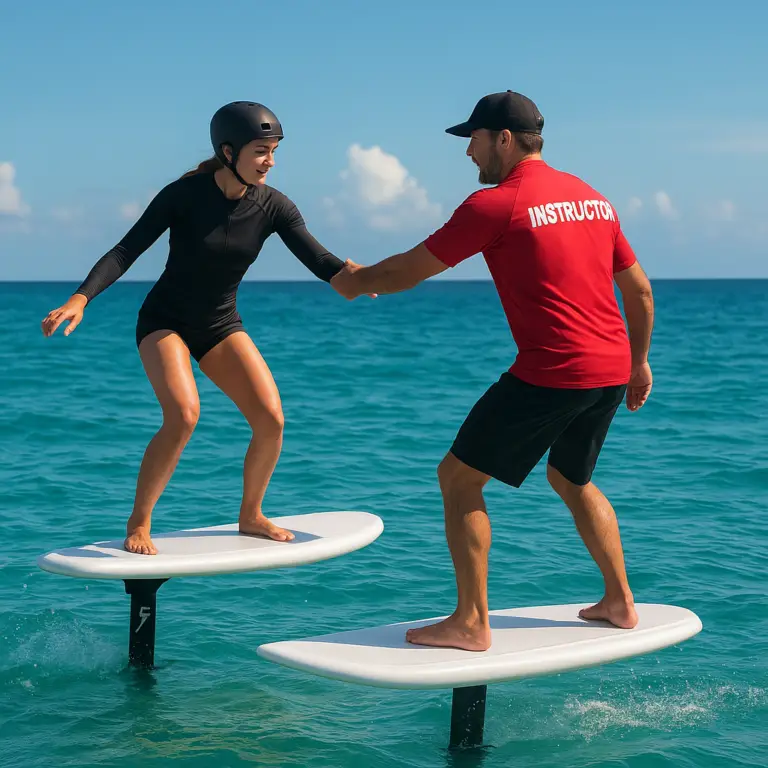
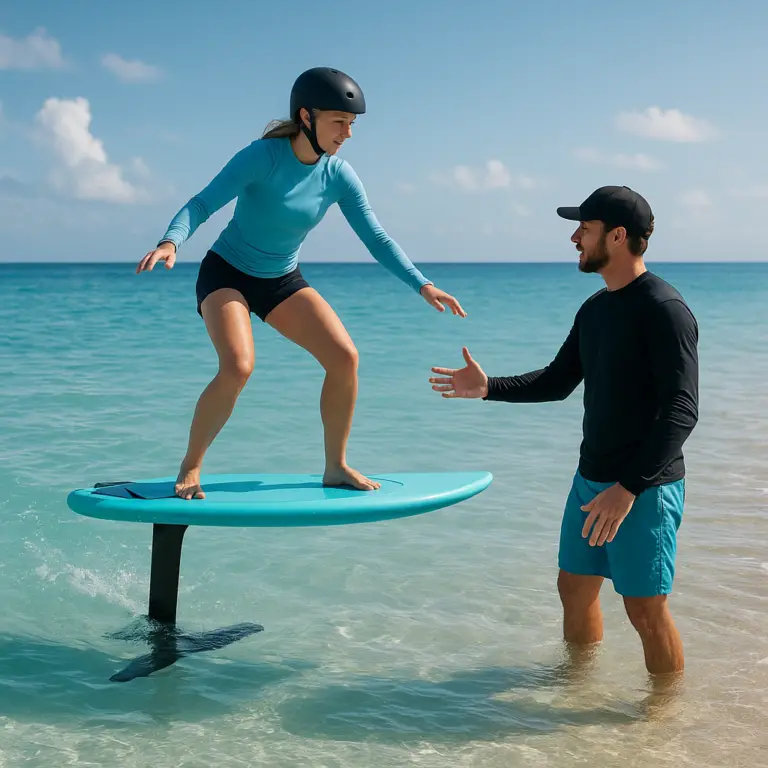
- Invest in coaching when possible: A qualified instructor can correct foot placement, takeoff timing, and safety habits before mistakes become muscle memory.
- Measure control, not drama: A short, repeatable glide and safe touchdown are better progress than one spectacular launch followed by a bruising finale.
Table of Contents
- ⚡ Quick Tips and Facts
- 🌊 Hydrofoil Surfing Explained: What It Is and Why It Fels Like Flying
- How a Surf Foil Generates Lift
- Surf Foiling vs. Prone Foiling, Wing Foiling, and E-Foiling
- 📜 From Experimental Foils to Modern Surf Foiling
- 🎯 Is Learning to Hydrofoil Surf Right for You?
- Required Surfing Skills and Fitness
- Best Waves, Weather, and Water Conditions for Beginners
- 🛡️ Safety First: How to Hydrofoil Without Becoming a Human Pinball
- Essential Protective Gear for Foil Surfing
- Foil Etiquette, Crowded Lineups, and Right-of-Way Rules
- Shallow Water, Refs, Rocks, and Other Hazards
- What to Do After a Fall
- 🧰 Hydrofoil Surfing Equipment Guide
- Choosing Your First Foil Board
- Front Wings, Stabilizers, and Mast Length
- Foil Fuselages, Mounts, Tracks, and Hardware
- Choosing a Beginner-Friendly Hydrofoil Setup
- Popular Surf Foil Brands and Models
- Board and Foil Compatibility Checklist
- 🏄 The 15-Step Learning to Hydrofoil Surf Progression
- 1. Learn Foil Components and Pre-Session Checks
- 2. Practice Falling Safely on Land and in Deep Water
- 3. Master Prone Paddling on a Stable Foil Board
- 4. Catch Small Whitewater Waves Without Foiling
- 5. Improve Your Pop-Up and Foot Placement
- 6. Take Your First Foil-Free Unbroken Waves
- 7. Learn to Paddle Into Open-Face Waves
- 8. Trim the Board Before Trying to Lift Off
- 9. Generate Controlled Foil Lift
- 10. Hold a Stable Flying Position
- 11. Control Height With Front-Foot and Back-Foot Pressure
- 12. Link Turns and Maintain Foil Speed
- 13. Pump the Foil Across Weak Sections
- 14. Recover From Touchdowns and Stallouts
- 15. Ride Longer Swells and Graduate to Advanced Foil Maneuvers
- 🧠 Balance, Body Position, and Foil Control Fundamentals
- Where to Place Your Feet on a Hydrofoil Board
- How to Use Your Ankles, Knes, Hips, and Shoulders
- Managing Speed, Lift, Pitch, Roll, and Yaw
- Why Looking Ahead Beats Staring at the Foil
- 🌬️ Paddling Into Waves and Getting Foil Lift
- The Best Takeoff Angle for Hydrofoil Surfing
- How Much Speed You Need to Take Off
- Using Wave Energy Instead of Muscle
- Common Takeoff Errors and Fast Fixes
- 🏋️ Training for Hydrofoil Surfing
- Balance and Proprioception Exercises
- Leg, Core, and Hip Strength Workouts
- Mobility and Flexibility for Better Pop-Ups
- Breath Control, Cardio, and Paddle Fitness
- Dryland Foil Practice and Video Analysis
- ❌ The 15 Most Common Hydrofoil Surfing Mistakes
- 1. Starting in Waves That Are Too Powerful
- 2. Choosing a Foil That Is Too Small
- 3. Standing Too Far Forward or Too Far Back
- 4. Trying to Force the Board Into Flight
- 5. Leaning Back During Takeoff
- 6. Looking Down at the Foil
- 7. Overcorrecting Every Woble
- 8. Riding Too High Above the Water
- 9. Using a Leash in Unsafe Conditions
- 10. Foiling Too Close to Other Surfers
- 11. Ignoring Mast and Hardware Checks
- 12. Practicing Only on Perfect Waves
- 13. Skipping Touchdown Recovery Practice
- 14. Progressing to Maneuvers Too Soon
- 15. Chasing Distance Instead of Control
- 🌊 Best Waves and Locations for Learning to Hydrofoil Surf
- Ideal Wave Height, Shape, and Period
- Open-Ocean Swells, Points, Refs, and Beach Breaks
- How Tides, Wind, and Current Affect Foil Sessions
- Finding Beginner-Friendly Foil Spots
- 📅 Building a Hydrofoil Surf Practice Plan
- A First-Session Plan
- A Four-Week Beginner Progression
- How to Measure Progress Without Chasing Big Air
- When to Hire a Foiling Instructor
- 🔧 Maintaining and Transporting Your Surf Foil
- Rinsing, Drying, and Inspecting Foil Components
- Preventing Corosion and Damaged Threads
- Repairing Dings, Scratches, and Delamination
- Safe Storage and Travel Tips
- 📈 Progressing Beyond the Basics
- Carving and Connecting Multiple Waves
- Pumping Technique for Endless Glides
- Prone Foiling on Open-Ocean Swells
- Downwind Foiling and Bump Riding
- Foilboard Turns, Rebounds, and Advanced Maneuvers
- 💬 Real Beginner Questions We Hear on the Beach
- 🏁 Conclusion
- 🔗 Recommended Links
- ❓ FAQ
- 📚 Reference Links
Quick Tips and Facts
If you’re wondering how do I get started with hydrofoiling?, our short answer is: learn conventional surfing first, use beginner-friendly foil gear, and practice in deep, uncrowded water with an instructor if possible. The foil is not a magic carpet. At first, it behaves more like a caffeinated shopping trolley.
- Start with small, soft waves or controlled tow practice, not powerful reef breaks.
- Learn to ride the board flat before deliberately lifting the foil.
- A large, stable, low-aspect front wing generally makes early learning more forgiving.
- Keep the foil in deep water with generous clearance from the bottom, swimmers, surfers, boats, and structures.
- Wear a helmet and impact vest. A foil is a sharp underwater wing attached to your board, not a decorative fin.
- When falling, jump away from the board and foil, preferably toward the side or rear, while protecting your head.
- Use small weight shifts. Foils respond to ankle and foot pressure more dramatically than ordinary surfboards.
- Look where you want to go. Staring at the nose or foil usually creates the very woble you’re trying to prevent.
- Progress is measured by control, not height. A low, stable glide beats a dramatic launch followed by a yard sale.
- Your first goal is not a long ride. It is a repeatable takeoff, controlled lift, and safe touchdown.
The most useful beginner principle we’ve found is this: speed creates lift, but body position controls whether that lift becomes flight or chaos. That relationship explains nearly every lesson that follows.
Hydrofoil Surfing Explained: What It Is and Why It Fels Like Flying
Hydrofoil surfing combines a surfboard with an underwater front wing, rear stabilizer, mast, and fuselage. Once the foil gains enough speed, the wings generate lift and raise the board above the surface. The result is a quiet, low-drag glide that can continue across sections where a conventional surfboard would bog down.
The International Hydrofoil Society describes the same basic principle used in marine hydrofoils: underwater wings create lift as water flows across them. In surfing, your wave, paddle stroke, boat, wing, or pumping motion supplies the energy.
At Hydrofoiling™, we describe it as surfing the moving water beneath the wave rather than merely sliding down the wave face. That distinction is why foil surfers can connect swell lines, weak sections, and sometimes entirely separate bumps.
How a Surf Foil Generates Lift
A foil behaves broadly like a small underwater aircraft. The front wing creates most of the lift, while the stabilizer helps control pitch and keeps the system balanced.
| Force or variable | What it does | What you feel as a rider |
|---|---|---|
| Lift | Raises the board and rider | The board begins to fly |
| Weight | Pulls the rider and board downward | More front-foot pressure is needed to resist rising |
| Drag | Slows the foil and board | Speed fades when the foil is too deep, too high, or poorly aligned |
| Thrust | Moves the system forward | Comes from the wave, paddle, boat, wing, or pumping |
| Angle of attack | Changes how aggressively the wing meets the water | More angle can create more lift, but also more drag and instability |
| Pitch | Nose-up or nose-down attitude | Controlled mainly through front-foot and back-foot pressure |
| Roll | Side-to-side tilt | Controlled through ankles, knees, hips, and shoulder alignment |
| Yaw | Rotation left or right around the mast | Influenced by turns, rail pressure, and foil design |
The basic physics is covered well by the NASA Glenn Research Center’s explanation of lift. Water is denser than air, so a relatively compact underwater wing can generate substantial force at modest speeds.
A useful mental model comes from the educational video Learning to Hydrofoil: Understanding Some Basics, which explains that a hydrofoil is “much like a small aeroplane.” The comparison is not perfect, but it is excellent for learning:
- More speed generally creates more lift.
- Too much nose-up pitch can make the foil climb abruptly.
- Too little speed or too much nose-down pressure can cause a touchdown or stall.
- Your feet are the control surfaces.
Why speed and pitch must work together
At low speed, the foil may need a higher angle of attack to generate lift. As speed rises, that same angle can create too much lift and send the board climbing. That is why a takeoff often feels like this:
- The board accelerates on the wave.
- You shift slightly rearward.
- The foil begins to lift.
- You move forward to stop the climb.
- You settle into a low, stable flight.
The common beginner mistake is to treat takeoff as an on/off switch. It is closer to turning a dimer: smooth pressure creates smooth lift.
Surf Foiling vs. Prone Foiling, Wing Foiling, and E-Foiling
“Hydrofoil surfing” can describe several sports. They share underwater foil technology but differ in how they create forward speed.
| Discipline | Primary power source | Typical board | Main learning challenge |
|---|---|---|---|
| Surf foiling | Breaking wave | Short foil board | Catching and staying with the wave |
| Prone foiling | Paddle plus swell energy | Compact prone foil board | Paddling efficiently and linking bumps |
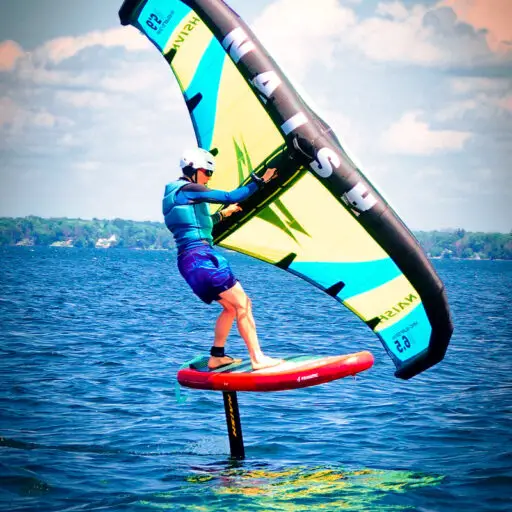
| Wing foiling | Inflatable hand wing and wind | Foil board | Managing wing power and foil balance |
| Kite foiling | Kite and wind | Small foil board | Kite control combined with foil control |
| Tow foiling | Boat or personal watercraft | Foil board | Learning pitch and turns without wave timing |
| E-foiling | Battery-powered motor | Larger powered board | Speed management, battery weight, and safety |
For complete beginners, tow foiling can simplify the first balance lessons, while surf foiling develops the wave skills you ultimately need. The Foiling Magazine guide to learning hydrofoil surfing recommends learning regular surfing and, where possible, practicing behind a boat or personal watercraft before heading into waves.
Our view is slightly more nuanced:
- ✅ Tow practice: excellent for learning pitch, stance, and controlled lift.
- ✅ Small-wave surf practice: essential for developing wave judgment.
- ❌ E-foil as a shortcut: helpful for some riders, but the powered board’s weight and speed can hide poor surf-takeoff habits.
- ❌ Wing foiling as direct preparation: useful for balance and foil control, but wind, wing handling, and board volume add another layer.
The foil may be the same family of machine, but each discipline speaks a different dialect.
From Experimental Foils to Modern Surf Foiling
Hydrofoils have been tested on boats for more than a century, with early experiments dating back to the late 180s. Modern surf foiling developed from a mixture of tow-in experimentation, kiteboarding, windsurfing, stand-up paddle foiling, and surfboard design.
The Hydrofoil Society history archive documents the broader development of hydrofoil craft, while modern brands such as GoFoil, Lift Foils, Slingshot Sports, Naish, and Armstrong Foils have helped make modular foil systems accessible to recreational riders.
Early surf foil setups often felt heavy, unforgiving, and difficult to tune. Contemporary systems offer:
- Carbon-fiber or lightweight aluminum masts.
- Interchangeable front wings and stabilizers.
- Adjustable mast tracks.
- Improved foil sections for earlier lift.
- More compact boards with reinforced foil mounts.
- Better hardware and standardized mounting systems.
This evolution created a curious trade-off: equipment became more capable, but the sport did not become easy. A modern foil can lift earlier and glide farther, yet that extra performance can punish poor pitch control. The machine got smarter; the water remained unimpressed.
Is Learning to Hydrofoil Surf Right for You?
Hydrofoil surfing suits riders who enjoy technical progression, repetition, and the occasional humbling encounter with gravity. It can transform weak surf into a worthwhile session, but it demands more awareness than ordinary surfing because the foil travels below the board and carries significant momentum.
Required Surfing Skills and Fitness
The Foiling Magazine learning guide recommends becoming a confident conventional surfer first. We agree. You should be able to:
- Paddle efficiently through modest surf.
- Catch unbroken waves consistently.
- Pop up quickly without looking at your feet.
- Ride frontside and backside.
- Control speed across a wave face.
- Fall calmly and resurface safely.
- Identify currents, rips, shallow areas, and other water users.
You do not need to be a professional shortboarder. However, a longboard-only background may not prepare you for the compact board, rapid pop-up, and sensitive pitch control of a foil board.
Fitness qualities that help
| Physical quality | Why it matters | Useful training |
|---|---|---|
| Ankle control | Fine-tunes pitch and roll | Balance board, single-leg stance |
| Leg endurance | Maintains a low, stable stance | Split squats, step-ups, cycling |
| Core stability | Keeps the upper body quiet | Planks, dead bugs, Pallof presses |
| Hip mobility | Makes pop-ups and stance changes easier | Hip flexor and aductor mobility |
| Paddle fitness | Gets you safely into position | Swimming, paddling, interval cardio |
| Breath control | Reduces panic after falls | Relaxed underwater exhalation practice |
A 2023 review in the Journal of Sports Science & Medicine highlights the role of balance, proprioception, and neuromuscular control in board sports. The practical translation is simple: your nervous system must learn where the foil is even when you cannot see it.
Best Waves, Weather, and Water Conditions for Beginners
Choose conditions that reduce consequences while preserving enough energy to create lift.
Beginer-friendly conditions:
- Small, clean, open-faced waves.
- Deep water with no immediate bottom hazard.
- Light wind or offshore wind that does not destroy the wave face.
- Long-period swell with manageable wave height.
- Plenty of space away from swimmers and surfers.
- A safe channel for paddling back out.
Poor learning conditions:
- Hollow shorebreak.
- Crowded peaks.
- Shallow reefs.
- Strong onshore wind.
- Powerful closeouts.
- Heavy current.
- Visibility so poor that you cannot see other water users.
A traditional surfer may call a wave “small and fun.” A foil surfer should ask a second question: Is there enough uninterrupted water depth for the mast and front wing?
Safety First: How to Hydrofoil Without Becoming a Human Pinball
Foil safety is not optional etiquette. It is the foundation of the sport.
A front wing can be sharp, fast, and difficult for others to predict. The United States Coast Guard emphasizes situational awareness, flotation, and responsible boating practices, all of which translate directly to foil sessions.
Essential Protective Gear for Foil Surfing
| Gear | Recommendation | Why it helps |
|---|---|---|
| Helmet | Strongly recommended | Protects against board, mast, or foil contact |
| Impact vest | Recommended, especially for tow practice | Adds flotation and impact protection |
| Leash | Use only where conditions and local practice support it | Keeps the board visible and nearby |
| Whistle | Useful in remote or low-visibility areas | Helps attract attention |
| Wetsuit | Appropriate for water temperature | Adds warmth and modest protection |
| Foil covers | Use on land and during transport | Protects people, wings, and board interiors |
| Quick-release tow system | Required for tow foiling | Lets the rider separate from the line rapidly |
The leash question deserves care. The Foiling Magazine guide recommends a properly sized surf leash because a floating, visible board can help identify a rider’s location after a fall. We agree in many surf conditions, but a leash can also pull a foil board back toward you. Follow local expert guidance, assess wave size and current, and never assume a leash is automatically safer.
Foil Etiquette, Crowded Lineups, and Right-of-Way Rules
A foil board has a larger danger radius than a conventional surfboard. Give yourself and everyone else more space.
✅ Do:
- Launch and land away from crowds.
- Communicate with other riders.
- Stay down the line of your own wave.
- Yield early if another surfer is already riding.
- Keep the foil low while paddling and waiting.
- Exit the water if control deteriorates.
❌ Do not:
- Foil through a crowded lineup.
- Take off behind someone.
- Practice near swimmers, children, docks, or anchored boats.
- Drop in because your foil can connect sections.
- Carry an uncovered foil through a busy beach.
- Assume other surfers understand your turning radius.
The International Surfing Association publishes competition and safety frameworks that reinforce the basic principle: the rider with the greater speed, reach, or equipment responsibility must act conservatively.
Shallow Water, Refs, Rocks, and Other Hazards
A foil mast can be long enough to make apparently deep water dangerously shallow. The front wing may contact the bottom before the board does, causing an abrupt pitch change or structural damage.
Before entering:
- Check local depth and tide information.
- Confirm the water remains deep along your likely riding line.
- Identify rocks, reefs, piers, morings, and submerged cables.
- Watch at least one wave cycle before launching.
- Ask local surfers or lifeguards about hidden hazards.
- Keep a generous buffer from the bottom.
A good rule is never learn in water that would make you nervous on a normal fined surfboard. The foil needs additional clearance, and your first sessions involve more falling than steering.
What to Do After a Fall
Your fall routine should be automatic:
- Release the board or tow rope if it is pulling you dangerously.
- Jump or fall away from the foil, not onto it.
- Cover your head with your arms.
- Let yourself travel away from the board before surfacing.
- Look for the mast and board before swimming toward them.
- Signal clearly if you need help.
- Retrieve the board only when the foil is stable and no one is approaching.
The most dangerous beginner instinct is trying to save an unstable ride at all costs. The Foiling Magazine guide advises riders not to overcorrect and to commit to the fall. That advice matches our experience: a clean, deliberate bailout is far safer than a last-second backward collapse onto the foil.
Hydrofoil Surfing Equipment Guide
Your first setup determines how quickly you learn and how dramatically you punish mistakes. We do not recommend buying the smallest, fastest foil because it looks impressive in a parking lot. The parking lot is not a wave.
For broader equipment advice, see our Hydrofoil Board Selection and Hydrofoil Equipment Reviews categories.
Choosing Your First Foil Board
A beginner board should provide stability while paddling and predictable release during takeoff.
| Board characteristic | Beginner benefit | Potential drawback |
|---|---|---|
| Extra width | Easier prone balance | Can feel less nimble |
| Moderate volume | Better paddle speed and stability | May resist sinking for advanced starts |
| Short-to-medium length | Easier maneuverability | Less glide during paddling |
| Reinforced foil tracks | Handles repeated loading | Adds weight |
| Flat or modest rocker | Efficient paddle and takeoff | Less forgiving in steep drops |
| Rounded rails | Smother touchdowns | Less crisp edge control |
For prone surf foiling, a board around your body length or slightly shorter can work once your paddling is strong. A rider with limited board-sport experience may benefit from more length and volume. Board choice should reflect your weight, paddle ability, wave energy, and discipline, not merely the dimensions printed on a product page.
Common board options include:
- Armstrong Downwind Boards
- Lift Foils Surf Boards
- Slingshot foil boards
- Naish foil boards
- Cabrinha foil boards
Front Wings, Stabilizers, and Mast Length
The front wing is the biggest setup decision. Larger wings generally produce lift at lower speeds, while smaller or higher-aspect wings can glide efficiently once you have control.
| Foil feature | Beginner-oriented choice | Advanced-oriented choice |
|---|---|---|
| Front wing area | Larger | Smaller or medium |
| Aspect ratio | Low to medium | Medium to high |
| Profile | Thick, stable, early-lifting | Faster, thinner, glide-focused |
| Stabilizer | Larger and forgiving | Smaller and more maneuverable |
| Mast length | Short or medium for early practice | Longer for carving and open water |
| Mast stiffness | Stable and predictable | High stiffness for precision |
There is no universal “best” wing size. A 90-kilogram rider and a 60-kilogram rider should not automatically use the same front wing. Manufacturers publish recommendations, but the most useful starting point is the brand’s compatibility chart, such as those from Armstrong, Lift, and GoFoil.
Why shorter masts can help beginners
A shorter mast reduces the height of the fall and makes board control feel less dramatic. It also provides less leverage and less clearance over chop, so it is not always ideal in larger surf.
Our preferred progression is:
- Practice on land with the foil removed.
- Ride board-on-water with a short or medium mast in deep water.
- Learn low flights and controlled touchdowns.
- Move to a longer mast once the foil no longer feels unpredictable.
Foil Fuselages, Mounts, Tracks, and Hardware
A modern foil system typically includes:
- Front wing.
- Rear stabilizer.
- Fuselage.
- Mast.
- Board plate or track mount.
- Screws, washers, and mounting hardware.
Track mounts let you adjust the foil’s position under the board. Moving the foil forward can increase lift or make the board feel more front-foot heavy; moving it rearward can reduce lift and make takeoff more demanding. Make one adjustment at a time and record what changes.
Hardware checks before every session:
- Confirm all screws are present.
- Inspect threads for damage.
- Check that the mast plate sits flush.
- Look for cracks, delamination, or impact damage.
- Tighten to the manufacturer’s specified torque.
- Rinse salt and sand from every connection after riding.
Brands such as Mast Technology, F-One, and Axis Foils offer modular systems, but mixing components across brands can create compatibility or tuning problems. A foil that “sort of fits” is not a trustworthy engineering standard.
Choosing a Beginner-Friendly Hydrofoil Setup
A practical beginner setup usually includes:
- A stable board with secure foil tracks.
- A large, low- or medium-aspect front wing.
- A predictable stabilizer.
- A mast length appropriate for deep water and coaching conditions.
- A helmet and impact vest.
- Foil covers and spare hardware.
- A professional fitting or lesson.
The Foiling Magazine guide lists early tow-learning examples including Slingshot H-series foils, Naish Thrust wings, Lift 150 and 170 wings, GoFoil Iwa and Maliko wings, Cloud 9 P-series wings, and Delta Surf wings. Those product names are useful historical reference points, but availability and current model names change. Always verify the current manufacturer specifications.
Popular Surf Foil Brands and Models
| Brand | Known for | Beginner considerations |
|---|---|---|
| Armstrong | Stiff carbon systems and modular wings | Excellent build quality; performance can feel sensitive |
| GoFoil | Early-lifting surf and prone wings | Strong reputation among surf foilers |
| Lift Foils | Carbon foils and e-foil systems | Broad ecosystem; check discipline-specific setup |
| Slingshot | Accessible foil systems and boards | Wide range of learning-oriented equipment |
| Naish | Surf, wing, and foil equipment | Multiple disciplines; confirm exact wing application |
| F-One | Modular foil families | Detailed system choices; selection can feel complex |
| Axis | High-performance modular foils | Strong progression potential |
| Cabrinha | Wing and foil equipment | Good cross-discipline support |
| Cloud 9 | Surf foil-specific designs | Often favored for low-speed lift |
| Delta | Surf and prone foil designs | Model suitability depends heavily on rider weight |
Product rating snapshot
These are learning suitability ratings, not universal product scores. They reflect design intent, adjustability, stability, and progression potential rather than a promise that one brand suits every rider.
| Brand or system | Design | Functionality | Beginner stability | Adjustability | Progression | Overall |
|---|---|---|---|---|---|---|
| Armstrong surf foil systems | 9/10 | 9/10 | 7/10 | 9/10 | 10/10 | 8.8/10 |
| GoFoil surf/prone systems | 8/10 | 9/10 | 8/10 | 8/10 | 9/10 | 8.4/10 |
| Slingshot foil systems | 8/10 | 8/10 | 8/10 | 8/10 | 8/10 | 8.0/10 |
| Naish foil systems | 8/10 | 8/10 | 8/10 | 7/10 | 8/10 | 7.8/10 |
| Lift surf foil systems | 9/10 | 9/10 | 7/10 | 8/10 | 9/10 | 8.4/10 |
| F-One foil systems | 9/10 | 9/10 | 7/10 | 9/10 | 9/10 | 8.6/10 |
These scores are comparative guidance, not laboratory measurements. Read current specifications and user feedback before choosing.
Community feedback: what riders commonly report
Across public retailer reviews, brand communities, and foil forums, recurring praise includes:
- Armstrong: stiffness, construction quality, and long-term progression.
- GoFoil: early lift and surf-specific glide.
- Slingshot: forgiving entry point and broad availability.
- Naish: versatile equipment across several foil disciplines.
- F-One: refined modular design and performance range.
Recurring criticisms include:
- Performance systems can feel too sensitive for first sessions.
- Carbon repairs are specialized and expensive.
- Large beginner wings may become limiting once speed and turning improve.
- Cross-brand compatibility is not always straightforward.
Treat reviews as evidence, not scripture. A lightweight rider praising a fast wing may be describing a completely different experience from a heavier beginner on a weak wave.
Board and Foil Compatibility Checklist
Before buying, verify:
- ✅ Board has a compatible plate or track system.
- ✅ Mast and fuselage connection matches the wing family.
- ✅ Front wing and stabilizer use compatible hardware.
- ✅ Board construction can handle foil loads.
- ✅ Mast length suits your water depth.
- ✅ Wing size matches rider weight and discipline.
- ✅ Replacement screws and covers are available.
- ✅ Brand instructions specify tightening torque.
- ✅ You can transport the setup safely.
- ❌ Do not assume any plate fits any track.
- ❌ Do not use damaged carbon or rounded screws.
- ❌ Do not judge foil suitability from wingspan alone.
The 15-Step Learning to Hydrofoil Surf Progression
This progression deliberately starts slower than most highlight reels. The goal is to build repeatable control, not produce one lucky flight followed by a week of mysterious bruises.
1. Learn Foil Components and Pre-Session Checks
Before entering the water, identify every part of the system. You should be able to assemble it without guessing which screw belongs where.
Check:
- Front wing orientation.
- Stabilizer orientation.
- Mast direction.
- Fuselage connection.
- Board track position.
- Screw length and washer placement.
- Leash attachment.
- Protective covers.
Place the assembled board on soft ground and rehearse how you will carry it. Keep hands clear of wing edges. A foil should never be treated like a normal surfboard under your arm.
2. Practice Falling Safely on Land and in Deep Water
On land, rehearse the movement without a foil:
- Bend your knees.
- Step or jump sideways.
- Cover your head.
- Avoid falling backward.
In deep water, practice separating from the board and resurfacing calmly. If using a tow rope, rehearse releasing it instantly. A US Sailing safety guide reinforces the value of practicing emergency actions before they become necessary.
3. Master Prone Paddling on a Stable Foil Board
A foil board may feel corky, narrow, and awkward under your chest. Paddle in flat water before attempting a wave.
Focus on:
- Keeping your chest centered.
- Minimizing side-to-side rocking.
- Paddling with clean, even strokes.
- Tracking straight.
- Turning without dragging the foil through the bottom.
Do not rush to stand. Efficient paddling is a safety skill because it gets you away from hazards and positions you for waves.
4. Catch Small Whitewater Waves Without Foiling
Your first surf objective is to catch waves while keeping the board on the water. Use a setup that places the foil far enough back or low enough that it does not lift unexpectedly.
Practice:
- Paddle into weak whitewater.
- Pop up normally.
- Keep your weight centered or slightly forward.
- Ride straight.
- Step off safely before the wave loses you.
This phase teaches the board’s balance and acceleration without adding flight.
5. Improve Your Pop-Up and Foot Placement
A foil board demands a fast, quiet pop-up. Place your feet deliberately:
- Front foot near the board’s centerline.
- Back foot approximately over or just forward of the mast area, depending on setup.
- Knes bent.
- Hips low.
- Shoulders aligned with the intended direction.
The exact foot position varies by foil and board. Use manufacturer guidance, then adjust in small increments. Moving the front foot even a few centimeters can change lift dramatically.
6. Take Your First Foil-Free Unbroken Waves
Ride unbroken waves without lifting. This develops timing and line selection.
Stay on the lower, more powerful part of the wave rather than racing straight toward the shoulder. If the board begins to accelerate, use front-foot pressure to keep it settled.
This is where many learners discover that the foil is not the hardest part; catching the right wave is.
7. Learn to Paddle Into Open-Face Waves
Choose waves with a gentle shoulder and enough depth. Paddle at angle rather than directly toward the beach if that gives you a cleaner line.
The sequence:
- Watch several waves.
- Select a wave with predictable energy.
- Position yourself with room down the line.
- Paddle early and smoothly.
- Pop up before the wave steepens too much.
- Keep the board low.
- Begin your line before attempting lift.
A late, vertical drop leaves little room to correct foil pitch. Early, angled entry gives you time.
8. Trim the Board Before Trying to Lift Off
Once standing, hold the board on the water. Keep your weight slightly forward and maintain speed.
Do not lean back simply because you want to fly. Let the wave accelerate you first. The foil should rise because you create a controlled change in angle and pressure, not because you panic and stomp the tail.
9. Generate Controlled Foil Lift
When the board has speed:
- Bend both knees.
- Apply gentle pressure through the rear foot.
- Let the foil rise only a few centimeters.
- Immediately add measured front-foot pressure.
- Keep your upper body quiet.
- Look down the line.
- Setle into a low flight.
This matches the controlled takeoff sequence described by The Foiling Magazine: shift rearward slowly to initiate lift, then move forward to stop the climb.
10. Hold a Stable Flying Position
A stable flight feels surprisingly boring. That is good.
Aim for:
- Mast nearly vertical.
- Board only modestly above the water.
- Knes flexed.
- Hips over the board.
- Arms relaxed.
- Eyes focused on the path ahead.
If you are constantly waving your arms, the foil is probably too high, your stance too narrow, or your weight shifts too large.
11. Control Height With Front-Foot and Back-Foot Pressure
Think of your feet as a pitch-control system:
- More front-foot pressure: nose lowers, foil descends.
- More back-foot pressure: nose rises, foil climbs.
- Balanced pressure: stable flight.
Avoid locking your knees. Flexible legs absorb small changes in water flow. Rigid legs transmit every disturbance directly to your torso, which then performs an interpretive dance no one requested.
12. Link Turns and Maintain Foil Speed
Begin with gentle S-turns across the wave face. Keep the foil low and the radius wide.
To turn:
- Look toward the new direction.
- Rotate your shoulders and hips.
- Apply gradual rail pressure.
- Keep the mast controlled.
- Exit the turn with speed.
Do not twist only your shoulders while leaving your lower body behind. The foil may yaw or roll abruptly.
13. Pump the Foil Across Weak Sections
Pumping is not jumping randomly. It is a coordinated rhythm that changes foil pitch and transfers energy through the moving water.
Start with small movements:
- Compress slightly.
- Extend while maintaining foil height.
- Guide the board forward.
- Repeat before speed fades.
The advanced hydrofoiling techniques category covers progression beyond the first stable rides. For now, prioritize smooth momentum over dramatic amplitude.
14. Recover From Touchdowns and Stallouts
A touchdown is not automatically a failure. Skilled riders use it as a reset.
If the board touches down:
- Keep your knees soft.
- Maintain forward momentum.
- Keep your weight centered.
- Avoid immediately forcing another lift.
- Rebuild speed before trying again.
If the foil stalls, the nose may drop suddenly. Stay relaxed and allow the board to reconnect with the water. A stable touchdown is far safer than trying to rescue a stalled foil with a giant backward lean.
15. Ride Longer Swells and Graduate to Advanced Foil Maneuvers
Only move on when you can repeatedly:
- Catch waves without panic.
- Fly at low height.
- Turn both directions.
- Touch down and recover.
- Fall away from the foil.
- Maintain awareness of other water users.
Then explore:
- Longer down-the-line rides.
- Cutbacks to the power pocket.
- Linking bumps.
- Prone swell entries.
- Pumping.
- Rebounds and tighter turns.
- Downwind foil techniques.
The famous “double dip” challenge in the featured video illustrates how addictive progression can become. The rider works with coach James Casey over seven days to connect one wave to another by pumping. The early sessions feature repeated falls, while later sessions show better focus, foot placement, wave reading, and control.
The lesson is not that everyone should learn in seven days. It is that specific coaching and deliberate repetition can turn vague frustration into measurable progress.
Balance, Body Position, and Foil Control Fundamentals
Where to Place Your Feet on a Hydrofoil Board
Foot position depends on the board’s mast track, foil profile, rider weight, and wing size. Start with the manufacturer’s recommended stance, then adjust only one foot at a time.
| Symptom | Likely adjustment |
|---|---|
| Board rises too aggressively | Move forward or reduce rear-foot pressure |
| Board refuses to lift | Move slightly rearward or build more speed |
| Board rolls side to side | Widen stance and soften knees |
| Nose dives during takeoff | Reduce front-foot pressure briefly |
| Turning feels sluggish | Check whether stance is too wide or foil too far forward |
| Touchdowns feel violent | Lower flight height and keep knees bent |
In the featured challenge, the coach advises shifting the front foot slightly backward to avoid excessive lift. That can work for a particular board and foil, but it is not a universal command. Foot placement is a tuning variable, not a tattoo.
How to Use Your Ankles, Knes, Hips, and Shoulders
Control moves upward through the body:
- Ankles: fine pitch and roll corrections.
- Knees: absorb chop and regulate pressure.
- Hips: shift the center of mass.
- Shoulders: initiate direction and maintain line.
- Eyes and head: guide the entire movement pattern.
Keep the upper body calm while the lower body works. The Foiling Magazine guide specifically recommends shifting weight smoothly without excessive upper-body movement.
Managing Speed, Lift, Pitch, Roll, and Yaw
| Feeling | Possible cause | Response |
|---|---|---|
| Foil climbs rapidly | Too much rear-foot pressure or speed | Add front-foot pressure gradually |
| Foil drops suddenly | Too much front-foot pressure or insufficient speed | Relax forward pressure and regain speed |
| Board rolls heel-toe | Uneven stance or stiff legs | Bend knees and center hips |
| Nose swings unexpectedly | Excessive shoulder rotation or yaw input | Look through the turn and soften hands |
| Speed disappears | Foil too deep, too high, or outside power | Lower flight and reconnect with energy |
The underwater wing cannot see the wave. It only responds to water flow and your pressure. That is why subtle movements beat frantic corrections.
Why Looking Ahead Beats Staring at the Foil
Your gaze influences posture. Looking down tends to fold the torso forward, load the front foot, and disturb balance. Looking down the line encourages a more neutral stance and better wave reading.
The featured seven-day challenge emphasizes looking down the line rather than straight ahead. That advice is especially useful because a foil ride may outrun the visible breaking section. You need to scan for:
- Green zones with usable energy.
- Red zones where the wave is fading or too far ahead.
- Open water for safe turns.
- Other surfers and obstacles.
- The next bump or connecting swell.
Paddling Into Waves and Getting Foil Lift
The Best Takeoff Angle for Hydrofoil Surfing
An angled takeoff often provides more time to establish control than a straight, steep drop. Aim along the open face while preserving enough energy to stay connected to the wave.
A good beginner takeoff feels almost ordinary until the foil begins to respond. If it feels like a vertical elevator launch, choose a softer wave or enter earlier.
How Much Speed You Need to Take Off
There is no single speed because lift depends on:
- Rider weight.
- Front-wing area.
- Wing profile.
- Angle of attack.
- Water flow.
- Board drag.
- Wave energy.
The Foiling Magazine guide lists approximate tow-learning bands such as 8–12 mph for larger, low-aspect wings and 10–14 mph for medium-volume wings. These figures are useful for boat instruction, not a universal surf target. Do not chase a speed number in waves; chase clean acceleration and control.
Using Wave Energy Instead of Muscle
The wave supplies the energy. Your job is to turn that energy into forward speed without wasting it.
To do that:
- Enter the wave early.
- Keep the board aligned with the face.
- Avoid abrupt pumping.
- Maintain a low line.
- Lift only after the board accelerates.
- Return toward the energy pocket when speed fades.
A foil can glide through weak sections, but it cannot create energy from nothing. If the wave is dead and the wind is pushing against you, even the best carbon foil becomes a very expensive floating question mark.
Common Takeoff Errors and Fast Fixes
| Error | What happens | Fix |
|---|---|---|
| Popping up too late | Step, unstable drop | Paddle earlier |
| Leaning back immediately | Foil shoots upward | Stay centered and build speed |
| Standing too tall | Delayed corrections | Keep knees bent |
| Looking down | Torso folds forward | Look down the line |
| Starting too high on the wave | You outrun the pocket | Begin lower and angle across |
| Forcing lift | Violent pitch change | Let speed create lift gradually |
| Trying to save every fall | Hard backward impact | Commit to a side fall |
Training for Hydrofoil Surfing
Balance and Proprioception Exercises
Try three or four short sessions each week:
- Single-leg stands with eyes forward.
- Step-downs from a low platform.
- Balance-board holds.
- Slow lateral lunges.
- Controlled heel-toe weight transfers.
- Paddle-position planks.
The American College of Sports Medicine recommends balance and neuromotor training as part of comprehensive fitness programming. You do not need circus equipment. Consistency beats novelty.
Leg, Core, and Hip Strength Workouts
A useful circuit includes:
- Split squats.
- Single-leg Romanian deadlifts.
- Lateral lunges.
- Step-ups.
- Side planks.
- Dead bugs.
- Calf raises.
- Hip airplanes.
Use controlled repetitions rather than chasing exhaustion. Foil surfing requires many small corrections over time, so muscular endurance matters as much as maximum strength.
Mobility and Flexibility for Better Pop-Ups
Prioritize:
- Ankle dorsiflexion.
- Hip flexor length.
- Thoracic rotation.
- Hamstring mobility.
- Aductor mobility.
- Shoulder range of motion.
A restricted ankle can force the knee and hip into awkward positions during the pop-up. Spend five to ten minutes warming up before paddling, especially in cold water.
Breath Control, Cardio, and Paddle Fitness
Useful conditioning includes:
- Easy aerobic swimming.
- Paddle intervals.
- Cycling or rowing.
- Short breath-control drills performed safely.
- Recovery-focused mobility.
Never practice breath holds alone in water. The American Red Cross water safety guidance emphasizes supervision and responsible aquatic practice. Foil surfing already supplies enough drama without adding avoidable blackout risk.
Dryland Foil Practice and Video Analysis
Record short clips from the side and down the line. Review:
- Where your feet land.
- How high the board rises.
- Whether your knees remain bent.
- When the nose begins to climb.
- Where your eyes look.
- How you fall.
Do not analyze every frame after every ride. Choose one variable per session. Otherwise, your brain becomes a committee meeting and your feet stop voting.
The 15 Most Common Hydrofoil Surfing Mistakes
1. Starting in Waves That Are Too Powerful
Powerful waves accelerate the board faster than a beginner can respond. Start smaller, cleaner, and deeper.
2. Choosing a Foil That Is Too Small
Small wings need more speed and precision. They can be excellent later but frustrating at the beginning.
3. Standing Too Far Forward or Too Far Back
Use manufacturer guidance and move in small increments. A few centimeters can transform the setup.
4. Trying to Force the Board Into Flight
Lift should develop from speed and controlled pressure. Stomping the tail usually creates an abrupt launch.
5. Leaning Back During Takeoff
This is the classic “send it” error. It makes the foil climb before you have enough stability to control it.
6. Looking Down at the Foil
Your posture follows your eyes. Look where you want to travel.
7. Overcorrecting Every Woble
Small wobbles often self-correct if you soften your knees. Large corrections create larger wobbles.
8. Riding Too High Above the Water
High flights increase fall height and make touchdown recovery harder. Stay low while learning.
9. Using a Leash in Unsafe Conditions
A leash may improve board visibility but can also return a foil board toward you. Follow local guidance and understand the risk.
10. Foiling Too Close to Other Surfers
Your turning radius and stopping distance are not obvious to everyone else. Give wide clearance.
11. Ignoring Mast and Hardware Checks
Loose screws can ruin a session or damage the board. Inspect before every launch.
12. Practicing Only on Perfect Waves
Perfect waves hide weaknesses. Progress also comes from learning to manage small sections, touchdowns, and imperfect timing.
13. Skipping Touchdown Recovery Practice
A touchdown is inevitable. Practice staying calm and rebuilding speed.
14. Progressing to Maneuvers Too Soon
Long rides come from control. Pumping and tight turns should follow stable takeoffs, not replace them.
15. Chasing Distance Instead of Control
A short, repeatable flight is more valuable than one heroic glide followed by a dangerous fall.
Best Waves and Locations for Learning to Hydrofoil Surf
Ideal Wave Height, Shape, and Period
The best beginner wave is usually:
- Small to moderate.
- Clean and open-faced.
- Slowly peeling.
- Deep enough for the mast.
- Strong enough to accelerate the board.
- Uncrowded.
Wave height alone is a poor measure. A small, steep wave may be harder than a larger, soft shoulder. Wave period also matters: longer-period swell often produces more organized energy, though local bathymetry can change the outcome.
Open-Ocean Swells, Points, Refs, and Beach Breaks
| Location type | Advantages | Risks |
|---|---|---|
| Point break | Long rides and predictable direction | Crowds and shallow sections |
| Open beach break | More space and varied peaks | Closeouts and shifting channels |
| Ref break | Consistent wave shape | Bottom hazards and limited bailout room |
| Open-ocean swell | Smooth moving energy | Requires strong paddling and awareness |
| Boat lake | Controlled tow practice | Boat traffic and propeller hazards |
| Protected bay | Reduced wind and wave impact | Currents, boats, and limited depth |
We prefer an uncrowded point or open beach break with a deep channel, but local safety beats theoretical perfection.
How Tides, Wind, and Current Affect Foil Sessions
- Tide: changes depth and wave shape.
- Wind: can create chop that destabilizes the foil.
- Current: affects paddle positioning and bailout routes.
- Swell direction: determines whether the wave offers a clean shoulder.
- Water clarity: helps identify hazards and other users.
Check official forecasts and local advisories such as the National Weather Service marine forecasts before heading out.
Finding Beginner-Friendly Foil Spots
Ask local surfers:
- Where is the deepest section?
- Which tide provides the cleanest shoulder?
- Are foils accepted at that break?
- Where do surfers exit?
- Are there submerged rocks or cables?
- Is there a rescue service nearby?
Avoid announcing a foil session by launching directly into the busiest peak. Start at the edge, observe, and earn trust.
Building a Hydrofoil Surf Practice Plan
A First-Session Plan
Before entering:
- Assemble and inspect the foil.
- Warm up ankles, hips, and shoulders.
- Review the fall plan.
- Check weather, tide, and depth.
- Tell someone where you are riding.
In the water:
- Paddle in flat water.
- Catch two or three waves without foiling.
- Practice low stance and foot placement.
- Attempt only gentle lift.
- Stop after repeated fatigue-related falls.
Fatigue makes fine foil control deteriorate quickly. Ending while your technique is still tidy is a skill, not surrender.
A Four-Week Beginner Progression
| Week | Main goal | Success marker |
|---|---|---|
| 1 | Board handling and safety | Stable paddling and controlled falls |
| 2 | Wave entry and foil-free rides | Consistent pop-ups |
| 3 | Low foil flights | Repeatable lift and touchdown |
| 4 | Directional control | Gentle turns and longer glides |
Some riders need two weeks for one stage; others need two months. The timeline is less important than the quality of repetition.
How to Measure Progress Without Chasing Big Air
Track:
- Number of safe takeoffs.
- Number of controlled flights.
- Maximum stable flight duration.
- Successful touchdowns.
- Falls away from the board.
- Ability to return to the power pocket.
- Awareness of other water users.
- Session fatigue and recovery.
A good log might say: “Six takeoffs, four low flights, three clean touchdowns.” That is more useful than “almost landed a huge one.”
When to Hire a Foiling Instructor
An instructor is especially valuable if:
- You have limited surfing experience.
- You cannot control board pitch.
- You are falling backward repeatedly.
- You are learning behind a boat.
- You ride near other water users.
- You have access to a structured coaching program.
The featured seven-day challenge shows the effect of targeted coaching from James Casey: the rider receives concrete feedback on focus, foot position, wave zones, and board control rather than generic encouragement. A qualified instructor can save weeks of trial-and-error and several unpleasant meetings with the ocean floor.
Maintaining and Transporting Your Surf Foil
Rinsing, Drying, and Inspecting Foil Components
After every session:
- Rinse the foil with fresh water.
- Flush sand from screw holes.
- Dry components separately.
- Inspect leading edges and wing tips.
- Check the mast connection.
- Store wings in padded covers.
- Keep hardware organized.
Saltwater corrosion can weaken hardware and make later disassembly difficult. Follow the maintenance guidance from your manufacturer, including Armstrong’s support resources and F-One’s manuals.
Preventing Corosion and Damaged Threads
- Use only compatible fasteners.
- Avoid forcing cross-threaded screws.
- Do not overtighten carbon components.
- Replace damaged hardware immediately.
- Keep disimilar metals clean and dry.
- Use manufacturer-approved corrosion protection where specified.
Never sand a foil’s aerodynamic leading edge casually. Small changes can alter performance and compromise the laminate.
Repairing Dings, Scratches, and Delamination
Minor cosmetic scratches may not affect performance, but cracks, soft spots, exposed fibers, or delamination require professional assessment.
Stop riding if you notice:
- A visible crack.
- Water entering a carbon component.
- A loose insert.
- A distorted wing.
- A mast that no longer sits flush.
- Unusual vibration or humming.
A foil failure under load is not a minor inconvenience. Contact the manufacturer or a qualified composite repair shop.
Safe Storage and Travel Tips
- Use dedicated wing and mast covers.
- Separate metal hardware from carbon surfaces.
- Avoid leaving carbon components in extreme heat.
- Secure the foil inside the vehicle.
- Protect wing tips during airport or beach transport.
- Carry spare screws and tools.
- Label components if traveling with multiple wings.
Foil gear is expensive, sharp, and surprisingly easy to damage when tossed into a vehicle beside a cooler and three sandy towels.
Progressing Beyond the Basics
Carving and Connecting Multiple Waves
Start by carving back toward the source of power rather than chasing the shoulder. Keep turns broad and maintain a low flight height.
A successful cutback has three phases:
- Enter with speed.
- Redirect toward the energy.
- Exit smoothly without stalling.
Pumping Technique for Endless Glides
Pumping works best when it is rhythmic and compact. Use the foil’s lift and your body’s compression to maintain speed.
Avoid:
- Excessive vertical hopping.
- Locking your knees.
- Leting the foil climb too high.
- Pumping without a clear line.
The goal is to move through water efficiently, not impress a gull.
Prone Foiling on Open-Ocean Swells
Prone foiling demands stronger paddling, earlier wave entry, and better swell reading. The rider often catches unbroken bumps and links energy that is invisible to conventional surfers.
Progress from:
- Small breaking waves.
- Whitewater and weak shoulders.
- Unbroken swell lines.
- Linking nearby bumps.
- Longer open-ocean routes.
Downwind Foiling and Bump Riding
Downwind foiling adds wind, swell timing, safety logistics, and often longer distances. It should be approached only after you can control speed, direction, and falls consistently.
Use:
- A clear route.
- Communication equipment where appropriate.
- A competent partner.
- Local knowledge.
- A reliable exit plan.
Foilboard Turns, Rebounds, and Advanced Maneuvers
Advanced skills include:
- Tight carving.
- Rebounds off wave sections.
- Pump-to-turn transitions.
- Dock starts.
- Prone takeoffs.
- Downwind linking.
- Wing and sail integration.
Explore these through our Advanced Hydrofoiling Techniques category, but keep the progression honest: if your basic touchdown still feels like a car crash, a reverse 360 can wait.
Real Beginner Questions We Hear on the Beach
“Why does the foil shoot straight up?”
Usually because the board has enough speed to generate lift, but your weight remains too far back. Add gentle front-foot pressure, bend your knees, and lower your flight height.
“Why can I fly behind a boat but not in waves?”
Boat towing removes wave timing and positioning. Surfing adds paddle speed, takeoff angle, wave selection, and energy management. The foil skills transfer, but the wave skills must be learned separately.
“Should I start with a big front wing?”
Usually, yes, if the wing is stable and appropriate for your weight. A larger wing lifts at lower speed, but an excessively large wing can feel slow and difficult to control. Use the manufacturer’s rider-weight range as a starting point.
“Why do I keep falling backward?”
You may be leaning back to create lift before the foil has enough speed, or reacting too aggressively when the nose rises. Stay centered, keep your upper body quiet, and practice low flights.
“How do I stop outrunning the wave?”
Angle back toward the power pocket, reduce flight height, and avoid climbing too high. The featured video’s “green zone” and “red zone” idea is useful: stay in the moving part of the wave rather than racing into dead water.
“Is falling part of learning?”
Absolutely. The goal is not to avoid every fall; it is to make every fall safer, calmer, and more informative. Commit away from the foil, protect your head, and reset before attempting another wave.