Support our hydrofoil educational content for free when you purchase through links on our site. Learn more
🚀 Foil vs. Regular Surfboard: The Ultimate 2026 Showdown


The core difference is simple: a regular surfboard skims the water’s surface, while a hydrofoil board lifts you into the air, turning the ocean into a silent, frictionless runway. When you ask what is the difference between a hydrofoil board and a regular surfboard, you’re really asking about the shift from fighting drag to mastering lift.
Imagine paddling out on a flat, chopy day where a standard board would just sit there, useless. Now picture yourself pumping your legs, feeling a sudden “pop,” and gliding three feet above the water in absolute silence. That’s the magic of foiling.
We’ve seen surfers who spent decades mastering the rail-to-rail carve suddenly feel like they’ve been transported to a different planet. It’s not just a new board; it’s a completely different sport.
Key Takeaways
- Physics of Flight: Regular boards rely on planing (skimming), while hydrofoils generate lift to fly above the water, reducing drag by up to 90%.
- Wave Independence: You can ride tiny, mushy waves or even flat water with a foil, whereas regular boards require significant wave energy.
- The Learning Curve: Expect a steeper, more physical learning curve with foils due to the risk of high-speed crashes and the need for new muscle memory.
- Speed & Silence: Foil surfing offers a silent, smooth ride at speeds often unreachable by traditional surfing in small conditions.
Table of Contents
- ⚡️ Quick Tips and Facts
- 📜 From Flat Water to Flight: A Brief History of Hydrofoil Evolution
- 🏄 ♂️ The Core Showdown: Hydrofoil Board vs. Regular Surfboard
- 1. The Lift Mechanism: How Foils Defy Gravity
- 2. Hull Design: Planing vs. Flying
- 3. Speed Thresholds: When Does the Magic Happen?
- 4. Wave Requirements: Chasing Swell vs. Creating Lift
- 5. The Learning Curve: Falling Hard vs. Falling Soft
- 🛠️ Anatomy of a Hydrofoil: Mast, Fuselage, and Wings Explained
- 🌊 Riding Dynamics: How It Fels to Fly on Water
- 🎒 Gear Up: Essential Equipment for Foil Surfing Beginners
- 🚫 Common Myths and Misconceptions About Foil Boards
- 🏆 Top Brands and Models to Consider in 2024
- 💡 Quick Tips and Facts for New Foilers
- 🔮 Conclusion
- 🔗 Recommended Links
- ❓ FAQ
- 📚 Reference Links
⚡️ Quick Tips and Facts
Before you even step foot on the sand, let’s cut through the foam. Here’s the raw truth about the hydrofoil board vs. regular surfboard debate, straight from the Hydrofoiling™ crew who’ve spent more hours falling off foils than standing up on them (okay, maybe not that many, but you get the idea).
- The Magic Moment: A regular surfboard relies on planing (skimming the surface), while a hydrofoil board relies on lift (flying above the water). Once you’re flying, drag drops by up to 90%.
- Wave Independence: You can ride a regular board only when there’s a wave. With a foil, you can “pump” your way to speed in flat water or catch waves that are too small for a standard board.
- The Crash Factor: Falling off a regular board hurts your ego. Falling off a foil at 15 mph feels like hitting a trampoline made of concrete. Safety gear is non-negotiable.
- Speed Potential: While a regular surfer might top out at 20-30 mph in a massive barrel, a foil rider can maintain high speeds in light wind, often reaching 3x the wind speed.
- The Learning Curve: Expect to spend your first 10 sessions on your back. It’s steep, but the moment you fly, you’ll never look at a regular board the same way again.
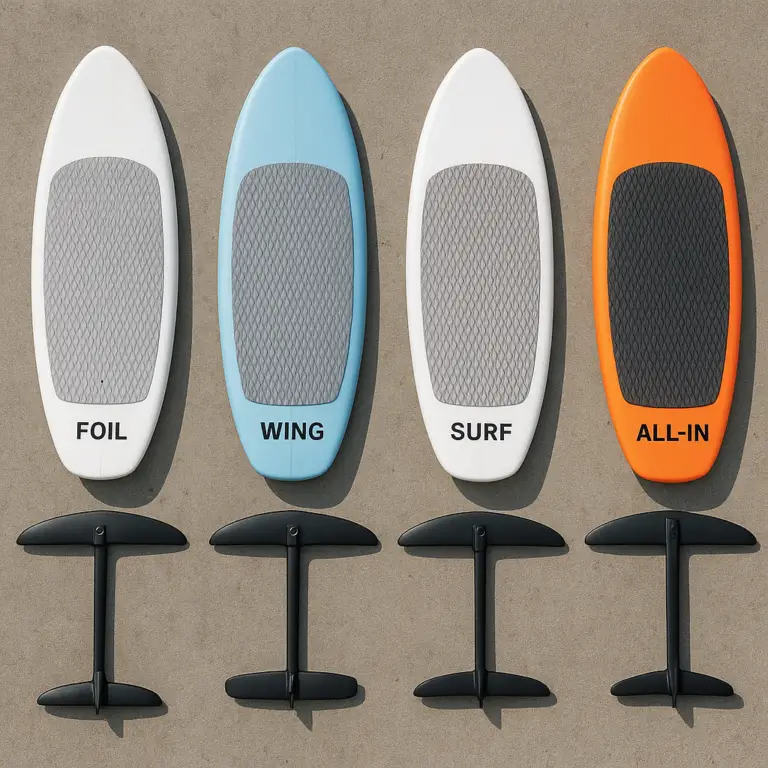
If you’re wondering, “Wait, are there different types of foils for different sports?” you’re spot on. Check out our deep dive on What are the different types of hydrofoil boards? to see how kite foils differ from surf foils.
📜 From Flat Water to Flight: A Brief History of Hydrofoil Evolution

The idea of lifting a boat out of the water isn’t new; it dates back to the early 20th century with Enrico Forlanini’s steam-powered hydrofoil. But for us surfers? The story is a bit more rebellious.
In the 190s, a few eccentric surfers started bolting underwater wings to their boards, mostly as a joke or a desperate attempt to find rideable water in flat lagons. It was messy, dangerous, and looked ridiculous. Fast forward to the 2010s, and the kiteboarding community adopted the tech, refining the carbon fiber wings and masts. Suddenly, the “foil” wasn’t just a novelty; it was a revolution.
Today, the technology has trickled down to prone surf foiling and wing foiling. The evolution from clunky aluminum DIY rigs to the sleek, full-carbon setups we see today (like those from Appletree or Gorilla) has transformed the sport from a “maybe it works” experiment into a legitimate discipline.
“It’s also very clear that you’re flying a tiny, sensitive airplane through the water, and the muscle memory to control the height takes some getting used to.” — Sam C. Jones, 2016
This quote from one of the early pioneers perfectly captures the shift in mindset. You aren’t just surfing anymore; you’re piloting.
🏄 ♂️ The Core Showdown: Hydrofoil Board vs. Regular Surfboard
So, what’s the real deal? Is a foil just a fancy regular board with a stick under it? Absolutely not. The physics, the feel, and the required skill set are worlds apart. Let’s break it down.
1. The Lift Mechanism: How Foils Defy Gravity
A regular surfboard is a plane. It rides on top of the water, relying on the wave’s energy to push it forward. The more speed you have, the more the board planes.
A hydrofoil board is an airplane. The board itself is just the cockpit. The real work happens underwater. As water flows over the hydrofoil wing (the foil), it generates lift. Once that lift exceeds the weight of you and the board, you rise out of the water.
- Regular Board: High drag, high friction. You feel every ripple.
- Foil Board: Low drag, near-frictionless. You glide over chop.
2. Hull Design: Planing vs. Flying
Because a foil board spends most of its time in the air, the shape of the board changes drastically.
| Feature | Regular Surfboard | Hydrofoil Surfboard |
|---|---|---|
| Bottom Shape | Concave, V-bottom, or flat for planing. | Flat or slightly concave to ensure the foil connects at a perfect 90-degree angle. |
| Tail Design | Swallow, squash, or pin for maneuverability. | Flat tail to prevent the board from hitting the water while flying. |
| Volume | Distributed for buoyancy and paddling. | Often shorter and thicker (higher volume) to help with initial takeoff, then you fly. |
| Stiffness | Flexible for rail-to-rail turns. | Extremely stiff to transfer energy directly to the foil. |
3. Speed Thresholds: When Does the Magic Happen?
With a regular board, you need a wave to get moving. You paddle, catch the wave, and boom, you’re going.
With a foil, you have a critical speed threshold. Below this speed, you sink. Above it, you fly.
- Regular Surfboard: Speed is variable based on wave size.
- Foil Board: You must reach a specific speed (often 8-10 mph) to generate lift. Once airborne, you can maintain that speed with minimal effort, or even pump to gain more.
4. Wave Requirements: Chasing Swell vs. Creating Lift
This is the game-changer.
- Regular Surfboard: Needs a consistent swell. No wave? No ride.
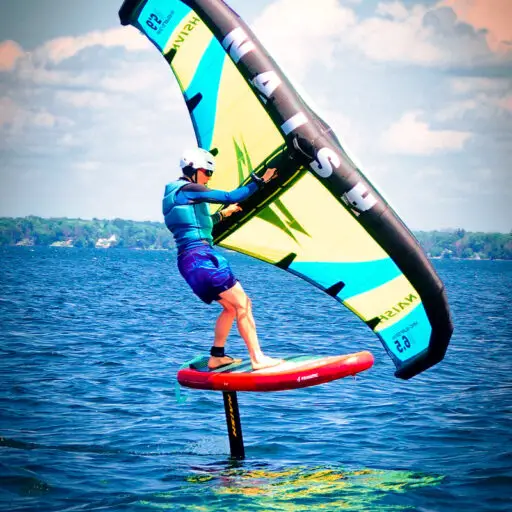
- Foil Board: Can ride tiny, mushy waves that a regular board would just slide over. In fact, many foil surfers prefer small, messy waves because the foil smooths out the chop. You can also generate your own speed by pumping the board up and down, allowing you to ride in flat water (if you have a kite or wing).
5. The Learning Curve: Falling Hard vs. Falling Soft
Let’s be real: Falling off a foil hurts.
- Regular Surfboard: You fall into water. It’s soft. You get up, shake it off, and try again.
- Foil Board: You are flying 2-3 feet above the water at speed. When you lose control, you don’t just fall; you crash. The board can snap back up and hit you. The foil mast is a solid piece of metal or carbon that can bruise you badly.
Pro Tip: Always wear a helmet and a impact vest when learning to foil. It’s not a sign of weakness; it’s a sign of intelligence.
🛠️ Anatomy of a Hydrofoil: Mast, Fuselage, and Wings Explained
If you’ve ever looked at a foil board and wondered what all those parts do, you’re not alone. It’s like a puzzle underwater.
The Mast
The mast is the vertical pole connecting the board to the wings.
- Length: Typically ranges from 60cm to 90cm. Shorter masts are easier for beginners (less leverage to control), while longer masts offer more stability and height.
- Material: Aluminum is durable and affordable; Carbon Fiber is lighter and stiffer, offering better performance.
The Fuselage
The fuselage is the horizontal bar that connects the front wing to the rear stabilizer (tail wing).
- Function: It determines the aspect ratio and stability. A longer fuselage generally means more stability but slower turns.
The Front Wing
This is the main lifting surface.
- Size: Measured in square centimeters (e.g., 120cm², 180cm²). Larger wings provide more lift at lower speeds (great for beginners), while smaller wings are for high-speed, aggressive riding.
The Stabilizer (Tail Wing)
The stabilizer acts like the tail of an airplane, providing pitch stability.
- Role: It prevents the board from pitching forward or backward uncontrollably.
🌊 Riding Dynamics: How It Fels to Fly on Water
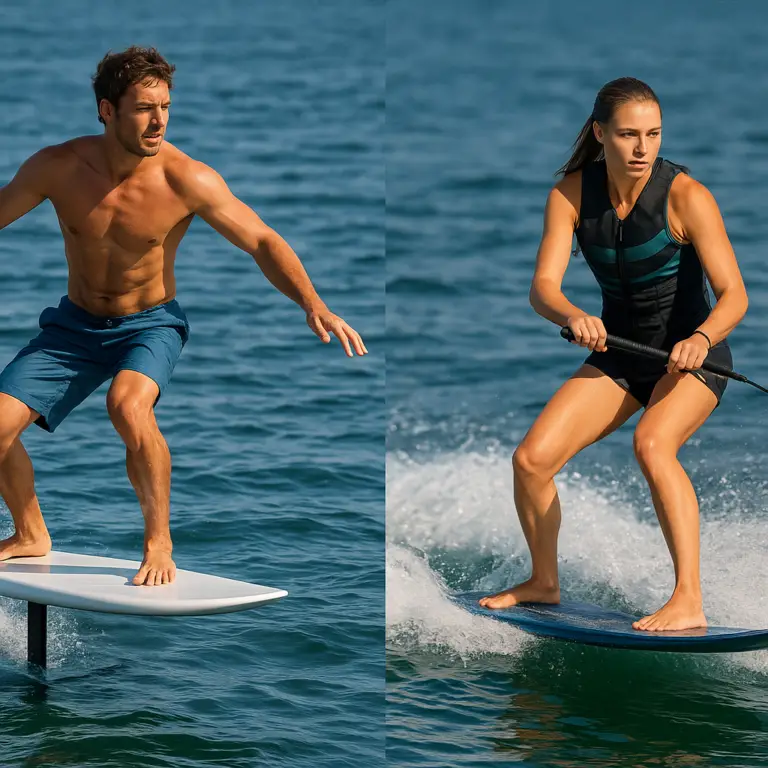
Imagine you’re driving a car on a bumpy road. That’s regular surfing. Now, imagine that same car suddenly lifting off the ground and gliding silently over a cloud. That’s foil surfing.
The sensation is often described as weightless. You lose the sound of the water rushing under the board. The only sound is the wind and your own breathing.
- The Takeoff: It feels like a sudden jolt. You’re paddling, then suddenly, the board lifts. It’s a “pop” sensation.
- The Flight: Once airborne, the board feels sensitive. Small shifts in your weight change your altitude instantly. You have to learn to “ster” with your feet and knees, not just your hands.
- The Turn: Turning on a foil is different. You don’t carve a rail; you bank the foil. It feels like banking an airplane.
“When you get up on the foil the feeling must be similar to a seabird skimming the surface; completely smooth and silent.” — Sam C. Jones
But here’s the catch: It’s addictive. Once you’ve felt that silence, the noise of a regular surfboard feels chaotic.
🎒 Gear Up: Essential Equipment for Foil Surfing Beginners
Ready to take the plunge? Don’t just grab any board. You need the right setup.
1. The Board
For beginners, you want a high-volume board.
- Why? It helps you paddle faster and catch waves easier.
- Recommendation: Look for boards with 10+ liters of volume if you’re over 180lbs.
- Brands: Appletree Paddle Foil 50, Gorilla, or Slingshot.
2. The Foil Setup
- Mast: Start with a 75cm aluminum mast. It’s forgiving and durable.
- Front Wing: Go for a large, low-aspect wing (150cm²+). This gives you more lift and stability.
- Stabilizer: A medium-sized stabilizer for balance.
3. Safety Gear
- Helmet: Non-negotiable.
- Impact Vest: Protects your ribs and back.
- Wetsuit: A full suit with a helmet-compatible hood if it’s cold.
4. Leash
A foil leash is different from a regular surf leash. It needs to be strong enough to hold the board when it’s flying, but also have a release mechanism to prevent injury.
🚫 Common Myths and Misconceptions About Foil Boards
Let’s bust some myths we’ve heard at the beach.
- Myth 1: “Foils are only for big waves.”
Truth: Foils excel in small, weak waves. They can ride waves that are too small for a regular board. - Myth 2: “You need a lot of wind to foil.”
Truth: While wind helps (especially for wing foiling), you can pump your way to speed in flat water. - Myth 3: “Foils are too dangerous.”
Truth: They are dangerous if you don’t respect them. With proper gear and a safe spot, they are as safe as any other water sport. - Myth 4: “You can’t turn on a foil.”
Truth: You can turn, but it requires a different technique. It’s more about banking than carving.
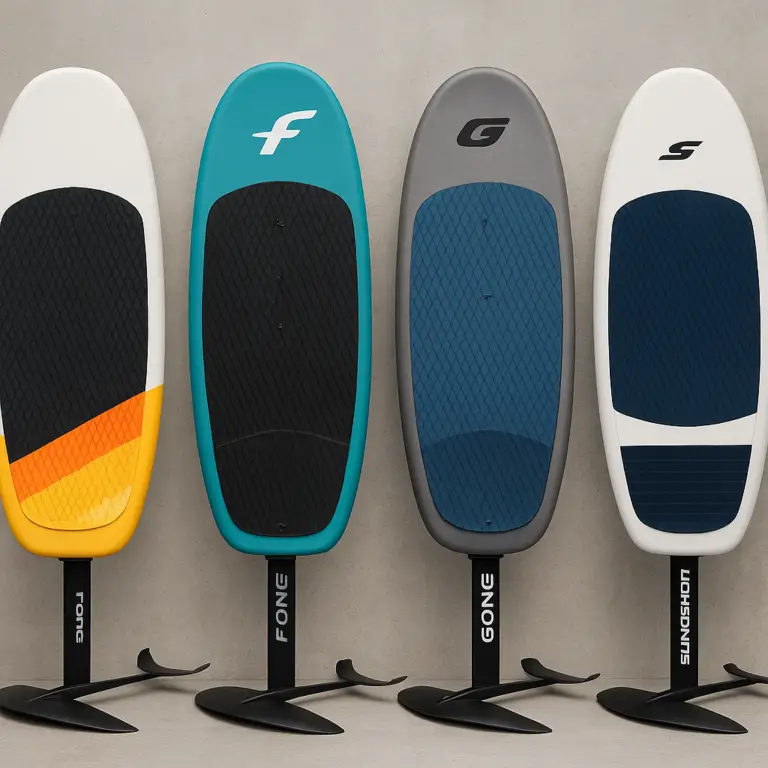
🏆 Top Brands and Models to Consider in 2024
We’ve tested a lot of gear, and here are our top picks for 2024.
Appletree Surfboards
Known for their carbon fiber construction and unique PET honeycomb core.
- Model: Pro Foil Surf Board
- Best For: Advanced riders looking for stiffness and speed.
- Why We Love It: The connection point is reinforced to handle the high loads of foiling.
Gorilla
A brand that focuses on durability and performance.
- Model: Gorilla Foil Board
- Best For: Beginners to intermediates.
- Why We Love It: Great volume distribution and a forgiving shape.
Slingshot
A pioneer in the industry, offering a wide range of foil setups.
- Model: Slingshot Hover Glide
- Best For: All-around performance.
- Why We Love It: Modular design allows you to swap wings and masts easily.
👉 CHECK PRICE on:
- Appletree Pro Foil: Amazon | Appletree Official
- Gorilla Foil Board: Amazon | Gorilla Official
- Slingshot Hover Glide: Amazon | Slingshot Official
💡 Quick Tips and Facts for New Foilers
Before you head out, here are a few last-minute tips from the Hydrofoiling™ team.
- Start in Flat Water: Don’t try to learn in big waves. Find a calm lake or a flat beach to get the feel of the lift.
- Watch Your Head: The board can come up fast. Keep your head down and protect your face.
- Pump, Don’t Kick: To gain speed, use a pumping motion with your legs, not a kicking motion.
- Be Patient: It takes time to build the muscle memory. Don’t get discouraged if you fall 50 times in a session.
- Respect the Ocean: Foils can be dangerous to others. Always give plenty of space to other surfers.
“But it’s very addictive!” — Sam C. Jones
We’ve covered the mechanics, the history, the gear, and the myths. But there’s one question we haven’t answered yet: Can you really switch between a regular board and a foil board on the same day? The answer might surprise you. Stay tuned for the conclusion, where we’ll wrap up this journey and give you our final verdict.
🔮 Conclusion

So, what’s the difference between a hydrofoil board and a regular surfboard? It’s the difference between driving a car and flying a plane.
A regular surfboard is about connection with the wave, feeling the water, and carving through the foam. It’s raw, visceral, and timeless.
A hydrofoil board is about efficiency, speed, and silence. It’s about defying gravity and gliding over the water like a seabird. It’s a different sport, a different feeling, and a different challenge.
Our Recommendation:
If you’re a surfer looking for a new challenge, definitely try foiling. Start with a high-volume board and a large foil. Wear your helmet. Fall a lot. But when you finally get that first flight, you’ll understand why we’re so obsessed.
If you’re a beginner surfer, stick to the regular board first. Master the basics of paddling and catching waves. Once you’re comfortable, then explore the world of foiling.
The Verdict:
- Regular Surfboard: Best for traditional surfing, big waves, and a connection to the ocean.
- Hydrofoil Board: Best for small waves, flat water, speed, and a unique flying sensation.
Both have their place in the water. The best part? You don’t have to choose. Many surfers now own both and switch depending on the conditions.
🔗 Recommended Links
Ready to get your hands on some gear? Here are our top picks for boards, foils, and accessories.
- Appletree Pro Foil Surf Board: Amazon | Appletree Official
- Gorilla Foil Board: Amazon | Gorilla Official
- Slingshot Hover Glide: Amazon | Slingshot Official
- Hydrofoil Leash: Amazon
- Impact Vest: Amazon
- Helmet: Amazon
Books to Read:
❓ FAQ

How much faster is a hydrofoil board compared to a regular surfboard?
A hydrofoil board can be significantly faster, especially in light wind or small wave conditions. While a regular surfboard is limited by the wave’s speed, a foil can maintain high speeds by pumping or using wind. In ideal conditions, a foil can reach speeds 2-3 times faster than a regular board in the same conditions.
Read more about “🌊 Hydrofoiling vs Traditional Surfing: Key Differences (2026)”
Can you use a hydrofoil board in small waves like a regular surfboard?
Yes, and it’s often better! One of the biggest advantages of a hydrofoil board is its ability to ride tiny, mushy waves that a regular board would just slide over. The foil generates lift, allowing you to stay on the wave even when it’s not powerful enough to push a regular board.
What are the main safety risks of learning to hydrofoil versus regular surfing?
The main risk is impact injury from falling. Since you’re flying above the water, a fall can result in hitting the board or the foil mast. Additionally, the foil can be a hazard to others if you lose control. Wearing a helmet and impact vest is crucial.
Read more about “Is Hydrofoiling Easier Than Surfing? 22 Truths You Need to Know (2026) 🌊”
Is a hydrofoil board harder to learn than a traditional surfboard?
Yes, it is harder. The learning curve is steep. You need to develop new muscle memory to control the lift and balance. It takes time to get the hang of the “pumping” motion and the sensitivity of the foil. However, once you get it, it’s incredibly rewarding.
Why do some people say foiling is “too easy” once you get the hang of it?
Some people say this because once you master the basics, the efficiency of the foil allows you to ride for hours with minimal effort. The “magic” of flying makes the physical exertion feel less intense compared to the constant paddling and popping up required in regular surfing.
Read more about “🌊 Hydrofoil vs. Traditional: The 2026 Guide to Picking Your Perfect Ride”
📚 Reference Links
- Appletree Surfboards: Five Questions About Hydrofoil Boards Answered
- Sam C. Jones: Hydrofoil Surfboard – Sam Jones
- Hydrofoiling.org: Hydrofoil Basics
- Hydrofoiling.org: Hydrofoil Equipment Reviews
- Hydrofoiling.org: Advanced Hydrofoiling Techniques
- Hydrofoiling.org: Hydrofoil Board Selection
- Hydrofoiling.org: Hydrofoil Brands Comparison
- e-foils.com: Electric Hydrofoil Boards