Support our hydrofoil educational content for free when you purchase through links on our site. Learn more
🌊 Hydrofoil Surfboard vs Wakeboard: Which Flight Path Wins in 2026?

The winner depends entirely on your power source: choose a wakeboard setup for the consistent, boat-towed ease of flat water, or grab a hydrofoil surfboard for the challenging, self-powered thrill of riding ocean waves.
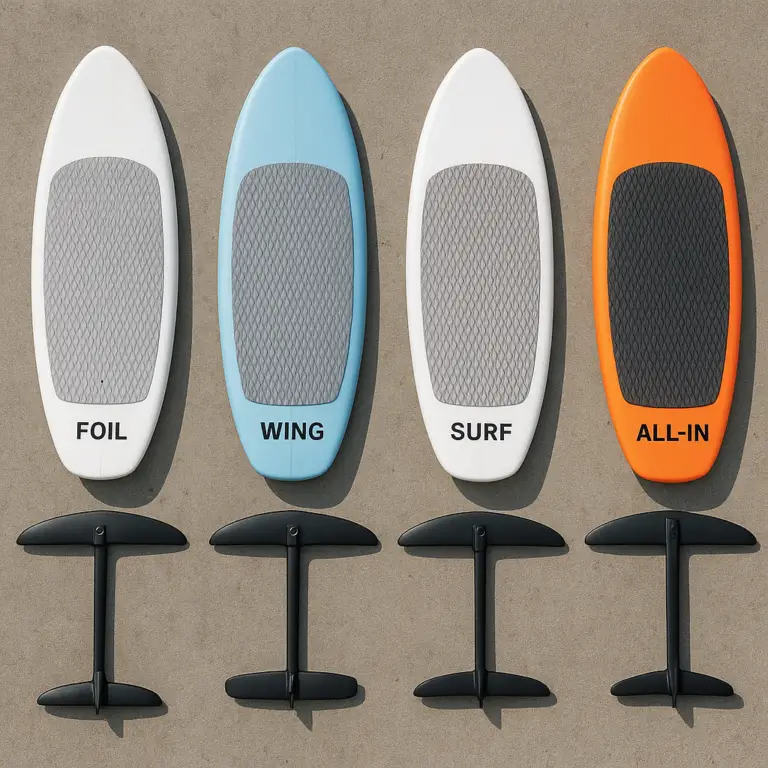
When you weigh hydrofoil surfboard vs wakeboard, the decision isn’t just about gear; it’s about how you want to connect with the water. Wake foils act like a magic carpet, lifting you effortlessly behind a boat, while surf foils demand you become the engine, pumping and paddling to stay airborne.
We remember the first time we tried to swap a massive 180 sq cm surf wing onto a tiny wake board; it was like trying to fly a kite in a hurricane. The board barely moved, and the wing dragged us under instantly. Conversely, using a tiny 60 sq cm wake wing on a surfboard in small waves left us bouncing on the surface, unable to generate enough lift to fly.
Did you know that a hydrofoil can reduce drag by up to 90% compared to a standard board? That’s the physics that makes the “flight” possible, but it also means the margin for error is razor-thin.
Key Takeaways
-
Power Source is King: Wake foils rely on boat tow for consistent speed, while surf foils require wave energy or pumping to generate lift.
-
Gear Specificity: You generally cannot interchange wings effectively; wake foils need smaller, high-aspect wings, whereas surf foils demand larger, low-aspect wings for stability.
-
Learning Curve: Wake foiling is typically faster to learn (1-3 sessions), while surf foiling requires significant patience and wave-reading skills (10+ sessions).
-
Safety First: Both disciplines require helmets and impact vests due to the sharp, exposed foil wings.
-
👉 Shop Wake Foil Systems: Slingshot Hover Glide | Moses M6
-
👉 Shop Surf Foil Systems: Axis F-1 Wing | Carve Carbon Wings
Table of Contents
- ⚡️ Quick Tips and Facts
- 🌊 From Surf to Wake: The Evolution of Hydrofoil Boards
- 1. The Core Mechanics: How Lift Works on Water
- 2. Wake Foiling vs. Frestyle Surf Foiling: A Side-by-Side Breakdown
- 3. Board Shape and Volume: Why Your Hull Matters More Than You Think
- 4. Wing Selection: Front Wing Size, Aspect Ratio, and Stability
- 5. Mast Length and Fuselage: Finding the Sweet Spot for Your Ride
- 6. Can You Swap Them? The Truth About Interchangeability
- 7. Learning Curve Showdown: Which is Harder to Master?
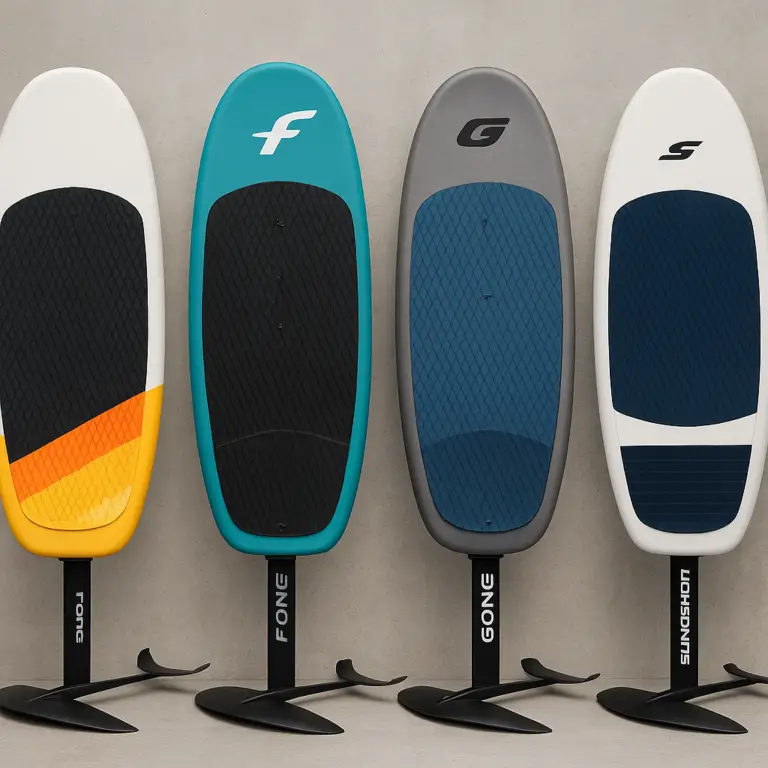
- 8. Gear Up: Top Brands and Models for Every Budget
- 9. Safety First: Common Injuries and How to Avoid the “Hydrofoil Hammer”
- 10. Maintenance and Longevity: Keeping Your Foil Sharp and Rust-Free
- 🛠️ Quick Tips and Facts
- 🏁 Conclusion
- 🔗 Recommended Links
- ❓ FAQ
- 📚 Reference Links
⚡️ Quick Tips and Facts
Before we dive into the nitty-gritty of hull shapes and aspect ratios, let’s get the lay of the land. If you’re standing on the dock scratching your head, wondering if you need a boat or just a good pair of legs, here’s the tea from the Hydrofoiling™ crew:
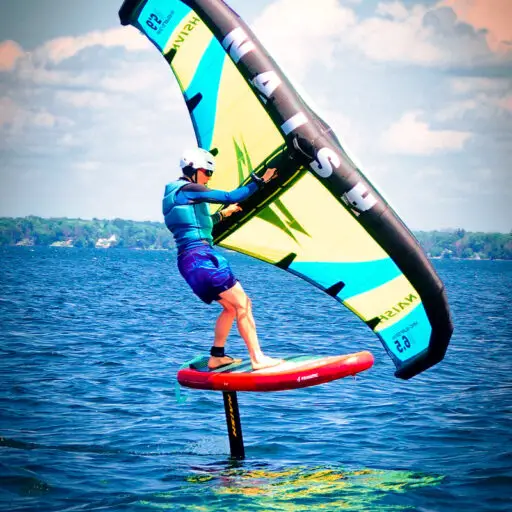
- The Lift Principle: Both wake foils and surf foils rely on the same physics: as water flows over the wing, it generates lift. However, the source of that water flow is the game-changer. Wake foils rely on a boat’s wake or a jet ski’s tow; surf foils rely on wave energy or your own paddling power.
- The “Hamer” Factor: We’ve all seen it. You fall, and the foil comes up like a spear. Safety is paramount. Always wear a helmet and a high-impact vest. The foil is sharp, and gravity is unforgiving.
- Interchangeability Myth: Can you use a wake foil on a surfboard? Technically, yes, if the mount fits. But it’s like putting a tractor tire on a Formula 1 car. It works, but you won’t be winning any races.
- Learning Curve: Expect to eat a lot of water. Classic foiling (no motor) is a beast to learn. E-foiling (motorized) gets you flying in an hour. Classic foiling might take you a weekend (or a month) to get consistent.
For a deeper dive into the different disciplines, check out our guide on What are the different types of hydrofoil boards?.
🌊 From Surf to Wake: The Evolution of Hydrofoil Boards
The story of the hydrofoil isn’t a straight line; it’s a zig-zaging path from naval engineering to the beach. Back in the early 20th century, designers were trying to make boats go faster by lifting them out of the water to reduce drag. Fast forward to the 190s, and a few brave souls in Hawaii started attaching airplane wings to their surfboards. They called it “hydrofoiling,” but the rest of the world was still catching waves the old-fashioned way.
The real explosion happened when the wakeboarding community caught wind. Wakeboarders, always looking for that “out of water” feeling, realized that a foil could let them ride the wake without the chop. Suddenly, we had two distinct paths: Wake Foiling (towed) and Foil Surfing (un-towed).
“The tasks that don’t come easy are the most rewarding.”
This sentiment, echoed in the community, perfectly captures the divide. While e-foils (like those from Lift and Flite) have democratized the sport by adding a motor, making it accessible to beginners within an hour, the classic disciplines remain a test of patience and skill. As noted in our analysis of the “first YouTube video” on the subject, the silence of a classic foil and the physical challenge of “stealing” a boat wake or paddling into a wave offer a raw, unadulterated connection to the water that a battery simply can’t replicate.
1. The Core Mechanics: How Lift Works on Water
Let’s get nerdy for a second. Why does a board fly? It’s all about Bernoulli’s Principle and Newton’s Third Law.
When water hits the front wing (the foil), it splits. The top surface is curved, forcing water to travel faster over the top than the bottom. Faster water equals lower pressure. The higher pressure underneath pushes the board up. Simultaneously, the wing deflects water downward, and the reaction force pushes the board upward.
The Variables at Play
- Speed: More speed = more lift. This is why wake foils need a boat to get going, while surf foils need a wave.
- Angle of Attack: Tilting the board slightly up increases lift but also drag. Too much, and you stall (the foil stops flying and drops).
- Aspect Ratio: This is the ratio of the wing’s span to its chord (width). High aspect = long and skinny (efficient, fast, but twitchy). Low aspect = short and wide (stable, slow, great for beginners).
For a visual breakdown of these mechanics, head over to our Hydrofoil Basics category.
2. Wake Foiling vs. Frestyle Surf Foiling: A Side-by-Side Breakdown
This is the heart of the debate. You’re standing in the shop, and the clerk asks, “Boat or Waves?” Here’s the breakdown.
Wake Foiling
- Power Source: A boat, jet ski, or cable system.
- Environment: Flat water, lakes, or ocean wakes.
- Ride Style: Consistent speed, predictable wake, endless runs. You can carve back and forth on the wake for miles.
- Best For: People who want to learn quickly, ride in flat water, or enjoy the social aspect of being towed.
Frestyle Surf Foiling
- Power Source: Wave energy, paddling, or a tow rope (in “tow-in” surfing).
- Environment: Ocean waves, river waves, or tidal currents.
- Ride Style: Dynamic, variable speed, requires reading the wave. You pump the board to generate speed.
- Best For: Surfers who want to extend their rides, ride smaller waves, or experience the silence of gliding above the water.
| Feature | Wake Foil | Surf Foil |
|---|---|---|
| Primary Power | Towed (Boat/Jet Ski) | Wave/Paddle/Pump |
| Speed Consistency | High (Constant) | Variable (Pumping required) |
| Board Volume | Lower (10-25L) | Higher (20-40L) |
| Wing Size | Smaller (60-10 sq cm) | Larger (10-20+ sq cm) |
| Learning Curve | Moderate (Easier to get up) | Step (Requires wave sense) |
3. Board Shape and Volume: Why Your Hull Matters More Than You Think
Many beginners make the mistake of thinking the foil does all the work. Wrong. The board is your launchpad.
Wake Foil Boards
These are often shorter, narrower, and have less volume. Why? Because you are being pulled. You don’t need to paddle.
- Shape: Twin fins or thruster setups are common, but the volume is low to allow for quick turns and tricks.
- Volume Range: Typically 10 to 25 liters.
- Material: Often EPS foam with epoxy or carbon fiber for lightness.
Surf Foil Boards
These need to catch waves. They need volume to float you while you paddle and to provide stability when you aren’t on the foil yet.
- Shape: Often look like mini longboards or fun shapes. They have a wider outline to catch more water.
- Volume Range: Typically 20 to 40+ liters.
- Material: Durable construction is key since you’ll be hitting the bottom if you stall.
Pro Tip: If you are buying your first board, don’t go too small. A board that is too small will make learning to pop up on the foil a nightmare. You need enough volume to float you comfortably before the foil takes over.
For more on choosing the right hull, visit our Hydrofoil Board Selection guide.
4. Wing Selection: Front Wing Size, Aspect Ratio, and Stability
The wing is the engine of your flight. Choosing the wrong one is like putting a Ferrari engine in a go-kart.
Front Wing Size
- Small Wings (60-90 sq cm): Fast, responsive, great for wake foiling and big waves. Harder to get up on.
- Medium Wings (10-140 sq cm): The sweet spot for most. Good for both wake and small surf.
- Large Wings (150+ sq cm): Slow, stable, great for beginners, small waves, and river foiling.
Aspect Ratio
- Low Aspect: Short and wide. Forgiving, stable, slower. Perfect for learning.
- High Aspect: Long and narrow. Efficient, fast, but prone to stalling if you lose speed.
Brand Spotlight:
- Axis: Known for their “F-1” series, offering incredible stability for beginners.
- Carve: Famous for their high-performance wings that slice through the water.
- Moses: The gold standard for modular systems, offering a wide range of wing options.
5. Mast Length and Fuselage: Finding the Sweet Spot for Your Ride
The mast connects the board to the wing. The fuselage connects the front wing to the rear stabilizer.
Mast Length
- Short Masts (30-40 cm): Closer to the water. Great for wake foiling where you want to stay low and do tricks. Less stable in chop.
- Medium Masts (50-60 cm): The all-rounder. Good for both wake and surf.
- Long Masts (70-90 cm+): Essential for big waves or chopy water. Keeps you above the chop, but makes the board feel “tippy” and harder to control.
Fuselage Length
- Short Fuselage: Tighter turns, more maneuverable.
- Long Fuselage: More stable, smoother ride, but wider turning radius.
Real Talk: We once saw a guy try to learn on a 90cm mast in flat water. He was bouncing off the water like a kangaroo on a trampoline. He switched to a 45cm mast and was flying in 20 minutes. Mast length is critical for stability.
6. Can You Swap Them? The Truth About Interchangeability
Here’s the million-dollar question: Can I buy a wake foil and use it for surfing?
The Short Answer: Yes, but with caveats.
The Long Answer: It depends on the mount system. Most modern boards use a US Box or a FCS2 style mount. If your board has a US Box, you can swap almost any foil system (like Moses, Axis, or Slingshot) as long as you have the right adapter.
However, the performance will suffer.
- Wake Foil on Surf: You’ll likely struggle to catch waves because the wing is too small and the board has too little volume. You’ll be paddling forever.
- Surf Foil on Wake: You’ll be stable, but you’ll feel sluggish. The large wing creates too much drag for the boat’s wake, and you won’t be able to do tight turns or tricks.
Verdict: If you are on a budget, start with a modular system like Moses or Slingshot that allows you to swap wings and masts. This way, you can buy a “starter” wing for wake foiling and a “surfer” wing for the ocean.
7. Learning Curve Showdown: Which is Harder to Master?
Let’s be honest: Foiling is hard. But which is harder?
Wake Foiling
- Getting Up: Easier. The boat pulls you at a constant speed. You just need to find the “sweet spot” on the wake.
- Staying Up: Moderate. Once you’re up, the boat keeps you going.
- Tricks: Hard. Learning to carve the wake and do jumps takes time.
- Time to Fly: Most people get up in 1-3 sessions.
Surf Foiling
- Getting Up: Harder. You need to paddle, catch the wave, and then transition to the foil.
- Staying Up: Harder. If you lose speed, you stall and fall. You need to “pump” the board to generate lift.
- Tricks: Very Hard. Reading the wave and managing speed simultaneously is a complex skill.
- Time to Fly: Can take 10+ sessions to get consistent.
The “E-Foil” Factor:
As mentioned in the video summary, e-foils (like Lift or Flite) change the game entirely. With a motor, you can learn to fly in an hour. But that’s a different beast. Classic foiling requires a physical connection to the water that e-foils lack.
8. Gear Up: Top Brands and Models for Every Budget
You don’t need to break the bank to start, but you also don’t want to buy junk that will break your back (or your board).
Top Brands
- Slingshot: The pioneers. Great all-around gear. Their “Foil Racer” and “Hover Glide” series are legendary.
- Moses: The modular king. Their “M6” and “M8” systems are industry standards.
- Axis: Known for durability and stability. The “Axis 10” is a favorite for beginners.
- Carve: High-performance, carbon fiber wings for the pros.
- Lift & Flite: The leaders in e-foiling. If you want to fly without a boat, these are the “BMW and Mercedes” of the industry.
Product Comparison Table
| Brand | Best For | Material | Price Range | Rating (1-10) |
|---|---|---|---|---|
| Slingshot | Beginners/All-Round | Carbon/Aluminum | Mid-High | 9/10 |
| Moses | Modularity | Carbon/Aluminum | High | 9.5/10 |
| Axis | Stability/Durability | Carbon/Aluminum | Mid | 8.5/10 |
| Carve | Performance | Full Carbon | High | 9/10 |
| Lift | E-Foiling | Carbon/Composite | Very High | 10/10 |
👉 CHECK PRICE on:
- Slingshot Hover Glide: Amazon | Slingshot Official
- Moses M6 System: Amazon | Moses Official
- Axis F-1 Wing: Amazon | Axis Official
9. Safety First: Common Injuries and How to Avoid the “Hydrofoil Hammer”
Let’s talk about the elephant in the room: The foil is sharp.
Common Injuries
- Cuts and Lacerations: The most common. A fall at speed can slice your leg or arm.
- Concussions: Hitting your head on the board or the foil.
- Shoulder Dislocations: Falling awkwardly while trying to catch a wave.
Safety Gear Checklist
- Helmet: Non-negotiable. A surf helmet with a chin strap is best.
- Impact Vest: Protects your ribs and back from the impact of the water and the foil.
- Wetsuit: Even in warm water, a full suit protects against scrapes.
- Leash: A coiled leash is essential to keep the board from hitting you or others.
Pro Tip: Never foil alone. Always have a spoter or a buddy. If you fall, stay away from the foil. Let it sink before you swim back to it.
10. Maintenance and Longevity: Keeping Your Foil Sharp and Rust-Free
Your foil is an investment. Treat it right, and it will last for years.
Cleaning
- Rinse Immediately: Salt water is the enemy. Rinse your foil with fresh water after every session.
- Dry Thoroughly: Water trapped in the mast or fuselage can cause corrosion.
Storage
- Losen the Bolts: Don’t leave the bolts tight for long periods. This can warp the board or the foil.
- Store in a Bag: Use a padded bag to protect the wings from dings.
Inspection
- Check for Cracks: Inspect the carbon fiber for cracks or delamination.
- Tighten Bolts: Before every session, check that all bolts are tight. A loose bolt can lead to a catastrophic failure.
For more on maintenance, check out our Hydrofoil Equipment Reviews section.
🛠️ Quick Tips and Facts (Recap)
Wait, we said we’d recap? Let’s make sure you didn’t miss the golden nugets:
- Wake Foil: Boat towed, flat water, smaller wings, easier to learn.
- Surf Foil: Wave powered, ocean, larger wings, harder to learn.
- Safety: Helmet and vest are mandatory.
- Maintenance: Rinse with fresh water, dry, and store properly.
- Interchangeability: Possible with modular systems, but performance varies.
Ready to take the plunge? Let’s wrap this up.
🏁 Conclusion

So, where does that leave you? The choice between a hydrofoil surfboard and a wakeboard (or more accurately, a wake foil setup) isn’t just about the gear; it’s about the lifestyle you crave.
If you love the predictability of a boat wake, the thrill of carving endless turns, and the social aspect of being towed, Wake Foiling is your jam. It’s the faster route to flying, perfect for those who want to master the mechanics of lift without the struggle of paddling.
On the other hand, if you are a surfer at heart, craving the silence of gliding above the water, the challenge of reading the ocean, and the freedom of no ropes, Foil Surfing is the ultimate reward. It’s harder, yes, but the feeling of “stealing” a wave and riding it for minutes on end is unmatched.
Our Verdict:
- For Beginners: Start with a Wake Foil setup or an E-Foil if budget allows. The learning curve is gentler, and the success rate is higher.
- For Surfers: Invest in a Surf Foil with a large wing and a high-volume board. Embrace the struggle; the payoff is worth it.
- For the Versatile Rider: Go Modular. Get a system like Moses or Slingshot that lets you swap wings and masts. This gives you the best of both worlds.
Remember, the “Hydrofoil Hammer” is real, so respect the water, wear your gear, and keep paddling. The sky is the limit—literally.
🔗 Recommended Links
Ready to gear up? Here are our top picks for getting started:
- Slingshot Hover Glide Foil System: Amazon | Slingshot Official
- Moses M6 Modular Foil System: Amazon | Moses Official
- Axis F-1 Front Wing: Amazon | Axis Official
- Lift 2 E-Foil: Lift Official | Amazon
- Carve Carbon Wings: Carve Official
- Hydrofoil Safety Helmet: Amazon
Books to Read:
❓ FAQ

How much faster does a hydrofoil surfboard go compared to a wakeboard?
Hydrofoil surfboards can reach speeds of 20-30 mph in good wave conditions, while wake foils are typically limited by the boat’s speed (usually 18-2 mph). However, wake foils can maintain a consistent speed, whereas surf foils vary with the wave.
Read more about “🌊 Hydrofoil vs. Traditional: The 2026 Guide to Picking Your Perfect Ride”
Can you use a hydrofoil surfboard in flat water like a wakeboard?
Technically, yes, but it’s extremely difficult. Without a boat or a wave, you have to generate all the speed by paddling or “pumping” the board. It’s exhausting and inefficient compared to being towed.
Read more about “Wakeboarding with a Hydrofoil: 7 Must-Know Tips for 2025 🚀”
What are the main safety differences between hydrofoiling and wakeboarding?
The main difference is the foil. Wakeboarding involves a board with fins, which is relatively safe to fall on. Hydrofoiling involves a sharp metal wing that can cause serious cuts. Helmets and impact vests are mandatory for foiling.
Read more about “🚀 12 Best Hydrofoil Boards for Every Rider (2026)”
Is a hydrofoil surfboard easier to learn than a wakeboard?
No. Wakeboarding is generally easier to learn because the boat provides constant speed. Hydrofoil surfing requires you to generate your own speed and balance on a moving wing, which is a much steeper learning curve.
How much does a hydrofoil surfboard cost compared to a wakeboard?
A complete hydrofoil setup (board, foil, mast, wings) can range from $1,50 to $4,0+. A standard wakeboard setup (board, bindings, rope) is usually cheaper, around $80 to $1,50. E-foils are significantly more expensive, often exceeding $8,0.
What are the main differences in speed between hydrofoils and wakeboards?
Wake foils are limited by the boat’s speed. Surf foils can go faster if the wave is big enough, but they are also limited by the wave’s energy. In general, wake foils offer more consistent speed, while surf foils offer higher potential speed in big waves.
Can you use a wakeboard fin on a hydrofoil surfboard?
No. Wakeboards use fins for stability and turning. Hydrofoil surfboards use a front wing and a rear stabilizer. The mechanics are completely different.
Read more about “🚀 Foil vs. Regular Surfboard: The Ultimate 2026 Showdown”
Is a hydrofoil board better than a wakeboard for beginners?
It depends. If you want to learn quickly and have access to a boat, a wake foil is better. If you want to learn surfing and are willing to put in the time, a surf foil is the way to go.
Read more about “🛡️ 7 Critical Hydrofoil Safety Rules to Master Before You Fly (2026)”
Can you use the same hydrofoil for both wakeboarding and surfing?
Yes, with a modular system. You can swap the wings and masts to suit the conditions. A smaller wing for wake foiling and a larger wing for surfing.
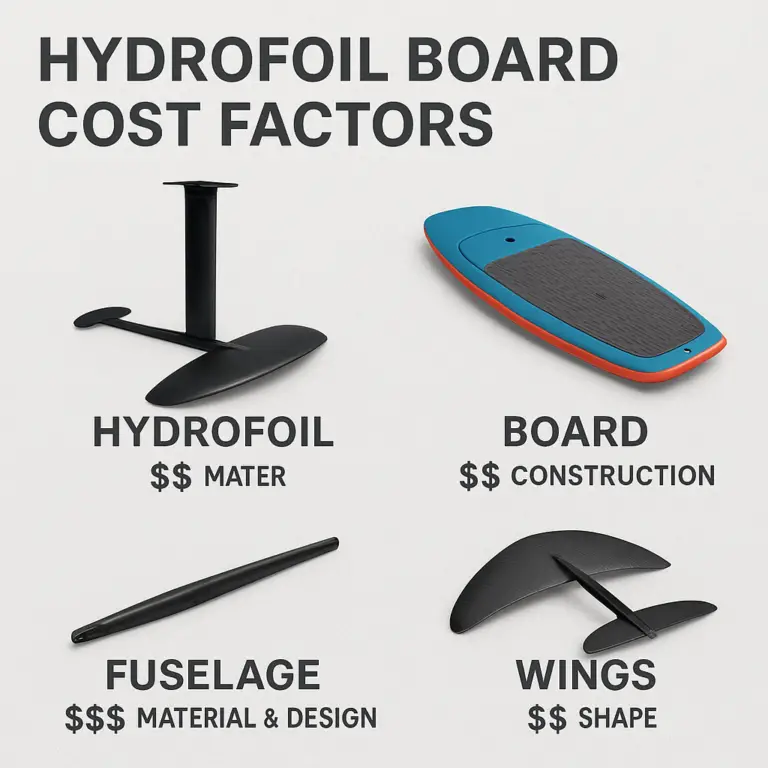
Read more about “💸 Hydrofoil Board Costs 2026: What Really Drives the Price?”
What is the difference between carbon and aluminum hydrofoils for surfing?
Carbon foils are lighter, stiffer, and more responsive, but more expensive. Aluminum foils are heavier, more durable, and cheaper, but can feel sluggish.
Read more about “🚀 7 Hydrofoil Board Designs & Styles to Master the Sky (2026)”
How does wing size affect performance in different surf conditions?
Larger wings provide more lift and stability, making them ideal for small waves and beginners. Smaller wings are faster and more maneuverable, perfect for big waves and advanced riders.
Read more about “🚀 5 Key Parts of a Hydrofoil Board & How They Fly (2026)”
What are the best hydrofoil shapes for beginners in wakeboarding?
Beginers should look for a low aspect ratio wing (short and wide) and a medium mast (45-50 cm). This provides the most stability and forgiveness.
Read more about “Wake Foiling Unleashed: 10 Must-Have Setups & Tips for 2026 🚀”
📚 Reference Links
- WakeMAKERS: Foil Surfboards and Hydrofoil Foil Wakeboards
- Slingshot Sports: Hydrofoil Products
- Moses Foils: Modular Foil Systems
- Axis Foils: Performance Wings
- Carve Foils: Carbon Fiber Wings
- Lift Foils: E-Foiling Technology
- Hydrofoiling.org: Hydrofoil Basics
- Hydrofoiling.org: Hydrofoil Equipment Reviews
- Hydrofoiling.org: Advanced Hydrofoiling Techniques
- Hydrofoiling.org: Hydrofoil Board Selection
- Hydrofoiling.org: Hydrofoil Brands Comparison