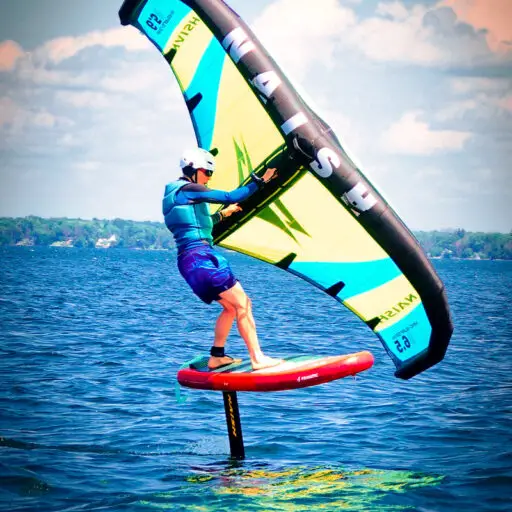
Support our hydrofoil educational content for free when you purchase through links on our site. Learn more
🏄 15 Best Places to Try Hydrofoil Boarding

Where are the best places to try hydrofoil boarding? Start with a location that fits your riding style: a supervised, protected bay or lake for eFoil and wake foiling, a roomy wind-sports zone for wing foiling, or small, uncrowded surf for surf foiling. The right spot is less about fame and more about safe depth, manageable conditions, local instruction, and enough room to fall and reset.
We’ve seen first-timers arrive eager to ride a famous break, then discover the wind, crowd, or shallow reef has other plans. A quieter lesson zone often makes for a far better first flight—and a much happier walk back up the beach.
Key Takeaways
- Match the spot to your discipline: surf foiling needs waves, wing foiling needs suitable wind, and eFoil or wake foiling can work on appropriate flat water.
- Choose safety and space over hype: check depth, bottom hazards, currents, boat traffic, and local rules before launching.
- Book a lesson for your first session: local instructors can help you choose suitable conditions, gear, and a safe practice area.
- Consider destinations such as Mission Bay, Hood River, Lake Tahoe, Maui, Tarifa, and the Gold Coast—but verify current conditions and access locally.
- A good first session is controlled and repeatable. Big flights can wait until you’ve learned safe starts, falls, and touchdowns.
Table of Contents
- ⚡ Quick Tips and Facts for Finding Your First Foil Spot
- 🌊 Hydrofoil Boarding: How It Works and Where the Sport Began
- 📍 How to Choose a Great Hydrofoil Boarding Location
- Water depth, launch access, and room to fall
- Wind, swell, current, and water conditions
- Local rules, permits, and protected areas
- 🏄 15 of the Best Places to Try Hydrofoil Boarding
- 1. Lake Tahoe, California and Nevada
- 2. Hood River, Oregon
- 3. San Francisco Bay, California
- 4. Mission Bay, San Diego, California
- 5. Maui, Hawaii
- 6. Kailua-Kona, Hawaii
- 7. Lake Michigan, Chicago and the Great Lakes
- 8. Lake Austin, Texas
- 9. Tampa Bay, Florida
- 10. Charleston Harbor, South Carolina
- 11. Cape Town, South Africa
- 12. The Gold Coast, Australia
- 13. Perth and the Swan River, Australia
- 14. Tarifa, Spain
- 15. Lake Garda, Italy
- 🌱 Best Beginner Hydrofoil Spots: What to Look For
- 🌬️ Match the Spot to Your Hydrofoiling Discipline
- Prone foiling and surf foiling
- Wing foiling and wind-powered hydrofoiling
- Wake foiling and tow-in foiling
- Downwind foiling and pump foiling
- 🛟 Hydrofoil Safety: Spot Hazards, Rules, and Safe Distances
- Foil awareness, fall zones, and other water users
- Depth, currents, weather, and emergency access
- Lessons and local instructors: when to book one
- 🏄 ♂️ Gear for Your First Hydrofoil Session
- Choosing a beginner hydrofoil board and foil setup
- Wings, masts, fuselages, and stabilizers explained
- Wetsuits, helmets, impact vests, and essential safety gear
- 🧭 Your First Hydrofoil Session: A Step-by-Step Guide
- Check the forecast and prepare your launch
- Set up and inspect your hydrofoil
- Practice balance, stance, and foot placement
- Choose a beginner-friendly way to get moving
- Build speed, lift off gradually, and control your height
- Turn, touch down, and finish your ride safely
- 🎯 Beginner Hydrofoiling Skills and Practice Drills
- Weight shifts, pitch control, and smooth turns
- How to fall, recover, and reset
- ❌ Common First-Timer Mistakes and How to Fix Them
- 🔧 Hydrofoil Setup, Maintenance, and Transport
- Foil assembly and fastener checks
- Rinsing, inspecting, and storing your gear
- 📈 A Simple Progression Plan: From First Flight to Longer Rides
- ❓ Frequently Asked Questions About Where to Try Hydrofoil Boarding
- ✅ Key Takeaways for Choosing Your First Foil Spot
- Conclusion
- Recommended Links
- Reference Links
⚡ Quick Tips and Facts for Finding Your First Foil Spot
The best place to try hydrofoil boarding is not necessarily the most famous foil destination. It’s the spot that suits your discipline, skill level, and conditions that day. Start with our guide to hydrofoiling basics, then use this short checklist before choosing a launch.
| What to check | Beginner-friendly starting point | Why it matters |
|---|---|---|
| Water users | A quiet zone, well away from swimmers and busy launches | A hydrofoil has hard, sharp components; falls and collisions can cause serious injury |
| Depth and bottom | Known depth, no shallow reef, rocks, pilings, or hidden sandbars | You need enough clearance for your mast and a predictable place to fall |
| Conditions | Gentle, predictable conditions that match your discipline | Calm water may suit supervised eFoil or wake sessions; surf and wing foiling need their own conditions |
| Space | A wide practice area with room downwind or downwave | You’ll fall, reset, and drift; give yourself room |
| Getting back | A safe return route, reachable shore, or instructor/boat support | A great ride is less great if you can’t get back safely |
| Local knowledge | An instructor or experienced local who knows the launch | Tide, current, traffic, and access rules can change the answer completely |
Quick facts worth remembering:
- Hydrofoiling is an umbrella term. Surf foiling, wing foiling, wake foiling, and eFoiling need different setups and locations.
- A calm lake or protected bay can be a good learning environment, particularly for a supervised tow or eFoil session. Flat water does not automatically mean safe: depth, boat traffic, and local restrictions still count.
- Surf foiling needs waves, but beginners should look for small, manageable surf and an uncrowded lineup—not a famous break at its most powerful.
- Wing foiling needs usable wind and room downwind. Offshore wind is a poor choice for beginners because it can carry you away from shore.
- Don’t treat beach starts as a default beginner shortcut. They are technical, and conditions, depth, and local hazards must be right.
- Take a lesson for your first session if you can. A good instructor can help match the equipment and launch to your ability, and teach safe falls before you start chasing airtime.
The best-location question has a useful twist: the answer depends less on the name on the map than on what you want to ride. We’ll compare destinations by discipline, then show you how to decide if a spot is actually suitable on the day.
🌊 Hydrofoil Boarding: How It Works and Where the Sport Began
A hydrofoil board has a submerged wing beneath the board. As it moves through the water, the foil generates lift, raising the board and rider above the surface. Less board-on-water contact can mean a smoother ride over chop—but it also means you’re balancing above a rigid underwater structure. That’s why a good learning location matters so much.
Hydrofoil designs have a long history in marine engineering, while today’s foiling sports grew across surfing, sailing, kiteboarding, and wind sports. The basic idea is simple; the skill is not. Small shifts in body weight can change the board’s pitch and height quickly. For a beginner-friendly overview of the different hydrofoil disciplines and fundamentals, start with conditions you can manage rather than a dramatic-looking wave.
Why a first foil ride feels different
On a conventional surfboard, water resistance and the board’s contact with the surface provide familiar feedback. On foil, lift changes that feedback: as speed builds, the board rises, and a small movement can produce a noticeable response. It can feel as though the water has turned into a moving balance beam.
We’ve watched first-timers focus so hard on “getting up” that they forget to look around. The better cue is to stay relaxed, look where you want to travel, and make small, patient adjustments. A calm, spacious training zone gives you time to learn those sensations without adding a crowded lineup or a hectic launch to the lesson.
📍 How to Choose a Great Hydrofoil Boarding Location
Before booking a trip because a destination has postcard water, ask a more practical question: Can you launch, practice, fall, and return safely there with your chosen foil discipline?
The answer depends on more than wave height. Check access, water depth, wind direction, current, traffic, weather, and local rules. Official forecasts are a starting point—not a substitute for asking a local instructor what the water is doing today. In the United States, check the National Weather Service marine forecasts and local advisories; elsewhere, use the national weather service and maritime authority for your area.
Water depth, launch access, and room to fall
A foil needs clearance beneath the board, but a beginner also needs a launch that won’t put the foil near swimmers, rocks, or other boards. Before you go:
- Check known depth, tide, and changes in bottom contour.
- Look for rocks, reefs, submerged logs, pilings, morings, kelp, and sandbars.
- Confirm that the launch is permitted and appropriate for board-and-foil gear.
- Identify a place where you can stop and get back to shore without crossing a busy channel.
- Make sure there is room to fall and reset without drifting into other users.
A beach may look open from the car park but narrow dramatically near the waterline. A protected bay may have a beginner-friendly feel yet include boat lanes or shallow areas. Ask a local school or shop about the exact launch zone, not just the general destination.
Wind, swell, current, and water conditions
“Calm” means different things for different foils. An eFoil can travel without wind or waves, while wing foiling requires suitable wind, and surf foiling relies on rideable swell. Wake foiling depends on a boat, driver, and controlled wake.
| Discipline | Conditions to seek | Conditions to avoid as a beginner |
|---|---|---|
| Surf foiling | Small, manageable, clean waves; an uncrowded takeoff zone | Powerful or steep surf, shallow reef, crowded breaks |
| Wing foiling | Steady, manageable wind; plenty of downwind space and a safe return | Offshore or stormy wind, gusty conditions, congested beaches |
| Wake foiling | A controlled tow or wake, qualified driver, designated riding area | Unsupervised towing, busy waterways, unclear signals |
| eFoiling | Suitable depth, protected water, clear operating zone | Swimmers, restricted waterways, unknown shallow hazards |
| Pump foiling | Controlled practice area with room to fall | Crowds, hard obstacles, unsuitable docks or public walkways |
Don’t confuse a forecast with a guarantee. Wind and current can vary across a bay or change during a session, so observe the water and check local advice as well.
Local rules, permits, and protected areas
Hydrofoil rules vary by jurisdiction and by waterway. There may be restrictions on powered craft, personal watercraft, board launches, speed, protected wildlife areas, or access during certain hours. An eFoil can be treated differently from an unpowered foil board, so verify the rules for the specific equipment and launch location.
Check the local parks, harbor, marine, and beach authority. For example, the U.S. National Park Service provides park-specific regulations, while local harbor or council sites may publish launch and water-use rules. If an instructor or rental operator works at that location, ask what boundaries they use and why.
🏄 15 of the Best Places to Try Hydrofoil Boarding
These destinations are well-known for one or more foiling disciplines, but none is automatically beginner-safe in every condition. Access, lessons, rentals, and permitted riding zones can change; contact local operators and authorities before planning a session.
| Destination | Best-known foiling options | Beginner potential | Watch out for |
|---|---|---|---|
| Lake Tahoe, California/Nevada | eFoil, wake foil, wing foil | Protected coves and lesson options may suit supervised sessions | Cold water, changing weather, boat traffic, local rules |
| Hood River, Oregon | Wing foil, kite foil, wind sports | Strong local expertise; sheltered learning zones may be available | Powerful wind and current in exposed areas |
| San Francisco Bay, California | Wing foil, eFoil, some tow sports | Lessons can help identify suitable zones | Currents, shipping, cold water, traffic |
| Mission Bay, San Diego, California | eFoil, wake foil, wing foil | Protected water and established watersports scene | Busy areas, restricted zones, shallow sections |
| Maui, Hawaii | Surf foil, wing foil, downwind foil | Excellent coaching culture; conditions vary widely | Reef, swell, wind, and crowded lineups |
| Kailua-Kona, Hawaii | eFoil, wing foil, surf foil | Local operators can guide site and gear choices | Reef, currents, and rapidly changing conditions |
| Lake Michigan | Wing foil, eFoil, wake foil | Seasonal options and broad water access | Cold water, weather, waves, and heavy boat use |
| Lake Austin, Texas | eFoil, wake foil | Sheltered-water sessions may be possible with an operator | Boat traffic, restricted zones, access rules |
| Tampa Bay, Florida | eFoil, wing foil, wake foil | Warm-water learning options may be available | Shallow flats, tides, boat traffic, storms |
| Charleston Harbor, South Carolina | eFoil, wing foil, wake foil | Local schools can help find quieter water | Tidal currents, shipping, and changing weather |
| Cape Town, South Africa | Wing foil, surf foil, downwind foil | Strong watersports community, with lessons available | Wind strength, cold water, waves, and currents |
| Gold Coast, Australia | Surf foil, wing foil, eFoil | Multiple coastal and sheltered-water possibilities | Crowded surf zones, surf conditions, local rules |
| Perth and Swan River, Australia | Wing foil, eFoil, wake foil | River locations may offer protected options | Wind, currents, boat traffic, launch restrictions |
| Tarifa, Spain | Wing foil, kite foil | Well-established wind-sport scene and instruction | Strong wind, crowded launches, offshore conditions |
| Lake Garda, Italy | Wing foil, wind sports | Resorts and schools can help match conditions | Wind changes, boat traffic, local access rules |
1. Lake Tahoe, California and Nevada
Lake Tahoe’s clear water and mountain setting make it easy to see why it draws paddlers and foilers. For a first session, prioritize a supervised eFoil or wake-foil lesson in a designated area, rather than choosing a launch by scenery alone. Water temperature, weather, boat traffic, and county or park rules all matter.
Lake Tahoe is also a place where a sunny shoreline can fool you: conditions offshore may differ from what you feel on the beach. Check the National Weather Service forecast and ask local operators about today’s wind, access, and safe operating area.
2. Hood River, Oregon
Hood River is famous for wind sports, and that reputation cuts both ways. Experienced wing foilers may find plenty to love; a first-timer should look for a school that can teach in an appropriate zone and assess wind strength. The exposed river is not a place to guess your way through gusts or current.
Check local wind and river conditions before going, and ask instructors about beginner-specific launches. A sheltered lesson zone can be a smarter introduction than heading straight into the conditions that make Hood River legendary.
3. San Francisco Bay, California
The Bay offers a rich watersports scene, but currents, cold water, shipping, and busy shorelines make local knowledge especially valuable. Beginners should book a lesson with an operator familiar with the chosen launch and avoid busy channels and crowded swimming areas.
We’d treat the Bay as a “choose the right micro-location” destination: the name on the map is less important than the launch, wind direction, traffic, and instructor plan. Review marine conditions through the National Weather Service.
4. Mission Bay, San Diego, California
Mission Bay’s protected-water setting can be attractive for supervised eFoil and wake-foil sessions. Still, it’s a popular recreation area, not an empty training pool. Confirm that the operator uses a permitted zone and that your lesson avoids swimmers, paddlers, and boat traffic.
Ask about equipment size, safety gear, and how the instructor handles falls and returns to shore. For board and foil selection, browse our hydrofoil board selection guides.
5. Maui, Hawaii
Maui is a major destination for surfing and wind sports, with a deep foiling community. That doesn’t mean every famous break is a suitable first-timer spot. Reef, swell, wind, and local etiquette all deserve respect; take a lesson and seek advice from local operators before entering the water.
For a beginner, small, manageable conditions and an uncrowded area beat a famous break with a dramatic reputation. If you’re traveling for surf foil, ask specifically about conditions appropriate to your skill level.
6. Kailua-Kona, Hawaii
Kailua-Kona offers a range of ocean and sheltered-water possibilities, depending on the discipline and conditions. Local operators can advise which sessions are appropriate for eFoil, wing, or surf foiling, and whether the chosen location has reef or current hazards.
Don’t assume that clear water means a clear bottom. Confirm the launch and riding zone with a local guide, and wear suitable protection for the water temperature and activity.
7. Lake Michigan, Chicago and the Great Lakes
The Great Lakes can offer wing-foiling and eFoiling opportunities, but the season, water temperature, wind, and weather are significant factors. Large bodies of freshwater can develop serious conditions; a lake is not automatically sheltered just because it isn’t an ocean.
Look for a local school, check marine forecasts, and use appropriate cold-water gear when needed. The Great Lakes Environmental Research Laboratory provides useful regional lake information, while local forecasts remain essential for session planning.
8. Lake Austin, Texas
Lake Austin is a popular boating and recreation area, so the safest option is to ask an established operator about designated eFoil or wake-foil sessions. Don’t assume that a quiet-looking cove is open to every craft or that it has adequate depth.
Before booking, confirm the launch point, operating boundaries, required gear, and whether the session is instructor-led. A controlled first session is worth far more than an improvised lap through boat traffic.
9. Tampa Bay, Florida
Tampa Bay’s warmer climate can make water time appealing, and local operators may offer powered or tow-based foiling. The bay’s shallow areas, tides, storms, and boat traffic still call for careful site selection.
Ask about water depth along the route and whether the session stays inside a designated area. Check local weather and marine advisories, especially during periods of rapidly changing thunderstorms.
10. Charleston Harbor, South Carolina
Charleston’s waterways bring tidal movement, working-waterfront traffic, and changing conditions. A local instructor can help choose a suitable lesson zone and explain access rules. Beginners should avoid entering harbor channels or unfamiliar current without guidance.
For a first try, favor a clearly defined, less-congested area with a plan for getting back to shore. Confirm the tide and weather on the day rather than relying on a general destination guide.
11. Cape Town, South Africa
Cape Town is known for wind and ocean sports, making it a compelling destination for wing and surf foiling. The same wind and wave conditions that attract experienced riders can be demanding for newcomers. Take a lesson and ask about the day’s wind, launch, and equipment requirements.
If you’re new to foiling, don’t let an impressive forecast talk you into overpowered conditions. A manageable session with a local school is a much better first chapter.
12. The Gold Coast, Australia
The Gold Coast offers a busy watersports environment and varied coastal options. Surf foilers should stay clear of crowded lineups and check local etiquette; wing and eFoil riders should confirm permitted zones and available instruction.
A video can help you picture the terrain before a trip: the featured video on Greenmount, Burleigh Platform, and The Dock shows several Gold Coast foil-surf locations. Treat it as a visual orientation, not a live conditions or safety report—the location that looks appealing in a clip may not suit a beginner on a particular day.
13. Perth and the Swan River, Australia
Perth’s river and coastal settings can suit different foiling disciplines, depending on wind and local access. The Swan River has active water traffic, so choose an operator and a clearly defined training zone rather than launching wherever the water looks calm.
Check local council and marine rules, and ask whether the session is appropriate for your experience level. Wind direction and current can change the return journey, even when the water appears inviting.
14. Tarifa, Spain
Tarifa is a major wind-sport destination. That makes it a natural place to explore wing foiling with an instructor, but not necessarily a place for a beginner to launch alone in strong or offshore wind. Ask schools to recommend a lesson window and zone based on the forecast.
If you’re new, choose coaching and controllable conditions over the biggest wind day. Verify local launch access and avoid crowded or restricted areas.
15. Lake Garda, Italy
Lake Garda is popular for wind sports and has a range of lakeside access points and schools. Conditions can vary with location and time of day, so talk with a local operator about beginner sessions, permitted areas, and the forecast.
A lake setting may feel reassuring, but boat traffic, wind shifts, and launch congestion still matter. Book a lesson that includes location-specific safety guidance, not just equipment time.
🌱 Best Beginner Hydrofoil Spots: What to Look For
The best beginner spot is usually predictable, spacious, and supported by local instruction. “Protected bay” and “calm lake” are useful starting descriptions, not universal guarantees. A busy bay with shallow hazards can be harder than a quiet, well-managed ocean lesson.
One competing guide puts it simply: “A good learning spot gives you room to fall, reset, and try again without putting other people in the foil’s path.” That advice applies across disciplines. Another recommends practicing in “calm, secure waters such as lakes or bays.” These perspectives agree on the key principle—control the environment where possible—but the ideal water differs by equipment. An eFoil can use suitable flat water; a surf foil cannot create the wave it needs.
Beginner spot checklist
Look for:
- A qualified instructor or experienced local guide
- A marked or clearly understood riding zone
- Enough depth and a known bottom
- Space to fall without reaching swimmers or other riders
- Wind, swell, and current that match your discipline and skill
- Safe shore access and an easy return route
- No prohibited zones, protected habitat, or busy boat channels
- Appropriate rental gear, including a helmet and impact protection
A useful rule for choosing between two spots
If one location is more famous but crowded, exposed, and unfamiliar, while another is quieter with an instructor and a clear safety plan, choose the second. Your first session is for learning how the foil responds—not proving you can handle the most challenging water on the coast.
🌬️ Match the Spot to Your Hydrofoiling Discipline
A location can be excellent for one type of foiling and poor for another. Before you search for a destination, decide what kind of ride you want. Our hydrofoil basics library covers the differences, while the comparison below is a quick field guide.
| Discipline | What powers the ride | Best location qualities | First-session suggestion |
|---|---|---|---|
| Prone/surf foil | Paddle power and waves | Small, clean surf; uncrowded; safe depth | Take a lesson outside busy lineups |
| Wing foil | Wind and a handheld wing | Steady, suitable wind; broad downwind area | Learn with an instructor in a managed zone |
| Wake foil | Boat wake or tow | Controlled water and an experienced driver | Agree on signals, route, and fall procedure |
| eFoil | Electric motor | Adequate depth and a clear operating area | Use a supervised rental or lesson |
| Pump foil | Rider-generated pumping motion | Controlled area with room to fall | Practice skills in a suitable, uncrowded setting |
| Downwind foil | Wind swell and moving ocean energy | Route planning, suitable swell, support and experience | Not a typical first-ever foiling session |
Prone foiling and surf foiling
Surf foiling uses wave energy, so it needs a suitable wave, a clear takeoff, and a rider who understands surf etiquette. Beginners should look for small, manageable waves and a quiet area, not a crowded break or shallow reef. A calm lake may be excellent for another discipline and entirely unsuitable for prone surf foiling.
Some beginner resources suggest small surf in roughly the 1–3-foot range. Treat that as a broad guide, not a universal rule: wave shape, period, tide, local exposure, and your equipment all change how a wave feels. A steep, fast wave can be challenging even when it looks modest on a forecast.
Wing foiling and wind-powered hydrofoiling
Wing foiling calls for wind, but more wind is not automatically better. A beginner benefits from manageable, fairly steady conditions, a safe launch, and a wide area downwind. Avoid offshore wind, storm conditions, and congested beaches unless a qualified local instructor has assessed the setup and it is appropriate.
The safest spot may be a school’s designated teaching area rather than the most popular launch. Check wind direction as well as strength, and plan how you’ll return if the wind drops or shifts.
Wake foiling and tow-in foiling
Wake foiling can offer a controlled way to learn because the driver and rider can coordinate speed and route. It is only controlled if the boat operator understands foiling, the riding zone is clear, and communication is agreed before starting.
Before the tow:
- Agree on the start, stop, and emergency signals.
- Set a route with clear separation from other users.
- Use appropriate tow equipment and a qualified driver.
- Discuss what happens when the rider falls and how the boat turns around.
- Never tow into an area with swimmers or unknown obstacles.
A lake may be suitable for a supervised wake session, but not if it is crowded, shallow, or restricted.
Downwind foiling and pump foiling
Downwind foiling involves linking moving ocean energy along a route; it can demand strong water awareness, fitness, and reliable support. Pump foiling requires timing, balance, and a suitable controlled practice area. Neither is the easiest place to start if you have never ridden a foil.
For progression ideas and advanced skills, explore advanced hydrofoiling techniques. Build foundations first: controlled starts, safe falls, and awareness of your foil.
🛟 Hydrofoil Safety: Spot Hazards, Rules, and Safe Distances
A foil’s underwater wings and mast can injure a rider or another water user, so spot choice and separation matter as much as board choice. Wear appropriate protective equipment, learn safe falls with an instructor, and avoid crowded water.
The U.S. Coast Guard’s boating safety guidance is useful for general water-safety principles, but local regulations and the specific risks of foiling still need to be checked with the relevant authority and your instructor.
Foil awareness, fall zones, and other water users
- Stay well clear of swimmers, paddlers, docks, and other riders.
- Don’t ride through swimming zones or crowded surf lineups.
- Keep your board and foil under control on the beach and in shallow water.
- When you fall, create distance from the foil before attempting to remount.
- Don’t assume other water users can see your foil beneath the surface.
- Follow local right-of-way conventions and any school or site rules.
There is no one-size-fits-all “safe distance” that replaces local rules and common sense. Give other users generous room, and choose an uncrowded area where you can maintain a clear buffer.
Depth, currents, weather, and emergency access
Before launching, identify likely hazards and your exit plan:
- Depth: Confirm that there is sufficient clearance throughout the riding area—not only at the launch.
- Bottom: Look for rocks, reef, pilings, logs, morings, and weed.
- Current and tide: Understand where you may drift and how you’ll get back.
- Weather: Check wind, thunderstorms, visibility, and changing conditions.
- Traffic: Avoid channels, ferry routes, and busy boat lanes.
- Emergency access: Know where to return, who to contact, and how the instructor or operator handles an emergency.
If conditions change, end the session early. A good rider knows when not to launch.
Lessons and local instructors: when to book one
We strongly recommend a lesson for a first session, particularly for wing, surf, or wake foiling. An instructor can help you choose a suitable spot, size the equipment, teach safe falls, and explain how to stay clear of the foil. The National Weather Service marine forecast and similar official tools help with conditions, but they cannot assess your skill or teach a safe launch.
Ask a school:
- Are instructors experienced in the exact discipline I want to try?
- Is the lesson in a designated beginner area?
- What safety gear is included?
- How do you handle falls, changing wind, or a rider who can’t return?
- Are the equipment and launch appropriate for my size and experience?
- What local rules or hazards should I know about?
🏄 ♂️ Gear for Your First Hydrofoil Session
For a first ride, renting through a reputable school is often smarter than buying a full setup. A coach can choose board volume, foil size, mast length, wing, and safety gear for your body weight and conditions. If you’re comparing equipment, see our hydrofoil equipment reviews and brand comparisons.
Choosing a beginner hydrofoil board and foil setup
Beginer setups generally prioritize stability and predictable lift over compactness or top speed. Exact sizing depends on your body weight, discipline, wind or wave conditions, and the school’s equipment range. Avoid choosing a foil based only on a brand’s marketing description.
| Component | What it does | Beginner consideration |
|---|---|---|
| Board | Supports the rider and provides the platform for takeoff | A stable, forgiving board can make early balance and starts easier |
| Front wing | Generates most of the lift | A more forgiving lift profile may help, but ask an instructor to match conditions |
| Mast | Connects board and foil underwater | Length affects clearance and feel; shorter is not automatically safer everywhere |
| Fuselage | Joins the front wing, mast, and stabilizer | Proper assembly and compatible components are essential |
| Stabilizer | Helps control pitch and stability | Setup choice affects handling; use the school’s recommended configuration |
Brands such as Duotone, Armstrong, Slingshot, and Lift Foils make foiling equipment across different disciplines. Always confirm compatibility and recommended use with the manufacturer or a qualified retailer.
Wings, masts, fuselages, and stabilizers explained
A hydrofoil is a system: components need to work together, and parts from different models are not automatically interchangeable.
- Front wing: Creates most of the lift. Size and profile affect lift, speed, and turning response.
- Mast: Sets the distance between board and foil. A longer mast may help in some conditions but can increase consequences in a fall.
- Fuselage: Connects the foil pieces and affects stability and turning behavior.
- Stabilizer: Helps manage pitch and balance.
- Wing or sail: In wing foiling, this generates power from the wind; it is separate from the underwater foil wing.
Ask a coach to explain the setup before riding. For broader equipment guidance, use our hydrofoil board selection section.
Wetsuits, helmets, impact vests, and essential safety gear
Your safety kit depends on water temperature, location, and discipline. Common items include:
- A properly fitted watersports helmet
- An impact vest or suitable personal flotation device
- Wetsuit or thermal layers appropriate to the water temperature
- Leash setup recommended by an instructor for the specific discipline
- Sun protection, water, and communication plan
- A first-aid and emergency plan managed by the operator
Don’t copy another rider’s leash setup without understanding the risks; leash recommendations differ by activity, equipment, and local practice. Follow the advice of an experienced instructor and the gear manufacturer.
🧭 Your First Hydrofoil Session: A Step-by-Step Guide
A good first session is about learning the gear and the water, not collecting a long flight. Here’s a sensible outline to follow with an instructor or qualified operator.
Check the forecast and prepare your launch
- Check the official local forecast, tide, and marine advisories.
- Confirm the location is open and permitted for your activity.
- Ask the instructor whether conditions suit a first-timer.
- Identify the launch, practice zone, return route, and emergency plan.
- Wear the required helmet, impact protection, and temperature-appropriate clothing.
- Keep the first session short enough that fatigue doesn’t erase good decisions.
Set up and inspect your hydrofoil
Before entering the water, have the instructor check that:
- The board and foil components are compatible.
- Fasteners are correctly tightened according to manufacturer guidance.
- There are no cracks, sharp damage, or loose fittings.
- The leash arrangement is suitable for the discipline.
- The board is carried so the foil does not strike people or the ground.
Never grab or carry the foil carelessly through a crowd. Those underwater wings are not decorative cutlery.
Practice balance, stance, and foot placement
Start with the instructor’s stance cues and learn where your feet belong for the chosen board. Keep your gaze up and ahead rather than staring at your feet. Relax your shoulders and avoid abrupt, oversized movements.
If you’re practicing on land, do so only with equipment secured and the foil safely managed. Do not balance on a foil-equipped board in a public area where a fall could expose someone to the mast or wings.
Choose a beginner-friendly way to get moving
The right start depends on the discipline:
- eFoil: Follow the operator’s controls and speed progression in the designated zone.
- Wake foil: Use a qualified driver and a pre-agreed towing plan.
- Wing foil: Learn wing handling and board control before expecting to fly.
- Surf foil: Work with a coach on paddling, wave selection, and safe positioning.
A beach start is not a universal beginner method. It can be a technical skill with specific depth and launch requirements, so only attempt it when an experienced instructor says the spot and setup are appropriate.
Build speed, lift off gradually, and control your height
As speed increases, the foil may begin to lift. Keep your movements small and avoid trying to jump the board into the air. If the board rises too high, make a gentle adjustment as taught by your coach; if it drops, stay composed and prepare for a controlled touchdown.
Your first goal is repeatable, low, controlled rides, not maximum height. That approach leaves more room to learn the sensations without turning every woble into a dramatic exit.
Turn, touch down, and finish your ride safely
Learn to slow down, touch down, and stop in the designated area before attempting sharp turns. Stay aware of the foil and other users after a fall. When the lesson ends, follow the operator’s instructions for carrying the board, removing the foil, and returning equipment.
A controlled touchdown is a skill, not a failure. It helps you reset, conserve energy, and keep the session safe.
🎯 Beginner Hydrofoiling Skills and Practice Drills
Your early progress comes from consistent, small corrections, not dramatic body movements. Ask your instructor to tailor drills to the board and discipline you’re using.
Weight shifts, pitch control, and smooth turns
Practice these principles under supervision:
- Look in the direction you intend to travel.
- Keep knees soft and movements gradual.
- Learn how small fore-and-aft shifts affect board pitch.
- Build speed steadily rather than accelerating abruptly.
- Practice low, controlled flight before turning.
- Follow the instructor’s guidance on stance and foot pressure.
The exact input varies with equipment and speed. Avoid rigid, one-size-fits-all cues: a movement that helps one setup can feel wrong on another.
How to fall, recover, and reset
Your instructor should demonstrate a safe fall for your activity before you try to ride. In general:
- Stay calm and move away from the foil as soon as it is safe.
- Keep track of the board and other water users.
- Don’t reach blindly toward the submerged foil.
- Follow your lesson’s method for recovering the board and remounting.
- Stop if you’re tired, cold, or losing awareness.
For additional skill-building material, see advanced hydrofoiling techniques. Even advanced riders benefit from revisiting the basics.
❌ Common First-Timer Mistakes and How to Fix Them
| Mistake | Why it causes trouble | Better approach |
|---|---|---|
| Choosing a spot for its fame | Famous breaks or launches may be crowded or exposed | Choose for conditions, room, and local support |
| Assuming flat water means safe water | Depth, traffic, current, and rules still matter | Inspect the route and confirm local access |
| Learning alone on an unfamiliar setup | You may miss hazards and unsafe equipment choices | Book a lesson or ride with qualified local support |
| Trying to fly high immediately | More height can mean harder falls and less control | Practice stable, low flights and controlled touchdowns |
| Riding too close to swimmers | Foils can cause serious injury | Use a designated area and generous separation |
| Ignoring wind direction | Offshore wind may carry you away from shore | Check direction and plan a safe return |
| Treating every discipline the same | Different sports require different conditions | Match the location to your foil type |
| Skipping the forecast | Weather and water conditions can change quickly | Check official sources and reassess before launch |
| Using unfamiliar or mismatched parts | Compatibility and assembly affect safety | Have a qualified person inspect the setup |
| Staying out when tired | Fatigue reduces balance and judgment | End the session before your decisions get sloppy |
One beginner resource describes avoiding crowded spots as essential because foiling can be dangerous in busy lineups. That advice is especially relevant to surf foiling, but the same logic extends to any busy waterway: separation and awareness are non-negotiable.
🔧 Hydrofoil Setup, Maintenance, and Transport
A well-maintained foil is easier to inspect and less likely to surprise you on the water. Follow the manufacturer’s instructions for your exact equipment; designs and fasteners vary.
Foil assembly and fastener checks
Before each session:
- Check that the mast, fuselage, wings, and board connection are compatible.
- Inspect fasteners and tighten them according to the maker’s guidance.
- Look for cracks, dents, corrosion, or damaged threads.
- Make sure the board’s foil tracks or mounting area are sound.
- Use only approved tools and assembly procedures.
If anything feels loose, damaged, or uncertain, don’t launch until it has been checked.
Rinsing, inspecting, and storing your gear
After use, rinse equipment with fresh water when appropriate, especially after saltwater sessions. Dry and store it as the manufacturer recommends. Protect wings and board surfaces during transport, and don’t leave gear where it can fall or expose people to sharp edges.
For brand-specific maintenance and product information, consult the manufacturer’s official resources, such as Duotone, Armstrong, Slingshot, and Lift Foils.
📈 A Simple Progression Plan: From First Flight to Longer Rides
Progress at the pace your control allows. A simple plan keeps your sessions focused:
| Stage | Main goal | Move on when… |
|---|---|---|
| 1. Spot and safety orientation | Understand the launch, conditions, and fall plan | You can explain the route and hazards |
| 2. Equipment familiarization | Learn the setup and controls | You can follow safe handling instructions |
| 3. Starts and balance | Move consistently without rushing | You can repeat controlled starts |
| 4. Low, steady flight | Keep the board stable and close to the water | You can ride without frequent abrupt rises |
| 5. Touchdowns and stops | End a ride deliberately | You can slow and reset safely |
| 6. Turns and longer rides | Add direction changes gradually | You can maintain awareness and control |
Don’t rush to advanced maneuvers because someone nearby is doing them. The person cruising past may have years of foil time behind them—and perhaps a very different setup.
❓ Frequently Asked Questions About Where to Try Hydrofoil Boarding
What are the best hydrofoil boarding destinations for beginners?
The best destination is one with qualified local instruction, a suitable launch, predictable conditions, enough depth, and room away from other water users. Protected bays and suitable lakes may work well for supervised eFoil or wake sessions; small, uncrowded surf is better for surf foiling. Hood River, Mission Bay, Lake Tahoe, and some Gold Coast locations have established watersports scenes, but conditions and access vary. Contact a local school before choosing a spot.
Which beaches have ideal conditions for hydrofoil boarding?
There is no universally ideal beach. For surf foiling, look for small, clean waves, a clear takeoff area, and an uncrowded lineup, while avoiding shallow reefs and powerful surf. For wing foiling, look for a legal launch, manageable wind, and broad space downwind. For powered foiling, a beach may not be the right launch at all; use the designated area recommended by the operator.
Where can you take hydrofoil boarding lessons?
Look for dedicated foiling schools, reputable watersports centers, or established rental operators at destinations such as Hood River, Mission Bay, Maui, the Gold Coast, Tarifa, and Lake Garda. Availability changes seasonally. Ask whether the instructor teaches your specific discipline, uses a beginner-appropriate area, provides safety gear, and explains local hazards and rules before the session.
What are the best lakes for hydrofoil boarding?
A lake can work well for supervised eFoiling, wake foiling, or some wing-foiling sessions, provided the water is deep enough, the activity is allowed, and boat traffic is manageable. Lake Tahoe, Lake Michigan, Lake Austin, and Lake Garda are examples with foiling activity, but none should be treated as automatically safe. Verify launch access, weather, depth, and local restrictions first.
Which destinations offer hydrofoil board rentals?
Rental availability depends on season, discipline, and operator. Larger watersports hubs—including Mission Bay, Maui, Hood River, the Gold Coast, Tarifa, and Lake Garda—may have schools or operators offering equipment and lessons. Confirm whether the rental includes instruction, helmet and impact protection, and access to a suitable riding zone. For your first try, choose a lesson-and-gear package rather than renting equipment and heading out alone.
When is the best time of year to try hydrofoil boarding?
The best season depends on the destination and discipline. Wind sports rely on suitable local wind seasons; surf foiling depends on regional swell and wave patterns; eFoiling can be less dependent on wind and swell but still needs safe weather and water access. Ask local schools about typical beginner conditions and avoid choosing dates based only on peak-season tourism.
What should you look for when choosing a hydrofoil boarding location?
Use this checklist:
- Conditions suited to your chosen discipline and experience
- Adequate water depth and a known bottom
- Space away from swimmers, boats, and other riders
- Safe launch and return access
- Local permission and clear operating boundaries
- A forecast you understand, including wind direction and current
- An instructor or operator who knows the spot
- A plan for falls, equipment recovery, and emergencies
If a location fails one of these checks, choose another site or wait for better conditions.
Can you learn hydrofoil boarding on flat water?
Yes, depending on the discipline. eFoiling and wake foiling can be learned on suitable flat water, with appropriate depth, equipment, and supervision. Wing foiling needs wind, and surf foiling needs waves, so flat water alone won’t provide the conditions those sports require.
Is a calm lake always safer than the ocean?
No. Lakes can have boat traffic, currents, shallow hazards, cold water, and changing weather. Oceans bring surf, tide, and currents, but a managed lesson in a suitable coastal area may be more controlled than an unfamiliar lake. Judge the specific site and conditions, not just whether the water is fresh or salty.
✅ Key Takeaways for Choosing Your First Foil Spot
- Match the location to the discipline: surf needs waves, wing needs suitable wind, and eFoil or wake foiling can use appropriate flat water.
- Choose space and predictable conditions over fame.
- Confirm depth, bottom hazards, currents, wind direction, local rules, and your route back.
- Take a lesson and use suitable protective equipment.
- Give swimmers, other riders, and boats generous separation.
- Don’t assume a calm-looking bay or lake is safe without checking access and conditions.
- A successful first session is one you can repeat safely—not the one with the highest flight.


