Support our hydrofoil educational content for free when you purchase through links on our site. Learn more
Can Beginners Learn to Hydrofoil Safely? 🌊

Yes, beginners can learn to hydrofoil safely with a qualified instructor, suitable beginner equipment, protective gear, and calm, open water. Start by learning how to control the board and stop; getting airborne can wait.
The first time we watched a new rider lift above the water, they grinned like they’d discovered a secret passage across the bay. Then the foil dipped, they fell, and—thanks to a safety briefing and plenty of space—they surfaced clear of the board, ready to try again. That’s the real beginner win: not avoiding every fall, but knowing how to make practice safer.
Hydrofoiling includes e-foiling, wing foiling, tow foiling, and surf foiling, and each has different equipment and learning demands. The right starting point depends on your chosen discipline, local conditions, and how confidently you can manage the controls and recover from a fall.
Key Takeaways
- Beginners can learn to hydrofoil safely when they progress gradually with good instruction and appropriate conditions.
- Take a lesson before riding solo. Learn the controls, stopping procedure, and how to fall clear of the foil.
- Choose calm, open water with adequate depth, clear visibility, and plenty of distance from swimmers, boats, and obstacles.
- Wear a properly fitted helmet and suitable impact or flotation protection. Follow local rules and the equipment manufacturer’s guidance.
- Start with control, not height. Practice starts, steering, stopping, and returning before attempting longer flights.
- There’s no guaranteed learning timeline. Your discipline, gear, conditions, confidence, and coaching all affect progress.
Table of Contents
- ⚡️ Quick Tips and Facts
- 🌊 Background: What Learning to Hydrofoil Involves
- ✅ Can Beginners Learn to Hydrofoil Safely?
- 🧭 Choosing the Right Hydrofoil Sport and Equipment
- E-foiling, wing foiling, and tow foiling compared
- Beginer foil boards, wings, masts, and stabilizers
- Safety gear: helmet, impact vest, and wetsuit
- 📍 Finding a Safe Place to Learn
- Water depth, wind, waves, and currents
- How to check local rules and riding conditions
- 🪜 9 Steps to Learn Hydrofoiling Safely
- 1. Take a lesson with a qualified instructor
- 2. Learn foil and board safety on land
- 3. Practice water starts and basic balance
- 4. Control speed before trying to lift off
- 5. Make short, controlled flights
- 6. Learn to fall away from the foil
- 7. Practice stopping and getting back to shore
- 8. Build skills gradually in easy conditions
- 9. Inspect and maintain your equipment
- 🚨 Hydrofoil Safety Risks and How to Reduce Them
- Foil cuts, impact injuries, and falls
- Collisions, right-of-way, and distance from others
- Leashes, entanglement, and safe equipment handling
- Cold water, fatigue, and changing weather
- 🆚 Hydrofoiling vs. Surfing, Wakeboarding, and Snowboarding
- 📅 How Long Does It Take to Learn to Hydrofoil?
- ❌ Beginner Mistakes and How to Avoid Them
- 🧑 🏫 Lessons, Rental Gear, and Learning on Your Own
- 💰 Hydrofoil Learning Costs and Equipment Choices
- 🌱 Beginner Progression: What to Learn After Your First Flights
- 🧠 Quick Tips for a Safer First Hydrofoil Session
- 🏁 Conclusion
- 🔗 Recommended Links
- ❓ FAQ
- 📚 Reference Links
⚡️ Quick Tips and Facts
Yes, beginners can learn to hydrofoil safely when they use the right equipment, learn progressively, and respect the conditions. Start with a qualified instructor and calm, open water—not a crowded beach and a borrowed foil.
For a broader introduction to the sport, see our guide to hydrofoiling and our Hydrofoil Basics articles.
| Beginner question | Practical answer |
|---|---|
| Do you need prior board-sport experience? | No. It can help with balance and board awareness, but it isn’t a prerequisite. |
| Is e-foiling the easiest entry point? | Often. A motor provides propulsion, so you can focus on stance, steering, and throttle control. It still requires instruction and careful handling. |
| What should you wear? | A properly fitted helmet, impact vest or PFD, and suitable wetsuit or waterwear. Add other protective gear as conditions and local rules require. |
| Where should you learn? | A legal, designated area with calm water, plenty of clearance, adequate depth, and reliable supervision. |
| What’s the safest first goal? | Controlled starts, low-speed steering, and safe falls—not getting airborne on the first run. |
| What’s the golden rule? | Release the throttle and create distance from the board and foil when you lose control. Follow your instructor’s exact procedure for the craft you’re riding. |
A Miami e-foil school describes e-foiling as a sport where “the motor provides the power,” reducing the need for athletic strength. That’s useful perspective, not a promise that every rider will fly in one lesson: water conditions, equipment, confidence, and coaching all affect progress. See its beginer e-foil guidance.
One distinction matters: “hydrofoiling” covers several sports. Electric hydrofoiling, wing foiling, tow foiling, and prone surf foiling have different propulsion systems, learning progressions, and risks. We’ll separate them before choosing gear.
🌊 Background: What Learning to Hydrofoil Involves
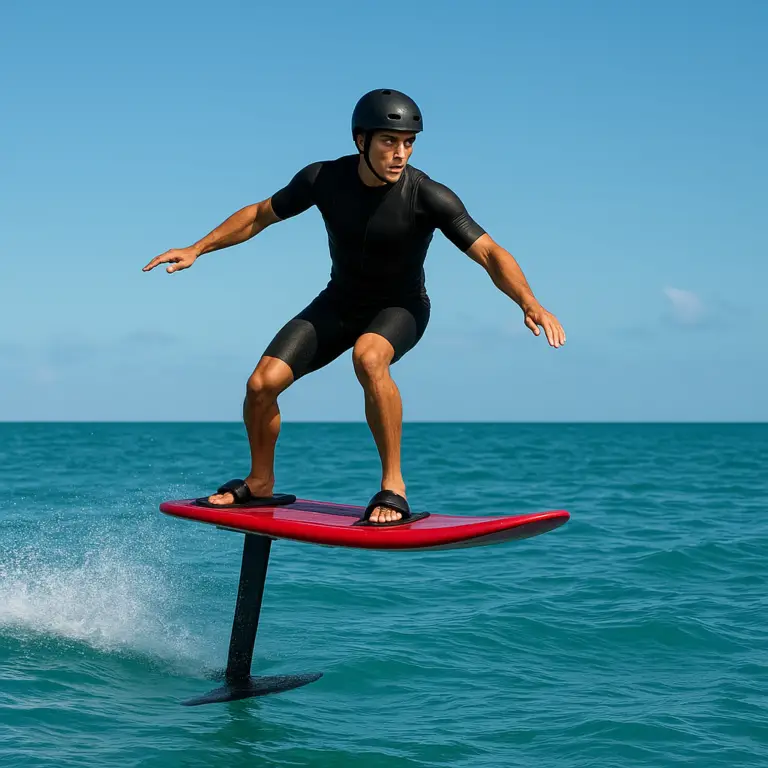
A hydrofoil is a submerged wing attached to a board by a mast. As the foil moves through water, it can generate lift and raise the board above the surface. That smooth, quiet glide is the magic; controlling the lift is the homework.
You don’t simply stand on a board and hope it flies. You learn to manage speed, balance, direction, and lift in small increments. When the foil rises too quickly, a rider can lose balance; when it breaches the water, lift can disappear abruptly. Beginners therefore benefit from stable equipment and a progression that keeps early attempts controlled.
How the main hydrofoil disciplines differ
| Discipline | What provides propulsion? | What a beginner mainly learns | Beginner considerations |
|---|---|---|---|
| E-foil | Electric motor and propeller | Remote control, throttle, stance, steering, lift control | Lessons and a supervised setup make it easier to focus on fundamentals. Motor and propeller add equipment-specific hazards. |
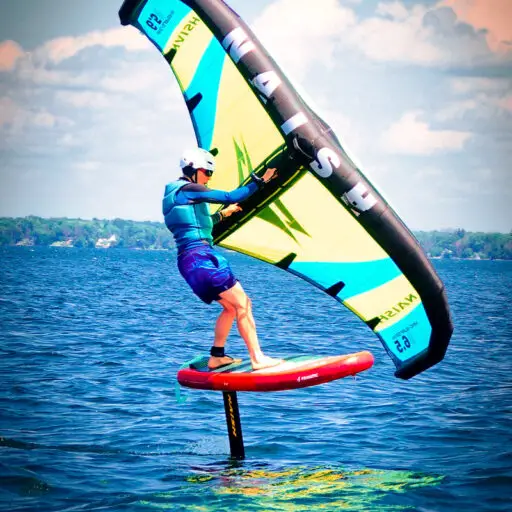
| Wing foiling | Handheld wing powered by wind | Wing handling, board balance, wind awareness, foil control | Wind and water conditions can change the challenge significantly. A lesson helps match conditions and equipment to skill. |
| Tow foiling | Tow from a boat or personal watercraft | Holding a tow handle, speed control, stance, and lift management | Requires a skilled driver, clear communication, and a safe tow area. |
| Prone surf foiling | Paddling into a wave | Wave timing, paddling, takeoff, and foil control | Surf knowledge helps, but the foil adds new handling and fall considerations. |
| Pump foiling | Repeated body-driven pumping, often from a dock or small wave | Board trim, timing, and efficient pumping | It can be physically and technically demanding. It’s not the easiest “skip-the-basics” option. |
For an overview of foil design and riding fundamentals, browse Hydrofoil Basics. A beginner’s safest discipline is the one you can learn in appropriate conditions with good instruction, not automatically the one with the smallest board or the most impressive video.
Why the board lifts—and why beginners should care
As the foil moves through the water, water flow around its wings produces lift. The relationship between speed, foil shape, and lift means the board can rise as speed builds. That’s why smooth inputs matter: a sudden increase in speed or a strong shift of weight can make the board rise faster than a new rider expects.
Treat the foil like a sensitive trim control, not an elevator button. Small, deliberate movements are easier to manage than big corrections. If you feel unstable, follow your instructor’s instructions, ease off the power where appropriate, and prioritize separating yourself from the equipment safely.
✅ Can Beginners Learn to Hydrofoil Safely?
Yes—with conditions. Beginners can learn safely when the learning environment, equipment, protective gear, and instruction are appropriate. No one can guarantee a fall-free session, and hydrofoil equipment has hard edges and moving parts that deserve respect. But you can reduce avoidable risks substantially.
The common “you don’t have to be an athlete” message is broadly reassuring, especially for e-foiling: the motor supplies forward drive, and balance and relaxed control matter more than brute strength. But that doesn’t mean fitness, mobility, swimming ability, or confidence in water are irrelevant. A rider who tires quickly may make poorer decisions; someone uncomfortable in deep water may find a lesson stressful even when the technique is simple.
| Perspective | What’s helpful about it | What to keep in mind |
|---|---|---|
| “You don’t need to be an athlete.” | E-foil propulsion reduces the need to generate speed by paddling or pumping. | You still need to follow instructions, manage balance, and be capable of responding to a fall. |
| “Most beginners can get a first flight quickly.” | A supportive instructor and stable setup can help a lesson progress efficiently. | A first flight is not a formal safety milestone or guaranteed outcome. Don’t rush it. |
| “Falls are part of learning.” | Accepting that you may fall can reduce panic and encourage steady practice. | A fall near a foil or propeller can still cause injury. Learn how to fall and separate from equipment before trying to lift off. |
| “Start in shallow water.” | Shallow, clear water can make a beginner feel more comfortable and may simplify retrieval. | The water must still be deep enough for the foil and safe operation. Shallow does not automatically mean safe. |
An e-foil school in Miami describes beginner lessons that progress from land briefing to low-speed practice and then standing. That gradual structure is the valuable lesson; the exact sequence and time to first flight vary by equipment and rider. Read its e-foiling fitness and learning overview.
What “safe learning” actually means
✅ You know the controls and emergency stop before entering the water.
✅ You can explain how to fall, release power, and move away from the board.
✅ You’re wearing correctly fitted protective equipment.
✅ You have a clear area away from swimmers, vessels, and other riders.
✅ Conditions suit your experience, and someone responsible knows where you are.
❌ You’re not relying on a product feature, short mast, or leash as a substitute for instruction.
❌ You’re not attempting your first session alone, in surf, or in congested water.
Who should take extra care?
Ask an instructor or clinician before riding if you have a condition that could affect balance, mobility, alertness, or your ability to swim and respond in water. Be honest about your comfort level and experience. There is no prize for progressing faster than your body and judgment allow.
🧭 Choosing the Right Hydrofoil Sport and Equipment
The right beginner setup makes practice more manageable; it doesn’t make risk disappear. Board volume, foil area, mast length, propulsion type, and rider weight all affect how a setup feels. For buying guidance, see our Hydrofoil Board Selection and Hydrofoil Equipment Reviews.
E-foiling, wing foiling, and tow foiling compared
| Factor | E-foiling | Wing foiling | Tow foiling |
|---|---|---|---|
| Main power source | Battery-powered motor | Wind and handheld wing | Boat or personal watercraft |
| Main beginner task | Learn remote, power, and stance | Control wing and board while reading wind | Communicate with driver and manage tow speed |
| Conditions to look for | Calm water, clear area, suitable depth | Manageable wind, space, and suitable water | Skilled driver, clear water, reliable communication |
| Typical learning support | Instructor or supervised rental | Instructor and properly selected wind conditions | Experienced driver and clear signals |
| Extra equipment risks | Propeller, battery, remote, watercraft operation | Wind shifts, wing handling, lines and traffic | Tow line, boat traffic, speed changes |
| Best beginner approach | Start with supervised low-speed control | Learn wing handling and board skills progressively | Begin under an experienced driver’s direct supervision |
We wouldn’t declare one discipline universally safest. A calm, controlled e-foil lesson may suit a rider who wants to focus on balance and throttle; wing foiling may suit someone drawn to wind power and willing to learn wing control; tow foiling depends heavily on the driver and communication. The conditions and teaching quality can matter more than the category label.
Beginner foil boards, wings, masts, and stabilizers
A larger, more buoyant board can make early balance and starts more forgiving, but “bigger” is not a universal safety guarantee. A suitable setup should be matched to your weight, skill, local conditions, and the manufacturer’s guidance.
| Component | What it does | Beginner-friendly considerations |
|---|---|---|
| Board volume and shape | Supports the rider and affects stability and starts | Ask about stable, appropriate volume and a shape suited to your weight and discipline. |
| Front wing | Produces lift | A larger front wing may lift at lower speed in some setups, but performance depends on the whole foil and rider. |
| Stabilizer / tail wing | Helps control pitch and stability | The right size and setup depend on the foil system; don’t make unsupervised component changes. |
| Mast | Connects board to foil | A shorter mast can reduce the height of early flights, but it does not eliminate collision or impact risk. |
| Propulsion system | Provides drive for e-foils or tow foils | Understand the emergency stop, propeller protection, battery limits, and manufacturer instructions. |
| Remote control | Regulates e-foil power | Practice the controls on land and learn what happens when the trigger is released or the safety system activates. |
A Miami school discusses high-volume e-foil boards, short-mast options, and sensor-based assistance on some Waydoo setups. Treat those details as model-specific examples, not universal standards: specifications and features can vary across models and versions. Confirm details directly with the Waydoo official site and read the manual for the exact board you’ll use.
Some riders like extra stability; others prefer a lighter, more responsive board. Our recommendation for a first session is simple: rent or take a lesson on a setup selected by an instructor, then shop once you understand what felt comfortable. Compare brands and system designs in Hydrofoil Brands Comparison.
Safety gear: helmet, impact vest, and wetsuit
Your gear should fit properly and suit your location, water temperature, and discipline. Follow local regulations and the equipment manufacturer’s instructions.
| Gear | Why it matters | Fit and use notes |
|---|---|---|
| Helmet | Helps protect your head from impacts | Choose a helmet intended for water sports and ensure it stays secure. |
| Impact vest or PFD | Provides impact protection or flotation, depending on design | An impact vest is not automatically a certified PFD. Check the label, applicable rules, and instructor advice. |
| Wetsuit or suitable waterwear | Helps manage cold exposure and abrasion | Choose for water temperature and session duration, not just air temperature. |
| Foot protection | Can reduce cuts and help with cold or rough launch areas | Use footwear compatible with the board and local conditions. |
| Waterproof remote lanyard or safety system | Helps keep a remote accessible, if required by the manufacturer | Follow the specific manual; don’t improvise attachments. |
| Whistle or communication aid | Can help signal for assistance where suitable | Keep it accessible and follow local requirements. |
The U.S. Coast Guard’s life-jacket guidance explains why correct flotation equipment and fit matter on the water. A helmet and impact vest can complement—not replace—a suitable PFD where one is required. For general boating safety, consult U.S. Coast Guard recreational boating resources.
📍 Finding a Safe Place to Learn
Your first spot should feel almost boring: open, calm, predictable, and free from obstacles. That’s a compliment. Flat water makes it easier to notice what the board is doing instead of wrestling with chop, current, and a surprise passing boat.
Water depth, wind, waves, and currents
| Condition | Beginner-friendly signs | Reasons to postpone or choose another spot |
|---|---|---|
| Water depth | Enough depth for the foil throughout the riding area | Foil could strike the bottom, rocks, reef, or submerged obstacles |
| Water surface | Calm or gently ripled water | Breaking waves, strong chop, or conditions beyond your control |
| Wind and current | Predictable and manageable for the discipline | Offshore wind, strong current, rapidly changing conditions |
| Visibility | Clear sightlines and good visibility below and around you | Murky water, glare, poor visibility, or hazards you can’t identify |
| Traffic | A designated area with plenty of separation | Swimmers, fishing lines, surf zones, launch lanes, or dense vessel traffic |
| Exit and rescue options | Easy access to shore and a support plan | Long distance from help, difficult shoreline, or no practical way to recover |
Don’t assume a sandy bottom makes a spot safe. A foil needs clearance; a fall in water that’s too shallow can put you in contact with the bottom or foil. Check depth across the whole route, not just where you launch.
Before riding, check official forecasts and local notices. In the United States, the National Weather Service marine forecasts provide marine conditions; local authorities and harbormasters can advise about restricted areas. Elsewhere, use your national weather service and local waterway rules.
How to check local rules and riding conditions
- Confirm that hydrofoils or powered boards are allowed. Rules may differ between lakes, beaches, marinas, and protected waters.
- Ask about launch points and no-ride zones. A legal riding area may still have restricted launches or swim zones.
- Check wind, current, tide, visibility, and weather. Use official sources and local advice, not only a phone-app snapshot.
- Find out what equipment rules apply. PFD, helmet, leash, navigation, and age requirements vary by place and craft.
- Plan your route and return. Consider battery or tow limits, wind direction, fatigue, and a safe exit.
- Tell someone your plan. Share the riding area, expected return, and how you’ll call for help.
In the U.S., the U.S. Coast Guard Navigation Rules are an important reference for vessel interactions. Powered hydrofoils may be subject to local vessel rules, so check with the relevant authority rather than assuming conventional surf etiquette is enough.
🪜 9 Steps to Learn Hydrofoiling Safely
This progression is a framework, not a universal lesson plan. E-foil, wing, tow, prone, and pump foiling require different coaching. Follow the instructor and equipment manual for your specific setup.
1. Take a lesson with a qualified instructor
A good instructor teaches more than how to stand. They explain the controls, equipment, fall response, local hazards, and how to stop. Ask whether the lesson includes suitable gear, an emergency briefing, and a practice area with enough room.
✅ Tell the instructor about your board-sport and swimming experience.
✅ Ask how the remote or propulsion system stops.
❌ Don’t accept “you’ll figure it out” as a safety briefing.
2. Learn foil and board safety on land
Before launching, learn how to carry and position the board without putting your hands or legs near sharp foil edges or a propeller. Practice the controls on land if the instructor and manufacturer allow it.
- Know where the foil, mast, propeller, and pinch points are.
- Keep a safe distance from other people while handling the board.
- Learn what to do if equipment behaves unexpectedly.
- Check that protective gear is fitted and fastened.
3. Practice water starts and basic balance
Your first aim is a controlled start, not a flight. Depending on the sport, that could mean kneling on an e-foil, handling a wing on a board, or learning a tow start under an experienced driver.
Stay within the instructor’s progression. A start that feels awkward on calm water can become difficult in wind or chop.
4. Control speed before trying to lift off
For an e-foil, learn how the remote responds and how to moderate speed. For wing or tow foiling, learn how power and speed change with wind or towing. Don’t chase a specific speed figure from an online story: lift depends on the complete setup, rider, and conditions.
A Miami lesson article mentions lift beginning around 10–11 mph on its teaching setup. That’s an example, not a universal threshold or a target beginners should pursue. Ask your instructor what speed is appropriate for your board and foil.
5. Make short, controlled flights
When your instructor says you’re ready, focus on low, short, controlled lifts. Use small weight shifts and look ahead rather than staring at your feet. If the foil rises unexpectedly, follow your coach’s instructions and avoid sudden, exaggerated movements.
One steady second is better practice than a high, wobbly flight. You’re building control, not collecting altitude.
6. Learn to fall away from the foil
Falls are part of learning, but you can practice responding calmly. Your instructor should demonstrate a fall appropriate to the sport and teach you how to separate from the board and foil.
- Don’t reach toward a moving propeller or foil.
- Follow the instructor’s direction about releasing power or the tow handle.
- Protect your head and keep distance from the equipment.
- Surface, check your surroundings, and regroup before restarting.
There isn’t one fall technique that suits every discipline or situation. Get a practical demonstration before your first ride, especially for e-foils and tow foiling.
7. Practice stopping and getting back to shore
Before you ride away from the launch area, know how to stop, recover the board, and return safely. E-foil riders should understand the remote’s stop behavior and the manufacturer’s procedure; wing and tow riders need discipline-specific recovery plans.
Set a conservative turnaround point and leave room for changes in wind, current, fatigue, or battery status. Don’t let a fun first run become a long-distance experiment.
8. Build skills gradually in easy conditions
Add one challenge at a time: slightly longer rides, gentle turns, or a different water surface. Avoid combining a new board, unfamiliar location, stronger wind, and a new maneuver in one session.
The first video’s coaching perspective, linked here as the featured video, recommends progressing from supported starts and gliding toward pumping and less hand support. Its repeated advice to build muscle memory gradually is useful. However, rail-holding or dock-start techniques are specific to that video’s teaching context and should not be treated as universal instructions. Follow a qualified coach, particularly around a dock or foil.
9. Inspect and maintain your equipment
Before every session, check the board, foil assembly, fasteners, battery, remote, leash or safety system, and protective gear according to the manufacturer’s manual. Stop if you notice damage, loose parts, or abnormal operation.
For e-foils, follow the brand’s instructions on charging, battery care, water exposure, transport, and storage. Don’t guess with electrical equipment. See the appropriate manufacturer support and manuals for model-specific guidance, and check our Hydrofoil Equipment Reviews when comparing designs.
🚨 Hydrofoil Safety Risks and How to Reduce Them
The main hazards aren’t mysterious: impact with the foil or board, collisions, loss of control, environmental conditions, and equipment failure. Good habits reduce risk, but no protective setup makes a rider invulnerable.
Foil cuts, impact injuries, and falls
The mast, wings, board rails, and propeller assembly can cause injury during a fall or while handling equipment. The best prevention is a combination of:
- Qualified instruction and a practiced fall response.
- A helmet and appropriate impact/flotation gear.
- Clear separation between riders and equipment.
- Safe carrying and launching habits.
- Low-speed practice before powered or high-lift riding.
Don’t carry a foil through a crowd with the wings exposed, and don’t assume a board leash is safe in every circumstance. Leash choices depend on the sport, location, and manufacturer guidance. The U.S. Coast Guard’s boating safety resources provide general safety context, but they do not replace hydrofoil-specific instruction.
Collisions, right-of-way, and distance from others
A hydrofoil can move quickly and may be difficult for swimmers or other users to predict. Keep a wide buffer around people, boats, shorelines, docks, and obstacles. Ride only where permitted, maintain awareness, and slow or stop if the area becomes crowded.
| Risk | Safer practice |
|---|---|
| Swimmer or surfer in your path | Stop or steer well clear; don’t assume they see or hear you. |
| Boat or personal watercraft nearby | Keep out of traffic lanes and follow local navigation rules. |
| Dock, rocks, reef, or shoreline | Give generous clearance and account for current and stopping distance. |
| Another foil rider | Agree on spacing and avoid crossing paths at speed. |
| Reduced visibility | Don’t ride if you can’t see hazards and other water users clearly. |
Check the U.S. Coast Guard Navigation Rules where applicable, and confirm local rules with the waterway authority. Right-of-way depends on the vessels and situation; never assume your foil board automatically has priority.
Leashes, entanglement, and safe equipment handling
A leash can prevent a board from drifting away, but it can also create an entanglement risk in some conditions. There is no one-size-fits-all leash rule for every type of hydrofoiling.
- Ask an instructor which leash configuration is appropriate for the craft and location.
- Follow the board and safety-system manufacturer’s instructions.
- Avoid wrapping a leash around your hand or body.
- Learn how to release or manage it if instructed.
- Keep clear of the foil when recovering a loose board.
Don’t copy a leash setup from a different discipline without checking whether it’s suitable for yours. Surf, wing, tow, and e-foil practices can differ.
Cold water, fatigue, and changing weather
Cold water, poor visibility, wind, and fatigue can turn an easy session into a difficult one. Wear suitable thermal protection, keep sessions short while learning, and stop when you’re tired or conditions change.
The National Weather Service marine forecast can help you assess conditions in U.S. waters. Also check local advisories, tides, and water-temperature information where available. If you’re shivering, confused, exhausted, or struggling to control the board, end the session and get help.
🆚 Hydrofoiling vs. Surfing, Wakeboarding, and Snowboarding
Hydrofoiling borows familiar ideas from other board sports—stance, balance, looking ahead—but adds a submerged foil that responds to speed and weight shifts. That can feel strange at first. The board may rise while your feet remain on it, and your movements affect both pitch and direction.
| Sport | Shared skills | What feels different on a hydrofoil |
|---|---|---|
| Surfing | Board awareness, wave reading, balance | The foil creates lift below the surface; falls and equipment handling require extra care. |
| Wakeboarding | Edge control, tow awareness, stance | A foil can lift rapidly and demands careful control of height and speed. |
| Snowboarding | Balance, looking ahead, weight shifts | Water drag, foil lift, and changing conditions make the feedback different. |
| Skateboarding | Stance and board orientation | A hydrofoil moves in three dimensions and responds to water flow beneath it. |
Prior experience can help, but it doesn’t replace a lesson. A confident surfer may understand waves but still need to learn foil height control; a beginner with no board-sport background may do well with patient coaching and suitable conditions.
📅 How Long Does It Take to Learn to Hydrofoil?
There’s no reliable universal timeline. Some riders may manage a brief, assisted flight during a first lesson; others need more time to feel comfortable starting, steering, stopping, and recovering. A successful first lift is not the same as independent, repeatable control.
Progress depends on:
- Which discipline you’re learning.
- Board and foil setup, rider size, and physical comfort.
- Water, wind, and visibility.
- Quality and duration of instruction.
- How consistently you practice.
- How confidently you handle falls and equipment.
A Miami e-foil school says students may get short flights in an initial lesson. That’s a school’s description of its experience—not an independently verified success rate. Use controllable skills as your benchmark: can you start, steer, stop, and return safely before attempting longer rides?
❌ Beginner Mistakes and How to Avoid Them
| Common mistake | Why it causes trouble | Better approach |
|---|---|---|
| Trying to stand or fly before learning the controls | Adds balance and speed demands at once | Practice the remote or propulsion system first. |
| Choosing a crowded spot because it looks calm | People and obstacles leave little room for correction | Find a legal, open area with clear sightlines. |
| Chasing a specific speed or height | Encourages overpowered, rushed attempts | Progress according to the instructor and equipment. |
| Making large body movements | Can cause abrupt changes in pitch and lift | Use small, controlled adjustments. |
| Assuming “shallow water” is always safer | The foil may strike the bottom or obstacles | Check depth throughout the riding area. |
| Treating a leash as universally safe | Different sports and conditions create different entanglement risks | Ask an instructor and follow the manufacturer’s guidance. |
| Buying before trying | A setup may not suit your body, skill, or local conditions | Take a lesson or rent suitable beginner equipment first. |
| Continuing when tired or conditions worsen | Fatigue and weather changes reduce control | Stop early and leave a margin for the return. |
| Learning alone on unfamiliar equipment | No one can help with setup, hazards, or recovery | Start with an experienced instructor or supervised session. |
We’ve watched eager riders focus on “getting up” and forget that stopping is a skill too. A controlled stop is progress. A safe return is progress. The dramatic clip can wait.
🧑 🏫 Lessons, Rental Gear, and Learning on Your Own
Why a lesson is worth considering
A qualified instructor can select suitable conditions and equipment, demonstrate safe handling, and correct problems before they become habits. For a first ride, that guidance is usually more useful than buying premium equipment and trying to teach yourself.
Before booking, ask:
- Does the session include a safety briefing and equipment fitting?
- What discipline and equipment will I use?
- How many students will share the instructor’s attention?
- Is the lesson in a designated area with appropriate depth and clearance?
- What happens if conditions change?
- Will I learn how to stop, recover, and return—not just how to stand?
Rental or buy?
| Option | Benefits | Drawbacks |
|---|---|---|
| Lesson and rental | Instructor-selected gear, supervised progression, less guesswork | You may not control the exact model or lesson pace |
| Rental without a lesson | Lets you try equipment before buying | May not include coaching; unfamiliar gear can add risk |
| Buy your own setup | Familiarity and convenient practice | Significant fit and safety decisions; difficult to choose well without experience |
| Learn on a friend’s setup | Can be convenient if the friend is experienced and attentive | Equipment may not suit you; friendship isn’t a substitute for structured instruction |
We recommend lesson first, equipment decision second. That gives you a chance to learn what board volume, foil feel, and control layout actually work for you. Explore model comparisons through Hydrofoil Brands Comparison.
💰 Hydrofoil Learning Costs and Equipment Choices
You don’t need to buy a complete setup to find out whether the sport suits you. A lesson or supervised rental can help you assess the experience before making a larger equipment decision. No specific price is useful across brands, regions, lesson types, and equipment packages, so compare what’s included rather than focusing on a headline figure.
| Choice | What to compare | Questions to ask |
|---|---|---|
| Lesson | Instructor experience, lesson length, group size, included safety gear | Does the lesson teach safety procedures and stopping? |
| Rental | Board condition, setup suitability, battery or gear support | Is a briefing included? Who helps if equipment behaves unusually? |
| Used equipment | Wear, damage, recalls, compatibility, battery condition | Can a qualified shop inspect it? Are manuals and service records available? |
| New equipment | Fit, brand support, availability of spare parts, manuals | Is this model appropriate for your skill and local conditions? |
| Protective gear | Certification or intended use, fit, comfort, durability | Is it appropriate for the sport and local rules? |
For e-foils, check battery care, charging requirements, water exposure limits, service access, and replacement parts before choosing a brand. Read the exact model’s official manual; online comments may describe a different version.
A note on Fliteboard ICON and beginner suitability
Fliteboard describes its ICON as a premium, lightweight performance eFoil, highlighting a “balance of strength and flexibility” and “comfort, grip and durability.” Those are product-design claims that may be relevant to handling and feel. The ICON page does not, by itself, establish that the board is beginner-specific or provide beginner safety instructions.
A polished board is not a shortcut around lessons. If you’re considering the ICON, ask an authorized dealer or instructor which configuration—board, foil, mast, and safety equipment—fits your weight, experience, and conditions. Compare the manufacturer’s product information with our Hydrofoil Equipment Reviews and Hydrofoil Board Selection guidance.
🌱 Beginner Progression: What to Learn After Your First Flights
Once you can lift, ride, and land in control, build range carefully. Don’t jump straight from a short, coached flight to a crowded coastline or complicated maneuver.
A sensible progression
- Repeat the basics: consistent starts, low flights, gentle steering, and controlled stops.
- Improve awareness: scan ahead, track other water users, and leave a wide buffer.
- Extend duration gradually: only when you can return comfortably and safely.
- Practice turns with coaching: turns change your direction and the space you need.
- Learn discipline-specific skills: wing handling, wave selection, tow communication, or pumping as appropriate.
- Ride varied conditions only when ready: change one variable at a time.
- Maintain your equipment: inspect and service it as the manufacturer directs.
The featured video’s instructor recommends supported knee or squat starts, first gliding, and then gradually adding pumping and releasing hand support. That gradual progression can be useful context for pump foiling, but the video also emphasizes dock-based techniques that may not be appropriate for every learner or location. Do not attempt dock starts without qualified supervision, suitable conditions, and a clear understanding of local hazards.
For more advanced techniques, see our Advanced Hydrofoiling Techniques. Until then, the safest next skill is often the least glamorous one: repeating a clean stop and easy return until they feel routine.