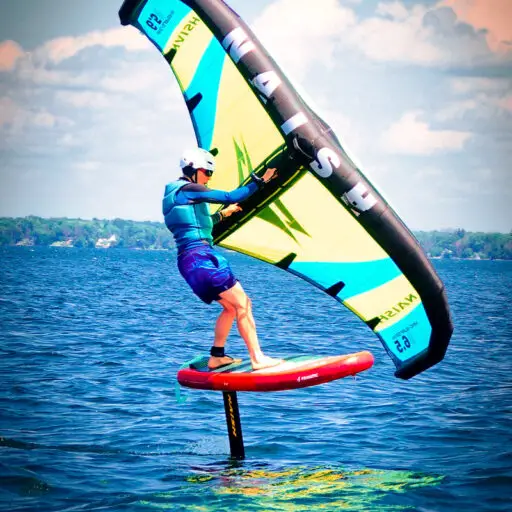
Support our hydrofoil educational content for free when you purchase through links on our site. Learn more
Hydrofoil Foiling for Fitness: 10 Benefits 🏄

Hydrofoil foiling can be a fun, demanding workout for your balance, core, legs, and cardiovascular fitness—but it’s not a guaranteed calorie burner or a replacement for every kind of training. Your effort depends on the discipline, conditions, skill level, and how much time you spend actively paddling, pumping, or handling a wing.
We’ve seen first-timers expect an effortless glide and discover that getting upright, staying balanced, and recovering after a fall takes plenty of work. That learning curve is part of the appeal: each session can challenge both your body and your coordination, while the workout changes with every gust and wave.
Key Takeaways
- Hydrofoiling can train your whole body, with the exact demands varying between foil surfing, wing foiling, and pump foiling.
- Balance, coordination, and muscular endurance are standout fitness benefits; paddling and wing handling can add upper-body work.
- Workout intensity and calorie burn vary widely with active time, conditions, technique, and rest.
- It can be low-impact while gliding, but it isn’t risk-free. Instruction, suitable conditions, distance from others, and protective gear matter.
- Start with skill and safety, then build fitness gradually. Foiling works best as one enjoyable part of a balanced exercise routine.
Table of Contents
- ⚡️ Quick Tips and Facts
- 🌊 Hydrofoil Foiling for Fitness: Background and How It Works
- What is hydrofoil foiling?
- How a hydrofoil board moves above the water
- Foil surfing, wing foiling, and other hydrofoil sports compared
- 💪 10 Fitness Benefits of Hydrofoil Foiling
- 1. Builds full-body strength
- 2. Challenges your core and balance
- 3. Trains leg strength and stability
- 4. Improves cardiovascular fitness
- 5. Develops coordination and body awareness
- 6. Builds muscular endurance
- 7. Encourages mobility and flexibility
- 8. Supports low-impact exercise
- 9. Refreshes your mind and reduces stress
- 10. Makes outdoor training genuinely fun
- 🏋️ What Muscles Does Hydrofoiling Work?
- Upper body, shoulders, and arms
- Core, hips, and lower back
- Glutes, thighs, and lower legs
- Muscles used in prone, kneling, and standing foiling
- 📊 Is Hydrofoiling a Good Workout? Fitness Benefits and Limitations
- Cardio intensity, calorie burn, and what affects your effort
- Hydrofoiling versus surfing, swimming, and stand-up paddleboarding
- Can hydrofoiling help with weight management?
- 🧭 Choosing a Hydrofoil Setup for Your Fitness Goals
- Foil surfing and prone foiling
- Wing foiling
- Downwind foiling and pump foiling
- Board volume, foil size, and skill level
- Essential hydrofoil gear and safety equipment
- 🛟 Safety, Injuries, and Recovery for Foil Fitness
- Common hydrofoiling injuries and how to reduce risk
- Water conditions, launch spots, and safe distances
- Warm-ups, cool-downs, hydration, and sun protection
- When to rest or seek medical advice
- 🎓 Learning to Foil: Beginner Progression and Fitness Tips
- What fitness level do you need to start?
- First-session expectations and learning curve
- Beginer drills for balance, paddling, and control
- How to build confidence without overtraining
- 📅 Hydrofoil Training Plans for Strength and Endurance
- A beginner weekly foiling routine
- A strength and mobility plan for foil surfers
- Cross-training for better balance and paddling power
- Tracking sessions, progress, and recovery
- 🔍 How to Evaluate Hydrofoil Fitness Claims and Choose Reliable Advice
- What fitness trackers can and cannot tell you
- Finding qualified instructors and trustworthy resources
- ❓ Frequently Asked Questions
- Is hydrofoiling good for fitness?
- Is hydrofoiling harder than surfing?
- How many calories does hydrofoiling burn?
- Can beginners learn hydrofoiling safely?
- Does hydrofoiling build muscle?
- How often should you hydrofoil for fitness?
- Is hydrofoiling suitable for older adults or people with joint concerns?
- 🏁 Conclusion
- 🔗 Recommended Links
- ❔ FAQ
- 📚 Reference Links
⚡️ Quick Tips and Facts
Hydrofoiling can be a challenging, skill-based water workout that combines balance, leg and core control, paddling or wing handling, and repeated bursts of effort. How strenuous it feels depends heavily on the discipline, conditions, skill level, and how much time you actually spend moving rather than resting between attempts.
If you’re new to the sport, start with our guide to hydrofoiling and browse Hydrofoil Basics. A foil session can look like a graceful glide from shore. From the board, it may feel more like negotiating with a very determined woble.
| Quick fact | What it means for your workout |
|---|---|
| It is not one single sport | Foil surfing, wing foiling, prone foiling, and pump foiling use different movement patterns and produce different training demands. |
| Skill affects effort | Beginners often spend more energy stabilizing, paddling, recovering, and getting back on the board. Experienced riders may glide efficiently, but can still choose demanding sessions. |
| The workout is intermittent | Effort often comes in bursts: paddling, popping up, pumping, turning, carrying gear, and recovering after a fall. |
| There is no reliable universal calorie number | Body size, activity time, wind, waves, technique, and rest periods all affect energy use. Treat tracker estimates as rough clues, not lab results. |
| Low-impact does not mean low-risk | Water may soften some falls, but a foil has a rigid mast and sharp-edged wings. Distance, control, and suitable protective gear matter. |
| Foiling is not a replacement for every kind of training | It can support strength, balance, endurance, and enjoyment, but structured resistance training and appropriate aerobic exercise remain useful complements. |
Quick-start checklist
- ✅ Take lessons or learn with an experienced instructor, especially for wing foiling or prone foiling.
- ✅ Choose a spacious, uncrowded learning area with suitable wind or swell.
- ✅ Wear a well-fitted impact vest and helmet; use additional protection appropriate to the discipline and local conditions.
- ✅ Keep clear of swimmers, other surfers, boats, and shore hazards.
- ❌ Don’t confuse time on the water with continuous exercise time.
- ❌ Don’t assume hydrofoiling is automatically joint-friendly or safe just because you’re above the water.
For a visual explanation of lift and common misconceptions, the featured video, “How Hydrofoils Work” by Our Kite Life, may help before your first session. It explains how a hydrofoil works, but it is not a fitness study or a substitute for instruction.
🌊 Hydrofoil Foiling for Fitness: Background and How It Works

Hydrofoiling is a family of board and watercraft sports built around an underwater wing, or foil, that generates lift as it moves through water. For fitness, the key question is not simply “Does the foil lift the board?” It’s what you’re doing to get moving, stay balanced, turn, recover, and keep going.
We’ve watched riders arrive at the beach expecting a leisurely glide and leave with tired legs, a damp wetsuit, and a newly respectful relationship with balance. But the training effect differs greatly between riding a wave, pumping a foil, and holding a wing in gusty wind.
What is hydrofoil foiling?
A hydrofoil is generally made up of a mast and underwater wings attached beneath a board or craft. As the foil travels through the water, the wings generate lift. In board sports, that lift can raise the board above the surface, reducing contact with the water.
The activity used to create and maintain that movement depends on the sport:
- Prone foiling: You paddle into a wave, pop up, and ride the foil.
- Wing foiling: You hold a handheld wing to harness the wind, usually while standing on a foil board.
- Pump foiling: You rhythmically shift your body to generate or maintain forward movement on the foil.
- Tow foiling: A boat or personal watercraft provides the initial pull; riders then use wave energy or pumping to continue.
- Hydrofoil-assisted or fully foiling kayaking: A specialized craft uses paddle or pedal power to move on or partly above its foils.
Our Hydrofoil Basics guide covers the equipment vocabulary and fundamental concepts. For equipment differences, see Hydrofoil Board Selection.
How a hydrofoil board moves above the water
The foil generates lift as water flows over its wings. At an appropriate speed and angle, that lift can raise the board. The rider controls pitch, roll, and direction through body position and, depending on the setup, wing handling, paddling, or wave energy.
That doesn’t mean foiling is effortless. The foil reduces drag from the board contacting the surface, but generating speed and controlling the system still require energy and skill. An explanation of the mechanics is available in the Our Kite Life hydrofoil video; for practical background, explore Hydrofoiling™’s overview.
Foil surfing, wing foiling, and other hydrofoil sports compared
| Discipline | Main source of motion | Typical physical demands | Fitness trade-off |
|---|---|---|---|
| Prone foiling | Paddling and wave energy | Shoulder and back effort while paddling; core and leg control while riding | Short, intense efforts with waiting and recovery between waves |
| Wing foiling | Wind captured by a handheld wing | Shoulder and arm endurance, stance, balance, leg control, repeated transitions | Can provide longer active periods when wind and conditions cooperate; managing the wing adds work |
| Pump foiling | Repeated body-driven pumping | Legs, hips, trunk, coordination, and sustained rhythm | Can be demanding and technical; poorly paced efforts can quickly fatigue the legs |
| Tow foiling | Tow to start, then wave or rider input | Starts, balance, turning, and pumping | Tow reduces the paddling demand but does not remove the riding challenge |
| Foil kayak | Paddle, pedal, or tow power | Upper-body paddling or leg-driven propulsion plus balance | Specialized craft can demand high output; not necessarily an easy or accessible fitness option |
One experienced rider in a Progression Project wing-foiling forum thread described wing as “like prone on steroids,” arguing it can offer frequent rides across different kinds of swell. That is one rider’s personal comparison, not a measured exercise result. The same discussion points to a real trade-off: the wing itself becomes another piece of gear to manage.
💪 10 Fitness Benefits of Hydrofoil Foiling
Hydrofoiling can support several components of fitness, but the benefits are conditional, not guaranteed. A relaxed downwind glide and a series of strenuous wing-foiling attempts are not the same workout. Here’s what the sport can train when your session includes enough active time.
1. Builds full-body strength
Getting onto a board, paddling, standing, handling a wing, pumping, and carrying equipment can recruit muscles throughout the body. This is generally sport-specific strength and endurance, not a substitute for progressive weight training if your goal is maximal strength or muscle growth.
2. Challenges your core and balance
The board can respond quickly to changes in your weight. You continually adjust your trunk and hips to stay balanced and control the foil. The CDC’s physical activity guidelines recommend activities that improve balance and coordination as part of a broader fitness routine, especially for older adults.
3. Trains leg strength and stability
Your legs help manage stance, absorb movement, shift pressure, and stabilize the board. Pump foiling and repeated starts can make the effort more obvious, while steady riding may feel less like a leg workout once technique improves.
4. Improves cardiovascular fitness
A sufficiently active session can raise your heart rate, particularly during repeated paddling, wing handling, or pumping. But foiling includes stops, falls, and waiting. A long session is not necessarily a long continuous cardio workout.
For general health guidance, the World Health Organization’s physical activity recommendations encourage adults to get regular aerobic activity and muscle-strengthening activity. Foiling may contribute, but you’ll need to assess the active portions of your own sessions.
5. Develops coordination and body awareness
Riders learn how small shifts in stance affect pitch and direction. That takes practice, attention, and repeated feedback from the board. We’ve found that a familiar movement can suddenly feel different in gusty wind or confused chop, so adaptability becomes part of the skill.
6. Builds muscular endurance
Holding a stable stance, managing a wing, paddling repeatedly, and staying composed through several attempts can challenge local muscular endurance. The biggest difference between a beginner and an experienced rider may be how efficiently they use effort, not simply how strong they are.
7. Encourages mobility and flexibility
Standing, crouching, rotating, and moving into different positions can involve hips, ankles, shoulders, and the upper back. Foiling does not automatically improve flexibility, though. Use a warm-up and separate mobility work if you have restricted movement.
8. Supports low-impact exercise
Once a rider is gliding, there may be less repetitive pounding than in activities involving continuous running. However, falls, board contact, awkward landings, and the foil itself can cause injury. Low impact during successful riding is not the same as low risk throughout a session.
9. Refreshes your mind and reduces stress
Time on the water can feel restorative, and concentrating on conditions may give you a welcome break from screens and routine. The American Psychological Association’s overview of exercise and stress describes the broader connection between physical activity and stress management; it does not establish a hydrofoiling-specific effect.
10. Makes outdoor training genuinely fun
Enjoyment matters because people are more likely to repeat activities they look forward to. A forum user in the Progression Project discussion emphasizes the attraction of getting many rides and using wing foiling in varied conditions. That’s a useful account of sport appeal, not a fitness trial.
🏋️ What Muscles Does Hydrofoiling Work?
The answer depends on the discipline and what happens during your session. Riding uses different muscles than paddling, carrying the board, or repeatedly climbing back on after a fall. Think of hydrofoiling as a mix of movement demands, not a fixed muscle-building program.
| Body area | Typical contribution | Most noticeable during |
|---|---|---|
| Shoulders and arms | Wing handling, paddling, and controlling equipment | Wing foiling and prone paddling |
| Upper back | Paddling and shoulder-blade control | Prone starts and repeated paddling |
| Abdominals and trunk | Stabilizing, rotation, and posture control | Turns, transitions, pumping, and balancing |
| Glutes and thighs | Stance, board control, and absorbing movement | Starts, rough water, and pumping |
| Calves and ankles | Fine balance and stance adjustments | Standing and controlling pitch or roll |
| Hands and forearms | Holding the wing and equipment | Gusty conditions and longer sessions |
The American Council on Exercise’s exercise library offers examples of movements for strengthening these areas off the water. If you’re choosing a board or foil, our Hydrofoil Board Selection articles can help match equipment to discipline and ability.
Upper body, shoulders, and arms
- Prone foiling: Repeated paddling can work the shoulders, arms, and upper back, especially during wave-catching attempts.
- Wing foiling: Holding and repositioning the wing can demand shoulder and arm endurance. Wind strength and technique change the load considerably.
- Carying equipment: Transporting a board and foil adds a separate carrying task—often the least glamorous training interval of the day.
The arm effort varies: a well-tuned wing and efficient technique may reduce unnecessary strain, while prolonged or poorly positioned holding can tire your shoulders. If pain develops rather than ordinary fatigue, stop and reassess.
Core, hips, and lower back
Your trunk helps control posture and transmit movement between your upper and lower body. Pumping and turning may involve repeated trunk and hip adjustments. Good technique generally uses coordinated body movement rather than relying on a single area to muscle every correction.
Avoid trying to “train your core” by forcing yourself to ride through lower-back pain. A comfortable, stable stance and appropriate equipment setup matter.
Glutes, thighs, and lower legs
The lower body works to maintain stance, shift pressure, and respond to board movement. Pump foiling can make the legs work harder through repeated loading and release. Beginners may also spend energy crouching or bracing because they’re still learning how the foil responds.
Muscles used in prone, kneling, and standing foiling
| Position or style | Commonly emphasized areas | Practical note |
|---|---|---|
| Prone paddling | Shoulders, arms, upper back, trunk | Paddling demand can be substantial before the foil ride begins |
| Kneling start | Thighs, hips, trunk, shoulders | Requires controlled transitions and balance |
| Standing wing foiling | Legs, glutes, trunk, shoulders, forearms | Wing handling adds upper-body work |
| Pump foiling | Legs, hips, trunk, calves | Rhythm and technique affect effort; fatigue can disrupt control |
📊 Is Hydrofoiling a Good Workout? Fitness Benefits and Limitations
Yes, hydrofoiling can be a good workout, especially when the session includes enough active riding, paddling, pumping, or wing handling. But it is not automatically a predictable cardio or strength session. Wind, waves, skill, equipment, and rest can change the workout from one day to the next.
There’s also an important distinction between fitness benefit and fitness efficiency. A sport can be enjoyable and demanding without offering the same controlled, continuous workload as running, cycling, or pool swimming.
Cardio intensity, calorie burn, and what affects your effort
The energy cost of a session depends on:
- Your body size and conditioning
- How much time you spend actively paddling, riding, or pumping
- Wind and wave conditions
- Skill and movement efficiency
- How often you fall, rest, or wait
- Your equipment and chosen discipline
We recommend tracking active time and perceived effort, not relying one calorie figure. A wrist-based device may struggle with water sports, and calorie estimates are not a measurement of your actual energy use. For a broader discussion of activity intensity and health, see the CDC’s physical activity guidance.
A useful session note might include:
- Total time on the water
- Approximate active time
- Session effort on a 1–10 scale
- Discipline and conditions
- Any pain, unusual fatigue, or equipment problem
Hydrofoiling versus surfing, swimming, and stand-up paddleboarding
| Activity | Typical fitness emphasis | How it compares with hydrofoiling |
|---|---|---|
| Traditional surfing | Paddling, pop-ups, balance, intermittent wave riding | Similar stop-start pattern; prone foiling may add paddle demand and foil-specific control |
| Swimming | Continuous aerobic work and broad muscular endurance | Easier to pace continuously; no foil equipment or wave-catching skill |
| Stand-up paddleboarding | Balance, trunk control, and sustained paddling | Often more predictable continuous paddling; wind and board type affect effort |
| Wing foiling | Balance, leg control, wing handling, and intermittent or sustained riding | Can provide more frequent rides in some conditions, but adds wing-management effort |
| Pump foiling | Repeated lower-body and trunk effort | Can be highly demanding in short bouts, but is technical and not necessarily beginner-accessible |
A rider in the Progression Project forum thread argues that wing foiling can work in breaking waves, unbroken swell, or relatively small conditions. That’s an individual’s report of where they ride, not a guarantee that every location or wind condition will be suitable.
Can hydrofoiling help with weight management?
Hydrofoiling can contribute to overall activity, but weight change depends on your total energy balance, food intake, other activity, and consistency. The sport alone does not guarantee weight loss.
If weight management is a goal:
- Choose a discipline you enjoy enough to practice consistently.
- Pair foiling with appropriate aerobic and resistance training.
- Build session duration gradually.
- Avoid treating a smartwatch calorie estimate as permission to ignore recovery or nutrition.
- Ask a qualified health professional for personalized advice if you have medical concerns.
🧭 Choosing a Hydrofoil Setup for Your Fitness Goals
Choose equipment around your discipline, ability, conditions, and safety, not a fitness claim on a product page. A foil that feels manageable for an experienced wing foiler may be too technical for a beginner. For buyer guidance, explore Hydrofoil Equipment Reviews and Hydrofoil Brands Comparison.
Some established brands in the sport include Armstrong Foils, Duotone, F-One, and Slingshot Sports. Their offerings vary by discipline; brand reputation alone does not tell you whether a particular setup suits your experience.
Foil surfing and prone foiling
Prone foiling involves paddling into a suitable wave, getting to your feet, and controlling the foil. It can emphasize paddling endurance, pop-up skills, and body control. It also depends on wave access and a safe, appropriate learning spot.
Potential fitness strengths
- Repeated paddling and wave-catching efforts
- Balance and trunk control
- Intermittent bouts of activity
Potential drawbacks
- Time between waves can reduce continuous exercise time.
- Crowded surf conditions can increase risk.
- Catching waves and managing a foil require skill.
Wing foiling
Wing foiling uses a handheld wing to harness wind while the rider stands on a foil board. It can offer many attempts and rides when conditions line up, but the wing adds handling, storage, transport, and technique demands.
The Progression Project thread captures both sides: one user celebrates plentiful riding opportunities; a commenter reduces the drawback to “THE WING!” It’s a joke with a practical point—you have to manage the wing as well as the board.
Downwind foiling and pump foiling
Downwind foiling uses moving bumps and swell to link glides, often with a route that needs careful planning and suitable support. It can involve significant paddling or wing assistance depending on the setup. Beginners should not treat offshore downwind routes as casual fitness outings.
Pump foiling relies on repeated body movement to maintain momentum. It can demand strong coordination and leg endurance but is highly technique-dependent. Start under coaching or in a controlled environment rather than improvising close to people or obstacles.
See Advanced Hydrofoiling Techniques for further skill-building topics.
Board volume, foil size, and skill level
Board and foil selection affect stability, take-off, control, and progression. There is no single best setup for every rider. Ask a knowledgeable local shop or qualified instructor about your weight, ability, conditions, and intended discipline.
| Equipment choice | What it can influence | Ask before choosing |
|---|---|---|
| Board volume and shape | Float, stability, paddling, starts, and ease of handling | Is it suitable for my body weight and current skill? |
| Foil wing size and design | Lift, speed range, glide, and turning feel | Does it match my conditions and intended use? |
| Mast length | Clearance, control, and stability demands | Is it appropriate for learning in this water depth? |
| Wing size | Wind range, handling effort, and control | Can I manage it safely in the local wind conditions? |
| Protective gear | Impact and exposure protection | Does it fit properly and suit this discipline? |
Browse our board selection resources and equipment reviews before settling on a setup.
Essential hydrofoil gear and safety equipment
Depending on the discipline, you may need:
- A board and foil appropriate to your ability
- A suitable wing, paddle, or tow arrangement
- A properly fitting helmet
- An impact vest or other suitable flotation and impact protection
- Wetsuit or other thermal protection suited to water temperature
- Leash configuration appropriate to the sport and local guidance
- Repair and inspection tools for equipment
- Communication and emergency planning for remote locations
A leash can help keep equipment close after a fall, but leash choice and use are discipline- and condition-dependent. Ask an instructor or local expert; never assume one arrangement is universally safe. For recognized water-safety information, consult the Royal National Lifeboat Institution and local authorities.
🛟 Safety, Injuries, and Recovery for Foil Fitness
Foiling can be physically rewarding, but it includes a hard-to-ignore piece of equipment below your feet. Foil wings and masts can cause serious injuries, especially during falls, close passes, or uncontrolled launches. Safety has to come before workout intensity.
Common hydrofoiling injuries and how to reduce risk
Potential risks include:
- Impact or cuts from board, mast, or wing
- Shoulder and back overuse from repeated paddling or wing handling
- Knee, ankle, or hip strain from awkward falls or stance
- Fatigue-related loss of control
- Cold exposure, sun exposure, and dehydration
Reduce risk by:
- Learning with a qualified instructor.
- Keeping a generous distance from swimmers and other riders.
- Practicing falls and recovery in suitable open water.
- Using well-fitted protective equipment.
- Inspecting the board, mast, foil, and attachment hardware before sessions.
- Stopping when tired enough that safe control starts to slip.
The U.S. Coast Guard’s boating safety guidance and local water-safety rules are valuable references, although your local jurisdiction and sport-specific instructions take precedence.
Water conditions, launch spots, and safe distances
Before launching, check:
- Wind direction and strength: Offshore wind can carry riders away from shore.
- Current, tide, and swell: These may affect drift, launch difficulty, and recovery.
- Water depth and obstacles: Shallow water and submerged hazards create foil-strike risks.
- Crowds and access: Choose space away from swimmers, boats, and surf traffic.
- Exit options: Know where you can safely return if conditions change.
- Weather forecast: Be alert for thunderstorms, rapid wind changes, and poor visibility.
A fitness goal is never a good reason to launch into conditions beyond your ability. For local guidance, consult lifeguards, water-sports schools, and official marine forecasts.
Warm-ups, cool-downs, hydration, and sun protection
A short warm-up can prepare you for paddling, standing, and repeated changes of direction.
Try this before a session:
- Walk or gently move for a few minutes.
- Do comfortable shoulder circles and arm movements.
- Add controlled hip hinges and shallow squats.
- Practice gentle ankle and trunk mobility.
- Start your first attempts at an easy pace.
Afterward, cool down with gentle movement and comfortable stretches. Drink according to conditions and your needs, protect your skin from sun exposure, and change out of wet clothing when appropriate. The American Academy of Dermatology’s sun-protection advice is useful for water sports, where glare and reflection can add to exposure.
When to rest or seek medical advice
Stop the session if you experience sharp pain, dizziness, unusual shortness of breath, confusion, severe chills, or loss of coordination. Seek medical help for serious injury, suspected concussion, breathing problems, or signs of hypothermia.
Rest is useful training, not a failure. If you have a medical condition, prior injury, or concerns about balance, ask a healthcare professional whether a particular type of foiling is suitable for you.
🎓 Learning to Foil: Beginner Progression and Fitness Tips
Hydrofoiling is a skill sport. Beginners may find that the biggest early workout is the effort of learning and recovering, rather than long periods of smooth riding. We recommend separating skill practice from fitness ambition: improve control first, then add duration and intensity.
What fitness level do you need to start?
You do not need to arrive as a competitive athlete. You should, however, be comfortable with the water, understand basic safety, and have enough general fitness to manage the relevant movements and recover between efforts.
Before starting, consider:
- Can you swim confidently in the conditions you plan to use?
- Can you get back onto the board or craft?
- Do you have any injury or health issue that affects balance, shoulders, knees, or back?
- Can you follow local safety rules and use the equipment properly?
A qualified instructor can recommend a discipline and equipment suited to your current ability. Our hydrofoiling basics are a useful starting point.
First-session expectations and learning curve
Your first outing may include instruction, handling equipment, balance practice, short attempts, falls, and plenty of rest. That is normal. Don’t judge your fitness—or your future potential—by whether you get a long ride on day one.
The goal for an early session:
- Understand the equipment and safety briefing.
- Practice controlled starts and recoveries.
- Learn how the board responds to small movements.
- Stop before fatigue compromises judgment.
Beginner drills for balance, paddling, and control
Drills should be taught and supervised in a suitable setting. Keep them simple and focus on control.
- Board familiarity: Practice carrying, positioning, and handling the equipment on land with an instructor’s guidance.
- Water entry and recovery: Learn how to stay clear of the foil and return safely to the board.
- Stable stance practice: Work on a relaxed, balanced position before trying to rise or accelerate.
- Short paddling efforts: For prone disciplines, practice efficient paddling and breathing rather than sprinting every attempt.
- Controlled wing handling: For wing foiling, learn how to hold, depower, and reposition the wing before adding foil complexity.
- Low-intensity repetitions: Take brief attempts with recovery between them, and finish while your technique is still controlled.
How to build confidence without overtraining
- Increase one variable at a time: session length, number of attempts, or difficulty.
- Keep early sessions short enough to maintain good decision-making.
- Leave demanding strength work and difficult water conditions for another day.
- Record what you learned, not just how long you rode.
- Consider lessons from organizations and schools with recognized coaching standards; International Kiteboarding Organization (IKO) offers kite and wing-related training information.
📅 Hydrofoil Training Plans for Strength and Endurance
The best plan is the one that fits your discipline, conditions, recovery, and current ability. The examples below are general templates, not medical prescriptions. Scale them down if you’re new, tired, or recovering from injury.
A beginner weekly foiling routine
| Day | Suggested activity | Focus |
|---|---|---|
| Day 1 | Short, coached foiling session | Safety, equipment handling, basic control |
| Day 2 | Rest or easy walk | Recovery |
| Day 3 | Light strength and mobility | Legs, trunk, shoulders |
| Day 4 | Rest or gentle aerobic activity | General conditioning |
| Day 5 | Short skills session if conditions are suitable | Repeat familiar drills |
| Weekend | Optional easy activity or full rest | Recovery and enjoyment |
You don’t need to foil every day to improve. Quality practice, sound recovery, and safer conditions beat squeezing in one more tired attempt.
A strength and mobility plan for foil surfers
A basic off-water routine may include:
- Squat or sit-to-stand: controlled leg strength
- Hip hinge: posterior-chain movement
- Rows: upper-back strength
- Push-ups or wall push-ups: pushing strength at an appropriate level
- Dead bug or bird dog: trunk control
- Calf raises: lower-leg strength
- Shoulder and hip mobility: comfortable, controlled movement
Start with manageable repetitions, focus on technique, and allow rest between strength sessions. If you’re unfamiliar with resistance training or have existing injuries, seek qualified coaching.
Cross-training for better balance and paddling power
Useful complements can include:
- Swimming for water confidence and aerobic conditioning
- Easy cycling or walking for general aerobic fitness
- Resistance training for legs, trunk, shoulders, and back
- Balance practice performed in a safe environment
- Mobility work tailored to your range of motion
No single exercise perfectly reproduces a foil session. The goal is to build a base that helps you handle repeated effort and stay controlled.
Tracking sessions, progress, and recovery
Track what helps you make safer decisions:
- Conditions and discipline
- Session duration and estimated active time
- Perceived effort (1–10)
- What skills you practiced
- Equipment setup
- Any pain, unusual fatigue, or near misses
- Sleep and recovery notes
A simple log can reveal patterns—for example, whether gusty conditions consistently leave your shoulders tired, or whether shorter sessions improve control. Treat consumer fitness devices as supporting tools, not definitive measurements of calories or training load.
🔍 How to Evaluate Hydrofoil Fitness Claims and Choose Reliable Advice
Foiling stories can be inspiring. They can also mix personal experience, equipment enthusiasm, and assumptions about exercise. To judge a fitness claim, ask: Was activity measured? Was the session representative? Is the claim about one rider or a broader group?
What fitness trackers can and cannot tell you
A smartwatch can help record time, heart rate, and general activity trends, but it may misread movement in water or during gripping and paddling. Calorie estimates are especially easy to overinterpret.
Use devices to compare your own sessions under similar conditions, not to declare that one discipline “burns exactly” a fixed amount for everyone. For health guidance, rely on evidence-based sources such as the CDC and WHO.
Finding qualified instructors and trustworthy resources
Look for instructors who:
- Teach the specific discipline you want to learn.
- Explain local hazards and equipment checks.
- Match equipment and conditions to your ability.
- Prioritize safe falls, recovery, and distance from others.
- Offer clear progressions rather than promising instant flights.
When reading product claims, compare official manufacturer information with independent testing and experienced user feedback. Our equipment reviews and brand comparisons can help you assess options, but no review replaces hands-on instruction.
The competition summary for the Mackiteboarding article, “Embracing the Silver Surfer Lifestyle: How Men Over 40 Can Benefit from Wing Foiling”, indicates that the supplied page showed a security-verification screen, so its article text could not be verified or quoted. We won’t invent claims from a page we couldn’t inspect.
The same caution applies to vivid forum figures. The Boat Design Net discussion about hydrofoil-assisted or fully flying kayaks includes participants’ reports and disputed estimates—not independent performance testing. One designer is quoted as saying, “It takes very intense energy for the paddler to keep up on the foils.” That describes a specialized racing concept, not the ordinary fitness demands of recreational board foiling. Its discussion of the Flyak’s reported speed and foil-drag estimates is best treated as historical participant commentary, not verified specifications.
❓ Frequently Asked Questions
Is hydrofoiling good for fitness?
It can be. Hydrofoiling can challenge balance, coordination, muscular endurance, and cardiovascular fitness when you spend enough time actively paddling, pumping, or handling a wing. The training effect varies by discipline and session, so it’s better viewed as one part of a varied fitness routine than a guaranteed all-in-one workout.
Is hydrofoiling harder than surfing?
It depends on what “harder” means. Foiling adds a distinct control challenge because the rider must manage lift, pitch, and roll. Traditional surfing can demand more paddling time in some conditions; wing foiling adds wind and wing handling. A beginner may find either sport tough at first.
How many calories does hydrofoiling burn?
There is no dependable universal number. Body size, active time, discipline, conditions, technique, and rest all change energy use. Treat smartwatch calorie estimates as rough estimates, and focus on session effort and consistency instead.
Can beginners learn hydrofoiling safely?
Yes, with appropriate instruction, equipment, conditions, and protective gear. Choose a clear learning area, learn how to fall and recover, and keep away from swimmers and other water users. Beginners should avoid strong or offshore winds and crowded locations.
Does hydrofoiling build muscle?
It can challenge muscles and improve sport-specific endurance, particularly in the legs, trunk, shoulders, and back, depending on the discipline. It is not a predictable muscle-building program by itself. Progressive resistance training is more appropriate if muscle growth or maximal strength is your main goal.
How often should you hydrofoil for fitness?
There is no one schedule for everyone. Beginners can start with one or two manageable skills sessions a week, with recovery between demanding efforts. Increase gradually and consider conditions, fatigue, and soreness. If your technique or judgment deteriorates, finish the session.
Is hydrofoiling suitable for older adults or people with joint concerns?
It may suit some people, but age or a joint condition can affect balance, paddling ability, recovery, and fall risk. Get advice from a healthcare professional and an instructor who can assess your experience and the specific discipline. A safe, beginner-appropriate setup and conditions matter more than a general age guideline.

