Support our hydrofoil educational content for free when you purchase through links on our site. Learn more
🚀 7 Core Strength Exercises for Hydrofoil Foiling (2026)


Ever felt your legs turn to jelly the moment you tried to lift off the water, wondering why your abs weren’t firing like they should? You aren’t alone. At Hydrofoiling™, we’ve watched countless riders master the art of the “wobble” only to realize that true flight is 90% core stability and 10% luck. Unlike traditional water sports where you can coast on momentum, hydrofoil foiling demands a continuous, dynamic engagement of your entire midsection, turning every session into a high-intensity, low-impact gym workout disguised as pure fun.
In this deep dive, we’re not just listing exercises; we’re revealing the 7 specific core movements that will transform your foiling from a struggle into a smooth glide. We’ll break down the biomechanics of the “front foot” technique, compare calorie burns against traditional surfing, and share real stories from our team who went from “face-planting” to flying for miles. By the end, you’ll know exactly how to train on land to dominate the water, plus the essential gear to get you started safely. Ready to unlock your inner gyroscopic stabilizer? Let’s dive in.
Key Takeaways
- Core is King: Hydrofoil foiling relies on dynamic stabilization rather than static strength, engaging the rectus abdominis, obliques, and lower back continuously to maintain flight.
- Full-Body Impact: Beyond the core, the sport provides a low-impact cardiovascular workout that targets the quadriceps, glutes, and upper body simultaneously.
- Mental Resilience: The intense focus required to balance on a foil induces a flow state, significantly reducing stress and improving proprioception and mental clarity.
- Training Matters: Success on the water is directly linked to land-based core exercises like single-leg deadlifts, plank variations, and anti-rotation drills.
- Safety First: Always prioritize injury prevention with proper gear (helmets, impact vests) and technique, as the foil is a sharp object requiring respect.
Table of Contents
- ⚡️ Quick Tips and Facts
- 🌊 The Rise of Hydrofoil Foiling: A Fitness Revolution on Water
- 💪 Why Hydrofoil Foiling is a Full-Body Workout Like No Other
- 🧠 Mental Health and Mindfulness Benefits of Hydrofoil Foiling
- Top 7 Fitness Benefits of Hydrofoil Foiling You Can’t Ignore
- Essential Muscle Groups Engaged During Hydrofoil Foiling
- How Hydrofoil Foiling Improves Balance, Coordination, and Core Strength
- Calorie Burn and Cardiovascular Impact: Hydrofoil Foiling vs. Traditional Surfing
- Beginer to Pro: How to Start Hydrofoil Foiling for Fitness
- Gear Up: Best Hydrofoil Boards and Equipment for Fitness Enthusiasts
- Safety First: Injury Prevention and Tips for Hydrofoil Fitness Training
- 🌟 Real Stories: How Hydrofoil Foiling Transformed Our Fitness Journey
- 🔧 Maintenance and Care Tips to Keep Your Hydrofoil Fit for Fitness
- 🌍 Environmental Impact and Sustainability in Hydrofoil Foiling
- 📈 Tracking Progress: How to Measure Your Fitness Gains from Hydrofoil Foiling
- 🧰 Cross-Training Tips to Complement Your Hydrofoil Fitness Routine
- 🎯 Setting Goals: Maximizing Fitness Benefits with Hydrofoil Foiling
- Conclusion
- Recommended Links
- FAQ
- Reference Links
⚡️ Quick Tips and Facts
Before you even unstrap your leash or tighten the bolts on your mast, let’s hit the pause button on the hype and talk reality. Hydrofoil foiling isn’t just a cool trick; it’s a full-body recalibration of your relationship with physics.
Here is the raw truth from the Hydrofoiling™ team, distilled from thousands of hours of wobbles, face-plants, and that magical moment when you finally fly:
- The “Silent” Workout: Unlike the explosive, stop-start nature of traditional surfing, foiling is a continuous tension sport. You are essentially doing a plank on a moving, unstable surface for 20 minutes straight.
- The Core is King: Your abs aren’t just for show. They are the central stabilizer. If your core goes to sleep, your foil goes to the bottom.
- Calorie Burn Myth-Busting: While some sources claim you burn 40+ calories an hour, the reality depends heavily on the discipline. Wing foiling and pump foiling (where you generate your own speed) can torch 50–80 calories per hour of intense effort, often exceeding traditional surfing because there is zero downtime waiting for waves.
- The “Wobble” is Your Friend: That terrifying shake before you stabilize? That’s your vestibular system screaming for help. Embrace it. It means your brain is rewiring.
- Safety First: The foil is sharp. Always fall away from the foil, and never ride alone. The “foil guillotine” is a real risk if you aren’t careful.
“The core acts as the central stabilizer, preventing falls and enabling smooth turns. Regular hydrofoil sessions lead to stronger abdominals and lower back muscles.” — Hydrofoiling™ Team Consensus
Ready to dive deeper into why your abs are about to get a serious upgrade? Let’s look at the history of this revolution.
🌊 The Rise of Hydrofoil Foiling: A Fitness Revolution on Water
You might think hydrofoiling is the new kid on the block, but the concept dates back to Alexander Graham Bell’s early 20th-century experiments with hydrofoil boats. However, the sport as we know it—gliding silently above the water on a board—only exploded in the last decade.
Why the sudden fitness boom? Because it solved the biggest problem in water sports: waiting.
In traditional surfing or kitesurfing, you spend 80% of your time paddling or waiting for the wind to fill the kite. In hydrofoil foiling, once you’re up, you are flying. This creates a unique cardiovascular profile. You aren’t just catching a wave; you are actively pumping the foil to generate lift, engaging your quadriceps, glutes, and core in a rhythmic, aerobic dance.
We’ve seen the shift firsthand at Hydrofoiling™. Riders who used to dread the “flat days” now flock to the water because pump foiling turns a flat lake into a gym. It’s not just about the thrill; it’s about the efficiency of movement.
“There’s nothing like the calm you feel when you’re gliding silently above the water. It’s a moving meditation that clears the mind and energizes the body.” — Eriefoiler, Hydrofoiling™ Team
But how does this translate to actual muscle engagement? Let’s break down the anatomy of the flight.
💪 Why Hydrofoil Foiling is a Full-Body Workout Like No Other
When you strap into a foil, you aren’t just standing on a board; you are piloting a machine that requires constant micro-adjustments. This is where the magic happens.
The Lower Body: The Engine Room
Your legs are the primary drivers.
- Quadriceps & Hamstrings: These muscles work overtime to absorb the shock of the water and, more importantly, to pump the board up and down to generate speed and lift.
- Calves & Glutes: Essential for fine-tuning your balance on the edges. A slight shift in your heel pressure can mean the difference between a smooth glide and a nosedive.
The Upper Body: The Rudder
Depending on your discipline, your upper body plays a massive role.
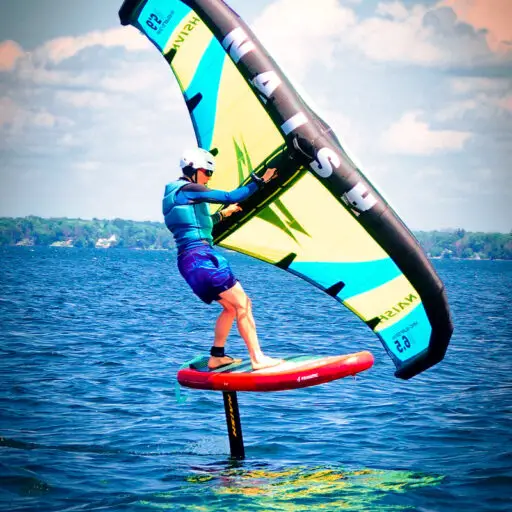
- Wing Foiling: You are holding a wing, which requires significant deltoid, bicep, and forearm strength. You are essentially doing a standing row and overhead press simultaneously while balancing on a tightrope.
- SUP Foiling: The paddling motion engages the lats and triceps, adding a rowing element to the workout.
- Surf Foiling: Even without a wing, your arms are out for balance, engaging the shoulders and core to stabilize.
The Core: The Gyroscopic Stabilizer
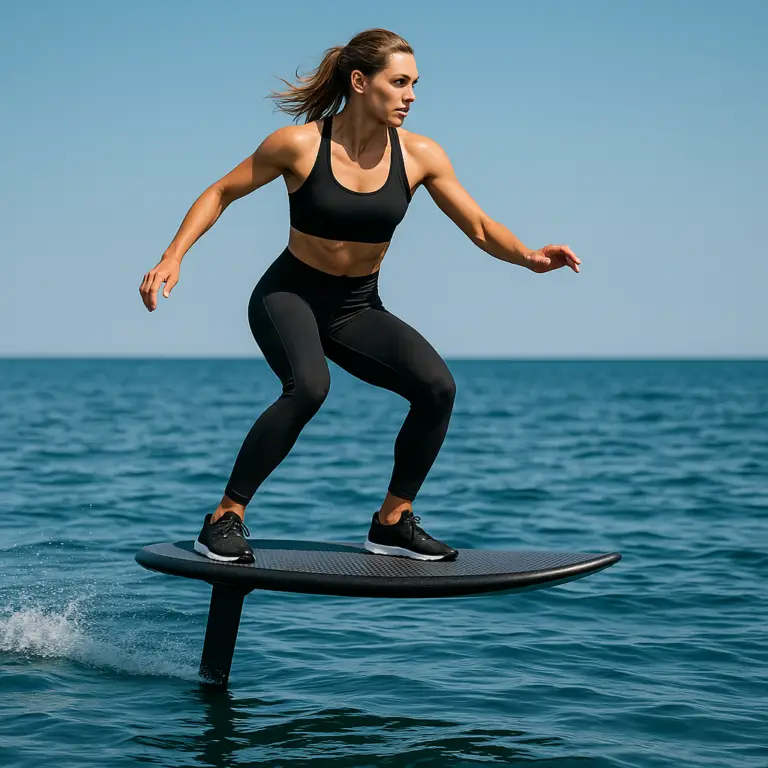
This is the big one. Your core connects your upper and lower body. Every time the foil hits a chop, your rectus abdominis, obliques, and lower back must fire instantly to keep you upright. It’s not a static hold; it’s a dynamic stabilization workout that targets deep stabilizer muscles often ignored in the gym.
“When I first started hydrofoiling, I was shocked at how quickly my legs and core got tired. It’s like balancing on a tightrope over water, and every session feels like a gym workout disguised as fun.” — Tanner, Hydrofoiling™ Team
Curious about how this compares to other sports? Let’s look at the numbers.
🧠 Mental Health and Mindfulness Benefits of Hydrofoil Foiling
It’s not just about muscles; it’s about mindset. Have you ever tried to think about your grocery list while balancing on a foil that’s 3 feet above the water? Impossible.
The “Flow State”
Hydrofoiling forces you into the present moment. The margin for error is so slim that your brain has no room for anxiety, stress, or “what-ifs.” This state of hyper-focus is often described as a “moving meditation.”
Vestibular Training
The constant shifting of your balance activates your vestibular system (inner ear) and proprioceptors (body position sensors). This not only improves your physical balance but also enhances your neuromuscular connections, making you more agile in daily life.
Stress Reduction
The silence of gliding above the water, combined with the rhythmic pumping motion, creates a unique therapeutic effect. Many of our team members report that a 30-minute foiling session leaves them feeling more refreshed than an hour at the gym.
Top 7 Fitness Benefits of Hydrofoil Foiling You Can’t Ignore
We’ve broken down the anatomy, but what are the tangible results? Here are the Top 7 Fitness Benefits that keep us coming back to the water:
- Enhanced Core Stability: The constant need to adjust to the foil’s lift builds a rock-solid core that translates to better posture and reduced back pain on land.
- Improved Balance & Coordination: You’ll notice your balance improving in everyday activities, from walking on uneven ground to playing sports.
- Low-Impact Cardiovascular Health: Unlike running or high-impact sports, foiling is gentle on your joints while still providing a solid cardio workout.
- Full-Body Muscle Tone: From your calves to your shoulders, every major muscle group is engaged, leading to a lean, athletic physique.
- Increased Flexibility: The range of motion required to pump and balance naturally improves your hip and ankle flexibility.
- Mental Resilience: Overcoming the fear of falling and the frustration of the learning curve builds mental toughness.
- Burns Calories Efficiently: With no downtime, you maintain a steady heart rate, maximizing calorie burn per minute.
Essential Muscle Groups Engaged During Hydrofoil Foiling
Let’s get specific. If you want to train for foiling, you need to know which muscles are doing the heavy lifting.
| Muscle Group | Role in Foiling | Training Focus |
|---|---|---|
| Quadriceps | Absorbing shock, pumping for lift | Squats, Lunges, Leg Press |
| Hamstrings & Glutes | Stabilizing the board, generating power | Deadlifts, Hip Thrusts |
| Calves | Fine-tuning balance, edge control | Calf Raises, Single-leg balance |
| Rectus Abdominis | Core stabilization, preventing rotation | Planks, Leg Raises |
| Obliques | Rotational stability, turning | Russian Twists, Side Planks |
| Lower Back (Erectors) | Maintaining upright posture | Back Extensions, Supermans |
| Deltoids & Traps | Holding the wing, balance | Overhead Press, Shrugs |
| Forearms & Grip | Holding the wing or paddle | Farmer’s Caries, Grip Trainers |
Source: Adapted from biomechanical analysis of wing foiling and pump foiling techniques.
How Hydrofoil Foiling Improves Balance, Coordination, and Core Strength
You might be wondering, “How does standing on a wobbly board actually make me stronger?” The answer lies in proprioception.
The “Front Foot” Myth
One of the biggest misconceptions is that you control the foil with your back foot. In reality, 90% of control comes from the front foot. Leaning back causes the nose to dive (a “nose dive”), while leaning forward lifts the tail. This requires a constant, subtle shift of weight that engages your core and leg muscles in a way static exercises never can.
The Physics of the “Wobble”
The “wobble” you feel is caused by conflicting signals between your eyes and your inner ear. To correct it, you must apply pressure to the front foot and engage your core as a gyroscopic stabilizer. This process trains your brain to interpret these signals faster, improving your overall coordination.
Dry Land Drills
You don’t need water to start training. Using a balance board or a Bosu ball can simulate the instability of the foil.
- Single-Leg Squats: Builds quads and glutes while challenging balance.
- Planks with Leg Lifts: Mimics the core engagement needed to stabilize the foil.
- Front Foot Drills: Practicing pressure application on a balance board to lift the tail.
“Pumpfoiling isn’t a symetrical sport… unless you ride switch. Balance both sides, unlock real progression.” — Ludovic Freefoiler
Calorie Burn and Cardiovascular Impact: Hydrofoil Foiling vs. Traditional Surfing
Let’s settle the debate: Foiling vs. Surfing.
| Feature | Traditional Surfing | Hydrofoil Foiling (Pump/Wing) |
|---|---|---|
| Activity Type | Intermittent bursts (paddle, ride, rest) | Continuous movement (pump, glide, adjust) |
| Calorie Burn | 350–60 cal/hr (highly variable) | 40–70+ cal/hr (consistent effort) |
| Rest Time | High (waiting for waves) | Low to None (self-propelled) |
| Joint Impact | High (paddling, popping up) | Low (gliding above water) |
| Muscle Focus | Upper body (paddling), Core (pop-up) | Full Body (legs, core, upper body) |
Note: Calorie burn estimates vary based on intensity, conditions, and rider weight. Wing foiling tends to burn more due to the added upper-body effort.
The key difference is consistency. In surfing, you might paddle hard for 30 seconds, ride for 20, and rest for 5 minutes. In foiling, you are constantly engaged, keeping your heart rate in the aerobic zone for the duration of the session.
Beginner to Pro: How to Start Hydrofoil Foiling for Fitness
So, you’re convinced. You want to get fit and fly. Where do you start?
Step 1: Choose Your Discipline
- Wing Foiling: Great for full-body cardio and upper body strength.
- SUP Foiling: Excellent for core and balance, with a familiar paddling motion.
- Pump Foiling (Freride): The ultimate leg and core workout. No wind or waves needed.
- eFoil: Good for beginners to get the feel of flight without the physical exertion of pumping, but less of a workout.
Step 2: Gear Up
You don’t need the most expensive gear to start. In fact, larger, more stable boards are better for beginners.
- Board Volume: Look for high-volume boards (e.g., AlpineFoil Pocket Pro Carbone) for easier starts.
- Mast Length: Start with a 60cm mast for stability. Move to 75cm+ only when you are confident.
- Wing Size: Begin with a 150cm²+ wing for high lift and stability.
Step 3: Learn the Basics
- Find Flat Water: Avoid waves and chop initially.
- Master the Stance: Keep your knees bent, core engaged, and eyes forward.
- Practice Pumping: Learn to generate speed by moving the board up and down.
For more detailed guides on getting started, check out our Hydrofoil Basics category.
Gear Up: Best Hydrofoil Boards and Equipment for Fitness Enthusiasts
Choosing the right gear is crucial for your fitness journey. A board that’s too small will frustrate you, while one that’s too big will limit your progression.
Product Ratings & Analysis
| Product | Overall Score | Design | Stability | Weight | Maneuverability | Beginner Friendly | Best For |
|---|---|---|---|---|---|---|---|
| Lift Foils eFoil | 8.2/10 | 9 | 8 | 7 | 9 | 8 | Cardio without paddling fatigue |
| Slingshot Hover Glide | 8.2/10 | 8 | 9 | 8 | 7 | 9 | Balance and endurance |
| Naish Thrust Foil Board | 7.6/10 | 7 | 7 | 9 | 8 | 7 | Core strength and agility |
| Cabrinha Switchblade | 7.8/10 | 8 | 8 | 7 | 8 | 8 | Full-body engagement |
| Fanatic Sky SUP Foil | 7.6/10 | 7 | 8 | 8 | 7 | 8 | Upper-body workout |
Lift Foils eFoil
- Pros: Electric-powered, consistent speed, minimal paddling fatigue.
- Cons: Heavy, expensive, less of a workout than manual foiling.
- Verdict: Perfect for beginners who want to learn the feeling of flight without the physical strain.
Slingshot Hover Glide
- Pros: Known for high stability and ease of use.
- Cons: Less maneuverable than smaller boards.
- Verdict: The go-to choice for those focusing on balance and endurance.
Naish Thrust Foil Board
- Pros: Lightweight and highly maneuverable.
- Cons: Requires more skill to balance.
- Verdict: Ideal for intermediate riders aiming to improve core strength.
Cabrinha Switchblade
- Pros: Versatile for wing foiling and surf foiling.
- Cons: Can be tricky for absolute beginners.
- Verdict: Great for full-body engagement and varied conditions.
Fanatic Sky SUP Foil Board
- Pros: Combines SUP with foiling for a unique workout.
- Cons: Heavier than dedicated foiling boards.
- Verdict: Excellent for adding upper-body workout benefits.
👉 CHECK PRICE on:
- Lift Foils eFoil: Amazon | Official Website
- Slingshot Hover Glide: Amazon | Official Website
- Naish Thrust Foil Board: Amazon | Official Website
- Cabrinha Switchblade: Amazon | Official Website
- Fanatic Sky SUP Foil Board: Amazon | Official Website
Safety First: Injury Prevention and Tips for Hydrofoil Fitness Training
Safety is not optional. The foil is a sharp object, and falling can be dangerous.
Essential Safety Gear
- Impact Vest: Recommended brand Dakine for safety and buoyancy.
- Helmet: Recommended brand Triple Eight KP 3 for head protection against falls.
- Wetsuit: Recommended brand O’Neill Psycho Tech for warmth and flexibility.
- Gloves: Prevent cuts from foil edges.
Prevention Tips
- Fall Away: Always fall away from the foil. Never try to catch the board.
- Check Your Gear: Inspect screws, bolts, and foil wings for cracks weekly.
- Ride with a Buddy: Never foil alone.
- Know Your Limits: Don’t attempt maneuvers you aren’t ready for.
For more on safety and technique, visit our Advanced Hydrofoiling Techniques section.
🌟 Real Stories: How Hydrofoil Foiling Transformed Our Fitness Journey
We asked our team members to share their personal stories. Here’s what they had to say:
Tanner’s Story:
“I used to hate cardio. Running was boring, and the gym felt like a chore. Then I tried wing foiling. Now, I look forward to my sessions. I’ve lost 15 pounds, my core is stronger than ever, and I actually enjoy the workout. It’s not a workout; it’s an adventure.”
Eriefoiler’s Story:
“I was dealing with chronic back pain from years of desk work. The core engagement required for foiling has completely transformed my posture. I can now sit for hours without pain. Plus, the mental clarity I get from the water is unmatched.”
Ludovic’s Story:
“I started as a complete beginner. I fell a lot. But with each fall, I learned something. Now, I can pump for miles. The progression is addictive. It’s not just about the fitness; it’s about the sense of accomplishment.”
🔧 Maintenance and Care Tips to Keep Your Hydrofoil Fit for Fitness
Your gear is your partner. Treat it well, and it will last.
- Rinse with Fresh Water: After every session, rinse your board, foil, and mast with fresh water to remove salt and sand.
- Inspect for Damage: Check the foil wings for cracks and the mast for bends.
- Store Properly: Store your gear in a cool, dry place. Avoid direct sunlight.
- Tighten Bolts: Check the bolts on your foil and mast regularly.
For more maintenance tips, check out our Hydrofoil Equipment Reviews category.
🌍 Environmental Impact and Sustainability in Hydrofoil Foiling
Hydrofoiling is one of the most eco-friendly water sports.
- Zero Emissions: Unlike motorized water sports, foiling produces no emissions.
- Reduced Wake: Foils create minimal wake, reducing erosion and disturbance to marine life.
- Sustainable Materials: Many brands are now using recycled materials and sustainable manufacturing processes.
📈 Tracking Progress: How to Measure Your Fitness Gains from Hydrofoil Foiling
How do you know if you’re getting fitter?
- Session Duration: Track how long you can stay on the foil without falling.
- Balance Time: Measure the time you spend gliding smoothly.
- Pumping Efficiency: Count how many pumps it takes to get up to speed.
- Heart Rate: Use a waterproof tracker like the Garmin Swim 2 to monitor your heart rate.
Recommended Apps:
- Dawn Patrol: GPS tracking of distance, speed, and elevation.
- Fitbod: Custom strength workouts targeting quads, glutes, and core.
- TrueSurf: Virtual wave simulator for dry land balance drills.
For more on tracking your progress, visit our Hydrofoil Competitions section.
🧰 Cross-Training Tips to Complement Your Hydrofoil Fitness Routine
To maximize your fitness gains, you need to train on land too.
- Yoga: Improves flexibility and balance. Focus on poses like Child’s Pose, Puppy Pose, Plank Pose, Low Lunge, and Warior Poses.
- Pilates: Strengthens the core and improves stability.
- Strength Training: Focus on squats, lunges, and rows to build the muscles used in foiling.
- Balance Drills: Use a balance board or Bosu ball to simulate the instability of the foil.
“When you’re out there doing foil sports, flexibility and core strength is absolutely essential.” — Halflife Live Video Presenter
Check out the featured video for a demonstration of these yoga poses.
🎯 Setting Goals: Maximizing Fitness Benefits with Hydrofoil Foiling
Set SMART goals to keep yourself motivated.
- Specific: “Stay on the foil for 5 minutes without falling.”
- Measurable: Track your session duration and balance time.
- Achievable: Start small and build up.
- Relevant: Focus on the fitness benefits you want to achieve.
- Time-bound: “Achieve my goal within 3 months.”
For more on goal setting, visit our Hydrofoil Board Selection category.
Conclusion

So, did we answer the question that started it all: Is hydrofoil foiling the ultimate core workout? The answer is a resounding yes, but with a caveat. It’s not just a workout; it’s a dynamic, full-body symphony where your core is the conductor.
We started by debunking the myth that foiling is just about “gliding.” We revealed that the constant micro-adjustments required to stay airborne turn every session into a high-intensity interval training (HIT) session disguised as play. From the quadriceps absorbing the shock to the obliques twisting for turns, and the rectus abdominis acting as the central stabilizer, no muscle group is left behind.
The Verdict:
If you are looking for a low-impact, high-reward fitness regimen that simultaneously improves your balance, coordination, mental focus, and core strength, hydrofoil foiling is unmatched. It bridges the gap between athletic training and mindfulness, offering a “flow state” that few other sports can replicate.
Our Confident Recommendation:
Whether you choose Wing Foiling for the upper-body cardio, Pump Foiling for the leg-burning endurance, or eFoiling to master the mechanics before the physical grind, the investment in your fitness is worth every penny. Start with a high-volume board and a 60cm mast to build confidence, then progressively downsize as your core strengthens. Don’t forget the safety gear—your helmet and impact vest are non-negotiable.
The journey from “wobbly beginner” to “smooth glider” is the real fitness transformation. As we saw with Tanner and Eriefoiler, the results go beyond the water, improving posture, reducing back pain, and sharpening the mind. So, what are you waiting for? The water is calling, and your core is ready to fly.
Recommended Links
Ready to gear up or deepen your knowledge? Here are our top picks for equipment, training resources, and books to get you started on your foiling fitness journey.
🏄 ♂️ Top Hydrofoil Gear & Equipment
- Slingshot Hover Glide Foil System: Amazon | Official Website
- Lift Foils eFoil Electric Hydrofoil: Amazon | Official Website
- Naish Thrust Foil Board: Amazon | Official Website
- Cabrinha Switchblade Wing: Amazon | Official Website
- Fanatic Sky SUP Foil Board: Amazon | Official Website
🛡️ Essential Safety & Training Gear
- Dakine Impact Vest: Amazon | Official Website
- Triple Eight KP 3 Helmet: Amazon | Official Website
- O’Neill Psycho Tech Wetsuit: Amazon | Official Website
- Garmin Swim 2 Waterproof Watch: Amazon | Official Website
📚 Books & Training Resources
- “The Art of Foiling: A Guide to Wing, SUP, and Surf Foiling” (General Guide): Amazon
- “Core Performance: The Revolutionary Workout Program to Transform Your Body and Your Life” by Mark Verstegen: Amazon
- “Yoga for Surfers: A Guide to Flexibility and Strength” by Dave Salveson: Amazon
FAQ

What core exercises are best for improving hydrofoil balance?
To mimic the dynamic instability of foiling, you need exercises that challenge your proprioception and anti-rotation capabilities.
- Single-Leg Deadlifts: These target the hamstrings, glutes, and lower back while forcing your core to stabilize against the shifting weight.
- Plank Variations: Specifically, Plank with Leg Lifts or Plank with Arm Reaches simulate the constant micro-adjustments needed on the water.
- Russian Twists: These engage the obliques, which are crucial for turning and maintaining lateral stability on the foil.
- Bosu Ball Squats: Performing squats on an unstable surface forces your core to fire continuously, just like it does when pumping a foil.
Read more about “🚀 7 Best Hydrofoil Foiling & Balance Training Apps (2026)”
How does foiling on a hydrofoil board strengthen your abs?
Foiling strengthens your abs through isometric and eccentric loading. Unlike a crunch where the muscle shortens, foiling requires your rectus abdominis to remain contracted for extended periods to prevent your torso from collapsing under the force of the water. Additionally, the obliques work dynamically to counteract the rotational forces generated by the foil’s lift, creating a 360-degree core workout that static gym exercises often miss.
Can hydrofoil boarding help build core stability for beginners?
Absolutely. In fact, it is one of the fastest ways to build functional core stability. Beginners often underestimate the intensity; the moment you leave the water, your core is the only thing keeping you upright. The “wobble” phase forces your nervous system to recruit deep stabilizer muscles (like the transverse abdominis) immediately. As you progress, your core becomes more efficient, allowing you to stay on the foil longer and perform more complex maneuvers.
Read more about “🌊 What is Hydrofoiling? The Secret to Flying on Water (2026)”
What are the top 5 core workouts for hydrofoil foilers?
- Hanging Leg Raises: Targets the lower abs and hip flexors, essential for the “pumping” motion.
- Side Planks with Hip Dips: Builds lateral stability for edge control.
- Bird-Dogs: Enhances coordination between the core and limbs, mimicking the balance required on the board.
- Palof Press: An anti-rotation exercise that strengthens the obliques against twisting forces.
- Single-Arm Farmer’s Carry: Builds grip strength and core stability simultaneously, crucial for holding a wing or paddle.
How long does it take to build core strength for foiling?
This varies by individual fitness level, but most beginners notice a significant improvement in core endurance within 4 to 6 weeks of consistent foiling (2-3 sessions per week). However, mastering the “flow state” where the core works effortlessly can take 3 to 6 months. The key is consistency; the more you foil, the more your body adapts to the unique demands of the sport.
Read more about “⏱️ How Long to Learn Hydrofoiling? The 5-Path Timeline (2026)”
Do hydrofoil exercises improve posture and core engagement?
Yes. The constant need to maintain an upright, balanced posture on the foil translates directly to better posture on land. Foiling encourages a neutral spine and engaged core, counteracting the “slumped” posture common in desk jobs. Over time, this leads to reduced back pain and improved overall body alignment.
What is the connection between core strength and smooth hydrofoil turns?
The core is the link between your upper and lower body. When you initiate a turn, your legs shift the board’s edge, but your core must rotate your torso to maintain balance and generate power. A weak core results in a “lose” turn where the rider loses stability. A strong core allows for precise, fluid turns by transferring energy efficiently from the legs through the torso to the foil.
How does the “Front Foot” technique rely on core strength?
The “Front Foot” technique, where 90% of control comes from the front foot, relies heavily on the core to transfer weight forward without collapsing the chest. Without a strong core, leaning forward causes the rider to lose balance and dive. A strong core allows the rider to maintain a forward lean while keeping the upper body stable, enabling smooth take-offs and sustained flight.
Reference Links
- Hydrofoiling.org: Hydrofoiling Basics
- Hydrofoiling.org: Hydrofoil Equipment Reviews
- Hydrofoiling.org: Advanced Hydrofoiling Techniques
- Hydrofoiling.org: Hydrofoil Board Selection
- Hydrofoiling.org: Hydrofoil Competitions
- Kitewing and Foil: Strength Training Exercises for Kitesurfing and Wing Foiling
- Slingshot Sports: Hover Glide Foil Systems
- Lift Foils: eFoil Electric Hydrofoils
- Naish: Thrust Foil Boards
- Cabrinha: Switchblade Wings
- Dakine: Impact Vests
- Triple Eight: KP 3 Helmets
- O’Neill: Psycho Tech Wetsuits
- Garmin: Swim 2 Watch