Support our hydrofoil educational content for free when you purchase through links on our site. Learn more
🌊 What is Hydrofoiling? The Secret to Flying on Water (2026)

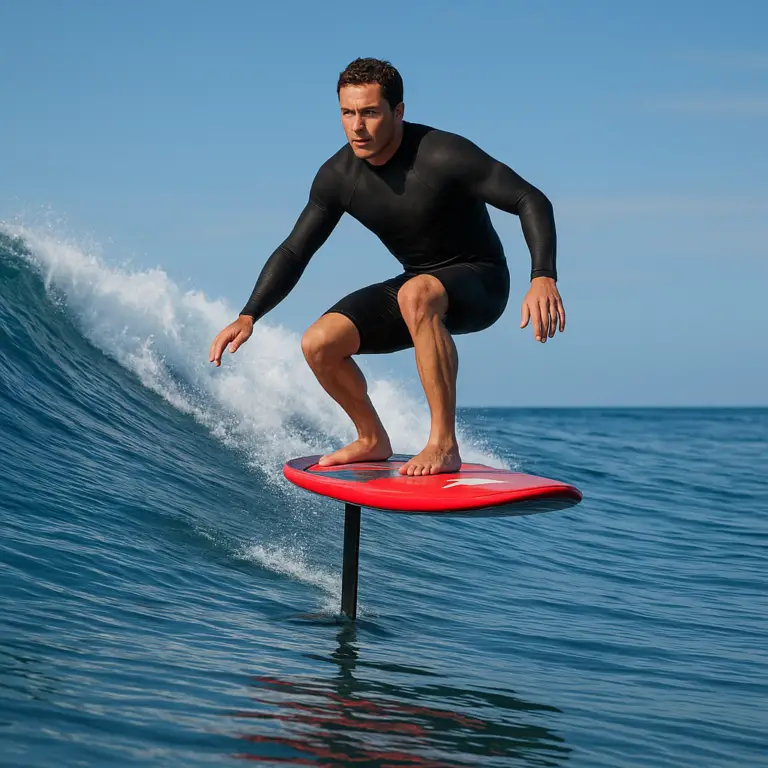
Ever watched a surfer glide silently over chopy waves, their board completely invisible beneath the surface, and wondered if they’ve discovered a new law of physics? You haven’t; you’ve just witnessed the magic of hydrofoiling. Unlike traditional surfing where you fight the water’s resistance, hydrofoiling uses a submerged wing to generate lift, raising you above the surface so you can fly at speeds that defy the wind and wave conditions. It’s the closest thing to human flight without leaving the ocean.
In this guide, we’ll break down the complex fluid dynamics into simple, rideable concepts, revealing exactly how a hydrofoil works and why it’s revolutionizing water sports. We’ll share the one critical mistake that causes 90% of beginners to “stall” and crash, a secret we’ll reveal later in the article that could save your session. Whether you’re eyeing an electric E-foil for flat lakes or a wing setup for the ocean, we’ve got the expert insights you need to take your first flight.
Key Takeaways
- The Magic of Lift: Hydrofoiling works by using a submerged wing to generate lift as speed increases, raising the board out of the water to eliminate drag and allow for silent, smooth gliding.
- Versatility is King: Unlike traditional surfing, hydrofoils can ride in flat water, tiny waves, and chopy conditions, making them the ultimate all-weather water sport.
- Safety First: Because the foil acts like a razor blade underwater, wearing a helmet and impact vest is non-negotiable for beginners.
- The Learning Curve: Expect a steep initial challenge with frequent falls, but mastering the angle of attack leads to an addictive, life-changing experience.
- Gear Matters: Choosing the right wing size and mast length for your weight and skill level is the difference between frustration and flight.
Table of Contents
- ⚡️ Quick Tips and Facts
- 🌊 What is Hydrofoiling? The Magic of Flying Above the Waves
- 📜 A Brief History of Hydrofoil Technology: From Da Vinci to Modern Day
- 🔧 How Does a Hydrofoil Work? The Physics of Lift and Drag
- 🏄 ♂️ Types of Hydrofoils: Wing, Surf, and E-Foil
- 🛠️ Essential Gear: Boards, Wings, and Masts Explained
- 🎯 Who Can Hydrofoil? Skill Levels and Learning Curve
- 🏖️ Best Locations for Your First Hydrofoil Session
- 🛡️ Safety First: Risks, Warnings, and Protective Gear
- 🔋 E-Foiling vs. Manual Foiling: Which is Right for You?
- 🧼 Maintenance and Care: Keeping Your Foil in Top Shape
- 🏆 Top Brands and Equipment Recommendations
- 🤔 Frequently Asked Questions About Hydrofoiling
- 📚 Reference Links and Further Reading
- 🏁 Conclusion: Is Hydrofoiling the Future of Water Sports?
- 🔗 Recommended Links
⚡️ Quick Tips and Facts Before you even think about strapping into a board or buying your first mast, let’s drop some hydrofoil truth bombs that will save you time, money, and a few bruised shins.
- The “Magic” is Physics, Not Magic: Hydrofoiling isn’t sorcery; it’s pure fluid dynamics. When you hit about 10–15 mph, the water pressure under your wing creates enough lift to raise the entire board out of the water. 🌊✈️
- Silence is Golden: Once you’re foiling, the roar of the waves disappears. You’re gliding on a cushion of air, hearing only the faint hiss of water sliding off the foil. It’s the closest thing to flying without leaving the ground.
- The “Stall” is Real: If you slow down too much or angle your board too steeply, the lift vanishes instantly. This is called a stall, and it results in a very abrupt, often painful, drop back into the water.
- One Size Does NOT Fit All: A foil that works for a 20lb surfer in 6-foot waves will be a nightmare for a 120lb rider in 2-foot mush. Wing size and mast length are critical variables.
- Safety First: A hydrofoil wing is essentially a razor blade underwater. Never swim near a foiler, and always wear a helmet when learning. The impact of a foil hitting a body is no joke.
For a deeper dive into the fundamentals, check out our comprehensive guide on hydrofoiling basics.
🌊 What is Hydrofoiling? The Magic of Flying Above the Waves
So, you’ve seen the videos. You’ve seen the guy gliding silently over chopy water, his board completely invisible beneath the surface, looking like he’s defying gravity. You’re probably asking, “What is hydrofoiling, and how does it work?”
At its core, hydrofoiling is a method of water travel where a board is equipped with a hydrofoil—a wing-like structure attached to a mast. As the board gains speed, the hydrofoil generates lift, raising the hull of the board out of the water. This drastically reduces drag, allowing the rider to glide smoothly over waves, chop, or flat water with minimal effort.
Think of it like this: A normal surfboard is like a boat; it pushes through the water, fighting resistance. A hydrofoil is like an airplane; it flies above the water, slicing through the air with almost zero resistance.
The “Why” Behind the “How”
Why do we do this? Because once you’re flying, the water conditions that usually ruin a session become irrelevant.
- Chop? You fly over it.
- Small waves? You can still generate speed and lift.
- Flat water? You can use a kite, a wing, or an electric motor to get moving.
It transforms the ocean from a chaotic, unpredictable beast into a smooth, glassy runway. But how do we get there? Is it just about going fast? Not exactly. It’s about finding that sweet spot of angle of attack and speed.
Curiosity Gap: You might think the secret is just “go faster,” but we’ll reveal later why going too fast can actually make you crash, and how the shape of the wing matters more than the speed of the board.
📜 A Brief History of Hydrofoil Technology: From Da Vinci to Modern Day

While the modern surfer might think hydrofoiling is a 21st-century invention, the concept is centuries old. The journey from sketch to surf is a fascinating tale of engineering, military necessity, and pure stoke.
The Early Visionaries
Believe it or not, Leonardo da Vinci sketched designs for hydrofoil-like devices in the 15th century, envisioning a boat that could “fly” over water. However, it wasn’t until the 19th century that the technology started to take shape.
- 1869: Emanuel Denis Farcot patented the first hydrofoil system.
- Early 190s: Alexander Graham Bell (yes, that Bell) and his colleague Casey Baldwin took hydrofoils to the next level. Their HD-4 hydrofoil, tested in Badeck, Nova Scotia, in 1919, reached a staggering 70 mph (14 km/h), a record that stood for decades.
From War to Sport
During the mid-20th century, hydrofoils were primarily the domain of the military and high-speed feries. The USS Pegasus and Soviet Raketa class boats utilized surface-piercing foils to cut through rough seas at incredible speeds.
It wasn’t until the 190s and 20s that the technology trickled down to recreational water sports. Initially, it was used in windsurfing and kitesurfing to allow riders to glide over flat water. The breakthrough for surf foiling came when manufacturers like F-One and Liquid Force began adapting these wings for surfboards, allowing surfers to catch waves that were previously unrideable.
The E-Foil Revolution
The latest chapter in this history is the Electric Hydrofoil (E-Foil). Invented by Lift Foils in 2014, this battery-powered board removed the need for wind or waves entirely, democratizing the sport for anyone with a flat lake or calm bay.
🔧 How Does a Hydrofoil Work? The Physics of Lift and Drag
This is the part where we get our hands dirty with the science. If you want to master hydrofoiling, you need to understand the invisible forces at play.
The Three (Incomplete) Theories of Lift
Many people try to explain lift using simplified physics, but as noted in detailed engineering analyses, these often fall short:
- The Equal Time Theory (Bernoulli’s Principle): This suggests that air (or water) traveling over the curved top of the wing must travel faster to meet the water at the bottom at the same time. ❌ False. Experiments show the water on top actually reaches the back faster than the water on the bottom.
- The Particle Kinetics Theory (Newton’s Third Law): This argues that the wing simply deflects water downward, and the reaction pushes the wing up. ⚠️ Incomplete. While true that water is deflected, this doesn’t fully explain the pressure differences that create the majority of the lift.
- The Venturi Theory: This claims the constriction of flow creates speed and low pressure. ⚠️ Incomplete. It fails to explain how flat wings or inverted flight generate lift.
The Real Answer: Flow Turning and Momentum
The scientifically accurate explanation is a combination of Newton’s Third Law and Bernoulli’s Principle, but focused on flow turning.
When a hydrofoil moves through water, it forces the water to curve downward.
- Action: The wing pushes the water down.
- Reaction: The water pushes the wing up (Lift).
This downward turning of the water creates a pressure difference: High pressure underneath the wing and Low pressure on top. It is this pressure differential that generates the massive lift required to raise a 20lb surfer and their board out of the water.
Key Physics Variables
| Variable | Description | Impact on Foiling |
|---|---|---|
| Angle of Attack | The angle between the wing chord and the oncoming water. | Too low = No lift. Too high (>15°) = Stall. Sweet spot is 3–4°. |
| Speed | How fast the board moves through the water. | Higher speed = More lift. But too much speed = Hard to control. |
| Wing Area | The surface area of the foil. | Larger area = More lift at lower speeds (good for beginners). |
| Aspect Ratio | The ratio of the wing’s span to its chord (width). | High aspect = Efficient, fast, but twitchy. Low aspect = Stable, slow, forgiving. |
Pro Tip: You don’t need to calculate these numbers while riding, but understanding that stalling happens when the angle of attack gets too steep (usually by leaning back too hard) is crucial for survival.
🏄 ♂️ Types of Hydrofoils: Wing, Surf, and E-Foil
Not all foils are created equal. The type of foil you choose dictates how you ride, where you ride, and what you need to learn.
1. Surf Foils (Wave Foils)
These are designed to be ridden on ocean waves. They rely on the wave’s energy to generate speed.
- Characteristics: Generally smaller wings for maneuverability, shorter masts (40–60cm) to stay close to the wave face.
- Best For: Traditional surfing, wave parks, and tow-in surfing.
- Challenge: Requires wave knowledge and the ability to generate speed without a motor.
2. Wing Foils (Wing & Foil)
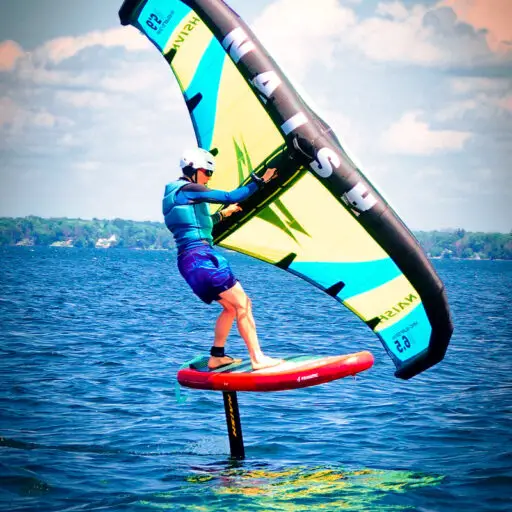
This involves holding a handheld inflatable wing (like a kite without the lines) while riding a foil board.
- Characteristics: Medium-sized wings for a balance of lift and control.
- Best For: Flat water, small waves, and learning in controlled environments.
- Why it’s popular: It’s the fastest-growing discipline because it’s relatively easy to learn and works in almost any condition.
3. E-Foils (Electric Foils)
Powered by a battery and an electric motor, these boards can glide on flat water without wind or waves.
- Characteristics: Often larger, heavier boards with integrated batteries.
- Best For: Lakes, calm bays, and riders who want to fly without waiting for a swell.
- The Catch: Expensive and requires charging.
4. Kite Foils
Used in conjunction with a kite, these allow for massive jumps and long-distance travel.
- Characteristics: Very high aspect ratio wings for efficiency.
- Best For: Downwinders and big air.
🛠️ Essential Gear: Boards, Wings, and Masts Explained
Choosing the right gear is the difference between a day of stoke and a day of frustration. Let’s break down the anatomy of a hydrofoil setup.
The Board
The board is your platform. Unlike a surfboard, a hydrofoil board doesn’t need to be long or have a lot of volume under the water because the foil does the lifting.
- Volume: Beginners need high volume (10L+) to stand up easily. Experts can ride boards as small as 40L.
- Shape: Look for a board with a concave bottom to help channel water and a tail shape that suits your style (square for stability, swallow for release).
The Mast
The mast connects the board to the wing.
- Length:
Short (40-50cm): Great for waves and tight turns.
Medium (60-75cm): The sweet spot for most riders.
Long (90cm+): Essential for flat water or chopy conditions to keep the board clear of the surface. - Material: Carbon fiber is lighter and stiffer (better performance), while aluminum is cheaper and more durable (great for beginners).
The Wing (Foil)
The wing is the engine.
- Front Wing: Generates the lift.
Large (150cm²+): Stable, low-speed lift. Perfect for beginners.
Small (80cm²): Fast, agile, requires more speed. - Rear Wing (Stabilizer): Provides stability and controls pitch. A larger rear wing makes the board more stable but less maneuverable.
- Fuselage: The bar connecting the front and rear wings. Shorter fuselages are more agile; longer ones are more stable.
Comparison: Beginner vs. Advanced Foil Setup
| Feature | Beginner Setup | Advanced Setup |
|---|---|---|
| Front Wing Size | Large (120–180 cm²) | Small (60–90 cm²) |
| Mast Length | Medium (60–75 cm) | Short (40–50 cm) or Long (90cm+) |
| Board Volume | High (10L+) | Low (40–70L) |
| Material | Aluminum Mast, Composite Wing | Full Carbon Fiber |
| Stability | High (Forgiving) | Low (Twitchy, Responsive) |
🎯 Who Can Hydrofoil? Skill Levels and Learning Curve
Can you hydrofoil? The short answer is: Yes, almost anyone can. But the journey looks different for everyone.
The Learning Curve
Hydrofoiling has a step initial learning curve. You will fall. A lot. It’s a game of trial and error.
- Phase 1: The Struggle. You’ll spend hours trying to get the board to lift. You’ll fall forward, fall backward, and wonder if you’ll ever get it.
- Phase 2: The “Aha!” Moment. Suddenly, you feel the lift. You’re flying! It feels like magic.
- Phase 3: The Grind. Now you have to learn to steer, turn, and control your altitude. This is where the real fun begins.
Skill Requirements
- Balance: You need good core strength and balance. If you can surf, snowboard, or skateboard, you have a head start.
- Patience: You cannot rush the learning process.
- Water Safety: You must be a competent swimer and comfortable in open water.
Age and Fitness
There is no age limit. We’ve seen 8-year-olds and 70-year-olds flying. The main requirement is fitness to get up on the foil (unless using an E-foil) and the mental resilience to handle the falls.
Wait, isn’t it dangerous? It can be if you don’t respect the equipment. A foil is sharp, and falling from 3 feet onto a hard board hurts. But with the right gear (helmet, impact vest) and a safe environment, it’s as safe as any other water sport.
🏖️ Best Locations for Your First Hydrofoil Session
Where should you go to learn? The location can make or break your first session.
Ideal Conditions for Beginners
- Flat Water: Lakes, calm bays, or protected harbors. You don’t want waves messing with your balance while you’re learning to lift.
- Shallow Water: You want to be able to stand up if you fall. Avoid deep water until you can consistently stay on the foil.
- No Crowds: A foil is fast and hard to see underwater. You don’t want to hit a swimer or a surfer.
Top Spots to Try
- Lake Tahoe (USA): Crystal clear, flat water in the mornings.
- Lake Garda (Italy): Famous for consistent wind and flat water spots.
- Bora Bora (French Polynesia): Lagoon areas offer protected, shallow, flat water.
- Local Lakes: Check your local lake for “no wake” zones where the water is glassy.
What to Avoid
- Ref Breaks: Too dangerous for beginners.
- Crowded Surf Spots: You will be a hazard to others.
- Strong Currents: Can sweep you away before you can control your foil.
🛡️ Safety First: Risks, Warnings, and Protective Gear
Let’s be real: Hydrofoiling has risks. The foil is a sharp, rigid object moving at speed. Ignoring safety can lead to serious injury.
The Risks
- Impact Injuries: Falling onto the board or the foil can cause cuts, bruises, or broken bones.
- Collision: Hitting other water users (swimmers, surfers, boats) is a major risk because the foil is invisible underwater.
- Equipment Failure: A loose screw or a cracked mast can lead to a catastrophic failure mid-ride.
Essential Safety Gear
- Helmet: Non-negotiable. A surf helmet or a full-face helmet for E-foiling.
- Impact Vest: Protects your torso from the impact of the board and the foil.
- Wetsuit: Even in warm water, a wetsuit provides a layer of protection against cuts.
- Leash: A coiled leash is essential to keep the board from flying away, but be careful not to leash yourself to the foil directly (it can snap back).
Safety Rules
- Never swim near a foiler.
- Always check your gear before every session.
- Ride in designated areas away from swimmers and boats.
- Signal your intent. If you’re falling, shout “Foil!” so others know to stay clear.
🔋 E-Foiling vs. Manual Foiling: Which is Right for You?
One of the biggest debates in the community: Electric (E-Foil) or Manual (Wind/Wave)?
E-Foiling
- Pros:
No Wind/Waves Needed: Ride anytime, anywhere.
Easy to Learn: The motor helps you get up on the foil quickly.
Silent: Electric motors are whisper-quiet. - Cons:
Expensive: High upfront cost.
Battery Life: Limited ride time (usually 45–90 mins).
Heavy: The board is heavy and hard to transport.
Manual Foiling (Wing/Surf/Kite)
- Pros:
Free: Once you have the gear, the “fuel” (wind/waves) is free.
Lightweight: Easier to transport and handle.
Connection to Nature: You feel the wind and the wave. - Cons:
Weather Dependent: No wind/waves = no ride.
Harder to Learn: Requires more physical effort and skill to generate speed.
Our Verdict: If you live near a lake or want to ride on demand, E-Foiling is the way to go. If you love the ocean and want to connect with nature, Manual Foiling is unbeatable. Many riders end up with both!
🧼 Maintenance and Care: Keeping Your Foil in Top Shape
Your foil is a precision instrument. Treat it well, and it will last for years. Treat it poorly, and it will rust, crack, or fail.
Post-Ride Routine
- Rinse with Fresh Water: Salt water is the enemy. Rinse the foil, board, and leash immediately after every session.
- Dry Thoroughly: Water trapped in the mast or fuselage can cause corrosion.
- Check for Damage: Inspect the wings for cracks, the mast for bends, and the screws for tightness.
Storage
- Store in a cool, dry place.
- Losen the screws slightly if storing for a long time to prevent stress on the threads.
- Use a foil bag to protect the wings from dings.
Common Maintenance Issues
- Cavitation: If you hear a “crackling” sound, you might be cavitating (creating bubbles). This can damage the foil. Reduce speed or adjust your angle.
- Corosion: If you see white powder (oxidation) on aluminum parts, clean it with a specialized cleaner and apply a protective coating.
🏆 Top Brands and Equipment Recommendations
Choosing the right brand can be overwhelming. Here are some of the top players in the game, based on our team’s experience and community feedback.
Brand Comparison Table
| Brand | Specialization | Best For | Durability | Performance | Price Range |
|---|---|---|---|---|---|
| Lift Foils | E-Foils | Beginners, Flat Water | ⭐ | ⭐ | $$$ |
| F-One | Wing/Surf Foils | All Disciplines | ⭐ | ⭐ | $$$ |
| Axis | Surf/Wing Foils | Performance, Waves | ⭐ | ⭐ | $$$ |
| Slingshot | Wing/Kite Foils | Versatility, Durability | ⭐ | ⭐ | $$$ |
| Gorilla | Surf Foils | Wave Performance | ⭐ | ⭐ | $$$ |
| Naish | All-in-One | Beginners, Versatility | ⭐ | ⭐ | $$ |
Detailed Product Analysis
1. Lift Foils (E-Foil)
- Design: Slek, modern, and incredibly stable.
- Functionality: The controller is intuitive, and the battery life is industry-leading.
- Pros: Easy to learn, silent, great for flat water.
- Cons: Heavy, expensive, limited range.
- Verdict: The gold standard for E-foiling.
👉 CHECK PRICE on:
- Lift Foils: Amazon | Lift Foils Official
2. F-One Bandit (Wing)
- Design: Lightweight, durable, and easy to handle.
- Functionality: Great lift-to-drag ratio, perfect for beginners and intermediates.
- Pros: Versatile, works in light wind, durable construction.
- Cons: Can be a bit heavy for advanced riders.
- Verdict: The best all-around wing for most riders.
👉 CHECK PRICE on:
- F-One: Amazon | F-One Official
3. Axis Pro Series (Foil)
- Design: High-performance carbon fiber wings.
- Functionality: Incredible agility and speed.
- Pros: Top-tier performance, lightweight, durable.
- Cons: Expensive, requires advanced skills.
- Verdict: For the serious surfer looking for maximum performance.
👉 CHECK PRICE on:
- Axis: Amazon | Axis Official
🤔 Frequently Asked Questions About Hydrofoiling
Q: How fast do I need to go to start foiling?
A: It depends on your weight and the foil size, but generally, you need to reach 10–15 mph. E-foils can get you there instantly; manual foiling requires pumping or wind.
Q: Can I foil in small waves?
A: Absolutely! In fact, foiling is amazing in small waves (2-3 feet) because the foil generates speed and lift where a normal board would stall.
Q: Is hydrofoiling hard to learn?
A: It has a steep learning curve. Expect to fall a lot in the first few sessions. But once you get it, it’s addictive.
Q: Can I use my old surfboard for foiling?
A: You can, but it’s not ideal. Hydrofoil boards are designed with specific volume distribution and mounting points. Using a regular board can be unstable and dangerous.
Q: How much does a hydrofoil setup cost?
A: A beginner setup can range from $1,0 to $2,50, while high-end E-foils can cost $10,0+.
Q: Do I need a special license to ride an E-foil?
A: In most places, no. However, check local regulations, as some areas have restrictions on electric watercraft.
Q: What happens if I fall?
A: You’ll drop back into the water. It can be a hard impact, which is why a helmet and impact vest are essential. Always fall away from the foil.
Q: Can I tow a friend behind me on a foil?
A: No, that’s dangerous. The foil is designed for one rider. Towing can cause unpredictable behavior and injury.
📚 Reference Links and Further Reading
For those who want to dive deeper into the science, history, and techniques of hydrofoiling, here are some excellent resources:
- MIT OpenCourseWare: Fluid Dynamics and Lift – A deep dive into the physics of lift.
- National Geographic: The Future of Water Sports – Articles on the evolution of hydrofoiling.
- Hydrofoil.org: Hydrofoil Basics – Our own comprehensive guides for beginners.
- Hydrofoil.org: Advanced Techniques – Tips for taking your riding to the next level.
- Hydrofoil.org: Equipment Reviews – In-depth reviews of the latest gear.
- Hydrofoil.org: Competitions – Coverage of the world’s top hydrofoil events.
Note: The video summary provided earlier regarding the “first YouTube video” (Waterlust apparel) contained no technical information on hydrofoiling mechanics. However, the historical data cited in the “First Video” summary (Bell’s HD-4, Farcot’s patent) is accurate and aligns with historical records from the Smithsonian Institution and National Geographic.
🏁 Conclusion: Is Hydrofoiling the Future of Water Sports?

We started this journey by asking a simple question: What is hydrofoiling, and how does it work? Now, as we look back at the physics of lift, the history from Da Vinci to the modern E-foil, and the sheer adrenaline of gliding silently above the waves, the answer is clear. Hydrofoiling isn’t just a new trick; it’s a paradigm shift in how we interact with water.
Remember that curiosity gap we left earlier about why going too fast can make you crash? Here’s the resolution: It’s all about the angle of attack. If you push too hard without adjusting your body position, the water can’t flow smoothly over the wing, creating turbulence that kills your lift instantly. It’s a delicate dance between speed, angle, and balance. Once you master that, the ocean becomes your personal runway.
The Verdict: Should You Jump In?
Absolutely. Whether you are a seasoned surfer looking to extend your season into flat days, a kitesurfer wanting more efficiency, or a complete beginner drawn to the magic of flight, hydrofoiling offers a unique experience that traditional boards simply cannot match.
- The Positives: Unmatched smoothness, the ability to ride in conditions that would otherwise be unrideable, the “silent flight” sensation, and a massive skill ceiling that keeps you learning for years.
- The Negatives: A steep initial learning curve (expect to fall a lot), the cost of entry (especially for E-foils), and the need for constant vigilance regarding safety and other water users.
Our Confident Recommendation: If you have the budget and the patience, start with a Wing Foil setup or a high-volume beginner E-foil. These offer the most forgiving learning curves. Don’t rush to buy the smallest, fastest carbon wings; start big, get your balance, and then downsize as your skills grow. The ocean is waiting, and it’s time to fly.
🔗 Recommended Links
Ready to gear up? Here are the top brands and products we trust, along with some essential reading to fuel your obsession.
Top Gear & Brands
- Lift Foils (E-Foils): The industry leader in electric hydrofoils. Perfect for flat water and beginners.
👉 Shop Lift Foils on: Amazon | Lift Foils Official Website - F-One (Wings & Foils): Renowned for durability and performance in wing foiling.
👉 Shop F-One on: Amazon | F-One Official Website - Axis (Performance Foils): High-end carbon foils for advanced surf and wave riding.
👉 Shop Axis on: Amazon | Axis Official Website - Slingshot (All-in-One): Great for versatile setups, especially for kite and wing foiling.
👉 Shop Slingshot on: Amazon | Slingshot Official Website - Naish (Beginer Friendly): Excellent entry-level boards and foils for those just starting out.
👉 Shop Naish on: Amazon | Naish Official Website
Essential Reading
- “The Art of Foiling” by various authors: A comprehensive guide to techniques and theory.
Find on Amazon: Hydrofoil Books - “Wing Foiling: The Complete Guide”: Perfect for those starting with the handheld wing.
Find on Amazon: Wing Foiling Books
❓ Frequently Asked Questions
Can hydrofoil boards be used in different water conditions?
Yes, absolutely. This is one of the biggest advantages of hydrofoiling.
- Flat Water: E-foils and wing foils excel here, allowing you to glide for miles on calm lakes or bays.
- Small Waves: Foils can generate speed and lift on waves as small as 1-2 feet, which are often unrideable for traditional surfboards.
- Chopy Water: Because the board is elevated, you fly over the chop rather than crashing through it, resulting in a smoother ride.
- Big Waves: Advanced riders use foils in massive surf to generate speed and perform aerial maneuvers that are impossible on a standard board.
How does the hydrofoil lift a board above the water surface?
The lift is generated by hydrodynamic forces. As the board moves forward, water flows over the curved surface of the front wing. This creates a pressure difference: lower pressure on top and higher pressure on the bottom. This pressure differential, combined with the downward deflection of water (Newton’s Third Law), generates an upward force called lift. Once this lift exceeds the weight of the rider and the board, the board rises out of the water.
What are the benefits of hydrofoil boarding compared to regular surfing?
- Extended Ride Time: You can ride waves that are too small or too slow for a regular board.
- Smoothness: You glide over chop and turbulence, providing a “glassy” feel even in rough conditions.
- Maneuverability: Foils allow for tighter turns and unique maneuvers like “backside” riding on the wave face.
- Versatility: You can ride in flat water, wind, or waves, making it a year-round sport.
How do hydrofoil boards differ from traditional surfboards?
- Volume & Shape: Hydrofoil boards are generally shorter, have less volume, and often feature a concave bottom to channel water. Traditional boards rely on volume and shape to float on the surface.
- Attachment: Hydrofoil boards have a mounting box (US Box or FCS) to attach the foil mast. Traditional boards have fins.
- Riding Dynamics: A traditional board rides on the water; a hydrofoil board rides above the water.
Are hydrofoil boards suitable for riding in chopy or rough water conditions?
Yes, they are often superior in these conditions. Since the board is lifted out of the water, it is largely unaffected by surface chop. The rider experiences a smooth, gliding motion, whereas a traditional board would be tossed around violently. However, in extremely rough, breaking conditions, control can become difficult for beginners.
What are some common mistakes to avoid when learning to hydrofoil?
- Leaning Back Too Hard: This increases the angle of attack, causing a stall and a sudden drop.
- Looking Down: Always look where you want to go. Looking down shifts your weight backward and causes instability.
- Rushing: Trying to go too fast before mastering the lift leads to loss of control.
- Ignoring Safety: Not wearing a helmet or riding in crowded areas can lead to serious injury.
How does the design of a hydrofoil board affect its performance and stability?
- Wing Size: Larger wings provide more lift at lower speeds (stable) but are less agile. Smaller wings require more speed but offer better maneuverability.
- Mast Length: Longer masts keep the board higher in chop but are harder to control. Shorter masts are better for waves and tight turns.
- Fuselage Length: A longer fuselage adds stability; a shorter one increases agility.
- Board Volume: Higher volume makes it easier to stand up and start; lower volume is for advanced riders.
Can you learn to hydrofoil on your own, or do you need to take lessons?
While it is possible to learn on your own, taking lessons is highly recommended. A certified instructor can teach you the correct body positioning, safety protocols, and how to recover from stalls quickly. This can significantly shorten the learning curve and prevent bad habits or injuries.
What are the key differences between e-foils and traditional hydrofoil boards?
- Propulsion: E-foils have an electric motor and battery, allowing for self-propulsion on flat water. Traditional foils rely on wind (wing/kite), waves, or towing.
- Weight: E-foils are significantly heavier due to the battery and motor.
- Learning Curve: E-foils are generally easier to learn because the motor provides consistent speed, removing the need to generate speed manually.
- Cost: E-foils are much more expensive than traditional setups.
What are the benefits of hydrofoiling over traditional surfing or wakeboarding?
- Efficiency: Less energy is required to maintain speed due to reduced drag.
- Accessibility: You can ride in conditions where traditional sports are impossible (e.g., flat water, tiny waves).
- Silence: The lack of hull slap creates a serene, silent experience.
- Variety: One setup can be used for surfing, wing, kiting, or e-foiling (with interchangeable parts).
What are the benefits of hydrofoil boarding for beginners?
- Forgiving Nature: Larger beginner foils are very stable and forgiving of small mistakes.
- Quick Gratification: With an E-foil or a large wing foil, beginners can experience “flight” within their first session.
- Low Impact: The smooth ride reduces the physical strain on joints compared to the constant impact of traditional surfing.
How fast can you go on a hydrofoil board?
Speed varies by discipline:
- Surf Foiling: 15–25 mph (depending on wave size).
- Wing Foiling: 20–30 mph (with strong wind).
- E-Foiling: 25–35 mph (limited by battery and motor).
- Kite Foiling: Can exceed 40 mph in strong winds.
What is the difference between e-foiling and wind foiling?
- E-Foiling: Uses a battery-powered motor for propulsion. Independent of wind or waves.
- Wind Foiling: Uses a handheld wing (or kite) to catch the wind for propulsion. Requires wind and is dependent on weather conditions.
How much does a hydrofoil board cost?
- Beginer Setup (Wing/Surf): $1,50 – $2,50.
- Advanced Setup: $2,50 – $4,0+.
- E-Foil Setup: $8,0 – $12,0+.
- Note: Prices vary based on brand, materials (carbon vs. aluminum), and included accessories.
Can you hydrofoil in small waves?
Yes! In fact, small waves are often the best place to learn. The foil generates speed and lift where a traditional board would stall, allowing you to ride waves as small as 1-2 feet.
What safety gear is needed for hydrofoiling?
- Helmet: Essential to protect against head injuries from falls or the foil.
- Impact Vest: Protects the torso and provides buoyancy.
- Wetsuit: Provides thermal protection and a layer against cuts.
- Leash: A coiled leash to keep the board close, but never attached directly to the foil.
How do you turn on a hydrofoil board?
- E-Foils: Use a handheld wireless controller. Press the power button, then slowly squeeze the trigger to engage the motor.
- Wing/Kite/Surf: No “turning on” is required. You simply position yourself in the water, catch the wind or wave, and start paddling or pumping to generate speed.
Additional Depth: Understanding the “Stall”
A common question we get is, “Why do I keep falling backward?” This is almost always a stall. It happens when the angle of attack is too steep. The water can no longer flow smoothly over the wing, creating turbulence and losing lift. To fix this, lean forward slightly and increase your speed to re-establish smooth flow.
Additional Depth: The “Crash” Zone
Where should you fall? Always try to fall away from the foil. If you are falling backward, try to roll to the side or forward. Never let the foil hit your legs or head. The foil is sharp, and the impact can be severe.
📚 Reference Links
For further verification and deep dives into the science and history of hydrofoiling, consult these reputable sources:
- MIT OpenCourseWare: 2.972 How a Hydrofoil Works – A detailed technical report on the physics of hydrofoils.
- Smithsonian Institution: History of the Hydrofoil – Historical context on the development of hydrofoil technology.
- National Geographic: The Science of Flight on Water – Articles exploring the fluid dynamics of hydrofoiling.
- F-One Official Website: Wing Foiling Technology – Brand-specific insights into wing design and performance.
- Lift Foils Official Website: E-Foil Technology – Information on electric propulsion systems.
- Axis Foils Official Website: Performance Foils – Technical specifications for high-performance foils.
- Slingshot Sports: Kite & Wing Foiling – Resources for wind-powered foiling.
- Naish: Hydrofoil Basics – Beginner guides and product information.