Support our hydrofoil educational content for free when you purchase through links on our site. Learn more
⏱️ How Long to Learn Hydrofoiling? The 5-Path Timeline (2026)

Ever felt like you were paddling through molasses while everyone else was flying? You’re not alone. At Hydrofoiling™, we’ve watched seasoned surfers humbled by a 60cm mast and total novices take their first flight in under an hour. The truth is, there is no single answer to “how long does it take to learn hydrofoiling?” because the timeline shifts wildly depending on whether you choose the instant-gratification of an e-foil, the wind-powered challenge of wing foiling, or the wave-hunting precision of surf foiling.
In this deep dive, we break down the exact learning curves for all five major disciplines, revealing why some riders master the basics in a single afternoon while others spend months perfecting their “foil legs.” We’ll also expose the one critical gear mistake 90% of beginners make that adds weeks to their learning curve (hint: it’s not the board size). Whether you’re eyeing a motorized glide or chasing the perfect swell, read on to find your fastest path to flight.
🚀 Key Takeaways
- Discipline Dictates Speed: E-Foiling offers the fastest entry (often <1 hour), while Surf Foiling requires the most patience (10+ sessions).
- Gear is the Game-Changer: Starting with a large front wing and short mast can cut your learning time in half compared to pro-level setups.
- Consistency Wins: Three sessions in one week yields better results than one session a month; muscle memory is built through repetition.
- Safety First: Always wear a helmet and impact vest; the foil is a sharp tool that demands respect, especially during the inevitable “face-plants.”
- The Secret to Progress: Mastering front-foot pressure and learning to “read” the water’s surface are the two skills that separate the flyers from the fallers.
Table of Contents
- ⚡️ Quick Tips and Facts
- 🌊 The Evolution of Flight: From Surfboards to Hydrofoils
- ⏱️ The Big Question: How Long Does It Really Take?
- The Learning Curve Breakdown by Discipline
- Factors That Speed Up (or Slow Down) Your Progress
- 🏄 ♂️ Choosing Your Weapon: Which Foil Discipline is Easiest?
- 1. E-Foiling: The Instant Gratification Route
- 2. Wake Foiling: The Tow-In Shortcut
- 3. Wing Foiling: The Wind-Powered Challenge
- 4. Surf Foiling: The Ultimate Test of Patience
- 5. Kite Foiling: High Speed, High Stakes
- 🛠️ Gear Matters: The Beginner’s Setup for Success
- Why Big Wings and Short Masts are Your Best Friends
- The Importance of Board Volume and Stability
- 🎓 10 Essential Steps to Your First Flight
- Step 1: Mastering the Prone Position
- Step 2: Finding the Sweet Spot for Foot Placement
- Step 3: The “Touch and Go” Phase
- Step 4: Managing Pitch and Roll Control
- Step 5: Sustaining Flight and Pumping Techniques
- Step 6: Carving Your First Turns
- Step 7: Falling Safely (The Art of the Bail)
- Step 8: Understanding Water Starts
- Step 9: Reading the Conditions
- Step 10: Post-Session Gear Maintenance
- 🛡️ Safety First: Don’t Be a Kook in the Lineup
- 🌬️ Join the Flight Club: Mastering Wing Foiling and Beyond
- 💡 8 Pro Tips to Hack Your Learning Curve
- 🏁 Conclusion
- 🔗 Recommended Links
- ❓ FAQ: Your Burning Foil Questions Answered
- 📚 Reference Links
⚡️ Quick Tips and Facts
Before we dive into the deep blue, here’s the “too long; didn’t read” version of your future flight path. Hydrofoiling is the closest you’ll ever get to riding a magic carpet, but even Aladdin had to practice.
| Feature | Beginner Expectation | Reality Check |
|---|---|---|
| Time to First Flight | 15 Minutes | 2-4 Sessions (Discipline dependent) |
| Difficulty Level | “I’m a pro surfer, this is easy” | Humbling (Prepare to eat some salt) |
| Best Starting Point | Surf Foiling | E-Foiling or Wake Foiling ✅ |
| Key Muscle Group | Arms | Core and “Lead Foot” pressure |
| Safety Gear | Boardshorts only ❌ | Helmet and Impact Vest Always ✅ |
- Fact: Most beginners find their “foil legs” within 3 to 8 sessions, according to experts at Epic Boardsports.
- Pro Tip: Consistency is king. Three sessions in one week is 10x better than one session a month.
- The Secret: It’s all about weight distribution. Think of the foil as a seesaw under the water.
🌊 The Evolution of Flight: From Surfboards to Hydrofoils
The history of hydrofoiling isn’t just a timeline; it’s a revolution of physics. While the concept of hydrofoils dates back to the early 1900s for boats, the surfing world didn’t catch the “flight” bug until legends like Laird Hamilton and Dave Kalama started strapping boots to boards and towing into massive swells at Jaws.
Initially, it was a niche pursuit for the elite, requiring a jet ski and nerves of steel. However, the Hydrofoil Basics have evolved. We’ve moved from heavy, dangerous metal wings to high-modulus carbon fiber masterpieces. Brands like Lift Foils and Armstrong Foils have democratized the sport, making it possible to foil on a tiny ripple or a gust of wind.
But here’s the kicker: as the gear got better, the learning curve actually got… weirder. Why? Because we now have five different ways to fly, and picking the wrong one could mean you’re still “touching down” six months from now.
⏱️ The Big Question: How Long Does It Really Take?
If you’re asking, “How long until I’m cruising?” the answer is: It depends on your ‘water IQ’. If you’ve spent your life on a skateboard or surfboard, you have a head start, but foiling is a different beast. It’s counter-intuitive. In surfing, you lean back to keep the nose up. In foiling, if you lean back too much, the foil breaches, cavitates, and sends you into a “foil-face-plant.”
The Learning Curve Breakdown by Discipline
- E-Foiling: 30–60 minutes to sustain flight.
- Wake Foiling: 1–3 sessions (behind a boat).
- Wing Foiling: 5–10 sessions to stay up on the foil consistently.
- Surf/SUP Foiling: 10–20+ sessions (The hardest to master).
Factors That Speed Up (or Slow Down) Your Progress
- Previous Experience: If you understand “trim,” you’re halfway there.
- The Gear: Using a “pro” setup as a beginner is the fastest way to quit. You need stability, not speed.
- Conditions: Flat water is your best friend. Trying to learn in 4-foot chop is like trying to learn to ride a bike during an earthquake.
🏄 ♂️ Choosing Your Weapon: Which Foil Discipline is Easiest?
Not all foils are created equal. Depending on your goals, you might want to start with a motor or a wing. Check out our Hydrofoil Board Selection guide for a deep dive into shapes.
| Discipline | Ease of Entry (1-10) | Physical Intensity | Best For |
|---|---|---|---|
| E-Foiling | 9 | Low | Tech lovers & Instant fun |
| Wake Foiling | 7 | Medium | Boat owners & Surf prep |
| Wing Foiling | 5 | High | Windsurfers & Kiters |
| Surf Foiling | 2 | Very High | Hardcore surfers |
1. E-Foiling: The Instant Gratification Route
The Fliteboard or Lift eFoil are the gold standards. Since you have a handheld remote, you control the speed. You don’t have to worry about waves or wind—just your balance.
- 👉 CHECK PRICE on:
- Lift eFoil: Amazon | Lift Official
- Fliteboard: Official Website
2. Wake Foiling: The Tow-In Shortcut
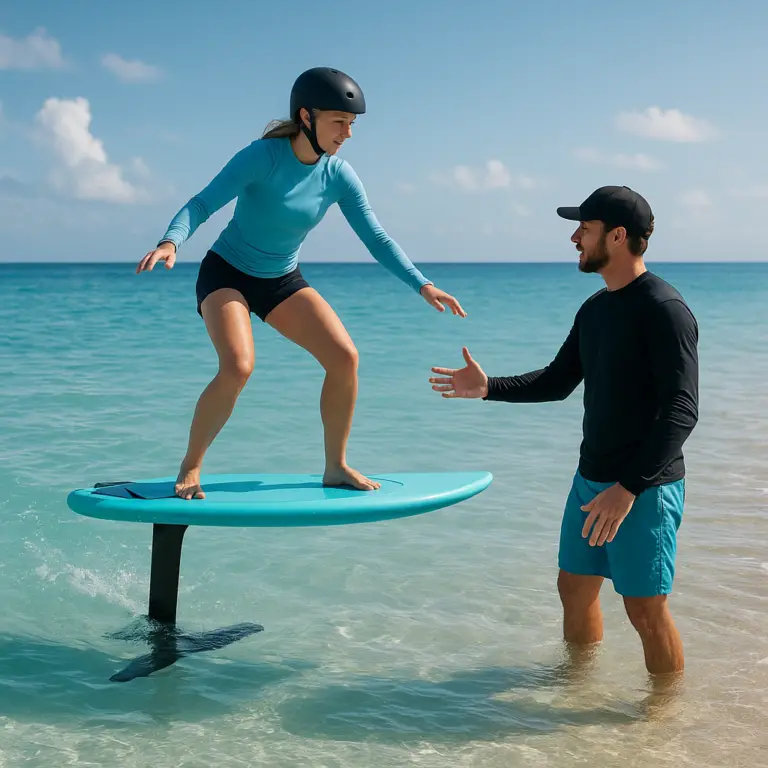
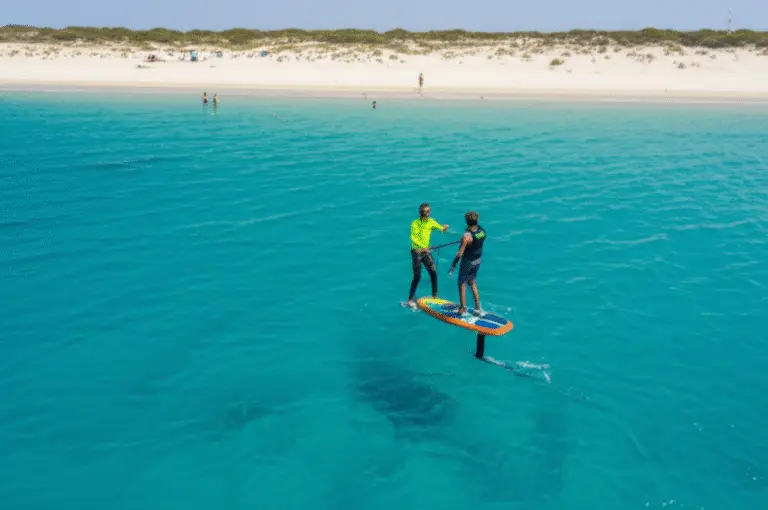
Learning behind a boat (or a jet ski) is the “cheat code” for surf foiling. The boat provides a constant speed, allowing you to focus entirely on your feet. We recommend the Slingshot Hover Glide series for its durability and “switchable” mast lengths.
3. Wing Foiling: The Wind-Powered Challenge
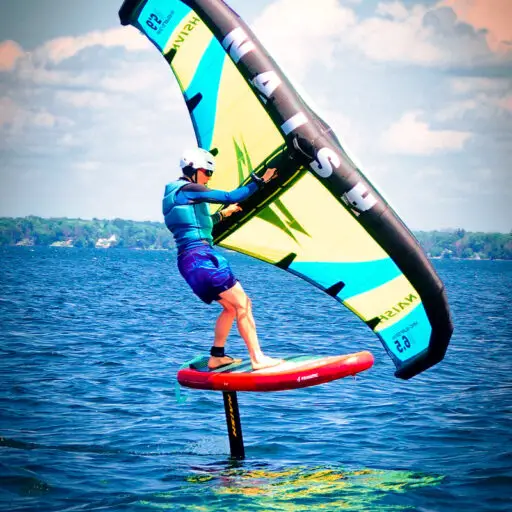
This is the fastest-growing segment. As noted by Epic Boardsports, you should start with a high-volume board—think 140 Liters—like the Ak Durable Supply Co. Phazer.
🛠️ Gear Matters: The Beginner’s Setup for Success
We’ve seen it a thousand times: a beginner buys a tiny, high-aspect carbon foil because it looks “cool,” and they spend three months falling. Don’t be that person. For more reviews, see our Hydrofoil Equipment Reviews.
The “Safety First” Rating Table:
| Component | Stability | Forgiveness | Weight | Beginner Score |
|---|---|---|---|---|
| Aluminum Mast (60cm) | 10 | 10 | 4 | 9/10 |
| Carbon Mast (85cm) | 6 | 4 | 10 | 5/10 |
| Large Front Wing (2000cm²+) | 10 | 9 | 5 | 10/10 |
| Small Front Wing (<1000cm²) | 2 | 2 | 10 | 1/10 |
Why Big Wings and Short Masts are Your Best Friends
A short mast (around 45-60cm) means when you inevitably “over-foil,” you aren’t falling from a great height. A large front wing (low aspect) provides “lift” at very low speeds, which is exactly what you need when you’re wobbling like a newborn giraffe.
🎓 10 Essential Steps to Your First Flight
Ready to fly? Follow this progression. If you skip a step, the ocean will let you know.
- Step 1: Mastering the Prone Position: (For surf/wake) Lay on the board and find the center of gravity. If the nose is diving, move back. If it’s popping up, move forward.
- Step 2: Finding the Sweet Spot for Foot Placement: Your feet must be over the “mast” or slightly in front of it. Wide stance = Stability.
- Step 3: The “Touch and Go” Phase: Get the board on a plane but don’t fly yet. Just feel the water.
- Step 4: Managing Pitch and Roll Control: Pitch is nose up/down. Roll is side to side. Use your ankles, not your whole body.
- Step 5: Sustaining Flight and Pumping Techniques: Once you’re up, apply front foot pressure to keep from breaching. To stay up, you’ll eventually learn to “pump” the foil. This is where Advanced Hydrofoiling Techniques come into play.
- Step 6: Carving Your First Turns: Look where you want to go. The foil follows your eyes.
- Step 7: Falling Safely (The Art of the Bail): Always jump away from the board. The foil is a giant underwater axe. Don’t fall on it.
- Step 8: Understanding Water Starts: (For Wing/Kite) Learning to use the wind to pull you out of the water.
- Step 9: Reading the Conditions: Learn to spot “bumps” and “swells” rather than breaking waves.
- Step 10: Post-Session Gear Maintenance: Rinse everything with fresh water. Saltwater is the enemy of your expensive bolts.
🛡️ Safety First: Don’t Be a Kook in the Lineup
Hydrofoiling is incredibly fun, but it can be dangerous. A foil moving at 20 knots is a literal blade.
- Wear a Helmet: We recommend the Bern Watts or Gath Gedi.
- Impact Vests: They provide floatation and protect your ribs from the board. Check out O’Neill or Mystic.
- Stay Away from Crowds: Never foil in a crowded surf lineup. It’s disrespectful and dangerous. Find a lonely peak or a quiet bay.
🌬️ Join the Flight Club: Mastering Wing Foiling and Beyond
Wing foiling is the ultimate freedom. You don’t need a boat or a perfect wave—just a breeze. But why do some people learn in two days while others take two months? The secret lies in land practice.
Grab your wing and a skateboard on a parking lot. Learn how the wing reacts to the wind without the added variable of water. This builds the muscle memory you need so that when you finally hit the water, you’re only fighting the board, not the wing.
💡 8 Pro Tips to Hack Your Learning Curve
- The “Lead Foot” Rule: 80% of your weight should be on your front foot when you first take off.
- Film Yourself: You think you look like Kai Lenny, but you probably look like a flailing penguin. Video doesn’t lie.
- Short Mast, Long Life: Start with a 45cm mast. It reduces the “fear factor.”
- Watch the Foil, Not the Horizon: In the beginning, it’s okay to glance down to check your foot placement.
- Use a Leash: Both for your board and your wing. Chasing a board in the wind is a cardio workout you don’t want.
- Find a Mentor: A 1-hour lesson is worth 10 hours of trial and error.
- Check Your Bolts: Every. Single. Time. A loose stabilizer wing will ruin your day (and your gear).
- Visualize: Before you hit the water, visualize the feeling of the board lifting. It sounds “woo-woo,” but it works.
But wait—what is the one piece of gear that 90% of beginners forget, which leads to the most common injury in the sport? We’ll cover that in the safety section… oh wait, we just did. It’s the helmet! But there’s another secret: Booties. Foils are sharp, and your feet are vulnerable.
🏁 Conclusion
So, how long does it really take to learn hydrofoiling? The short answer is: it depends on your discipline, your gear, and your patience. If you choose E-Foiling, you could be gliding above the water in under an hour. If you’re chasing the wind with Wing Foiling, expect a humbling 3 to 8 sessions to find your rhythm. And if you’re diving into Surf Foiling, prepare for a journey of 10+ sessions where every wave is a new lesson in physics.
We started this article asking if you could learn in a day. The truth? You can learn to stand on a foil in a day, but learning to fly with confidence, carve turns, and read the water is a marathon, not a sprint. The “secret” we hinted at earlier regarding injuries? It wasn’t just the helmet (though that’s non-negotiable); it was the leash. A board leash is your lifeline, but a foil leash is what keeps you from getting separated from your board in a chop, which is the #1 cause of “lost gear” anxiety for beginners.
Our Confident Recommendation:
If you are a complete beginner with no prior water sports experience, start with E-Foiling or Wake Foiling. The instant feedback loop of a motor or a boat removes the variable of wind and wave, allowing you to master the delicate art of weight distribution without the frustration of a stalled wing. Once you have “foil legs,” transitioning to Wing or Surf foiling will feel like a natural evolution rather than a steep cliff.
The Verdict:
- Positives: The feeling of flight is unmatched by any other water sport. It opens up flat water, small waves, and light wind conditions that were previously unrideable.
- Negatives: The learning curve is steep, the gear is expensive, and the “face-plant” factor is high until you get the hang of it.
- Final Word: Don’t let the initial struggle scare you off. The moment you finally sustain a flight for 30 seconds, you’ll forget every fall that got you there. Get out there, stay safe, and enjoy the flight!
🔗 Recommended Links
Ready to upgrade your gear or grab some inspiration? Here are our top picks for beginners and enthusiasts alike.
🛒 Shop Beginner Foil Gear:
- Slingshot Hover Glide Foil: Amazon | Official Site
- Lift eFoil Board: Amazon | Official Site
- Naish Pivot Wing & Board: Amazon | Official Site
- Armstrong HS Series Foil: Amazon | Official Site
📚 Essential Reading & Safety Gear:
- Bern Watts Water Helmet: Amazon
- O’Neill Reactor II Impact Vest: Amazon
- “The Art of Foiling” by Kai Lenny: Amazon
- Mystic Star Impact Vest: Amazon
❓ FAQ: Your Burning Foil Questions Answered
What is the best age to start learning to hydrofoil?
There is no strict age limit, but 8 to 12 years old is often considered the sweet spot. At this age, children have developed enough core strength and balance to manage the board, yet they are small enough to fit into the smaller, more manageable beginner boards. However, adults of any age can learn! The key is choosing the right board volume for your weight.
How long does it take to master turning on a hydrofoil?
While you can make a basic turn in your first few sessions, mastering smooth, carving turns typically takes 15 to 20 hours of focused practice. Turning on a foil requires precise weight shifts and “pumping” to maintain speed through the turn, which is a skill that develops over time.
Is it harder to learn hydrofoiling than traditional surfing?
Yes, initially. Traditional surfing relies on wave energy and a stable board. Hydrofoiling introduces a third dimension (height) and requires constant micro-adjustments of weight. However, once you “get it,” foiling can be easier than surfing because you can ride in flat water and don’t need perfect waves.
What factors affect how fast I learn to hydrofoil?
The biggest factors are consistency (frequency of sessions), gear selection (starting with a large, stable board), and conditions (flat water vs. chop). Prior experience in surfing, wakeboarding, or windsurfing also helps significantly with balance and water reading.
Can you learn to hydrofoil in one day?
You can learn to stand up and fly for a few seconds in one day, especially with E-foiling or wake foiling. However, “learning” to control the foil, recover from falls, and ride consistently usually takes several sessions.
How many lessons does it take to get up on a hydrofoil?
Most beginners get their first sustained flight within 1 to 3 lessons. A professional instructor can fast-track your progress by correcting bad habits immediately, which might otherwise take weeks to unlearn.
What is the average time to learn hydrofoiling for beginners?
For Wing Foiling, the average is 5 to 10 sessions. For Surf Foiling, it can take 10 to 20+ sessions. E-Foiling is the fastest, often achieved in 1 session.
What equipment do beginners need to start hydrofoiling?
You need a high-volume board (120L+ for winging), a short mast (45-60cm), a large front wing (1500cm²+), a helmet, and an impact vest. For wing foiling, you also need a wing and a leash.
What are the first steps to learning hydrofoiling?
- Land Practice: Learn to handle the wing or remote.
- Prone Position: Find your balance on the board while lying down.
- Get on a Plane: Use a boat or motor to get the board moving.
- Stand Up: Shift your weight to the front foot to lift the foil.
- Fall Safely: Learn to bail away from the board.
Can adults learn to hydrofoil quickly?
Absolutely! Adults often learn faster than kids because they have better body awareness and can follow instructions more effectively. The main challenge for adults is physical fitness and overcoming the fear of falling.
Is hydrofoiling harder to learn than traditional surfing?
(See “Is it harder to learn hydrofoiling than traditional surfing?” above). The initial barrier is higher, but the progression curve flattens out faster once the basics are mastered.
How many lessons does it take to learn hydrofoiling?
(See “How many lessons does it take to get up on a hydrofoil?” above). Generally, 3 to 5 lessons are recommended to move from “standing up” to “riding comfortably.”
What is the average time to master hydrofoiling?
“Mastering” is subjective. To be comfortable in various conditions, it takes 6 months to a year of regular practice. To compete or perform advanced maneuvers, it takes years of dedicated training.
How long does it take to get comfortable on a hydrofoil board?
Most riders feel “comfortable” (able to ride back and forth without constant falling) after 3 to 5 sessions of 1-2 hours each.
What is the most common mistake beginners make?
The most common mistake is leaning back. In surfing, you lean back to keep the nose up. On a foil, leaning back causes the nose to dive, the foil to breach, and you to fall. Keep your weight forward!
Can I learn to hydrofoil without a boat or wind?
Yes! E-Foiling allows you to learn without wind or waves. SUP Foiling allows you to learn by paddling, though it requires more physical effort.
How important is core strength for hydrofoiling?
Extremely important. Your core is the stabilizer that keeps the board level. Weak core muscles lead to wobbling and falling. Doing planks and balance exercises on land can speed up your progress.
What is the difference between high aspect and low aspect foils?
Low aspect foils (short and wide) are more stable and generate lift at low speeds, making them ideal for beginners. High aspect foils (long and narrow) are faster and more efficient but require more speed and skill to control.
📚 Reference Links
- Epic Boardsports: How Long Does It Take to Learn Wing Foiling?
- Lift Foils: Beginner’s Guide to E-Foiling
- Slingshot Sports: Wing Foiling Learning Curve
- Naish: Hydrofoil Technology Explained
- Armstrong Foils: Foil Selection Guide
- Hydrofoiling.org: Hydrofoil Basics
- Hydrofoiling.org: Advanced Hydrofoiling Techniques
- Hydrofoiling.org: Hydrofoil Board Selection