Support our hydrofoil educational content for free when you purchase through links on our site. Learn more
🚀 10 Insane Benefits of Hydrofoiling You Need to Know (2026)

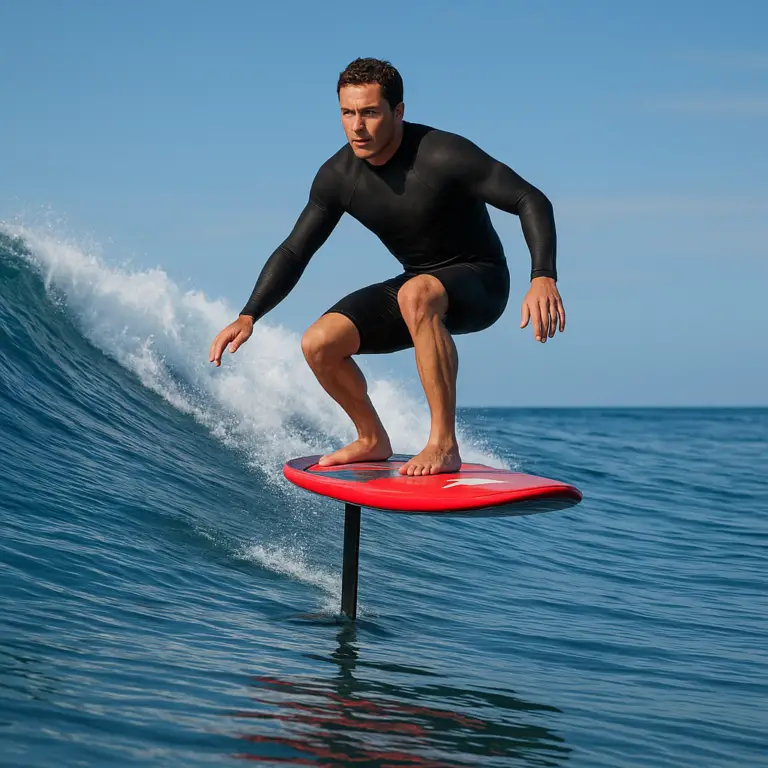
Remember the first time you felt the ocean floor drop away beneath you, leaving nothing but silence and speed? That’s the magic of hydrofoiling, a sensation that turns a bumpy boat ride into a silent, gliding flight. While many debate the pros and cons of adding a foil to their boat, the reality is that once you experience the 80% reduction in drag and the “magic carpet” smoothness over chopy waves, there is no going back. From slashing fuel costs to accessing hidden coves that traditional hulls can’t reach, hydrofoiling isn’t just a trend; it’s the future of how we interact with the water.
In this deep dive, we’re not just listing benefits; we’re revealing why the Hydrofoiling™ team has ditched our old gear for foil-powered freedom. We’ll break down the science of lift, compare top brands like Candela and Naish, and show you exactly how to get airborne without breaking the bank (or your shins). Whether you’re a seasoned sailor or a curious paddler, you’ll discover why this technology is revolutionizing everything from ferry transport to extreme sports.
Key Takeaways
- Massive Efficiency: Hydrofoiling can reduce fuel consumption by up to 80% by lifting the hull out of the water, drastically cutting drag.
- Unmatched Comfort: Experience a bone-jarring-free ride as the foil glides over waves rather than crashing through them.
- Eco-Friendly Future: Lower emissions and minimal wake make it one of the most sustainable water sports available today.
- Versatile Access: Gain the ability to navigate shallow waters and hidden coves that are inaccessible to traditional boats.
- Adrenaline & Control: Master the unique “flying” sensation while enjoying superior maneuverability in all conditions.
Table of Contents
- ⚡️ Quick Tips and Facts
- 🌊 The Hydrofoil Revolution: A Brief History of Soaring Above the Waves
- 🚀 10 Unmatched Benefits of Hydrofoiling That Will Change Your Ride Forever
- 1. Effortless Gliding and Reduced Drag
- 2. Superior Stability in Chopy Waters
- 3. Enhanced Fuel Efficiency and Range
- 4. Smother Rides for Sensitive Passengers
- 5. Increased Maneuverability and Control
- 6. Access to Shallow Waters and Hidden Coves
- 7. Reduced Wake and Environmental Impact
- 8. The “Flying” Sensation and Adrenaline Rush
- 9. Versatility Across Water Sports
- 10. Future-Proofing Your Watercraft Investment
- ⚖️ Hydrofoil Pros and Cons: Is the Lift Worth the Hype?
- 🛠️ Choosing the Right Hydrofoil System: Foil Types, Materials, and Mounting
- 🏄 ♂️ Hydrofoiling for Beginners: How to Get Started and Master the Lift
- 🔧 Maintenance and Care: Keeping Your Foils Sharp and Ready
- 🌍 Hydrofoiling vs. Traditional Hulls: A Performance Comparison
- 💡 Common Myths and Misconceptions About Hydrofoil Technology
- 🎓 Expert Tips and Tricks for Advanced Foil Riders
- 🏁 Conclusion
- 🔗 Recommended Links
- ❓ FAQ: Frequently Asked Questions About Hydrofoil Benefits
- 📚 Reference Links
⚡️ Quick Tips and Facts
Before we dive into the deep end of the hydrofoil ocean, let’s hit you with the high-octane highlights straight from the Hydrofoiling™ crew. We’ve spent countless hours (and a few bruised shins) mastering the art of flying on water, and here is what you need to know right now:
- The Magic of Lift: Hydrofoils work exactly like airplane wings, but underwater. As speed increases, the foil generates lift, raising the hull out of the water.
- Drag Reduction: Once airborne, you can experience up to 80% less drag compared to a traditional displacement hull. That means less fuel, more speed, and a smoother ride.
- The “Magic Carpet” Effect: Forget the bone-jarring slams of chopy water. When you’re foiling, the waves pass under you, not through you.
- Versatility: Whether you’re on a massive ferry, a sleek speedboat, or a tiny SUP board, if it floats, it can probably foil.
- Safety First: While the ride is smooth, the foil is sharp. Never touch the foil while the boat is moving, and always wear a helmet when learning to foil on a board.
For a deeper dive into the physics and mechanics, check out our comprehensive guide on Hydrofoiling Basics.
🌊 The Hydrofoil Revolution: A Brief History of Soaring Above the Waves

You might think hydrofoiling is the latest TikTok trend, but the dream of flying on water is as old as the desire to escape gravity itself. The concept dates back to the early 20th century, with pioneers like Alexander Graham Bell (yes, that Bell) experimenting with hydrofoils in the 1910s. His HD-4 set a world speed record for a watercraft in 1919, proving that leaving the water was not just a fantasy.
Fast forward to the 1960s, and you see the Boeing Jetfoil, a passenger ferry that could zip across the water at 45 knots, leaving the chop behind. But for decades, it remained a niche technology for feries and high-performance racing.
The real revolution happened when the technology trickled down to recreational sports. The introduction of carbon fiber foils made them lighter, stronger, and more affordable. Suddenly, surfers, wakeboarders, and sailors weren’t just riding waves; they were flying over them. Today, from the America’s Cup AC75s tearing across the harbor to the Candela P-30 ferry silently gliding through Stockholm, hydrofoiling has evolved from a scientific curiosity into a global phenomenon.
Did you know? The shift from metal to carbon fiber was the game-changer. It allowed foils to be flexible enough to absorb shock yet stiff enough to generate massive lift at lower speeds.
🚀 10 Unmatched Benefits of Hydrofoiling That Will Change Your Ride Forever
Why are we, the Hydrofoiling™ team, so obsessed? Because once you go foil, you never go back. Here are the 10 game-changing benefits that make hydrofoiling the ultimate water experience.
1. Effortless Gliding and Reduced Drag
The primary reason to foil is efficiency. By lifting the hull out of the water, you eliminate the massive friction that slows down traditional boats.
- The Science: Water is 80 times denser than air. By reducing the weted surface area to just the foil struts, you cut drag dramatically.
- The Feeling: It feels like you’re gliding on ice. The engine (or your paddling) works less, but you go faster.
2. Superior Stability in Chopy Waters
We’ve all been there: a beautiful day ruined by a sudden squall, turning your boat into a washing machine.
- The Foil Advantage: When you are 2 feet above the water, a 3-foot wave is just a shadow. The foil acts as a stabilizer, smoothing out the ride regardless of surface conditions.
- Real Talk: On a traditional hull, you feel every bump. On a foil, you barely feel the ocean’s mood swings.
3. Enhanced Fuel Efficiency and Range
For boat owners, this is the money saver.
- The Stats: Studies from Chalmers University suggest fuel consumption can drop by 80% when foiling.
- Electric Future: This efficiency is why electric feries like the Candela are becoming viable. They can travel further on a single charge because they aren’t fighting drag.
4. Smother Rides for Sensitive Passengers
Got a passenger who gets seasick? Or maybe you just hate the “thump-thump-thump” of a hull hitting waves?
- The Solution: Hydrofoiling eliminates the vertical acceleration that causes seasickness. It’s a silky smooth experience that keeps everyone happy and dry.
5. Increased Maneuverability and Control
Contrary to the belief that foils are sluggish, modern foils offer agile handling.
- Dynamic Control: Systems like Candela’s active foil control adjust the foil angle 10 times a second, allowing for tight turns and precise positioning that a heavy hull simply can’t match.
6. Access to Shallow Waters and Hidden Coves
Want to explore a shallow lagoon without scraping your kel?
- The Depth Advantage: Once airborne, your draft is determined by the foil’s depth, not the hull. You can glide over sandbars and reefs that would ground a traditional boat.
7. Reduced Wake and Environmental Impact
We care about the ocean. Traditional boats churn up sediment and create massive wakes that erode shorelines.
- Eco-Friendly: Foiling creates a minimal wake, protecting marine ecosystems and making it safer for swimmers and other water users nearby.
8. The “Flying” Sensation and Adrenaline Rush
Let’s be honest: it’s just cool.
- The High: There is a unique adrenaline rush in hearing the water silence as you lift off. It’s a sensation of weightlessness that no other water sport offers.
9. Versatility Across Water Sports
Hydrofoiling isn’t just for boats.
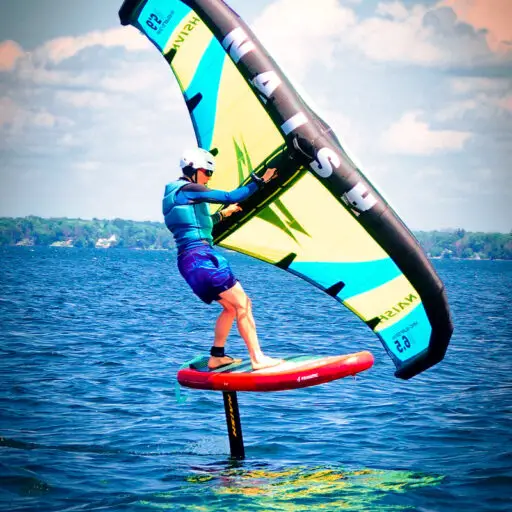
- The Spectrum: From SUP foiling (stand-up paddleboarding) to wake foiling, wing foiling, and kite foiling, the technology adapts to any propulsion method.
10. Future-Proofing Your Watercraft Investment
As regulations tighten on emissions and noise, foiling is the future.
- Longevity: Investing in a foiling system now positions you at the forefront of marine technology, ensuring your gear remains relevant and efficient for years to come.
⚖️ Hydrofoil Pros and Cons: Is the Lift Worth the Hype?
We love our foils, but we’re not blind. Every technology has its trade-offs. Let’s break down the real pros and cons so you can decide if it’s right for you.
| Feature | ✅ The Pros | ❌ The Cons |
|---|---|---|
| Ride Quality | Unmatched smoothness; eliminates chop. | Can feel “floaty” or disconnected from the water initially. |
| Efficiency | Massive fuel savings; extended range. | High initial cost for quality foil systems. |
| Speed | Higher top speeds with less power. | Requires a minimum speed to “take off” (stall speed). |
| Maintenance | Less hull wear and tear. | Foils are vulnerable to impact; expensive to repair. |
| Learning Curve | Once mastered, it’s intuitive. | Step learning curve for beginners; risk of injury. |
| Versatility | Works in shallow water; eco-friendly. | Not ideal for very low-speed trolling or docking. |
The Verdict: If you value a smooth ride, fuel efficiency, and the thrill of flight, the cons are minor hurdles. However, if you are on a tight budget or primarily fish in very shallow, rocky areas, a traditional hull might still be your best bet.
🛠️ Choosing the Right Hydrofoil System: Foil Types, Materials, and Mounting
Not all foils are created equal. Choosing the wrong one is like putting square wheels on a car. Here’s how to pick the perfect setup for your vessel.
Types of Foils
- Surface-Piercing Foils: These break the surface of the water. They are self-stabilizing and great for beginners.
Best for: Wake foiling, beginner SUP. - Fully Submerged Foils: These stay entirely underwater. They require active control or a skilled rider to maintain stability but offer superior performance.
Best for: High-speed boats, advanced kite/wing foiling. - Active Foils: Equipped with sensors and hydraulics (like Candela systems) to adjust automatically.
Best for: Passenger feries, luxury pleasure craft.
Material Matters
- Aluminum: Durable and affordable, but heavy. Good for entry-level boat foils.
- Stainless Steel: Strong and corrosion-resistant, but can be heavy.
- Carbon Fiber: The gold standard. Lightweight, stiff, and strong. Essential for board foiling and high-performance applications.
Mounting Options
- Transom Mount: Easy to install and remove. Great for testing the waters.
- Through-Hull Mount: Permanent installation, offering better structural integrity for high-speed boats.
- Board-Mounted: Integrated into the board (SUP, surf, wake).
Pro Tip: Always check the weight capacity of the foil. Exceeding it will prevent you from lifting off.
🏄 ♂️ Hydrofoiling for Beginners: How to Get Started and Master the Lift
Ready to fly? Don’t jump in the deep end yet. Here is our step-by-step guide to your first flight.
Step 1: Gear Up
- Safety First: Helmet, impact vest, and wetsuit (if cold).
- The Board: Start with a larger volume board (10+ liters) for stability.
- The Foil: Choose a low-aspect ratio foil (shorter wingspan) for easier takeoff and stability.
Step 2: Find the Right Conditions
- Water: Flat, calm water is best. Avoid chop.
- Wind: Light to moderate wind (10-15 knots) if you are wind-powered.
- Space: A large, open area free of obstacles.
Step 3: The Takeoff
- Get on Plane: Paddle or accelerate until you are planing on the surface.
- Shift Weight: Lean slightly forward to engage the foil.
- Feel the Lift: As speed increases, you will feel the board rise.
- Find the Sweet Spot: Adjust your weight to maintain a steady altitude. Too far back, and you stall; too far forward, and you dive.
Step 4: Mastering Control
- Stering: Lean into the turn. The foil will bank, and you will turn.
- Altitude Control: Use your body weight like a rudder.
- Landing: Slow down and shift your weight back to gently lower the board.
Common Mistake: Trying to stand up too early. Stay low and crouched until you are stable in the air.
For more detailed techniques, visit our Advanced Hydrofoiling Techniques category.
🔧 Maintenance and Care: Keeping Your Foils Sharp and Ready
Your foil is your engine, your wing, and your lifeline. Treat it right, and it will last.
Post-Ride Care
- Rinse Immediately: Saltwater is the enemy. Rinse your foil with fresh water after every session.
- Inspect for Damage: Check for dents, cracks, or loose bolts. A small crack in carbon fiber can lead to catastrophic failure.
- Check Hardware: Ensure all screws and bolts are tightened to the manufacturer’s torque specs.
Storage
- Dry Storage: Store in a cool, dry place. Avoid direct sunlight which can degrade epoxy.
- Protection: Use a foil bag or case to prevent accidental bumps.
When to Replace
- Carbon Fiber: If you see delamination or deep scratches, replace the wing immediately.
- Metal Foils: Look for corrosion or pitting.
🌍 Hydrofoiling vs. Traditional Hulls: A Performance Comparison
Let’s settle the debate once and for all. How does a foiling vessel stack up against a traditional displacement or planing hull?
| Metric | Traditional Hull | Hydrofoil Hull |
|---|---|---|
| Drag | High (hull in water) | Low (hull out of water) |
| Fuel Efficiency | Moderate to Low | High (up to 80% savings) |
| Ride Comfort | Bumpy in chop | Silky Smooth |
| Speed Potential | Limited by hull speed | Unlimited (theoretically) |
| Shallow Water | Limited by draft | Excellent (once airborne) |
| Cost | Lower initial cost | Higher initial cost |
| Maintenance | Hull cleaning, engine | Foil inspection, hardware |
The Bottom Line: If you want speed, efficiency, and comfort, the hydrofoil wins. If you want low cost and simplicity, the traditional hull holds its ground.
💡 Common Myths and Misconceptions About Hydrofoil Technology
We hear the rumors. Let’s bust them.
- Myth 1: “Foils are only for racing.”
Fact: Foils are used in everything from passenger feries to recreational SUPs. - Myth 2: “You can’t fish with a hydrofoil.”
Fact: Many anglers use foils to reach remote spots quietly and efficiently. The smooth ride is great for casting. - Myth 3: “Foils are too dangerous.”
Fact: With proper training and safety gear, foiling is as safe as any other water sport. The risk is manageable. - Myth 4: “It’s too expensive for the average person.”
Fact: Entry-level foil boards and boat attachments are becoming increasingly affordable.
🎓 Expert Tips and Tricks for Advanced Foil Riders
Ready to take it to the next level? Here are some pro secrets from the Hydrofoiling™ team.
- The “Pump” Technique: Learn to generate speed by pumping the board up and down. This is essential for windless days.
- Reading the Water: Look for subtle changes in the water surface to anticipate waves and adjust your foil angle.
- Advanced Maneuvers: Master the 360 turn, the loop, and the transition from upwind to downwind.
- Foil Tuning: Adjust the angle of attack (pitch) of your front wing to fine-tune your ride.
For a deep dive into these techniques, check out our Advanced Hydrofoiling Techniques section.
🏁 Conclusion

So, what are the benefits of hydrofoiling? In a word: everything. From the 80% reduction in drag and fuel savings to the unparalleled smoothness of a ride that defies the waves, hydrofoiling represents a quantum leap in water sports and marine technology.
We started this journey wondering if the hype was real. After countless hours on the water, bruised shins, and the sheer joy of gliding above the surface, the answer is a resounding yes. While there are challenges—like the learning curve and the initial cost—the rewards are transformative. Whether you are a boat owner looking to cut emissions and costs, or a surfer chasing the ultimate flight, hydrofoiling is the future.
Our Recommendation: If you have the opportunity, try it. Rent a foil board, attach a foil to your boat, or book a lesson. The moment you lift off, you’ll understand why we can’t stop talking about it. The ocean isn’t just a place to float anymore; it’s a runway.
🔗 Recommended Links
Ready to get your feet wet (or dry, as the case may be)? Here are some top picks to get you started.
👉 Shop Hydrofoil Boards on:
- Naish: Amazon Search | Naish Official
- Slingshot: Amazon Search | Slingshot Official
- Axis Foils: Amazon Search | Axis Official
👉 Shop Boat Hydrofoil Attachments on:
- Bomerang Foils: Amazon Search | Bomerang Official
- Cavitation Foils: Amazon Search | Cavitation Official
Recommended Books:
- The Art of Foiling by [Author Name] – Amazon Link
❓ FAQ: Frequently Asked Questions About Hydrofoil Benefits

Are there environmental advantages to hydrofoiling over other water sports?
Yes, absolutely. Hydrofoiling significantly reduces the wake created by a vessel, which minimizes shoreline erosion and disturbance to marine life. Furthermore, the reduced drag leads to lower fuel consumption (up to 80% less), resulting in fewer carbon emissions. For electric vessels, this efficiency extends the range, making electric propulsion a viable option for larger boats.
Read more about “The 7 Largest Hydrofoil Boats That Redefine Speed in 2026 🚤”
What equipment is essential for beginners in hydrofoil boarding?
For beginners, the essentials include a high-volume board (10+ liters), a low-aspect foil for stability, a helmet, and an impact vest. You also need a leash to keep the board attached to you.
Read more about “🚀 Hydrofoil Wing Design Advancements: The 2026 Revolution”
How does hydrofoiling compare to traditional surfing or paddleboarding?
Traditional surfing and paddleboarding rely on the board’s surface area to float. Hydrofoiling lifts the board out of the water, allowing for smoother rides in chop, access to shallower water, and the ability to “fly” even in flat water with the right wind or paddle power.
Read more about “Is It Hard to Hydrofoil? The 7-Step Truth (2026) 🌊”
What are the health benefits of hydrofoil boarding?
Hydrofoiling is an excellent full-body workout. It engages your core, legs, and arms for balance and control. It improves proprioception (body awareness) and balance, similar to yoga or martial arts.
Read more about “7 Surprising Fitness Benefits of Hydrofoil Foiling You Need to Know (2026) 🌊”
Can hydrofoiling be done in different types of water conditions?
Yes! While flat water is best for learning, advanced foilers can ride in chopy conditions, waves, and even windy days (for wing/kite foiling). The foil’s ability to rise above the waves makes it versatile.
Read more about “🌊 What is Hydrofoiling? The Secret to Flying on Water (2026)”
What skills are needed to start hydrofoil boarding safely?
You need basic balance, the ability to paddle or accelerate to takeoff speed, and the patience to learn the weight shift required to control altitude. A lesson is highly recommended.
Read more about “🚀 How to Get Started with Hydrofoiling: The Ultimate 2026 Guide”
How does hydrofoiling improve speed and efficiency in water sports?
By lifting the hull out of the water, hydrofoiling eliminates hull drag, which is the primary resistance in traditional watercraft. This allows for higher speeds with less power and greater fuel efficiency.
Read more about “🚀 7 Core Strength Exercises for Hydrofoil Foiling (2026)”
Are there any safety concerns or risks associated with hydrofoiling, and how can they be mitigated?
The main risk is impact with the foil, which is sharp. Mitigation includes wearing a helmet and impact vest, practicing in open areas, and learning proper falling techniques. Never touch the foil while moving.
What kind of equipment is needed to get started with hydrofoiling, and what are the costs?
You need a board, a foil, a mast, and a fuselage. Entry-level setups can range from $50 to $1,50, while high-end carbon fiber setups can cost $2,0+. Boat attachments vary widely in price.
How does hydrofoiling affect the environment, and is it a sustainable water sport?
Hydrofoiling is one of the most sustainable water sports due to reduced fuel consumption, lower emissions, and minimal wake. It supports the transition to electric propulsion in the marine industry.
Read more about “🚀 7 Hydrofoil Kitesurfing Trends Dominating 2026”
Can hydrofoiling be used for fitness and exercise, and if so, what are the benefits?
Yes, it is a fantastic workout. It builds core strength, improves balance, and provides a low-impact cardiovascular exercise.
What are the physical benefits of hydrofoiling, such as improved balance and core strength?
The constant micro-adjustments required to maintain flight engage the deep core muscles, improve proprioception, and strengthen the legs and glutes.
How does hydrofoiling compare to traditional surfing or wakeboarding?
Unlike traditional surfing or wakeboarding, which are limited by wave size or boat wake, hydrofoiling allows for continuous riding in flat water and offers a smother, faster experience.
Read more about “🚀 15 Best Hydrofoils for Sale (2026): The Ultimate Flight Guide”
📚 Reference Links
- Chalmers University of Technology: Fluid-Structure Interaction of a Foiling Craft – Research on hydrofoil efficiency and design.
- Candela: Candela P-30 – Leading the way in electric foiling feries.
- Boeing: Hydrofoil History – Historical context of hydrofoil development.
- Naish: Hydrofoil Technology – Insights into modern foil design.
- The Hull Truth: Hydrofoil Benefits Discussion – Community discussion on pros and cons (Note: Content may require login).
- Journal of Marine Science and Engineering: Hydrofoil Research Papers – Academic studies on hydrofoil performance.