Support our hydrofoil educational content for free when you purchase through links on our site. Learn more
🌊 Hydrofoiling vs Traditional Surfing: Key Differences (2026)


The ultimate choice comes down to this: traditional surfing offers a raw, visceral connection to the wave’s power, while hydrofoiling grants you the silent, gravity-defying freedom to fly above the water on conditions that would leave a standard board stranded. When weighing hydrofoiling vs traditional surfing: key differences, the winner depends entirely on whether you crave the roar of the ocean or the silence of the sky.
Imagine standing on a beach where the waves are barely knee-high. A traditional surfer watches the lineup, waiting for a swell that might never come, while a foil rider pumps their board, lifts off the surface, and glides effortlessly across the flat water like a ghost. This isn’t magic; it’s physics, and it’s changing how we interact with the ocean.
Did you know that a hydrofoil can reduce water drag by up to 90% compared to a standard surfboard? That efficiency allows riders to catch waves 50% smaller than what a traditional board needs to plane. It’s the difference between paddling until your arms burn and simply gliding on a cushion of air.
But is the silent flight worth the steep learning curve and the risk of a sharp mast? We’ve spent years wiping out on both to find the answer, and the journey from “stuck in the water” to “flying above it” is more rewarding than you might think.
Key Takeaways
- Physics of Flight: Hydrofoiling uses underwater wings to generate lift, eliminating surface drag and allowing you to ride waves too small for traditional boards.
- Learning Curve: Traditional surfing offers a gentler start for beginners, while hydrofoiling requires mastering balance on an unstable platform, often taking dozens of sessions to get comfortable.
- Gear & Safety: Foiling involves a complex rig of masts and wings that requires assembly and strict safety gear (helmet, impact vest) due to the risk of deep cuts, unlike the simple setup of a surfboard.
- Versatility: Hydrofoiling opens up flat water, lakes, and rivers for riding, whereas traditional surfing is strictly dependent on wave energy.
- Sensory Experience: Choose traditional surfing for the visceral roar and spray of the water, or hydrofoiling for the silent, cloud-like glide above the surface.
Table of Contents
- ⚡️ Quick Tips and Facts
- 🌊 From Wipeouts to Flight: A Brief History of Hydrofoiling vs Traditional Surfing
- 🏄 ♂️ The Core Showdown: Hydrofoiling vs Traditional Surfing Key Differences
- 1. The Physics of Lift: How Foils Defy Gravity While Boards Ride Waves
- 2. Wave Selection: Chasing Small Swell vs. Waiting for the Perfect Peak
- 3. The Learning Curve: Why Falling on a Foil Hurts More (and Takes Longer)
- 4. Gear Weight and Portability: Carying a Surfboard vs. A Hydrofoil Rig
- 5. The Sensory Experience: Feeling the Water vs. Gliding Above It
- 🛠️ Essential Gear Breakdown: Choosing the Right Hydrofoil Setup vs. Your Trusty Surfboard
- Foil Mast Length and Wing Size: Finding Your Sweet Spot
- Board Volume and Shape: High-Volume Starters vs. Low-Volume Performers
- Fuselage and Connection Systems: Aluminum, Carbon, and the Magic of Integration
- 🚀 Mastering the Transition: How to Progress from Surfing to Foiling
- 🌍 Environmental Impact and Ocean Access: Which Sport is More Sustainable?
- 💰 Cost Analysis: Is Hydrofoiling Worth the Investment Over Traditional Surfing?
- 🤔 Common Myths and Misconceptions Debunked
- 🏆 Top Brands and Models We Trust: Slingshot, Lift, Naish, and More
- ⚡️ Quick Tips and Facts
- 🏁 Conclusion
- 🔗 Recommended Links
- ❓ FAQ
- 📚 Reference Links
⚡️ Quick Tips and Facts
Before we strap you into the cockpit of a hydrofoil or hand you a longboard, let’s hit the pause button on the hype and drop some hard truths straight from the Hydrofoiling™ crew. We’ve spent more hours staring at the horizon than we care to admit, and here’s what we’ve learned:
- The “Magic” is Physics, Not Magic: Unlike traditional surfing where you ride the wave’s face, hydrofoiling lifts you 6 to 12 inches (or more) above the water. This eliminates surface drag, allowing you to glide on waves that are too small or too weak for a standard board.
- The Learning Curve is Step: You might catch a wave on day one with a traditional board. With a foil? You might spend your first three sessions just trying to stand up without face-planting. Patience is your best friend.
- Safety First: A foil mast is essentially a sharp spear underwater. While traditional surfing injuries are usually scrapes and bruises, foil injuries can be deep cuts. Always wear a helmet and a high-impact vest when learning.
- It’s Not Just for Waves: While we love the ocean, hydrofoiling (specifically windfoiling or e-foiling) lets you ride on flat water, lakes, and rivers where traditional surfing is impossible.
- The Noise Factor: Traditional surfing is loud (roaring water, crashing waves). Hydrofoiling is eerily silent, often described as “gliding like a ghost.”
For a deeper dive into the mechanics, check out our guide on What is hydrofoiling and how does it work?.
🌊 From Wipeouts to Flight: A Brief History of Hydrofoiling vs Traditional Surfing

You might think hydrofoiling is the new kid on the block, but the concept is older than your favorite vintage surfboard. The first patent for a hydrofoil on a vessel appeared in 1869 in Britain. Fast forward to the 190s, and water skiers were using “air chairs” towed by boats, lifting them out of the water.
But the real revolution for us surfers happened in the early 20s. Enter Laird Hamilton. He took a hydrofoil from an air chair, bolted it to a surfboard, and got towed by a jet ski. Suddenly, weren’t just riding waves; were flying over them. This innovation allowed riders to access waves that were previously unrideable and changed the face of surfing forever.
Traditional surfing, on the other hand, is rooted in ancient Polynesian culture, relying on the raw connection between the board, the rider, and the wave’s energy. It’s a dance of friction and gravity. Hydrofoiling is a dance of lift and efficiency.
Why does this history matter? Because understanding that foiling was born from a desire to go faster and ride smaller waves explains why the gear feels so different. It’s not just a “fancy surfboard”; it’s a completely different vehicle.
🏄 ♂️ The Core Showdown: Hydrofoiling vs Traditional Surfing Key Differences
So, you’re standing on the beach, looking at a traditional longboard and a hydrofoil setup. Which one do you grab? The answer depends on what you’re chasing. Let’s break down the key differences that define these two worlds.
1. The Physics of Lift: How Foils Defy Gravity While Boards Ride Waves
This is the big one. In traditional surfing, the board stays in contact with the water. You rely on the planing surface of the board to glide. If the wave dies, you stop.
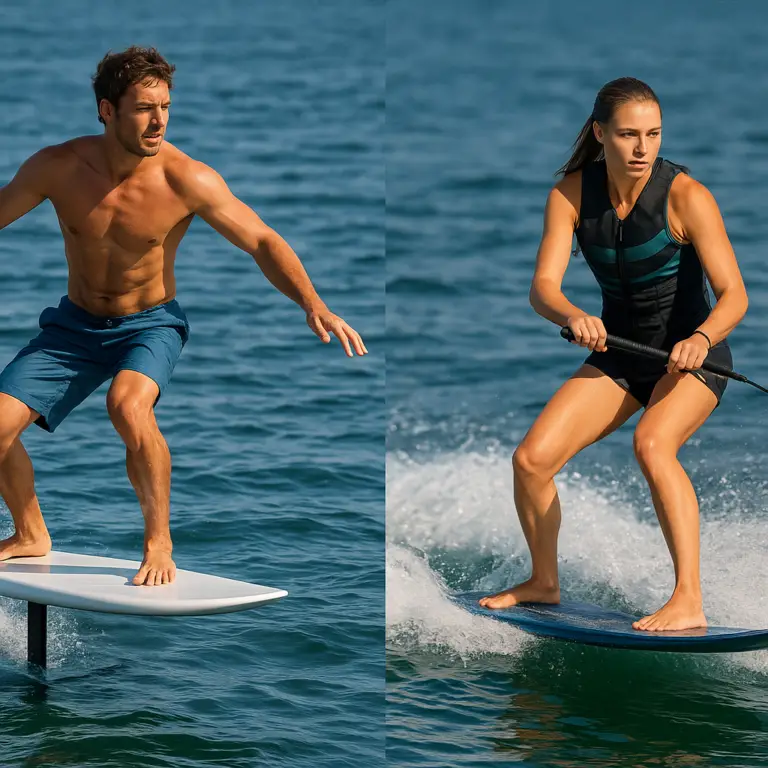
In hydrofoiling, the board is just a handle. The real action happens underwater. As you gain speed, water flows over the hydrofoil wing (the underwater airfoil), generating lift. Once you hit a critical speed, the board rises, and you are gliding on a cushion of air.
- Drag Reduction: By lifting out of the water, you eliminate 90% of the drag. This means you can maintain speed on waves that are too small to generate enough momentum for a traditional board.
- The “Feel”: Traditional surfing feels like sliding on a rug. Hydrofoiling feels like flying a plane. The water is invisible; you only feel the wind and the subtle shifts in the foil.
2. Wave Selection: Chasing Small Swell vs. Waiting for the Perfect Peak
Traditional Surfing: You need a wave with enough power to push you. If the swell is small, you’re paddling until your arms fall off, and you might only get one ride. You are at the mercy of the ocean’s mood.
Hydrofoiling: This is where the foil shines. Because of the reduced drag, you can pump the board to generate your own speed. You can ride waves that are knee-high or even flat water (if you have wind or a motor).
- The Trade-off: You can ride more often, but the waves you ride are often “mushier” and less powerful than the ones traditional surfers wait for.
3. The Learning Curve: Why Falling on a Foil Hurts More (and Takes Longer)
Let’s be real: Falling on a foil hurts. When you fall on a surfboard, you hit the water. When you fall on a foil, you might hit the water, the board, or the sharp mast.
- Traditional Surfing: You can learn to pop up and ride a whitewater wave in a single afternoon.
- Hydrofoiling: It often takes dozens of sessions to get comfortable. You have to learn to balance on a moving, unstable platform that is sensitive to every shift in weight.
- The “Aha!” Moment: In traditional surfing, the “aha” moment is catching your first wave. In foiling, it’s the moment you realize you can pump the board to stay on foil without a wave.
4. Gear Weight and Portability: Carying a Surfboard vs. A Hydrofoil Rig
- Traditional Surfboard: It’s a single piece of foam and fiberglass. You carry it under your arm, throw it in a car, and you’re good to go.
- Hydrofoil Rig: It’s a system. You have the board, the fuselage, the mast, and the wings. You have to assemble it every time you go out.
Weight: A foil setup is often heavier and bulkier to transport.
Assembly: You need to tighten bolts, check for cracks, and ensure everything is aligned. It’s like packing a tent; you can’t just wing it.
5. The Sensory Experience: Feeling the Water vs. Gliding Above It
This is the most subjective difference, but also the most profound.
- Traditional Surfing: You feel the texture of the water. You feel the spray, the warmth of the sun on your skin, and the roar of the wave. It’s visceral and raw.
- Hydrofoiling: It’s silent. The water is gone. You are in a world of wind and speed. It feels like you are floating on a cloud. Some purists say it lacks the “soul” of surfing; others say it’s the ultimate freedom.
🛠️ Essential Gear Breakdown: Choosing the Right Hydrofoil Setup vs. Your Trusty Surfboard
Choosing gear for hydrofoiling is like choosing a car engine; it changes everything. You can’t just buy a “foil” and hope for the best. You need to match the components to your skill level and the conditions.
Foil Mast Length and Wing Size: Finding Your Sweet Spot
The mast is the vertical strut that connects the board to the wings.
- Short Masts (30-40cm): Easier to learn, more stable, but you hit the bottom in shallow water. Great for beginners and small waves.
- Long Masts (60-90cm+): For advanced riders who want to ride in deep water or perform high-speed maneuvers. They offer more clearance but are harder to balance.
The wing size (front wing) determines lift.
- Large Wings (10cm²+): Generate lift at low speeds. Perfect for beginners and small waves.
- Small Wings (40-60cm²): Require high speed to generate lift but offer incredible maneuverability and speed. For pros only.
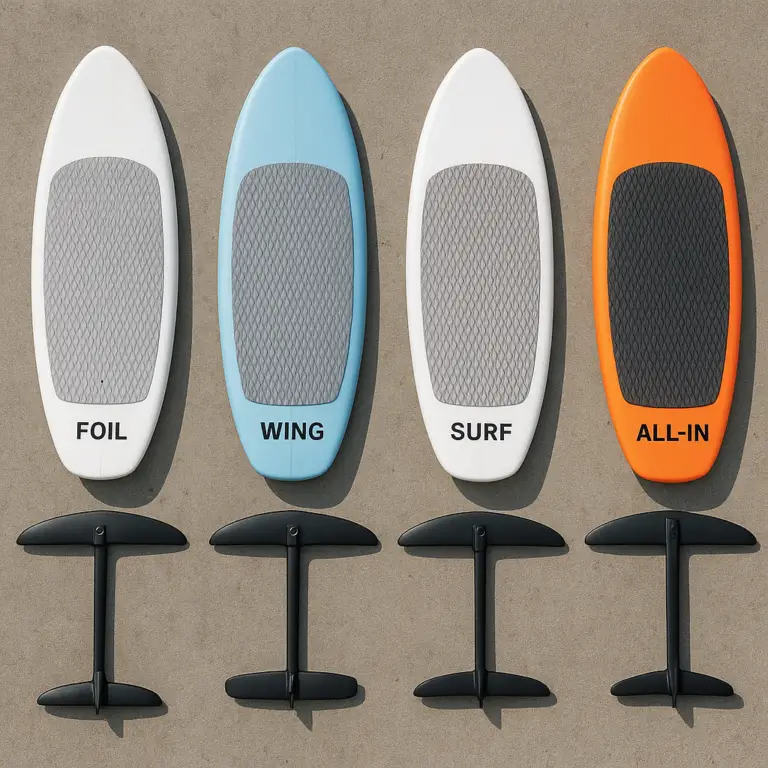
Board Volume and Shape: High-Volume Starters vs. Low-Volume Performers
- Beginer Boards: High volume (10L+), wide, and thick. They float you up so you can focus on balancing.
- Performance Boards: Low volume, narrow, and thin. They are designed to be ridden by someone who can already fly.
Fuselage and Connection Systems: Aluminum, Carbon, and the Magic of Integration
The fuselage connects the front and rear wings.
- Aluminum: Durable, heavy, and affordable. Great for learning.
- Carbon Fiber: Light, stiff, and expensive. Offers better response and speed.
Brands to Watch:
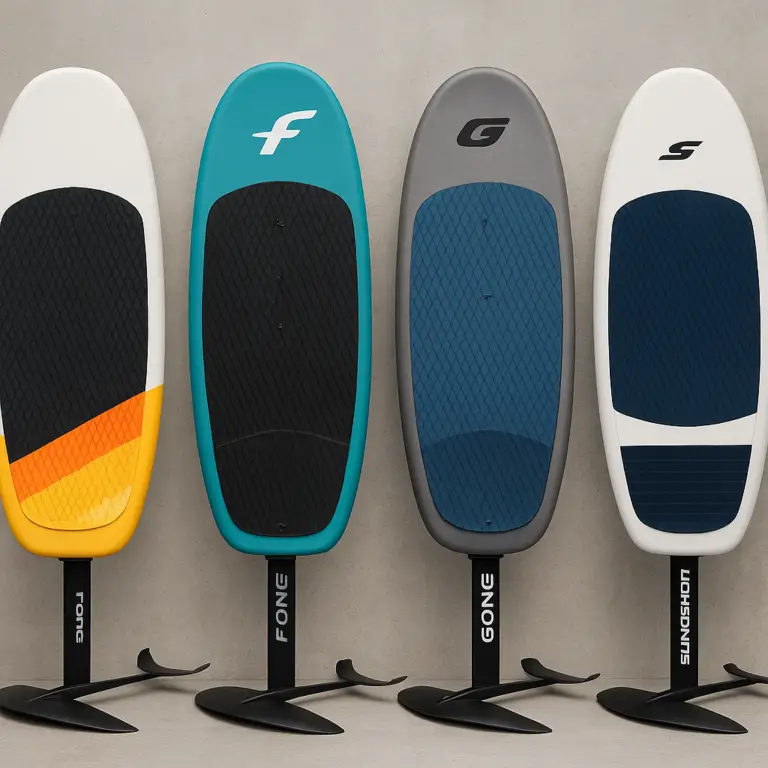
- Lift Foils: Known for their durability and the “Lift 2” series which is a favorite for beginners.
- Slingshot: Famous for their “Hover Glide” series, offering a great balance of performance and ease of use.
- Naish: A pioneer in the industry, offering the “Alaia” and “Sword” foils.
👉 CHECK PRICE on:
- Lift Foils: Amazon | Lift Official
- Slingshot: Amazon | Slingshot Official
- Naish: Amazon | Naish Official
🚀 Mastering the Transition: How to Progress from Surfing to Foiling
So, you’re a solid surfer. You can drop in, cut back, and ride the tube. Now you want to fly. Here is the step-by-step path we recommend at Hydrofoiling™:
- Start on Flat Water: Don’t try to foil on a wave immediately. Find a calm lake or a flat day at the beach. Use a tow rope (or a friend on a jet ski) to get up to speed.
- Find Your Balance: Get used to the feeling of the board lifting. Keep your weight centered. Don’t lean back! Leaning back causes the nose to dive (a “nose dive” is the foil equivalent of a wipeout).
- Learn to Pump: Once you can stay on foil, try to generate your own speed by pumping the board up and down. This is the secret to riding without a motor or a tow rope.
- Move to Small Waves: Once you can pump, try small, mushy waves. The goal is to catch the wave, get on foil, and ride the wave’s energy.
- Refine Your Technique: Learn to turn, carve, and eventually ride the “face” of the wave.
For more advanced techniques, check out our guide on Advanced Hydrofoiling Techniques.
🌍 Environmental Impact and Ocean Access: Which Sport is More Sustainable?
This is a hot topic. Traditional surfing has a low carbon footprint. You paddle, you ride, you leave no trace (except maybe a few sunblock stains).
Hydrofoiling is a bit more complex.
- e-Foils: These require electricity to charge the battery. While they are silent and emission-free on the water, the electricity comes from the grid.
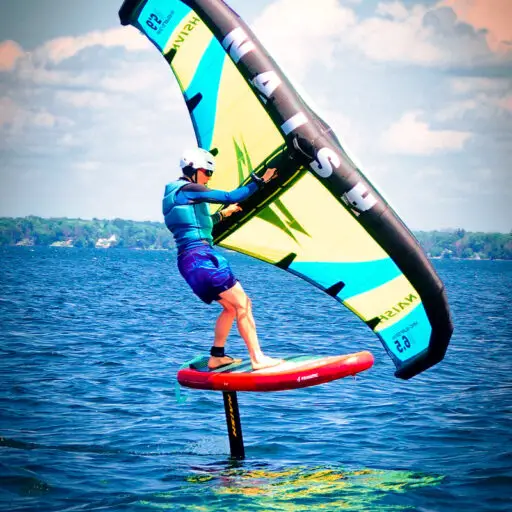
- Wind/Kite Foils: These are powered by the wind, making them just as sustainable as traditional surfing.
- Manufacturing: Foils are made of carbon fiber and aluminum, which have a higher manufacturing footprint than a simple foam board.
However, hydrofoiling allows us to enjoy the ocean in conditions where traditional surfing is impossible, potentially reducing the need for long drives to find good waves. It’s a trade-off.
💰 Cost Analysis: Is Hydrofoiling Worth the Investment Over Traditional Surfing?
Let’s talk money.
- Traditional Surfing: A decent board can cost $50-$1,0. You need a leash, wax, and maybe a wetsuit. Total: $1,0 – $2,0 to start.
- Hydrofoiling: A beginner foil setup (board + foil) can cost $1,50-$3,0. If you go for an e-foil, you’re looking at $5,0-$10,0+.
- Maintenance: Foils require more maintenance. Bolts loosen, wings get dinged, and carbon fiber can crack.
Is it worth it? If you love the feeling of flight and want to ride in flat water or small waves, absolutely. If you only care about riding big, powerful waves, traditional surfing might be the better value.
🤔 Common Myths and Misconceptions Debunked
- Myth: “Foiling is just for rich people.”
Fact: While e-foils are expensive, traditional windfoils and kite foils are becoming more affordable. You can find used setups for a fraction of the price. - Myth: “You can’t learn to foil without a motor.”
Fact: You can learn to pump and ride waves without a motor. It just takes more practice. - Myth: “Foiling is dangerous.”
Fact: It can be, but so is traditional surfing. With proper safety gear (helmet, vest) and respect for the foil, it’s safe.
🏆 Top Brands and Models We Trust: Slingshot, Lift, Naish, and More
We’ve tested them all. Here are our top picks:
- Lift Foils: The Lift 2 is our go-to for beginners. It’s stable, durable, and forgiving.
- Slingshot: The Hover Glide series is fantastic for intermediate riders. The Foilwing is a game-changer for kite foiling.
- Naish: The Sword foil is a classic, known for its smooth ride and reliability.
- Fliteboard: If you want an e-foil, the Fliteboard is the gold standard. It’s expensive, but it’s the best.
👉 Shop
- Lift Foils: Amazon | Lift Official
- Slingshot: Amazon | Slingshot Official
- Naish: Amazon | Naish Official
- Fliteboard: Fliteboard Official
⚡️ Quick Tips and Facts (Revisited)
Wait, we said we’d cover this earlier, but let’s reiterate the most critical point: Safety.
- Always wear a helmet.
- Always wear a high-impact vest.
- Never foil in crowded areas.
- Check your gear before every session.
And remember, the journey from “wiping out” to “flying” is the most rewarding part of the sport. Don’t give up!
For more on gear selection, visit our Hydrofoil Board Selection category.
🏁 Conclusion

So, where does that leave us? The choice between hydrofoiling and traditional surfing isn’t about which is “better.” It’s about what you want from the ocean.
If you crave the raw, visceral connection of riding a wave’s face, the roar of the water, and the simplicity of a single board, traditional surfing is your soulmate. It’s a dance with nature that has been perfected over centuries.
But if you want to fly, to glide silently above the water, to ride waves that are too small for anyone else, and to experience a sense of freedom that feels almost supernatural, then hydrofoiling is your destiny. It’s a challenge that rewards patience, but the payoff is unlike anything else on the planet.
We’ve seen surfers who thought they’d never learn to foil, and now they’re the ones teaching others. We’ve seen traditional surfers who were skeptical, and now they can’t imagine going back. The ocean is big enough for both.
Our Recommendation: If you’re a traditional surfer, try a windfoil or a kitefoil on a flat day. It might just change your life. If you’re a foiler, don’t forget to occasionally grab a surfboard and feel the water again.
The question isn’t “which is better?” The question is, “Are you ready to fly?”
🔗 Recommended Links
- Books:
- The Art of Foiling: A Guide to Hydrofoil Surfing
- Surfing: The Ultimate Guide
- Brands:
- Lift Foils
- Slingshot Sports
- Naish
- Fliteboard
- Internal Resources:
- Hydrofoil Basics
- Hydrofoil Equipment Reviews
- Advanced Hydrofoiling Techniques
- Hydrofoil Board Selection
- Hydrofoil Brands Comparison
❓ FAQ

Is hydrofoiling harder to learn than traditional surfing?
Yes, significantly. Traditional surfing has a gentler learning curve. You can catch a whitewater wave on your first day. Hydrofoiling requires mastering balance on a moving, unstable platform that is sensitive to every shift in weight. It often takes dozens of sessions to get comfortable. However, once you “get it,” the progression can be rapid.
Read more about “🚀 10 Best Hydrofoil Board Reviews (2026): Fly Higher Than Ever!”
What are the main safety differences between hydrofoiling and regular surfing?
The primary difference is the risk of injury. In traditional surfing, falls usually result in scrapes, bruises, or hitting the board. In hydrofoiling, the mast and wings are sharp and can cause deep cuts. This is why wearing a helmet and a high-impact vest is non-negotiable for foilers. Additionally, foilers must be aware of their surroundings to avoid hitting others with the foil.
Read more about “🚀 What Equipment Do I Need for Hydrofoiling? The 2026 Starter Guide”
Can you use a hydrofoil board in small waves where traditional surfing fails?
Absolutely. This is one of the biggest advantages of hydrofoiling. Because the foil generates lift and reduces drag, you can ride waves that are too small or too weak to generate enough speed for a traditional board. You can also pump the board to generate your own speed, allowing you to ride in flat water or very small swell.
How does the speed of hydrofoiling compare to traditional surfing?
Hydrofoiling can be faster than traditional surfing, especially in small waves. By eliminating surface drag, a foiler can maintain high speeds on waves that would slow a traditional board to a halt. However, in large, powerful waves, a traditional surfer can sometimes reach higher speeds due to the sheer power of the wave.
Read more about “🌊 Hydrofoil vs. Traditional: The 2026 Guide to Picking Your Perfect Ride”
What is the difference between windfoiling and e-foiling?
Windfoiling relies on the wind (via a sail or kite) to generate speed and lift. It’s a pure, unassisted connection to the elements. e-Foiling uses a battery-powered motor to generate thrust, allowing you to ride in flat water with no wind or waves. Windfoiling is more challenging but offers a more “natural” experience, while e-foiling is more accessible and versatile.
📚 Reference Links