Support our hydrofoil educational content for free when you purchase through links on our site. Learn more
🌊 Surf vs. Wing Foil: The Ultimate 2026 Showdown

Ever felt like you’re standing on the shore, staring at two different paths to flight, wondering which one leads to the magic you crave? You’re not alone. The debate between surf foiling and wing foiling is the hottest topic in the hydrofoil world right now, and for good reason. One offers the pure, primal dance with the ocean’s waves, while the other unlocks the freedom of the wind across flat water and chop. But here’s the kicker: the “best” choice isn’t about the gear; it’s about the conditions you have access to and the feeling you want to chase.
In this deep dive, we’re stripping away the jargon to reveal exactly how these two disciplines differ in propulsion, board design, mast length, and learning curves. We’ll share war stories from our team—like the time Rad_Duke rode a “nothing” swell for twenty minutes straight on a surf foil, or how Tanner.0 found freedom on a flat lake with just a handheld wing. We’ll even tackle the burning question of mast sizes (spoiler: it’s not just 75 vs. 85; it’s about why you choose one over the other) and give you a clear roadmap to your first flight.
Key Takeaways
- Propulsion is the Game Changer: Surf foils rely on wave energy or your own pumping power, while wing foils are powered by a handheld inflatable wing harnessing the wind.
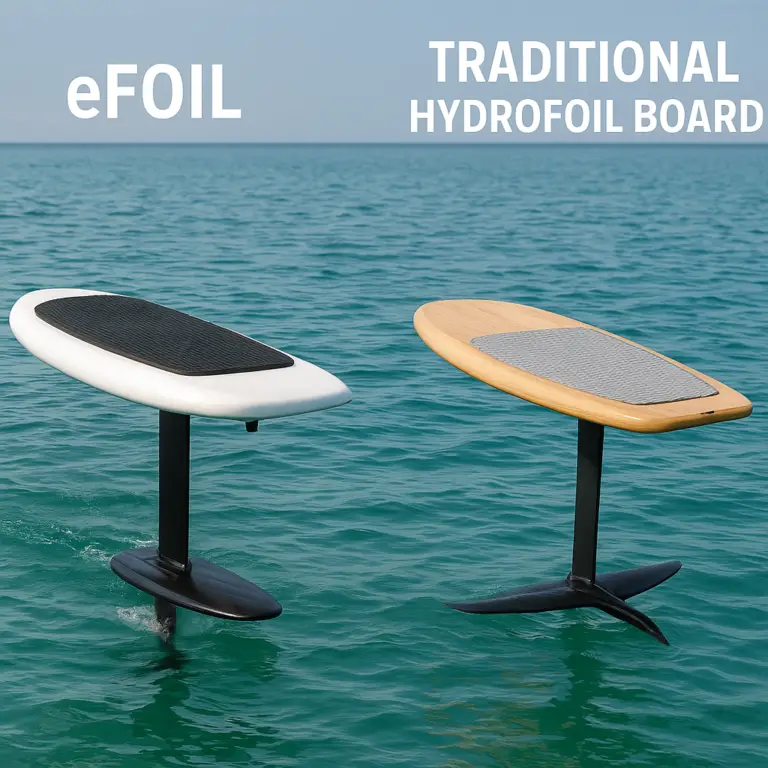
- Board Design Matters: Wing foil boards are typically high-volume and wide for stability, whereas surf foil boards are low-volume and compact for maneuverability and pumping efficiency.
- Learning Curve Nuances: Wing foiling often has a gentler entry for getting up on foil in flat water, while surf foiling demands strong wave-reading skills and physical pumping technique.
- Mast Length Strategy: Shorter masts (60-75cm) favor tight turns and shallow water, while longer masts (85-10cm+) provide crucial clearance for chop and aggressive upwind riding.
- Condition Dependency: Choose surf foiling for small, clean swells with little wind; choose wing foiling for consistent wind (8+ knots) in flat water, chop, or mixed conditions.
Ready to find your perfect match? Keep reading to discover which discipline will launch your next adventure!
Table of Contents
- ⚡️ Quick Tips and Facts
- 🌊 The Evolution of Hydrofoiling: From Surf Foils to Wing Foils
- 1. The Core Distinction: Propulsion and Power Source
- 2. Board Design and Volume: Stability vs. Performance
- 3. Mast Length and Fuselage: How Height and Reach Change the Ride
- 4. Wing Shape and Surface Area: Lift Dynamics Explained
- 5. The Learning Curve: Which is Easier for Beginners?
- 6. Surf Foil Specifics: Riding Waves Without a Motor or Hand Wing
- 7. Wing Foil Specifics: Mastering Wind, Tacking, and Jibing
- 8. Gear Compatibility: Can You Mix and Match Surf and Wing Components?
- 9. Ideal Conditions: When to Choose Surf Foiling vs. Wing Foiling
- 10. Safety Considerations: Collisions, Spins, and Self-Rescue
- 1. Cost Breakdown: Investing in Your First Surf or Wing Foil Setup
- 12. Real-World Anecdotes: Tales from the Hydrofoil Team
- 13. Expert Recommendations: Choosing Your Perfect Match
- 🏁 Conclusion
- 🔗 Recommended Links
- ❓ FAQ
- 📚 Reference Links
⚡️ Quick Tips and Facts
Welcome to the ultimate showdown, fellow hydrofoilers! You’ve landed here
because you’re probably scratching your head, wondering if that sleek surf foil you’ve been eyeing can double as your wing-foiling steed, or vice-versa. Or maybe you’re just starting your journey into the incredible
world of hydrofoiling and want to understand the fundamental differences before you dive fin-first into a purchase. Well, you’ve come to the right place! We, the Hydrofoiling™ team, live and breathe this stuff
, and we’re here to break it all down for you.
Here are some rapid-fire facts to get your brain buzzing:
- Propulsion is Key: The most significant difference?
Surf foils are powered by waves or pumping, while wing foils harness the wind with a handheld inflatable wing. It’s the classic “wave rider vs. wind rider” debate! - Board Volume Matters: Generally
, wing foil boards are significantly higher in volume and often wider than surf foil boards to provide stability for standing and launching with a wing. - Mast Length Preferences: While there’s overlap, many wing foilers prefer
slightly longer masts for better clearance and upwind performance, whereas surf foilers might opt for shorter masts for quicker turns and easier recovery in waves. - Wing Design Specialization: The front and rear wings (the “foil” itself)
are often optimized for different purposes. Surf foils prioritize pumpability and carving, while wing foils balance early lift, speed, and stability for diverse wind conditions. - Learning Curve Nuances: While both require dedication, many find the
initial stages of wing foiling a bit more forgiving for simply getting up and riding in flat water, thanks to the external power source. Surf foiling demands a good understanding of wave dynamics and strong pumping technique. - Gear Compatibility
: Can you mix and match? Sometimes! Many brands offer modular systems, but specific components are optimized for one discipline over the other. Don’t just assume your surf foil setup will be perfect for winging without checking the specs.
Ready to dive deeper? Let’s peel back the layers and uncover the fascinating world beneath your feet (and hands!). If you’re keen to explore the broader universe of hydrofoiling, check out our comprehensive guide right here: Hydrofoiling Explained.
🌊 The
Evolution of Hydrofoiling: From Surf Foils to Wing Foils
It wasn’t that long ago that hydrofoiling felt like something out of a sci-fi movie, right? But oh, how far we’ve come!
The journey from those early, often clunky, experimental setups to the sleek, high-performance gear we ride today is a testament to innovation and a relentless pursuit of glide.
The roots of modern hydrofoiling can be traced back to
various water sports, but the concept of lifting a board out of the water to reduce drag truly took hold in surfing and wakeboarding. Early pioneers, often with a background in aerospace or engineering, began attaching hydrofoils to surfboards, allowing
riders to experience an otherworldly sensation of flying above the water. This was the birth of surf foiling as we know it – a pure, wave-driven experience, demanding skill, balance, and a deep connection to the ocean’s energy.
Then came the “wing revolution.” Suddenly, we had a new way to power our foils: a handheld, inflatable wing. It wasn’t quite kiteboarding, not quite windsurfing, but a beautiful hybrid that opened up foiling to a whole
new set of conditions and riders. The wing provided an accessible, controllable power source, allowing us to foil not just on waves, but across flat water, in light wind, and even upwind – something traditional surf foiling couldn’t offer
without a tow-in.
This evolution didn’t just add a new sport; it refined existing ones. The demands of wing foiling pushed foil designers to create more stable, efficient, and user-friendly setups, benefits that often
trickled back into surf foil designs. It’s a symbiotic relationship, really, where each discipline pushes the boundaries of the other, leading to incredible advancements in hydrofoil technology and board design. We’re talking about a true
golden age for anyone who loves to fly on water!
1. The Core Distinction: Propulsion and Power Source
Alright, let’s cut to the chase. If you take one thing away from this article, it should be this: the primary difference between a surf foil and a wing foil lies in how you get going and stay going. It’
s all about the propulsion, baby!
Surf Foiling: The Power of the Ocean (and Your Legs!) 🌊
When you’re surf foiling (often called prone foiling or pump foiling), your
engine is either the wave itself or your own body.
- Wave Power: You paddle into a wave, just like traditional surfing, but instead of riding the face, you aim to catch enough speed for the foil to lift you
out of the water. Once you’re up, you’re essentially riding the energy of the wave, often well ahead of the breaking white water. The goal is to stay on foil, carving and gliding. - Pumping
Power: This is where the magic (and the workout!) happens. After catching a wave or even from a flat water start (often with a tow-in or dock start), skilled surf foilers can “pump” the board and foil with
their legs and body weight, generating enough lift and forward momentum to connect multiple waves, or even ride indefinitely on flat water. It’s an incredible feeling of self-propulsion!
Pros:
-
Pure, unadulterated
connection to the ocean’s energy. -
No external gear (like a wing or kite) to manage once on foil.
-
Can be done in incredibly small swells that wouldn’t even break for traditional surfing.
-
Incredible full-body workout.
Cons:
- Requires waves or a tow-in/dock start.
- Steep learning curve for pumping and wave reading.
- Can be physically demanding.
Wing Foiling: Harnessing the Wind’s Embrace 💨
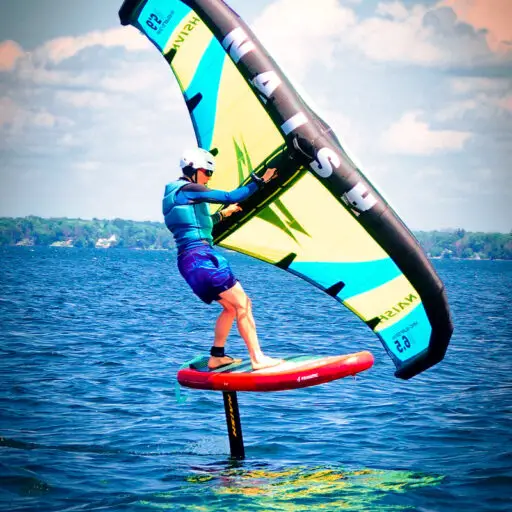
Now, wing foiling is a different beast entirely. Here, your power source is a handheld, inflatable wing that you hold onto. Think of it like a
sail, but you’re holding it directly, and it’s not attached to your board.
- Wind Power: You stand on your board, hold the wing, and let the wind fill it. By manipulating the wing,
you generate forward momentum, which in turn lifts the foil out of the water. Once you’re up and flying, you can use the wing to steer, accelerate, and even jump! - Versatility: This is where
wing foiling shines. You can ride in flat water, chop, swell, and even small waves. The wind dictates your speed and direction, allowing for long cruises, upwind travel, and downwind runs. As one user on Progression
Project put it, wing foiling “can be performed in breaking, unbreaking, or no waves at all,” relying primarily on wind (8+ knots).
Pros:
- Can be done in a
much wider range of conditions (flat water, chop, waves, light wind). - Offers a fantastic blend of surfing, windsurfing, and kiteboarding sensations.
- Often considered easier to learn the basics of getting up and riding than
surf foiling. - Great for exploring vast stretches of water.
Cons:
- Requires consistent wind.
- Managing the wing and the foil simultaneously can be a coordination challenge initially.
- Gear setup
can take a bit longer than just grabbing a surf foil board.
Our Take: As Hydrofoiling™ surfers, we love both for different reasons. Surf foiling is that primal connection to the wave, a pure dance with the ocean. Wing
foiling is the ultimate playground, opening up endless possibilities for exploration and progression across all sorts of water. It’s like comparing a finely tuned race car (surf foil) to a versatile adventure vehicle (wing foil) – both incredible, but built
for different journeys.
2. Board Design and Volume: Stability vs. Performance
The board you stand on is your
platform, your connection to the foil below. And just like the propulsion, the design philosophy behind surf foil boards and wing foil boards diverges significantly to meet the demands of their respective sports. It’s a delicate balance between stability
, maneuverability, and getting up on foil efficiently.
Surf Foil Boards: Minimalist Magic ✨
When you look at a surf foil board, especially for prone foiling, you’ll immediately notice its compact size. These
boards are designed to be as small as possible while still providing enough flotation to paddle and catch a wave.
- Low Volume, Short Length: Surf foil boards typically have low volume (often 20-50 liters)
and are very short (under 5 feet). The idea is to minimize swing weight and drag once you’re on foil, allowing for maximum maneuverability and pumpability. - Concave Decks & Kick Tails: Many
surf foil boards feature concave decks for better foot control and a “kick tail” or pronounced rocker in the tail to help with pumping and getting up on foil. - Construction: They are often built with lightweight, durable constructions, similar to high
-performance surfboards, to withstand the forces of waves and pumping. Brands like Lift Foils and GoFoil are renowned for their specialized surf foil board designs.
Table: Typical Surf Foil Board Characteristics
| Feature
| Description | Benefit |
|---|---|
| Volume | Low (20-50L) |
| Minimal drag on foil, highly maneuverable | |
| Length | Short (under 5 ft / 150 cm) |
| **Width | |
| ** | Moderate (18-22 inches / 45-55 cm) |
| Deck Shape | Often concave or flat with |
| subtle contours | Enhanced foot feel and control, especially for pumping |
| Tail Design | Kick tail or slight rocker |
| **Foot | |
| Strap Inserts** | Often none, or minimal for advanced riders |
Wing Foil Boards: The Stable Platform 🚀
Wing foil boards, on the other hand, prioritize
stability and ease of getting up on foil with the power of the wing. They tend to be larger and more voluminous than their surf foil counterparts.
- High Volume, Wider Stance: Wing foil boards range from 60
liters for advanced riders up to 150+ liters for beginners. They are generally wider and often a bit longer than surf foil boards, providing a stable platform to stand on, especially when learning to manage the wing. - Rec
essed Decks & Foot Strap Options: Many wing foil boards feature recessed decks to lower your center of gravity, enhancing stability. Foot strap inserts are almost universally present, offering more control and the ability to jump. - Construction: Dur
ability is key, as these boards often take a beating from learning falls and transport. Brands like Fanatic, Duotone, and F-One offer a wide range of dedicated wing foil boards.
Table: Typical Wing Foil Board
Characteristics
| Feature | Description | Benefit |
|---|---|---|
| Volume | High (60-150+L) | Excellent stability for standing and launching, easier to get on foil |
| Length | Moderate (4.5-6.5 ft / 135-200 cm) | |
| Balances stability with maneuverability, good glide | ||
| Width | Wide (26-32 inches / 65-80 cm) | Maximum stability for learning and light wind conditions |
| Deck Shape | Often recessed or flat with traction pads | Lowers center of gravity, comfortable standing platform |
| Tail Design | Often wider, sometimes with release chines | Aids in early planning
and water release for getting on foil |
| Foot Strap Inserts | Multiple options for stance width and angle | Enhanced control, ability to jump, secure footing |
Can You Use a Wing Foil Board for Surf Foiling?
While technically possible, it’s generally ❌ not ideal. A high-volume wing foil board will be much harder to paddle into a wave and will feel cumbersome and less responsive for pumping and carving on a wave face.
Can
You Use a Surf Foil Board for Wing Foiling?
This is a bit more nuanced. For experienced wing foilers, especially those looking for a challenge or riding in strong winds, a low-volume surf foil board can be exhilarating
. However, for beginners, it’s a definite ❌ no-go. You’ll struggle immensely with stability and getting up on foil. The Progression Project forum notes that winging needs less frequent gear upgrades and is “less sensitive
to foil technicalities” compared to prone foiling, suggesting that while specific boards are optimized, there might be more flexibility in winging once proficient.
Our Recommendation: Start with a dedicated board for your chosen discipline
. It will make your learning curve much smoother and more enjoyable. If you’re looking to cross over later, you’ll have a better understanding of what you need.
3. Mast Length and Fuselage: How Height and Reach Change the Ride
The mast and fuselage are the backbone of your hydrofoil, connecting your board to
the wings and dictating how high you ride above the water. Their length and design significantly impact the feel, performance, and even the safety of your ride. This is where personal preference, skill level, and the conditions you ride in really
come into play.
The Mast: Your Connection to the Sky (or Water) 📏
The mast is the vertical strut that connects the foil’s fuselage and wings to the board. Its length is a critical factor
.
- Short Masts (e.g., 60-75 cm):
- Benefits: Easier to learn on, especially in shallow water. Less leverage means less dramatic falls. Quicker to
recover from touch-downs. Often preferred by surf foilers for tighter turns and less exposure to breaching (the foil coming out of the water). - Drawbacks: Limits the angle of bank in turns, making aggressive carving harder
. More prone to “touching down” (the board hitting the water) in chop or when pumping aggressively. - Medium Masts (e.g., 75-90 cm):
Benefits: A great all-around length for both surf and wing foiling. Offers a good balance of lift height, maneuverability, and stability. Allows for deeper carves and more clearance over chop.
- Draw
backs: Can still touch down in very choppy conditions or during steep turns. - Long Masts (e.g., 90-110+ cm):
- Benefits: Provides maximum clearance above
the water, ideal for choppy conditions, big waves, or aggressive wing foiling maneuvers like jumping. Offers a smoother ride in rough water and excellent upwind performance for winging. Allows for very deep carves. - Draw
backs: More challenging to learn on due to increased leverage, making falls more impactful. Requires deeper water. Can feel less “connected” to the water for some surf foilers.
Surf Foil Mast Preferences: Many surf foilers,
especially those focused on wave riding and pumping, often prefer shorter to medium masts (60-80 cm). This allows for quicker response, tighter turns within the wave pocket, and easier recovery if the foil breaches or touches down. For
instance, a 75cm mast might be a sweet spot for many.
Wing Foil Mast Preferences: Wing foilers, particularly those riding in open water, chop, or focusing on speed and upwind ability, often gravitate towards medium
to long masts (80-100+ cm). The extra height provides a smoother ride, better clearance for chop, and more room for error when carving or learning to jump. The question of “75 or 85 for
mast sizes” is a common one in the wing foil community, as seen in discussions like those on Facebook groups. For winging, a longer mast like 85cm or 90cm often provides more comfort
and performance once past the absolute beginner stage, as it gives you more room to lean and absorb chop without the board touching down.
The Fuselage: The Connecting Rod 🔗
The fuselage is the horizontal body that connects the mast
to the front and rear wings. Its length plays a crucial role in the foil’s stability, turning radius, and pumping efficiency.
- Short Fuselage:
- Benefits: More maneuverable, quicker to
turn, and feels more “lively” underfoot. Often preferred by advanced surf foilers for aggressive carving and tight turns. - Drawbacks: Less stable, can be twitchy, and more challenging to pump effectively
for long distances. - Medium Fuselage:
- Benefits: A good all-around choice, offering a balance of stability and maneuverability. Easier to pump than a short fuselage.
Drawbacks:** Might not offer the extreme turning of a short fuselage or the ultimate stability of a long one.
- Long Fuselage:
- Benefits: Very stable, easier to balance, and excellent for straight
-line speed and efficient pumping. Great for beginners in both surf and wing foiling, and for wing foilers focused on cruising and upwind performance. - Drawbacks: Less maneuverable, slower to turn, and can
feel less “playful.”
Our Take on Mast & Fuselage: When choosing, consider your primary discipline and skill level. For surf foiling, we often lean towards shorter masts and fuselages for that snappy, responsive feel
. For wing foiling, especially when learning or cruising, a longer mast and fuselage can be your best friend, offering stability and a smoother ride. As you progress, you might experiment with shorter setups for more aggressive maneuvers. Remember, it’s
all about finding what feels right for you and your local conditions!
4. Wing Shape and Surface Area
: Lift Dynamics Explained
Ah, the wings! These are the true magic makers, the hydrodynamic airfoils that generate lift and allow you to fly above the water. The shape, aspect ratio, and surface area of both the front (main) wing and the rear (stabilizer) wing are meticulously designed to deliver specific performance characteristics, making them vastly different for surf foiling versus wing foiling.
The Front Wing: Your Primary Lift Generator 🦅
The front wing
is the powerhouse, responsible for the majority of the lift and drive.
- Aspect Ratio (AR): This is the ratio of the wing’s span (width) to its chord (front-to-back measurement).
Low Aspect Ratio (LAR) Wings: These wings are shorter and wider.
- Characteristics: Generate more lift at lower speeds, are very stable, and turn easily. They are excellent for pumping and tight turns.
Ideal for: Surf foiling (especially prone and dock starts), learning, and smaller waves where immediate lift is crucial. Brands like Armstrong Foils and Axis Foils offer fantastic LAR options.
Medium Aspect Ratio (MAR) Wings:** A versatile middle ground.
-
Characteristics: Offer a good balance of lift, glide, and maneuverability.
-
Ideal for: Crossover riders, wing foiling
in varied conditions, and intermediate surf foilers. -
High Aspect Ratio (HAR) Wings: These wings are long and narrow.
-
Characteristics: Generate less drag, offer incredible glide, maintain speed efficiently
, and are excellent for upwind performance. They require more speed to generate lift and are less maneuverable for tight turns. -
Ideal for: Wing foiling (especially for speed, racing, and long-distance cruising), downwind foiling, and advanced surf foilers looking for maximum glide and pump efficiency. Slingshot and F-One have pushed the boundaries with HAR wing designs.
-
Surface Area: The
total area of the wing. -
Larger Surface Area: Provides more lift at lower speeds, making it easier to get on foil. Great for beginners, heavier riders, or light wind conditions in wing foiling. Also
excellent for small wave surf foiling where early lift is paramount. -
Smaller Surface Area: Requires more speed to generate lift but offers higher top speeds and increased maneuverability. Favored by advanced riders for high-wind wing foiling or
aggressive surf foiling.
Table: Front Wing Characteristics Comparison
| Feature | Surf Foiling (Typical) | Wing Foiling (Typical) |
|---|---|---|
| :— | :— | :— |
| Aspect Ratio | Low to Medium (LAR for pump/turn, MAR for versatility) | Medium to High (MAR for all-around, HAR for speed/glide) |
| Surface Area | ||
| Moderate to Large (for early lift, pumping) | Moderate to Large (for early lift, light wind) to Small (for high wind, speed) | |
| Profile | Thicker, more camber for low | |
| -speed lift | Thinner, more efficient for speed and glide | |
| Primary Goal | Early lift, pumpability, tight turns | Early lift, glide, speed, upwind performance |
The
Rear Wing (Stabilizer): The Finetuner ⚖️
Often overlooked, the rear wing (or stabilizer) plays a crucial role in the foil’s stability, pitch control, and overall feel.
-
Size and
Shape: -
Larger Stabilizers: Provide more stability and make the foil feel more locked in. Great for beginners or those seeking a very predictable ride.
-
Smaller Stabilizers: Offer less drag, making
the foil faster and more maneuverable, but also less stable. -
Anhedral/Dihedral: The angle of the stabilizer wings can influence stability and turning. Anhedral (tips pointing down) can increase stability, while dihedral (tips pointing up) can make it more playful.
-
Placement (on Fuselage): The distance of the stabilizer from the front wing (determined by fuselage length) also impacts performance, as discussed in the previous section.
**
Our Take on Wing Design:** This is where the magic truly happens! For surf foiling, we often gravitate towards lower aspect ratio front wings with generous surface area, paired with a stabilizer that allows for quick, responsive turns and easy pumping. Think
of it as a nimble, powerful engine for wave riding. For wing foiling, especially if you’re chasing speed or covering long distances, a higher aspect ratio front wing with a more efficient profile, combined with a stabilizer that offers
good directional stability, will be your best friend. It’s like having a glider that can also accelerate on demand. The beauty is that many brands offer modular systems, allowing you to swap out front and rear wings to fine-tune your setup
for different conditions and riding styles. Don’t be afraid to experiment!
5. The Learning
Curve: Which is Easier for Beginners?
Ah, the age-old question: “Which one should I try first?” It’s a valid one, and honestly, both surf foiling and wing foiling present
their own unique challenges and rewards. There’s no single “easier” answer, as it often comes down to your prior watersports experience, physical fitness, and even your local conditions. However, we can break down the typical progression
for each.
Learning to Surf Foil: The Art of the Pump and Wave Whisperer 🌊
Learning to surf foil is often described as a multi-stage process, demanding a blend of surfing skills, balance, and sheer physical effort.
Step-by-Step Progression for Surf Foiling:
- Towed Starts (Optional but Recommended): Many beginners start by being towed behind a boat or jet ski. This allows you to focus solely on getting up
on the foil and understanding the sensation of flying, without the added complexity of paddling and catching waves.
- Tip: Start with a longer mast (e.g., 75-85cm) and a larger
, more stable front wing.
- Dock Starts: Once comfortable with being towed, dock starts are the next logical step. You push off a dock, get a little speed, and try to pump onto the foil. This
builds crucial pumping muscles and coordination.
- Tip: Use a slightly shorter mast (e.g., 60-75cm) and a high-lift front wing.
- Paddling into Waves:
This is where your traditional surfing skills come into play. You need to paddle efficiently, catch the wave, and then transition smoothly to standing and getting on foil. This requires excellent wave reading and timing.
- Challenge: The initial paddle-
in can be tricky, as the foil creates drag. You need enough speed for the foil to lift before the wave breaks.
- Sustained Foiling and Pumping: Once on foil, the goal is to stay
up! This involves subtle weight shifts, carving, and continuous pumping to maintain speed and connect sections of the wave or even link multiple waves.
Why it’s challenging:
- No External Power: You’re relying
entirely on wave energy or your own pumping, which is a significant physical demand. - Balance on a Small Board: Surf foil boards are often low volume, making them less stable for standing and paddling.
- Wave Reading: Mastering
the nuances of wave energy and timing is crucial.
Our Anecdote: “I remember my first few attempts at prone foiling,” says Rad_Duke from our team. “It felt like trying to balance on a greased watermelon
while simultaneously doing squats. The breakthrough came when I finally understood the rhythm of the pump – it’s less about brute force and more about a fluid, rhythmic motion. Once you get it, though, it’s pure magic, connecting waves you
‘d never even look at on a surfboard!”
Learning to Wing Foil: The Wind is Your Friend (Mostly!) 🌬️
Wing foiling is often perceived as having a more accessible entry point, especially for those with some board
sports experience (skateboarding, snowboarding, windsurfing, kiteboarding). The external power source (the wing) simplifies some aspects of the learning process. The first YouTube video in the article notes, “Winging is definitely easy to get
out, get riding.”
Step-by-Step Progression for Wing Foiling:
- Kneeling on the Board (No Foil): Start by getting comfortable kneeling on a high
-volume wing foil board in flat water, holding the wing. Learn how to steer the wing, generate power, and move across the water.
- Tip: Use a large, stable wing (e.g., 5-6m for light wind) and a high-volume board (100L+).
- Standing and Steering (No Foil): Progress to standing on the board without the foil, still using the wing for
propulsion. This builds core strength and balance. - First Flights (with Foil): Attach the foil (start with a medium mast, e.g., 80-90cm, and a large, stable front wing). Practice getting on your knees, then standing up, and then gently sheeting in the wing to generate enough speed for the foil to lift.
- Challenge: Coordinating the wing, your stance, and the foil’s lift simultaneously
. This is often the biggest hurdle.
- Sustained Foiling, Tacking, and Jibing: Once you can consistently get on foil, you’ll work on maintaining your flight, steering, and learning basic maneuvers like
tacking (turning upwind) and jibing (turning downwind).
Why it’s often considered easier (initially):
- External Power: The wing provides consistent propulsion, so you don’t have to rely on
waves or constant pumping. - Stable Platform: Wing foil boards are typically high volume, offering a much more stable platform for learning to stand and manage the wing.
- Versatile Conditions: You can learn in flat
water with consistent wind, which is often more predictable than waves.
Our Anecdote: “When I first picked up a wing, I was a seasoned kiteboarder,” recalls Tanner.0 from our team. “I thought,
‘How hard can this be?’ Turns out, holding a floppy wing and trying to balance on a board while a foil tries to lift you is a unique challenge! But the progression felt faster than surf foiling. Within a few sessions,
I was flying, and the feeling of silent glide across the water was instantly addictive. The presenter in the YouTube video also mentioned, ‘Winging has been actually super fun to learn something new.’ That really resonates
with my experience.”
Conclusion on Learning Curve:
For simply getting up and flying across the water, wing foiling often has a gentler initial learning curve due to the stable board and external power. However, mastering
advanced maneuvers in wing foiling (jumping, wave riding) is just as challenging as becoming a proficient surf foiler. If you have a strong surfing background and good physical fitness, surf foiling might click faster for you. If you’
re new to board sports but have a good sense of balance and coordination, wing foiling could be your quicker path to flight.
Our Recommendation: If you’re truly a beginner to all board sports, consider starting with a few
wing foil lessons. The controlled environment and stable gear can build a fantastic foundation. If you’re a seasoned surfer looking for a new challenge, surf foiling might be your natural progression.
6. Surf Foil Specifics: Riding Waves Without a Motor or Hand Wing
Alright, let’s zoom in on the pure, unadulter
ated joy of surf foiling. This is where you truly become one with the ocean’s energy, harnessing its power to lift you above the surface and glide with an almost supernatural grace. No motors, no kites, no wings – just you,
your board, your foil, and the wave. It’s a dance, a meditation, and a serious workout all rolled into one.
The Art of the Take-Off: Catching the Uncatchable 🏄 ♂️
Unlike
traditional surfing where you ride the breaking part of the wave, surf foiling allows you to catch and ride the unbroken swell well before it peaks. This is a game-changer, opening up a vast new playground of waves previously
deemed unrideable.
- Paddle Power: You start by paddling, much like traditional surfing, but with a crucial difference: you need to generate enough speed for the foil to engage and lift. This often means paddling harder and longer
, especially on smaller boards. - The “Pop-Up” and Lift: As the wave lifts your board, you’ll feel the foil start to generate lift. This is your cue to quickly transition to your feet.
The goal is to get the board flying before the wave breaks, allowing you to ride the pure energy of the swell. - Weight Distribution is Key: As you stand, your weight distribution is critical. Too far
back, and the nose will dive; too far forward, and the tail will breach. It’s a delicate balance to find that sweet spot of stable flight.
Pumping: The Endless Glide Machine 💪
This is the holy
grail of surf foiling. Pumping is the rhythmic up-and-down motion of your body and board that generates propulsion, allowing you to maintain speed, connect sections, and even ride indefinitely on flat water after catching a bump
.
- The Motion: Imagine doing a subtle squat and stand, combined with a forward and backward weight shift. As you push down, the foil generates lift and forward momentum. As you come up, you’re setting up for the next
downward push. It’s a full-body movement, engaging your legs, core, and even your arms. - Connecting Waves: The true beauty of pumping is its ability to link waves. You can ride one wave, pump
off it, and then glide across the flat water to catch the next incoming swell, often covering significant distances. This is where the “prone on steroids” feeling mentioned in the Progression Project forum comes alive, allowing riders to catch “10 waves
” on windswell or real swell. - Gear for Pumping: Shorter fuselages and lower aspect ratio front wings often make pumping easier and more efficient, as they are more responsive to
subtle movements. Brands like GoFoil and Lift Foils are renowned for their highly pumpable setups.
Carving and Maneuvers: Dancing on Water 💃
Once you’re flying, surf foiling offers
an incredible sensation of carving and turning that’s unlike any other board sport.
- Rail-to-Rail Transitions: Because you’re lifted out of the water, there’s no rail drag. This allows for incredibly smooth
, fluid rail-to-rail transitions. You initiate turns by leaning and applying pressure through your feet. - Tight Turns: Shorter masts and fuselages, combined with lower aspect ratio wings, allow for very tight,
radical turns within the wave pocket. - Breaching and Recovery: Occasionally, the foil might “breach” (the wing tips come out of the water) during aggressive turns or in choppy conditions. Learning to recover from a
breach, by quickly shifting weight and re-engaging the foil, is an essential skill.
Our Take: Surf foiling is a journey of constant refinement. It’s about feeling the subtle energy of the ocean, anticipating the wave, and
then executing a precise, powerful pump to elevate yourself into a state of pure glide. It’s challenging, yes, but the reward of riding an otherwise unrideable bump, connecting multiple waves, and feeling that silent flight is absolutely unparalleled. It’
s a testament to human ingenuity and our endless desire to connect with the elements.
7. Wing
Foil Specifics: Mastering Wind, Tacking, and Jibing
Now, let’s shift gears to the dynamic world of wing foiling. Here, you’re not just riding waves; you’re harnessing the wind
, transforming it into propulsion, and gliding across the water with a freedom that combines elements of windsurfing, kiteboarding, and surfing. It’s an incredibly versatile sport that opens up a vast playground, from glassy lakes to choppy oceans.
Understanding the Wing: Your Handheld Sail 🪁
The wing itself is your engine, your rudder, and your throttle. Learning to manipulate it effectively is the first step to unlocking the full potential of wing foiling.
Holding the Wing: Most wings have multiple handles or a boom. You’ll typically use a front handle for stability and a rear handle (or boom section) to sheet in and generate power.
- Generating Power: By
orienting the wing into the wind and pulling on the rear handle, you “sheet in” the wing, much like a sail, catching the wind and generating forward thrust. - Depowering: To slow down or stop,
you simply release the rear hand or feather the wing so it’s less exposed to the wind. - Neutral Position: When you’re on foil and cruising, you’ll often hold the wing in a relatively neutral position, allowing
it to “flag out” behind you, minimizing drag while still providing subtle control.
The Launch: Getting Up and Flying 🚀
Getting up on foil with a wing involves a coordinated effort between your board, your body, and the
wing.
- Kneeling Start: Most beginners start on their knees. You’ll position yourself on the board, grab the wing, and let the wind fill it to gain some initial momentum.
- Standing Up
: Once you have a little speed, you’ll transition to a standing position, keeping your weight centered and the wing generating just enough power to maintain stability. - Pumping the Board and Wing: As you gain more
speed, you’ll use a combination of pumping the board (similar to surf foiling, but often less aggressive) and pumping the wing (sheeting in and out) to generate the final burst of lift needed to get the foil flying
.
- Tip: A larger front wing and a higher volume board will make this process significantly easier for beginners.
Tacking and Jibing: Navigating the Wind 🧭
These are your fundamental turns in wing
foiling, allowing you to change direction and travel upwind or downwind.
- Tacking (Upwind Turn): This maneuver involves turning the nose of your board through the wind, typically to change direction while heading upwind.
-
Initiate Turn: Start by carving upwind, shifting your weight onto your heels.
-
Bring Wing Overhead: As you turn, bring the wing overhead and slightly forward to help pivot the board.
-
Switch Stance/Hands: As the board passes through the wind, you’ll need to quickly switch your foot stance and hand position on the wing.
-
Power Up: Once on the new tack
, sheet in the wing to regain speed and lift.
- Jibing (Downwind Turn): This maneuver involves turning the tail of your board through the wind, typically to change direction while heading downwind.
Initiate Turn: Start by carving downwind, shifting your weight onto your toes.
2. Flag the Wing: As you turn, often you’ll “flag” the wing behind you, letting it dep
ower momentarily.
3. Switch Stance/Hands: As the board completes the turn, quickly switch your foot stance and hand position.
4. Power Up: Sheet in the wing on the new tack to accelerate
.
Our Anecdote: “My first few jibes felt like a wrestling match with an octopus!” laughs Eriefoiler from our team. “The wing would flap, the board would wobble, and I’d inevitably end
up in the water. But then, one day, it just clicked. The coordination of shifting my feet, rotating the wing, and maintaining balance all came together. Now, a smooth jibe feels like a ballet on water – effortless and incredibly satisfying.
The ability to go upwind and then cruise downwind on a jibe is what makes winging so incredibly versatile.”
Our Take: Wing foiling is a fantastic blend of skills. It demands coordination, balance, and an understanding of wind dynamics
. While the initial learning curve for getting on foil can be quicker than surf foiling, mastering maneuvers like tacking and jibing, especially in choppy conditions, requires dedication. But once you’ve got it, the freedom to explore,
cruise, and even catch waves with the power of the wind is truly exhilarating.
- Gear Compatibility: Can You Mix and Match Surf and Wing Components?
This is a question we hear all the time, and it’s a good one! Investing in hydrofoil gear can be a significant commitment, and naturally
, you want to get the most bang for your buck. The short answer is: sometimes, but with caveats. The longer, more helpful answer involves understanding the modular nature of foils and the specific demands of each discipline.
The Modular
System: Mast, Fuselage, Front Wing, Stabilizer 🧩
Most modern hydrofoil systems are modular, meaning the mast, fuselage, front wing, and stabilizer are separate components that bolt together. This is fantastic because it allows for
customization and tuning. However, “modular” doesn’t always mean “universally compatible.”
- Mast-to-Board Connection: This is often the first compatibility hurdle. Most foils use either a plate mount (a flat plate with four bolts that attach to tracks on the board) or a pedestal mount (a specific shape that fits into a recessed box on the board). While plate mounts are fairly standardized (often 90mm x 165mm bolt pattern), the tracks on boards can vary in length, and some brands have proprietary systems.
- Mast-to-Fuselage Connection: This is usually brand-specific. The way a mast slots into and bolts to a
fuselage is unique to each manufacturer. So, you generally cannot mix a Fanatic mast with an Armstrong fuselage, for example. - Fuselage-to-Wing Connection: Similar to the mast-to
-fuselage, the bolt patterns and connection points for the front wing and stabilizer to the fuselage are almost always proprietary to the brand.
The Realities of Mixing and Matching ⚖️
So, what can you realistically
mix?
- Boards and Foils (Plate Mount): If both your board and your foil mast (with a plate mount) use the standard track system, you can often interchange them. This means you could potentially use a **
Naish** wing foil board with a Lift Foils surf foil setup, or vice-versa, if the mast has a plate mount. However, remember the design differences: a wing foil board will be cumbersome for surf foiling
, and a surf foil board will be unstable for winging. - Wings within a Brand’s Ecosystem: This is where the most flexibility lies. If you own a Slingshot foil system, you can typically swap out different
Slingshot front wings and stabilizers to tune your ride for different conditions or disciplines, as long as they are designed to fit that specific fuselage. For instance, you might use a large, low-aspect Slingshot
wing for surf foiling and a smaller, high-aspect Slingshot wing for high-wind wing foiling, all on the same mast and fuselage. - Wings (the inflatable kind) and Boards: The
handheld wing itself is generally independent of the board and foil system. You can use a Duotone wing with an F-One board and an Axis foil, for example. There’s no direct physical connection between
the wing and the board/foil.
Table: Gear Compatibility Quick Check
| Component | Surf Foil Setup | Wing Foil Setup | Can You Mix? | Notes
⚡️ Quick Tips and Facts
Welcome to the ultimate showdown, fellow hydrofoilers! You’ve landed here because you
‘re probably scratching your head, wondering if that sleek surf foil you’ve been eyeing can double as your wing-foiling steed, or vice-versa. Or maybe you’re just starting your journey into the incredible world of
hydrofoiling and want to understand the fundamental differences before you dive fin-first into a purchase. Well, you’ve come to the right place! We, the Hydrofoiling™ team, live and breathe this stuff,
and we’re here to break it all down for you.
Here are some rapid-fire facts to get your brain buzzing:
- Propulsion is Key: The most significant difference? **Surf foils
** are powered by waves or pumping, while wing foils harness the wind with a handheld inflatable wing. It’s the classic “wave rider vs. wind rider” debate! - Board Volume Matters: Generally, **
wing foil boards** are significantly higher in volume and often wider than surf foil boards to provide stability for standing and launching with a wing. - Mast Length Preferences: While there’s overlap, many wing foilers prefer
slightly longer masts for better clearance and upwind performance, whereas surf foilers might opt for shorter masts for quicker turns and easier recovery in waves. - Wing Design Specialization: The front and rear wings (the “foil” itself) are
often optimized for different purposes. Surf foils prioritize pumpability and carving, while wing foils balance early lift, speed, and stability for diverse wind conditions. - Learning Curve Nuances: While both require dedication, many find the initial
stages of wing foiling a bit more forgiving for simply getting up and riding in flat water, thanks to the external power source. Surf foiling demands a good understanding of wave dynamics and strong pumping technique. - Gear Compatibility:
Can you mix and match? Sometimes! Many brands offer modular systems, but specific components are optimized for one discipline over the other. Don’t just assume your surf foil setup will be perfect for winging without checking the specs.
Ready
to dive deeper? Let’s peel back the layers and uncover the fascinating world beneath your feet (and hands!). If you’re keen to explore the broader universe of hydrofoiling, check out our comprehensive guide right here: Hydrofoiling Explained.
🌊 The Evolution of Hydrofoiling: From Surf Foils to Wing Foils
It wasn’t that long ago that hydrofoiling felt like something out of a sci-fi movie, right? But oh, how far we
‘ve come! The journey from those early, often clunky, experimental setups to the sleek, high-performance gear we ride today is a testament to innovation and a relentless pursuit of glide.
The roots of modern hydrofoiling can
be traced back to various water sports, but the concept of lifting a board out of the water to reduce drag truly took hold in surfing and wakeboarding. Early pioneers, often with a background in aerospace or engineering, began attaching hydrofoils to
surfboards, allowing riders to experience an otherworldly sensation of flying above the water. This was the birth of surf foiling as we know it – a pure, wave-driven experience, demanding skill, balance, and a deep connection
to the ocean’s energy.
Then came the “wing revolution.” Suddenly, we had a new way to power our foils: a handheld, inflatable wing. It wasn’t quite kiteboarding, not quite windsurfing, but a
beautiful hybrid that opened up foiling to a whole new set of conditions and riders. The wing provided an accessible, controllable power source, allowing us to foil not just on waves, but across flat water, in light wind, and even up
wind – something traditional surf foiling couldn’t offer without a tow-in.
This evolution didn’t just add a new sport; it refined existing ones. The demands of wing foiling pushed foil designers to create more stable,
efficient, and user-friendly setups, benefits that often trickled back into surf foil designs. It’s a symbiotic relationship, really, where each discipline pushes the boundaries of the other, leading to incredible advancements in hydrofoil technology and board
design. We’re talking about a true golden age for anyone who loves to fly on water!
1
. The Core Distinction: Propulsion and Power Source
Alright, let’s cut to the chase. If you take one thing away from this article, it should be this: the primary difference between a surf foil and a wing foil lies
in how you get going and stay going. It’s all about the propulsion, baby!
Surf Foiling: The Power of the Ocean (and Your Legs!) 🌊
When you’re surf foiling (often called prone foiling or pump foiling), your engine is either the wave itself or your own body.
- Wave Power: You paddle into a wave, just like traditional surfing, but instead of riding the face, you
aim to catch enough speed for the foil to lift you out of the water. Once you’re up, you’re essentially riding the energy of the wave, often well ahead of the breaking white water. The goal is to stay on
foil, carving and gliding. - Pumping Power: This is where the magic (and the workout!) happens. After catching a wave or even from a flat water start (often with a tow-in or dock start),
skilled surf foilers can “pump” the board and foil with their legs and body weight, generating enough lift and forward momentum to connect multiple waves, or even ride indefinitely on flat water. It’s an incredible feeling of self-prop
ulsion!
Pros:
- Pure, unadulterated connection to the ocean’s energy.
- No external gear (like a wing or kite) to manage once on foil.
- Can be done
in incredibly small swells that wouldn’t even break for traditional surfing. - Incredible full-body workout.
Cons:
- Requires waves or a tow-in/dock start.
- Steep learning
curve for pumping and wave reading. - Can be physically demanding.
Wing Foiling: Harnessing the Wind’s Embrace 💨
Now, wing foiling is a different beast entirely. Here, your power source is
a handheld, inflatable wing that you hold onto. Think of it like a sail, but you’re holding it directly, and it’s not attached to your board.
- Wind Power: You stand on your board,
hold the wing, and let the wind fill it. By manipulating the wing, you generate forward momentum, which in turn lifts the foil out of the water. Once you’re up and flying, you can use the wing to steer,
accelerate, and even jump! - Versatility: This is where wing foiling shines. You can ride in flat water, chop, swell, and even small waves. The wind dictates your speed and direction, allowing for long
cruises, upwind travel, and downwind runs. As one user on Progression Project put it, wing foiling “can be performed in breaking, unbreaking, or no waves at all,” relying primarily on wind (8+ knots).
Pros:
- Can be done in a much wider range of conditions (flat water, chop, waves, light wind).
- Offers a fantastic blend of surfing, windsurfing, and
kiteboarding sensations. - Often considered easier to learn the basics of getting up and riding than surf foiling.
- Great for exploring vast stretches of water.
Cons:
- Requires consistent wind.
Managing the wing and the foil simultaneously can be a coordination challenge initially.
- Gear setup can take a bit longer than just grabbing a surf foil board.
Our Take: As Hydrofoiling™ surfers, we love both
for different reasons. Surf foiling is that primal connection to the wave, a pure dance with the ocean. Wing foiling is the ultimate playground, opening up endless possibilities for exploration and progression across all sorts of water. It’s like
comparing a finely tuned race car (surf foil) to a versatile adventure vehicle (wing foil) – both incredible, but built for different journeys.
2. Board Design and Volume: Stability vs. Performance
The board you stand on is your platform, your connection to the foil below. And just like the propulsion, the design philosophy behind **surf foil boards
** and wing foil boards diverges significantly to meet the demands of their respective sports. It’s a delicate balance between stability, maneuverability, and getting up on foil efficiently.
Surf Foil Boards: Minimalist Magic ✨
When you look at a surf foil board, especially for prone foiling, you’ll immediately notice its compact size. These boards are designed to be as small as possible while still providing enough flotation to paddle and catch a wave.
- Low Volume, Short Length: Surf foil boards typically have low volume (often 20-50 liters) and are very short (under 5 feet). The idea is to minimize swing weight and drag once you’
re on foil, allowing for maximum maneuverability and pumpability. - Concave Decks & Kick Tails: Many surf foil boards feature concave decks for better foot control and a “kick tail” or pronounced rocker in the tail
to help with pumping and getting up on foil. - Construction: They are often built with lightweight, durable constructions, similar to high-performance surfboards, to withstand the forces of waves and pumping. Brands like Lift Fo
ils and GoFoil are renowned for their specialized surf foil board designs.
Table: Typical Surf Foil Board Characteristics
| Feature | Description | Benefit |
|---|---|---|
| :— | :— | :— |
| Volume | Low (20-50L) | Minimal drag on foil, highly maneuverable |
| Length | Short (under 5 ft / 150 cm) | Reduced swing weight, easier pumping and turning |
| Width | Moderate (18-22 inches / 45-55 cm) | |
| Balances stability for paddling with narrow profile for carving | ||
| Deck Shape | Often concave or flat with subtle contours | Enhanced foot feel and control, especially for pumping |
| **Tail Design | ||
| ** | Kick tail or slight rocker | Aids in generating lift for pumping, easier take-off |
| Foot Strap Inserts | Often none, or minimal for advanced riders | Prioritizes freedom of movement |
| and quick bailouts |
Wing Foil Boards: The Stable Platform 🚀
Wing foil boards, on the other hand, prioritize stability and ease of getting up on foil with the power of the wing. They tend to be larger
and more voluminous than their surf foil counterparts.
- High Volume, Wider Stance: Wing foil boards range from 60 liters for advanced riders up to 150+ liters for beginners. They are generally wider and
often a bit longer than surf foil boards, providing a stable platform to stand on, especially when learning to manage the wing. - Recessed Decks & Foot Strap Options: Many wing foil boards feature recessed decks to lower your
center of gravity, enhancing stability. Foot strap inserts are almost universally present, offering more control and the ability to jump. - Construction: Durability is key, as these boards often take a beating from learning falls and transport.
Brands like Fanatic, Duotone, and F-One offer a wide range of dedicated wing foil boards.
Table: Typical Wing Foil Board Characteristics
| Feature | Description | Benefit |
|---|---|---|
| Volume | High (60-150+L) | Excellent stability for standing and launching, |
| easier to get on foil | ||
| Length | Moderate (4.5-6.5 ft / 135-200 cm) | Balances stability with maneuverability, good glide |
| Width | Wide (26-32 inches / 65-80 cm) | Maximum stability for learning and light wind conditions |
| Deck Shape | Often recessed | |
| or flat with traction pads | Lowers center of gravity, comfortable standing platform | |
| Tail Design | Often wider, sometimes with release chines | Aids in early planning and water release for getting on foil |
| Foot Strap Inserts | Multiple options for stance width and angle | Enhanced control, ability to jump, secure footing |
Can You Use a Wing Foil Board for Surf Foiling?
While technically possible, it
‘s generally ❌ not ideal. A high-volume wing foil board will be much harder to paddle into a wave and will feel cumbersome and less responsive for pumping and carving on a wave face.
Can You Use a Surf Foil
Board for Wing Foiling?
This is a bit more nuanced. For experienced wing foilers, especially those looking for a challenge or riding in strong winds, a low-volume surf foil board can be exhilarating. However, for beginners
, it’s a definite ❌ no-go. You’ll struggle immensely with stability and getting up on foil. The Progression Project forum notes that winging needs less frequent gear upgrades and is “less sensitive to foil technicalities”
compared to prone foiling, suggesting that while specific boards are optimized, there might be more flexibility in winging once proficient.
Our Recommendation: Start with a dedicated board for your chosen discipline. It will
make your learning curve much smoother and more enjoyable. If you’re looking to cross over later, you’ll have a better understanding of what you need.
3. Mast Length and Fuselage: How Height and Reach Change the Ride
The mast and fuselage are the backbone of your hydrofoil, connecting your
board to the wings and dictating how high you ride above the water. Their length and design significantly impact the feel, performance, and even the safety of your ride. This is where personal preference, skill level, and the conditions you ride
in really come into play.
The Mast: Your Connection to the Sky (or Water) 📏
The mast is the vertical strut that connects the foil’s fuselage and wings to the board. Its length is a critical factor.
- Short Masts (e.g., 60-75 cm):
- Benefits: Easier to learn on, especially in shallow water. Less leverage means less dramatic falls. Quicker to
recover from touch-downs. Often preferred by surf foilers for tighter turns and less exposure to breaching (the foil coming out of the water). - Drawbacks: Limits the angle of bank in turns, making aggressive carving
harder. More prone to “touching down” (the board hitting the water) in chop or when pumping aggressively. - Medium Masts (e.g., 75-90 cm):
Benefits: A great all-around length for both surf and wing foiling. Offers a good balance of lift height, maneuverability, and stability. Allows for deeper carves and more clearance over chop.
Drawbacks:** Can still touch down in very choppy conditions or during steep turns.
- Long Masts (e.g., 90-110+ cm):
- Benefits: Provides maximum
clearance above the water, ideal for choppy conditions, big waves, or aggressive wing foiling maneuvers like jumping. Offers a smoother ride in rough water and excellent upwind performance for winging. Allows for very deep carves.
Drawbacks: More challenging to learn on due to increased leverage, making falls more impactful. Requires deeper water. Can feel less “connected” to the water for some surf foilers.
Surf Foil Mast Preferences: Many surf
foilers, especially those focused on wave riding and pumping, often prefer shorter to medium masts (60-80 cm). This allows for quicker response, tighter turns within the wave pocket, and easier recovery if the foil breaches or touches
down. For instance, a 75cm mast might be a sweet spot for many.
Wing Foil Mast Preferences: Wing foilers, particularly those riding in open water, chop, or focusing on speed and upwind ability,
often gravitate towards medium to long masts (80-100+ cm). The extra height provides a smoother ride, better clearance for chop, and more room for error when carving or learning to jump. The question of “75
or 85 for mast sizes” is a common one in the wing foil community, as seen in discussions like those on Facebook groups. For winging, a longer mast like 85cm or 9
0cm often provides more comfort and performance once past the absolute beginner stage, as it gives you more room to lean and absorb chop without the board touching down.
The Fuselage: The Connecting Rod 🔗
The **fuselage
** is the horizontal body that connects the mast to the front and rear wings. Its length plays a crucial role in the foil’s stability, turning radius, and pumping efficiency.
- Short Fuselage:
Benefits: More maneuverable, quicker to turn, and feels more “lively” underfoot. Often preferred by advanced surf foilers for aggressive carving and tight turns.
- Drawbacks: Less stable, can be
twitchy, and more challenging to pump effectively for long distances. - Medium Fuselage:
- Benefits: A good all-around choice, offering a balance of stability and maneuverability. Easier to pump than
a short fuselage. - Drawbacks: Might not offer the extreme turning of a short fuselage or the ultimate stability of a long one.
- Long Fuselage:
- Benefits: Very stable
, easier to balance, and excellent for straight-line speed and efficient pumping. Great for beginners in both surf and wing foiling, and for wing foilers focused on cruising and upwind performance. - Drawbacks:
Less maneuverable, slower to turn, and can feel less “playful.”
Our Take on Mast & Fuselage: When choosing, consider your primary discipline and skill level. For surf foiling, we often lean towards shorter masts
and fuselages for that snappy, responsive feel. For wing foiling, especially when learning or cruising, a longer mast and fuselage can be your best friend, offering stability and a smoother ride. As you progress, you might experiment with
shorter setups for more aggressive maneuvers. Remember, it’s all about finding what feels right for you and your local conditions!
4. Wing Shape and Surface Area: Lift Dynamics Explained
Ah, the wings! These are the true magic makers, the hydrodynamic airfoils that generate lift and allow you to fly above the water. The shape, aspect ratio
, and surface area of both the front (main) wing and the rear (stabilizer) wing are meticulously designed to deliver specific performance characteristics, making them vastly different for surf foiling versus wing foiling.
The
Front Wing: Your Primary Lift Generator 🦅
The front wing is the powerhouse, responsible for the majority of the lift and drive.
-
Aspect Ratio (AR): This is the ratio of the wing’s span (width) to its chord (front-to-back measurement).
-
Low Aspect Ratio (LAR) Wings: These wings are shorter and wider.
-
Characteristics: Generate more lift at lower speeds, are
very stable, and turn easily. They are excellent for pumping and tight turns. -
Ideal for: Surf foiling (especially prone and dock starts), learning, and smaller waves where immediate lift is crucial. Brands
like Armstrong Foils and Axis Foils are fantastic for LAR options. -
Medium Aspect Ratio (MAR) Wings: A versatile middle ground.
-
Characteristics: Offer a good balance of lift
, glide, and maneuverability. -
Ideal for: Crossover riders, wing foiling in varied conditions, and intermediate surf foilers.
-
High Aspect Ratio (HAR) Wings: These
wings are long and narrow. -
Characteristics: Generate less drag, offer incredible glide, maintain speed efficiently, and are excellent for upwind performance. They require more speed to generate lift and are less maneuverable for tight turns
. -
Ideal for: Wing foiling (especially for speed, racing, and long-distance cruising), downwind foiling, and advanced surf foilers looking for maximum glide and pump efficiency. Slings
hot and F-One have pushed the boundaries with HAR wing designs. -
Surface Area: The total area of the wing.
-
Larger Surface Area: Provides more lift at lower speeds,
making it easier to get on foil. Great for beginners, heavier riders, or light wind conditions in wing foiling. Also excellent for small wave surf foiling where early lift is paramount. -
Smaller Surface Area: Requires
more speed to generate lift but offers higher top speeds and increased maneuverability. Favored by advanced riders for high-wind wing foiling or aggressive surf foiling.
Table: Front Wing Characteristics Comparison
| Feature | Surf |
|---|---|
| Foiling (Typical) | Wing Foiling (Typical) |
| Aspect Ratio | Low to Medium (LAR for pump/turn, MAR for versatility) |
| Surface Area | Moderate to Large (for early lift, pumping) |
| to Large (for early lift, light wind) to Small (for high wind, speed) | |
| Profile | Thicker, more camber for low-speed lift |
| Primary Goal | Early lift, pumpability, tight turns |
The Rear Wing (Stabilizer): The Finetuner ⚖️
Often overlooked, the rear wing (or stabilizer) plays a crucial role in the foil’s stability, pitch control, and overall feel.
-
Size and Shape:
-
Larger Stabilizers: Provide
more stability and make the foil feel more locked in. Great for beginners or those seeking a very predictable ride. -
Smaller Stabilizers: Offer less drag, making the foil faster and more maneuverable, but also less stable
. -
Anhedral/Dihedral: The angle of the stabilizer wings can influence stability and turning. Anhedral (tips pointing down) can increase stability, while dihedral (tips pointing up) can make it more playful.
-
Placement (on Fuselage): The distance of the stabilizer from the front wing (determined by fuselage length) also impacts performance, as discussed in the previous section.
Our Take on Wing Design: This is where
the magic truly happens! For surf foiling, we often gravitate towards lower aspect ratio front wings with generous surface area, paired with a stabilizer that allows for quick, responsive turns and easy pumping. Think of it as a nimble, powerful
engine for wave riding. For wing foiling, especially if you’re chasing speed or covering long distances, a higher aspect ratio front wing with a more efficient profile, combined with a stabilizer that offers good directional stability, will be your
best friend. It’s like having a glider that can also accelerate on demand. The beauty is that many brands offer modular systems, allowing you to swap out front and rear wings to fine-tune your setup for different conditions and riding styles
. Don’t be afraid to experiment!
5. The Learning Curve: Which is Easier for
Beginners?
Ah, the age-old question: “Which one should I try first?” It’s a valid one, and honestly, both surf foiling and wing foiling present their own unique challenges and rewards
. There’s no single “easier” answer, as it often comes down to your prior watersports experience, physical fitness, and even your local conditions. However, we can break down the typical progression for each.
Learning
to Surf Foil: The Art of the Pump and Wave Whisperer 🌊
Learning to surf foil is often described as a multi-stage process, demanding a blend of surfing skills, balance, and sheer physical effort.
Step-
by-Step Progression for Surf Foiling:
- Towed Starts (Optional but Recommended): Many beginners start by being towed behind a boat or jet ski. This allows you to focus solely on getting up on the foil
and understanding the sensation of flying, without the added complexity of paddling and catching waves.
- Tip: Start with a longer mast (e.g., 75-85cm) and a larger, more stable
front wing.
- Dock Starts: Once comfortable with being towed, dock starts are the next logical step. You push off a dock, get a little speed, and try to pump onto the foil. This builds crucial pumping
muscles and coordination.
- Tip: Use a slightly shorter mast (e.g., 60-75cm) and a high-lift front wing.
- Paddling into Waves: This
is where your traditional surfing skills come into play. You need to paddle efficiently, catch the wave, and then transition smoothly to standing and getting on foil. This requires excellent wave reading and timing.
- Challenge: The initial
paddle-in can be tricky, as the foil creates drag. You need enough speed for the foil to lift before the wave breaks.
- Sustained Foiling and Pumping: Once on foil, the
goal is to stay up! This involves subtle weight shifts, carving, and continuous pumping to maintain speed and connect sections of the wave or even link multiple waves.
Why it’s challenging:
-
No External Power:
You’re relying entirely on wave energy or your own pumping, which is a significant physical demand. -
Balance on a Small Board: Surf foil boards are often low volume, making them less stable for standing and paddling.
-
Wave Reading: Mastering the nuances of wave energy and timing is crucial.
Our Anecdote: “I remember my first few attempts at prone foiling,” says Rad_Duke from our team. “It felt like
trying to balance on a greased watermelon while simultaneously doing squats. The breakthrough came when I finally understood the rhythm of the pump – it’s less about brute force and more about a fluid, rhythmic motion. Once you get it, though
, it’s pure magic, connecting waves you’d never even look at on a surfboard!”
Learning to Wing Foil: The Wind is Your Friend (Mostly!) 🌬️
Wing foiling is often perceived as having a
more accessible entry point, especially for those with some board sports experience (skateboarding, snowboarding, windsurfing, kiteboarding). The external power source (the wing) simplifies some aspects of the learning process. The first YouTube video in the
article notes, “Winging is definitely easy to get out, get riding.”
Step-by-Step Progression for Wing Foiling:
- Kneeling on the Board (No Foil): Start by getting comfortable kneeling on a high-volume wing foil board in flat water, holding the wing. Learn how to steer the wing, generate power, and move across the water.
- Tip: Use
a large, stable wing (e.g., 5-6m for light wind) and a high-volume board (100L+).
- Standing and Steering (No Foil): Progress to standing
on the board without the foil, still using the wing for propulsion. This builds core strength and balance. - First Flights (with Foil): Attach the foil (start with a medium mast, e.g.,80-90cm, and a large, stable front wing). Practice getting on your knees, then standing up, and then gently sheeting in the wing to generate enough speed for the foil to lift.
- Challenge: Coordinating
the wing, your stance, and the foil’s lift simultaneously. This is often the biggest hurdle.
- Sustained Foiling, Tacking, and Jibing: Once you can consistently get on foil,
you’ll work on maintaining your flight, steering, and learning basic maneuvers like tacking (turning upwind) and jibing (turning downwind).
Why it’s often considered easier (initially):
*
External Power: The wing provides consistent propulsion, so you don’t have to rely on waves or constant pumping.
- Stable Platform: Wing foil boards are typically high volume, offering a much more stable platform for learning to
stand and manage the wing. - Versatile Conditions: You can learn in flat water with consistent wind, which is often more predictable than waves.
Our Anecdote: “When I first picked up a wing,
I was a seasoned kiteboarder,” recalls Tanner.0 from our team. “I thought, ‘How hard can this be?’ Turns out, holding a floppy wing and trying to balance on a board while a foil tries to lift you
is a unique challenge! But the progression felt faster than surf foiling. Within a few sessions, I was flying, and the feeling of silent glide across the water was instantly addictive. The presenter in the YouTube video also mentioned, ‘W
inging has been actually super fun to learn something new.’ That really resonates with my experience.”
Conclusion on Learning Curve:
For simply getting up and flying across the water, wing foiling often
has a gentler initial learning curve due to the stable board and external power. However, mastering advanced maneuvers in wing foiling (jumping, wave riding) is just as challenging as becoming a proficient surf foiler. If you have a
strong surfing background and good physical fitness, surf foiling might click faster for you. If you’re new to board sports but have a good sense of balance and coordination, wing foiling could be your quicker path to flight.
**
Our Recommendation:** If you’re truly a beginner to all board sports, consider starting with a few wing foil lessons. The controlled environment and stable gear can build a fantastic foundation. If you’re a seasoned surfer looking for a new challenge
, surf foiling might be your natural progression.
6. Surf Foil
Specifics: Riding Waves Without a Motor or Hand Wing
Alright, let’s zoom in on the pure, unadulterated joy of surf foiling. This is where you truly become one with the ocean’s energy,
harnessing its power to lift you above the surface and glide with an almost supernatural grace. No motors, no kites, no wings – just you, your board, your foil, and the wave. It’s a dance, a meditation,
and a serious workout all rolled into one.
The Art of the Take-Off: Catching the Uncatchable 🏄 ♂️
Unlike traditional surfing where you ride the breaking part of the wave, surf foiling allows you to
catch and ride the unbroken swell well before it peaks. This is a game-changer, opening up a vast new playground of waves previously deemed unrideable.
- Paddle Power: You start by paddling,
much like traditional surfing, but with a crucial difference: you need to generate enough speed for the foil to engage and lift. This often means paddling harder and longer, especially on smaller boards. - The “Pop-Up
” and Lift: As the wave lifts your board, you’ll feel the foil start to generate lift. This is your cue to quickly transition to your feet. The goal is to get the board flying before the wave breaks, allowing you to
ride the pure energy of the swell. - Weight Distribution is Key: As you stand, your weight distribution is critical. Too far back, and the nose will dive; too far forward, and the tail will breach.
It’s a delicate balance to find that sweet spot of stable flight.
Pumping: The Endless Glide Machine 💪
This is the holy grail of surf foiling. Pumping is the rhythmic up-and-down motion of your
body and board that generates propulsion, allowing you to maintain speed, connect sections, and even ride indefinitely on flat water after catching a bump.
- The Motion: Imagine doing a subtle squat and stand, combined with a forward and
backward weight shift. As you push down, the foil generates lift and forward momentum. As you come up, you’re setting up for the next downward push. It’s a full-body movement, engaging your legs, core,
and even your arms. - Connecting Waves: The true beauty of pumping is its ability to link waves. You can ride one wave, pump off it, and then glide across the flat water to catch the next incoming swell,
often covering significant distances. This is where the “prone on steroids” feeling mentioned in the Progression Project forum comes alive, allowing riders to catch “10 waves” on windswell or real swell.
Gear for Pumping: Shorter fuselages and lower aspect ratio front wings often make pumping easier and more efficient, as they are more responsive to subtle movements. Brands like GoFoil and Lift Foils
are renowned for their highly pumpable setups.
Carving and Maneuvers: Dancing on Water 💃
Once you’re flying, surf foiling offers an incredible sensation of carving and turning that’s unlike any other board
sport.
- Rail-to-Rail Transitions: Because you’re lifted out of the water, there’s no rail drag. This allows for incredibly smooth, fluid rail-to-rail transitions. You initiate turns by
leaning and applying pressure through your feet. - Tight Turns: Shorter masts and fuselages, combined with lower aspect ratio wings, allow for very tight, radical turns within the wave pocket.
- Breaching
and Recovery: Occasionally, the foil might “breach” (the wing tips come out of the water) during aggressive turns or in choppy conditions. Learning to recover from a breach, by quickly shifting weight and re-engaging the foil
, is an essential skill.
Our Take: Surf foiling is a journey of constant refinement. It’s about feeling the subtle energy of the ocean, anticipating the wave, and then executing a precise, powerful pump to elevate yourself
into a state of pure glide. It’s challenging, yes, but the reward of riding an otherwise unrideable bump, connecting multiple waves, and feeling that silent flight is absolutely unparalleled. It’s a testament to human ingenuity and
our endless desire to connect with the elements.
7. Wing Foil Specifics: Mastering
Wind, Tacking, and Jibing
Now, let’s shift gears to the dynamic world of wing foiling. Here, you’re not just riding waves; you’re harnessing the wind, transforming it into propulsion, and gliding
across the water with a freedom that combines elements of windsurfing, kiteboarding, and surfing. It’s an incredibly versatile sport that opens up a vast playground, from glassy lakes to choppy oceans.
Understanding the Wing: Your Hand
held Sail 🪁
The wing itself is your engine, your rudder, and your throttle. Learning to manipulate it effectively is the first step to unlocking the full potential of wing foiling.
- Holding the Wing: Most wings
have multiple handles or a boom. You’ll typically use a front handle for stability and a rear handle (or boom section) to sheet in and generate power. - Generating Power: By orienting the wing into the wind
and pulling on the rear handle, you “sheet in” the wing, much like a sail, catching the wind and generating forward thrust. - Depowering: To slow down or stop, you simply release the rear hand or
feather the wing so it’s less exposed to the wind. - Neutral Position: When you’re on foil and cruising, you’ll often hold the wing in a relatively neutral position, allowing it to “flag out
” behind you, minimizing drag while still providing subtle control.
The Launch: Getting Up and Flying 🚀
Getting up on foil with a wing involves a coordinated effort between your board, your body, and the wing.
1
. Kneeling Start: Most beginners start on their knees. You’ll position yourself on the board, grab the wing, and let the wind fill it to gain some initial momentum.
2. Standing Up:
Once you have a little speed, you’ll transition to a standing position, keeping your weight centered and the wing generating just enough power to maintain stability.
3. Pumping the Board and Wing: As you gain more speed
, you’ll use a combination of pumping the board (similar to surf foiling, but often less aggressive) and pumping the wing (sheeting in and out) to generate the final burst of lift needed to get the foil flying.
- Tip: A larger front wing and a higher volume board will make this process significantly easier for beginners.
Tacking and Jibing: Navigating the Wind 🧭
These are your fundamental turns in wing foiling
, allowing you to change direction and travel upwind or downwind.
- Tacking (Upwind Turn): This maneuver involves turning the nose of your board through the wind, typically to change direction while heading upwind.
- Initiate Turn: Start by carving upwind, shifting your weight onto your heels.
- Bring Wing Overhead: As you turn, bring the wing overhead and slightly forward to help pivot the
board. - Switch Stance/Hands: As the board passes through the wind, you’ll need to quickly switch your foot stance and hand position on the wing.
- Power Up:
Once on the new tack, sheet in the wing to regain speed and lift.
- Jibing (Downwind Turn): This maneuver involves turning the tail of your board through the wind, typically to change direction while heading
downwind.
- Initiate Turn: Start by carving downwind, shifting your weight onto your toes.
- Flag the Wing: As you turn, often you’ll “flag” the
wing behind you, letting it depower momentarily. - Switch Stance/Hands: As the board completes the turn, quickly switch your foot stance and hand position.
- Power Up: Sheet
in the wing on the new tack to accelerate.
Our Anecdote: “My first few jibes felt like a wrestling match with an octopus!” laughs Eriefoiler from our team. “The wing would flap, the board would
wobble, and I’d inevitably end up in the water. But then, one day, it just clicked. The coordination of shifting my feet, rotating the wing, and maintaining balance all came together. Now, a smooth jibe feels
like a ballet on water – effortless and incredibly satisfying. The ability to go upwind and then cruise downwind on a jibe is what makes winging so incredibly versatile.”
Our Take: Wing foiling is a fantastic blend of
skills. It demands coordination, balance, and an understanding of wind dynamics. While the initial learning curve for getting on foil can be quicker than surf foiling, mastering maneuvers like tacking and jibing, especially in choppy conditions, requires dedication
. But once you’ve got it, the freedom to explore, cruise, and even catch waves with the power of the wind is truly exhilarating.
8. Gear Compatibility: Can You Mix and Match Surf and Wing Components?
This is a question we hear all the time, and it’s a good one
! Investing in hydrofoil gear can be a significant commitment, and naturally, you want to get the most bang for your buck. The short answer is: sometimes, but with caveats. The longer, more helpful answer involves understanding the modular
nature of foils and the specific demands of each discipline.
The Modular System: Mast, Fuselage, Front Wing, Stabilizer 🧩
Most modern hydrofoil systems are modular, meaning the mast, fuselage, front wing, and
stabilizer are separate components that bolt together. This is fantastic because it allows for customization and tuning. However, “modular” doesn’t always mean “universally compatible.”
- Mast-to-Board Connection: This is often
the first compatibility hurdle. Most foils use either a plate mount (a flat plate with four bolts that attach to tracks on the board) or a pedestal mount (a specific shape that fits into a recessed box on the board). While plate mounts are fairly standardized (often 90mm x 165mm bolt pattern), the tracks on boards can vary in length, and some brands have proprietary systems. - Mast-to-Fus
elage Connection: This is usually brand-specific. The way a mast slots into and bolts to a fuselage is unique to each manufacturer. So, you generally cannot mix a Fanatic mast with an Armstrong fuselage,
for example. - Fuselage-to-Wing Connection: Similar to the mast-to-fuselage, the bolt patterns and connection points for the front wing and stabilizer to the fuselage are almost always proprietary to the brand.
The Realities of Mixing and Matching ⚖️
So, what can you realistically mix?
- Boards and Foils (Plate Mount): If both your board and your foil mast (with a plate mount) use the standard track system, you can often interchange them. This means you could potentially use a Naish wing foil board with a Lift Foils surf foil setup, or vice-versa, if the
mast has a plate mount. However, remember the design differences: a wing foil board will be cumbersome for surf foiling, and a surf foil board will be unstable for winging. - Wings within a Brand’s Ecosystem
: This is where the most flexibility lies. If you own a Slingshot foil system, you can typically swap out different Slingshot front wings and stabilizers to tune your ride for different conditions or disciplines, as long
as they are designed to fit that specific fuselage. For instance, you might use a large, low-aspect Slingshot wing for surf foiling and a smaller, high-aspect Slingshot wing for high-
wind wing foiling, all on the same mast and fuselage. - Wings (the inflatable kind) and Boards: The handheld wing itself is generally independent of the board and foil system. You can use a Duotone
wing with an F-One board and an Axis foil, for example. There’s no direct physical connection between the wing and the board/foil.
Table: Gear Compatibility Quick Check
| Component
| Surf Foil Setup | Wing Foil Setup | Can You Mix? | Notes
👉 CHECK PRICE on:
- Wing
Foil Boards: Amazon | Fanatic Official Website | Duotone Official Website - Surf Foil Boards: Amazon | Lift Foils Official Website | GoFoil Official Website
- Hydrofoil Wings (Front & Rear): Amazon | Armstrong Foils Official Website | Axis Foils Official Website
- Handheld Wings: Amazon | F-One Official Website | Slingshot Sports Official Website
9. Ideal Conditions: When to Choose Surf Foiling vs. Wing Foiling
Knowing the differences in gear and technique is one thing, but understanding when to grab your surf foil versus
your wing foil is where the true hydrofoiling wisdom lies. The conditions dictate the fun, and choosing the right setup for the day can make all the difference between an epic session and a frustrating flop.
Surf Foiling: The
Wave Hunter’s Domain 🌊
Surf foiling thrives on wave energy. It’s about finding that sweet spot where the ocean’s power can lift you and propel you.
- Small to Medium Swell: This is the
surf foiler’s paradise. While traditional surfers might groan at knee-high waves, a surf foiler sees endless potential. Even tiny, barely breaking wind swells can become a playground for continuous pumping and gliding. - Clean
Conditions: Less chop and wind are generally preferred for surf foiling. While you can certainly foil in bumpy conditions, a clean, organized swell allows for smoother rides, easier pumping, and less chance of the foil breaching unexpectedly.
Light or No Wind: Wind can actually be a hindrance for surf foiling, as it can create chop and make paddling into waves more challenging. A calm, glassy day with a consistent swell is often ideal.
- Deep
Water Take-Offs: While dock starts and tow-ins can get you going in flat water, wave-riding surf foiling requires enough depth for the mast and wings to clear the bottom.
When to choose your Surf Foil:
✅ You have access to consistent, even small, waves or swells.
✅ The wind is light or non-existent, and the water is relatively clean.
✅ You’re looking for a pure, wave-driven experience and a great
physical workout.
✅ You want to ride waves that are too small or too disorganized for traditional surfing.
When to reconsider your Surf Foil:
❌ No waves or swell present.
❌ Strong, gusty wind creating significant chop.
❌
Very shallow water conditions.
Our Anecdote: “There are those days,” recalls Hdip, one of our long-time team riders, “when the ocean looks flat to the untrained eye. But to a surf foiler
, you see those subtle bumps, those tiny lines of energy. That’s when I grab my prone board. I’ve had some of my most memorable sessions riding what others would call ‘nothing,’ connecting bump after bump for miles.
It’s a secret world, really.”
Wing Foiling: The All-Rounder’s Playground 🌬️
Wing foiling is incredibly adaptable, making it a fantastic choice for a huge range of conditions and locations.
- Consistent Wind (8+ knots): This is the primary requirement. As the Progression Project forum highlights, wing foiling relies on wind, with 8+ knots being a common threshold. The stronger
the wind, the smaller the wing you’ll typically need. - Flat Water, Chop, or Swell: This is where wing foiling truly shines. You can have an absolute blast on flat lakes, in choppy bays
, or even riding ocean swells. The wing provides the power to overcome chop and allows you to catch and ride waves (downwinders are epic!). - Any Depth (within reason): While you still need enough depth for your
foil, the ability to launch from shore or even shallow water (by wading out a bit) makes it more accessible than surf foiling which often requires paddling out through breaking waves. - Versatility for Exploration: The ability to travel
upwind and downwind means you can explore vast stretches of coastline or lake, making it perfect for adventures.
When to choose your Wing Foil:
✅ There’s consistent wind, even if it’s light.
✅ You want
to cover long distances or explore different areas.
✅ The water is choppy, or you’re dealing with mixed conditions (wind and small waves).
✅ You’re looking for a more accessible way to get on foil and enjoy the
sensation of flight.
✅ You want to learn tacking, jibing, and other wind-powered maneuvers.
When to reconsider your Wing Foil:
❌ Absolutely no wind (unless you’re planning on just paddling the board!).
❌ Extremely gusty, unpredictable wind that makes control difficult.
Our Anecdote: “I used to be glued to the forecast, waiting for perfect waves,” says 321-foiler. “Now, with my
wing, almost any day with a breeze is a good day. I’ve had incredible sessions on our local lake, just cruising and perfecting my jibes, and then hit the coast on a windy day to ride some proper ocean swell. It
‘s truly broadened my horizons and my time on the water. The YouTube video also mentions that kite surfing is preferred in very light winds for its ability to ‘push the limits in light wind,’ but winging makes it ‘easy to get out
, get riding’ in a wider range of conditions. This perfectly captures the wing’s accessibility.”
The Crossover Sweet Spot: Many riders eventually find themselves with both setups, choosing their gear based on the conditions
of the day. A light wind day with small waves? Maybe the wing foil. A glassy morning with a perfect groundswell? Time for the surf foil. The beauty of hydrofoiling is that it offers options for almost any water condition
!
10. Safety Considerations: Collisions, Spins, and Self-Rescue
Let’s be
real: hydrofoiling is exhilarating, but it’s not without its risks. We’re talking about sharp foils, fast speeds, and hard boards. Whether you’re surf foiling or wing foiling, understanding
and practicing safety is paramount. We’ve all had our share of tumbles and close calls, and trust us, a little caution goes a long way in preventing serious injuries.
Universal Hydrofoiling Safety Tips ⚠️
Before we
dive into discipline-specific concerns, here are some golden rules for any type of hydrofoiling:
- Wear a Helmet: Non-negotiable. Your head is important. Protect it.
- CHECK
PRICE on: Hydrofoil Helmet | Impact Helmet - Wear an Impact Vest: Essential for flotation
and protecting your ribs and torso from board and foil impacts. - 👉 CHECK PRICE on: Impact Vest | Buoyancy Aid
- Leash Up: Always use a leash to connect your board to you. A lost board is a dangerous projectile and a long swim.
- Tip: For wing foiling, a
coiled ankle or waist leash is common. For surf foiling, a calf leash is often preferred to keep the board close after a wipeout. - Check Your Gear: Before every session, inspect your foil, board, and connections
for any damage, loose bolts, or cracks. A catastrophic gear failure mid-flight is not fun. - Know Your Limits: Don’t push yourself too far too fast. Progress gradually, and don’t attempt conditions
beyond your skill level. - Buddy System: Whenever possible, go with a friend or let someone know where you’re going and when you expect to be back.
- Avoid Crowds: Foils are fast
and have a large footprint. Stay well clear of swimmers, surfers, paddleboarders, and other water users. The Progression Project forum mentions that surf foiling “can freak surfers out,” highlighting the importance of avoiding lineup conflicts. A good rule of thumb is to stay at least 100 meters (about 330 feet) from others.
Surf Foiling Specific Hazards 🦈 (Okay, maybe not sharks, but you get the idea!)
- Shallow Water: The foil extends significantly below the board. Hitting the bottom can cause severe damage to your gear and potentially you. Always be aware of the depth.
- Wave Collisions: In busy
lineups, the speed and unpredictable nature of a foil can lead to collisions with other surfers. This is why many surf foilers seek out less crowded spots or specific foil-friendly breaks. - Foil-to-Body Impact: During
a wipeout, the foil can spin and become a sharp, fast-moving object. Try to fall away from your board and foil. - Pumping Fatigue: Long pumping sessions can lead to exhaustion, making it harder to paddle
back to shore or recover from falls.
Wing Foiling Specific Hazards 🌬️
- Wind Conditions: Gusty or offshore winds can quickly get you into trouble. Always check the forecast and be aware of wind shifts.
Wing Management: Losing control of the wing in strong winds can be a challenge. Practice self-rescue techniques, including how to flag the wing and use it as a sail to get back to shore.
- Collisions (with other wing foilers/kitesurfers): While wing foiling often takes place in more open water, collisions are still a risk, especially in crowded spots. Maintain awareness of your surroundings.
- Foil Breaching
and “Spin-Outs”: In choppy conditions or during aggressive maneuvers, the foil can breach the surface, leading to a sudden loss of lift and a rapid descent. This can throw you off balance and lead to a fall.
Self-
Rescue: Your Lifeline ⚓
Knowing how to self-rescue is crucial for both disciplines.
- Wing Foiling Self-Rescue: If the wind drops or you get into trouble, you need to know how to pack down
your wing (or at least depower it) and paddle your board back to shore. Many wings are designed to be rolled up and used as a paddle assist. - Surf Foiling Self-Rescue: If you lose your board or get
too far downwind, you’ll need to be able to swim back to your board and paddle it in. This reinforces the importance of a good leash.
Our Take: Safety is not just a suggestion; it’s a necessity
. We’ve seen (and experienced!) firsthand how quickly things can go sideways. Always prioritize your safety and the safety of others. Invest in the right protective gear, understand your environment, and never underestimate the power of the ocean or the wind
. A safe session is a fun session!
1. Cost Breakdown: Investing
in Your First Surf or Wing Foil Setup
Let’s talk brass tacks. You’re stoked, you’re ready to fly, but a little voice in your head is probably asking, “How much is this going to set
me back?” It’s a fair question, and the answer, as with most specialized sports gear, is: it varies! However, we can give you a solid overview of what to expect when investing in your first surf foil or
wing foil setup.
It’s important to remember that these are investments in incredible experiences, and quality gear often means better performance, durability, and a smoother learning curve.
The Components and Their Contribution to Cost 💰
Both
surf and wing foil setups share some core components, but the specific requirements for each discipline often lead to different price points.
Core Foil Components (Universal, but with variations):
- Mast: Carbon masts are lighter and stiffer
but more expensive than aluminum. Length also plays a role. - Fuselage: Often aluminum or carbon, with carbon being pricier.
- Front Wing: This is arguably the most impactful component on performance and often
the most expensive single piece. Larger, more complex, or full-carbon designs cost more. - Stabilizer (Rear Wing): Smaller than the front wing, but still contributes to the overall cost.
- Hardware
(Screws, Plate/Pedestal): Small but essential, and adds to the total.
Discipline-Specific Components:
- Board:
- Surf Foil Boards: Generally smaller, less
volume, often high-performance construction. - Wing Foil Boards: Typically larger, higher volume, can range from entry-level inflatable to high-performance carbon.
- Wing (Handheld, for Wing Foiling only): An inflatable wing, ranging in size (meters squared). Larger wings for light wind, smaller for strong wind. Quality of materials and design impacts cost.
Typical Cost Ranges (Estimates) 📊
Please note: these
are general ranges and can fluctuate based on brand, materials (aluminum vs. carbon), new vs. used, and sales.
Table: Estimated Cost Breakdown for New Hydrofoil Gear
| Component | Entry-Level (USD) | Mid-Range (USD) | High-End (USD) | Notes
Our Take on Cost: Value and Longevity 💰
While the initial investment
in hydrofoiling gear might seem substantial, remember that you’re buying into a sport that offers unparalleled sensations and incredible versatility.
- Prioritize Quality: We always recommend investing in quality core components (mast, fuselage, front wing) from reputable brands like Armstrong Foils, Axis Foils, Lift Foils, Fanatic, Duotone, and F-One. These components are the foundation of your setup and will significantly impact your learning
experience and long-term enjoyment. Cheaper, off-brand foils often compromise on stiffness, durability, and hydrodynamic efficiency, leading to frustration. - Consider Used Gear: The used market for hydrofoiling gear is robust. You
can often find excellent deals on slightly used boards, wings, and even complete foil setups. Just be sure to inspect everything thoroughly for damage. - Start with the Right Size: Don’t skimp on a larger, more stable board
or a higher-lift front wing if you’re a beginner. This will accelerate your progression and prevent you from needing to upgrade too quickly. - Safety Gear is Non-Negotiable: Always factor in the cost of a good
helmet and impact vest. These are essential for your safety and well-being.
Ultimately, the cost of getting into surf foiling or wing foiling is an investment in a lifestyle. The joy of flying silently above the water, connecting with nature
, and constantly pushing your boundaries is, in our humble opinion, priceless.
1
- Real-World Anecdotes: Tales from the Hydrofoil Team
You’ve heard the technical breakdowns, the comparisons, and the safety warnings. Now, let’s get personal. We, the Hydrofoiling™ team, have
spent countless hours on the water, experimenting, falling, learning, and ultimately, flying. Our experiences are what truly bring the differences between surf foiling and wing foiling to life.
Rad_Duke’s
Revelation: The Unseen Swell 🌊
“I’ve been a surfer my whole life,” says Rad_Duke. “Riding waves, feeling that raw power – nothing compared. Or so I thought. When I first tried
surf foiling, it was on a day I wouldn’t even bother paddling out on a longboard. The waves were barely knee-high, just mushy windswell. I got towed in, and the sensation was immediate. I was flying
! But the real ‘aha!’ moment came when I started to understand pumping. I caught a tiny ripple, pumped off it, and then kept going. I wasn’t just riding the wave; I was creating my own momentum, connecting to
the next ripple, and the next. It felt like I had unlocked a secret dimension of the ocean. Suddenly, every little bump had potential. I remember one session, I must have ridden for twenty minutes straight, linking invisible energy lines,
my legs burning, but my mind absolutely blown. It wasn’t just surfing; it was something more, something… endless. The Progression Project forum described winging as ‘prone on steroids,’ allowing riders to catch ’10 waves’ on
windswell. For me, surf foiling on those tiny bumps is that ‘prone on steroids’ feeling, but purely from the wave and my own effort. It’s a profound connection.”
Tanner.
0’s Freedom: The Lakeside Wanderer 🌬️
Tanner.0, with a background in kiteboarding, found a different kind of liberation with the wing. “Kiteboarding is amazing, but it can be restrictive. You
need certain wind directions, open launch spots, and sometimes, those lines are just a hassle. When I first picked up a wing, I was skeptical. Another gear addiction, I thought. But then I took it to our local lake.
Light, inconsistent wind, the kind of day I’d never even consider kiting. I got up on foil, and suddenly, the whole lake was my playground. I could cruise upwind, explore little coves, then turn downwind and just
glide. No lines to untangle, no big kite to manage. It was so simple. I remember one evening, the sun was setting, the wind was just enough, and I was silently flying across the water, the wing gently
pulling me. It felt like I was walking on water, effortlessly. It wasn’t about tricks or big air; it was about pure, unadulterated freedom and exploration. The YouTube video mentioned that winging is ‘super fun to learn something
new’, and that’s exactly it. It reignited that beginner’s stoke for me.”
Eriefoiler’s Crossover Challenge: Two Worlds, One Passion 🔄
”
I started with surf foiling, obsessed with pumping and catching every ripple,” says Eriefoiler. “Then the wing foil craze hit, and I thought, ‘Why not?’ I figured my foil skills would transfer easily. Boy
, was I wrong! The coordination of managing the wing and the foil at the same time was a whole new ballgame. My first attempts at jibing were comical – I’d be trying to switch my feet, rotate the wing
, and keep the foil flying, all while the wind was trying to rip the wing out of my hands. It was a tangled mess of limbs and inflatable fabric. But that challenge was also the hook. It forced me to learn a new kind
of balance, a different way of reading the wind and the water. Now, I love both equally, but for different reasons. If there’s a good swell and no wind, I’m surf foiling. If there’s wind
, even if it’s flat, I’m winging. Each discipline makes me a better foiler overall, and the crossover has been incredibly rewarding, even if it started with a lot of face-plants!”
These stories aren
‘t just about the gear; they’re about the feeling, the connection, and the endless possibilities that hydrofoiling offers. Whether you choose the pure wave energy of surf foiling or the wind-powered freedom of wing foiling, you
‘re in for an unforgettable ride.
13. Expert Recommendations: Choosing Your Perfect Match
Alright, you’ve
absorbed the knowledge, heard the tales, and now it’s time to make a decision. Which path should you take into the incredible world of hydrofoiling? As your expert team at Hydrofoiling™, we’re here to give
you some confident recommendations, balancing perspectives with practical advice.
The “best” choice isn’t universal; it’s deeply personal, depending on your background, local conditions, and what you hope to get out of the sport.
For
the Absolute Beginner (No Prior Board Sports Experience) 👶
If you’re starting from scratch, with minimal to no experience in surfing, windsurfing, kiteboarding, or even snowboarding/skateboarding:
- Our Recommendation:
Start with Wing Foiling. - Why: The learning curve for simply getting up and flying is generally more forgiving. The high-volume boards offer stability, and the handheld wing provides a controllable power source that doesn’t require waves
. You can learn in predictable flat water conditions. The YouTube video supports this, stating “Winging is definitely easy to get out, get riding.” - Gear Advice:
- Board:
Go big on volume! 100-150+ liters, depending on your weight. Brands like Fanatic Sky Wing or Duotone Unit boards are excellent choices for stability. - Foil
: A large, low-to-medium aspect ratio front wing (e.g., 2000-2500 cm²) for early lift and stability, paired with a medium-length mast (80-90 cm). Look at F-One Gravity or Slingshot Hover Glide setups. - Wing (Handheld): A mid-sized wing (e.g., 5m for average conditions) from brands like F-One Strike or Duotone Unit.
- Action Plan: Invest in lessons! A few hours with a certified instructor will accelerate your progress exponentially and ensure you learn safely.
For
the Experienced Surfer/Paddler (Strong Wave Background) 🏄 ♂️
If you’re comfortable in the ocean, can paddle into waves, and have a good sense of balance:
- Our Recommendation: Consider Surf Foiling
(Prone). - Why: Your existing wave knowledge and paddling fitness will give you a significant head start. The feeling of catching a wave and silently gliding is incredibly rewarding and a natural extension of surfing.
Gear Advice:
- Board: Start with a slightly larger surf foil board (e.g., 40-60 liters) to aid in paddling. Brands like Lift Foils or **GoFoil
** offer excellent prone-specific boards. - Foil: A low-to-medium aspect ratio front wing (e.g., 1500-2000 cm²) for good pumpability and turning
, with a medium-short mast (60-75 cm). Armstrong HS or Axis BSC wings are popular for wave riding. - Action Plan: Start with tow-ins or dock starts to get the
feel of the foil before tackling waves. Focus on developing your pumping technique.
For the Wind Sports Enthusiast (Kiteboarder/Windsurfer) 💨
If you’re already familiar with harnessing the wind and board
control:
- Our Recommendation: Wing Foiling is a natural fit.
- Why: Your understanding of wind dynamics, apparent wind, and board control will translate very well to wing foiling. You’ll likely
pick up the wing and foil coordination quickly. - Gear Advice:
- Board: You might be able to start on a slightly lower volume board (e.g., 80-100 liters)
if you have excellent balance. Brands like Naish Hover Wing or Fanatic Sky Wing are robust. - Foil: A medium-to-high aspect ratio front wing (e.g., 1500-2000 cm²) for a good balance of lift, glide, and speed, with a medium-long mast (85-95 cm). Look at F-One Phantom or **Slingshot Infinity
** series. - Wing (Handheld): You’ll likely want a quiver of wings (e.g., 4m, 5m, 6m) to cover different wind conditions.
Action Plan:** Focus on refining your stance, tacking, and jibing. You’ll progress quickly to more advanced maneuvers.
The Crossover Dreamer (Wanting Both!) 🌈
If your ultimate goal is to enjoy
both disciplines:
- Our Recommendation: Start with the discipline that aligns most with your current skills and local conditions, then expand.
- Why: While some components can overlap (like a mast and fuselage from a modular system), trying to buy a “one-size-fits-all” setup often leads to compromises in both sports. It’s better to get a solid foundation in one, then strategically add components for the other.
Gear Advice: Consider a modular foil system from a brand like Armstrong Foils, Axis Foils, or Slingshot, which offers a wide range of front wings and stabilizers optimized for both surf and wing foiling.
You’ll likely need two different boards (a low-volume surf foil board and a higher-volume wing foil board) and, of course, a handheld wing for wing foiling.
- Action Plan: Master one,
then slowly acquire the specialized gear for the other. You’ll appreciate the dedicated performance of each setup.
No matter which path you choose, remember that the journey is the reward. Hydrofoiling is a sport of continuous learning, breathtaking
moments, and an incredible sense of freedom. Get out there, be safe, and prepare to fly!