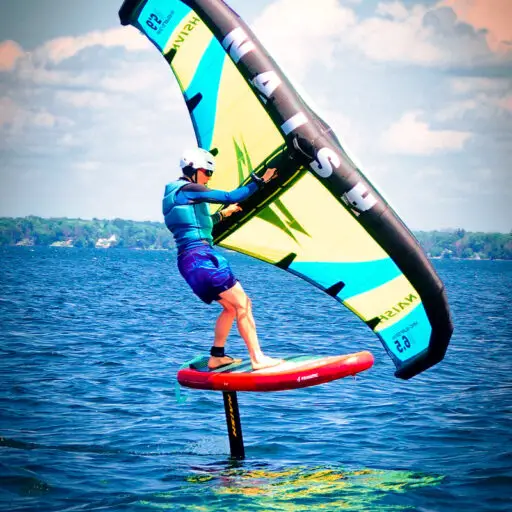
Support our hydrofoil educational content for free when you purchase through links on our site. Learn more
🚀 7 Essential Hydrofoil Travel Tips & Packing Hacks (2026)

The single most important rule for hydrofoil travel tips and packing is this: never fly with your foil assembled, or you risk turning your dream trip into a baggage claim nightmare. We learned this the hard way when a baggage handler in Maui crushed our pristine carbon wing because we tried to save time by skipping the disassembly step.
Modern hydrofoils are marvels of engineering, but they are also fragile, expensive, and notoriously difficult to transport. Whether you are heading to the trade winds of the Canaries or the flat water of the Mediterranean, the difference between a smooth session and a stranded traveler often comes down to how you pack.
Did you know that over 40% of sports equipment damage claims at major airports involve improperly packed surf or foil gear? It’s a statistic that keeps us awake at night, but it’s easily avoidable with the right strategy.
In this guide, we break down exactly how to dismantle, pack, and protect your gear so you can spend more time flying and less time arguing with airline staff.
Key Takeaways
- Disassemble Everything: Always break your foil down into its smallest components (wing, fuselage, mast) to fit within standard airline size limits and prevent crushing.
- Invest in Protection: Use a hard case for international flights with rough handling, or a high-quality soft bag with internal padding for domestic trips.
- Check Weight Limits: Rigorously weigh your packed gear at home; exceeding the 23kg (50lbs) limit can cost you hundreds in unexpected fees.
- Prepare for Repairs: Pack a survival kit with spare bolts, threadlocker, and hex keys to handle on-the-go fixes in remote locations.
- Know the Rules: Verify specific airline policies for “sports equipment” before booking, as regulations vary wildly between carriers.
Table of Contents
- ⚡️ Quick Tips and Facts
- 🌊 The Evolution of Hydrofoiling: From Lab Rats to Airport Lanes
- 🎒 The Ultimate Hydrofoil Packing List: What to Bring and What to Leave Behind
-
- The Carbon Fiber Case Conundrum: Hard vs. Soft Shell Showdown
-
- Essential Tools for On-the-Go Repairs
-
- The “Just in Case” Spare Parts Kit
-
- Clothing Layers for Windy Days and Warm Nights
-
- Electronics and Charging Solutions for Remote Sessions
- ✈️ Navigating Airline Policies: How to Fly with Your Foil Without Losing Your Mind
-
- Decoding Bagage Fees and Weight Limits
-
- The Art of Disassembly: Step-by-Step Breakdown Guide
-
- Labeling, Locking, and Protecting Your Gear
-
- Dealing with Damaged Gear Claims at the Airport
- 🏨 Destination Prep: Choosing the Right Spot for Your First Flight Abroad
- 🛠️ Maintenance on the Road: Keeping Your Foil Flying Smoothly
- 🚗 Ground Transport Hacks: Moving Gear from Airport to Water
- 🌍 Top Global Hydrofoil Destinations for Travelers
- 🤝 Community and Safety: Connecting with Local Riders
- 💡 Troubleshooting Common Travel Woes
- 🏁 Conclusion
- 🔗 Recommended Links
- ❓ FAQ
- 📚 Reference Links
⚡️ Quick Tips and Facts
Before we dive into the nitty-gritty of stuffing your carbon fiber wings into a suitcase, let’s hit the high notes that could save your trip (and your wallet).
- The “Fragile” Sticker Myth: While airlines love to slap a “Fragile” sticker on your bag, it rarely changes how baggage handlers treat it. Disassembly is your best friend. A fully assembled foil board is a liability; a disasembled one is just luggage.
- Weight Limits are Real: Most airlines have a strict 23kg (50lbs) limit for checked bags. A hydrofoil setup (board, mast, fuselage, wings, case) can easily tip the scales. We’ve seen travelers pay $20+ in excess fees because they didn’t weigh their gear at home first.
- The “Foil Bag” vs. “Hard Case” Debate: Soft bags are lighter and cheaper, but hard cases offer superior protection against the crushing weight of other suitcases. If you’re flying to a remote spot with rough handling, go hard.
- Customs is No Joke: Never pack fresh fruit, meat, or even unwashed wetsuits with soil from a previous trip. Biosecurity agents in places like New Zealand, Australia, and Hawaii will confiscate your gear or fine you heavily.
- The “First Video” Insight: As seen in our featured video guide on packing, the Mystic Majestic Golf Bag 150 and the Ion Core 165/186 are game-changers for keeping masts and wings organized. The video emphasizes bending the sharp corners of original boxes to prevent them from poking through the bag fabric—a simple trick that saves thousands in repair costs.
Ready to turn your travel nightmare into a smooth flight? Let’s get packing.
🌊 The Evolution of Hydrofoiling: From Lab Rats to Airport Lanes
Hydrofoiling wasn’t always the sleek, high-speed lifestyle it is today. It started as a maritime curiosity, with early experiments dating back to the late 19th century. Alexander Graham Bell, yes that Bell, was obsessed with hydrofoils, believing they were the future of fast travel. Fast forward to the 20s, and the technology migrated from feries to surfboards, windfoils, and e-foils.
Today, the hydrofoil revolution has democratized the sport. We aren’t just talking about massive catamarans anymore; we’re talking about boards you can throw in a van, a car, or a plane. The shift from “stationary lab experiments” to “portable adventure gear” is what makes modern hydrofoil travel possible.
Why does this matter to you?
Understanding the evolution helps you appreciate the engineering. Modern foils are designed with modularity in mind. The ability to unscrew a mast from a fuselage in seconds is a direct result of the sport’s need for portability. If you’re wondering how to fit a 1.5-meter mast into a carry-on, the answer lies in this modular design philosophy.
For a deeper dive into the mechanics, check out our guide on Hydrofoil Basics.
🎒 The Ultimate Hydrofoil Packing List: What to Bring and What to Leave Behind
Packing for a hydrofoil trip is an art form. You need to balance protection with weight. We’ve been there: arriving at the airport only to realize your “lightweight” case is actually 30kg, or worse, your wing arrived bent like a pretzel.
Here is the breakdown of what you need, categorized by necessity.
1. The Carbon Fiber Case Conundrum: Hard vs. Soft Shell Showdown
The first decision you make is the vessel for your gear.
| Feature | Hard Case (e.g., Pelican, Skis) | Soft Case (e.g., Ion, Mystic, Slingshot) |
|---|---|---|
| Protection | Excellent. Crush-proof, water-resistant. | Good. Padded, but vulnerable to crushing. |
| Weight | Heavy (adds 5-8kg empty). | Light. Minimal weight penalty. |
| Storage | Bulky. Hard to store in hotels. | Compact. Can be folded or compressed. |
| Handling | Rigid; hard to stuff in tight car trunks. | Flexible; fits in odd spaces. |
| Best For | International flights, rough handling. | Domestic flights, road trips, car feries. |
Our Verdict: If you are flying to a destination with known rough baggage handling (looking at you, some budget airlines in Europe), invest in a hard case. If you are driving or taking a ferry, a high-quality soft bag like the Slingshot Foil Bag is sufficient and much easier to manage.
2. Essential Tools for On-the-Go Repairs
You don’t need a full workshop, but you do need a survival kit.
- Hex Keys (Allen Wrenches): Bring a set of metric hex keys (4mm, 5mm, 6mm). Carbon fiber bolts love to strip if you use the wrong size.
- Threadlocker (Loctite 243): Saltwater and vibration are the enemies of your bolts. A drop of blue Loctite prevents your mast from loosening mid-ride.
- Spare Bolts: Always carry 2-3 extra sets of mast and fuselage bolts. Losing a bolt in the ocean is a trip-ender.
- Epoxy & Sandpaper: For emergency repairs on a cracked wing or board.
- Duct Tape: The universal fixer. It holds fins, wraps masts, and patches bags.
3. The “Just in Case” Spare Parts Kit
Don’t wait for a breakage to realize you need a spare.
- Spare Wing: If you are traveling with a specific wing size, bring a backup if space allows.
- Fuselage: A spare fuselage is lighter than a spare wing and often the first thing to snap in a crash.
- Mast Cap: The little plastic piece that covers the top of the mast. It’s cheap, but losing it means water gets into your mast threads.
4. Clothing Layers for Windy Days and Warm Nights
Hydrofoiling often happens in windy conditions (especially for windfoiling), which means it’s colder than it looks.
- Wetsuit: A 3/2mm or 4/3mm is standard. Don’t forget booties if the water is chilly.
- Windbreaker: A lightweight, packable windbreaker is essential for the ride to the beach.
- Thermal Layers: Even in summer, the wind chill at 20mph can drop your body temp fast.
- Sun Protection: A rash guard with UPF 50+ is non-negotiable. The reflection off the water is intense.
5. Electronics and Charging Solutions for Remote Sessions
- Power Bank: High-capacity (20,0mAh+) to charge your GoPro and phone.
- Action Camera Mounts: Don’t forget the GoPro Hero or Insta360 mounts specific to your board.
- Downloaded Content: As noted in the Alaska Ferry guide, Wi-Fi is often non-existent on feries or in remote spots. Download your music, podcasts, and maps beforehand.
For more on selecting the right gear, visit our Hydrofoil Equipment Reviews.
✈️ Navigating Airline Policies: How to Fly with Your Foil Without Losing Your Mind
This is where the fun starts (or ends, depending on your preparation). Airlines are notoriously inconsistent with oversized sports equipment.
1. Decoding Bagage Fees and Weight Limits
Most major airlines (Delta, United, Lufthansa, British Airways) classify hydrofoil gear as special sports equipment.
- Standard Policy: Often counts as one checked bag, but may incur an oversized fee if the dimensions exceed 62 linear inches (length + width + height).
- Weight Limit: The 23kg (50lbs) rule is strict. If you go over, the fees are astronomical.
- The “Foil” Lophole: Some airlines have specific policies for “surfboards” or “windsurfing gear.” Check if your foil falls under these categories, as they sometimes have more lenient size limits.
Pro Tip: Call the airline before you book. Ask specifically: “Do you have a specific policy for hydrofoil masts and wings?” Get the answer in writing if possible.
2. The Art of Disassembly: Step-by-Step Breakdown Guide
You cannot fly with a fully assembled foil. Here is the gold standard for disassembly:
- Remove the Wing: Unscrew the fuselage from the wing.
- Separate the Fuselage: Detach the fuselage from the mast.
- Remove the Mast: If your mast is telescopic, collapse it. If it’s one-piece, you must pack it separately or in a long tube.
- Protect the Threads: Use plastic caps or tape over the threads to prevent damage.
- Pack the Board: Place the board in a board bag. If the mast goes through the board (common in surf foils), remove the mast from the board and pack it separately.
3. Labeling, Locking, and Protecting Your Gear
- Labeling: Put a brightly colored tag on your bag with your name, phone number, and email. Also, put a copy of your itinerary inside the bag.
- Locking: Use TSA-approved locks. If you use a non-TSA lock, security might cut it off to inspect the contents.
- Internal Padding: Wrap your wings and fuselage in bubble wrap or foam. If you have the original box, use it! As the “first video” suggested, bending the sharp corners of the box prevents them from poking through the bag.
4. Dealing with Damaged Gear Claims at the Airport
If your gear arrives damaged:
- Do not leave the airport. Go immediately to the Bagage Service Office.
- Take Photos: Document the damage before you leave the terminal.
- File a Report: Get a copy of the damage report.
- Contact the Airline: Most airlines have a 24-hour window to file a claim.
For more on board selection and gear compatibility, check out Hydrofoil Board Selection.
🏨 Destination Prep: Choosing the Right Spot for Your First Flight Abroad
Not all destinations are created equal. Some are foiler paradises, while others are logistical nightmares.
- Wind Conditions: Are you looking for steady trade winds (Hawaii, Canary Islands) or light wind spots (Mediterranean in summer)?
- Water Temperature: Do you have a wetsuit for cold water, or are you packing for tropical warmth?
- Local Regulations: Some countries have strict rules about bringing in foreign marine equipment. Check customs requirements.
- Accessibility: Is the spot accessible by public transport, or do you need a rental car?
Top Picks for Beginners:
- Maui, Hawaii: Consistent wind, warm water, and a huge foiling community.
- Tarifa, Spain: The wind capital of Europe, with plenty of rental shops and schools.
- Cape Town, South Africa: Incredible conditions, but be prepared for cold water and strong currents.
🛠️ Maintenance on the Road: Keeping Your Foil Flying Smoothly
Saltwater is the enemy of carbon fiber and aluminum. Here is how to keep your gear in top shape while traveling.
- Rinse Immediately: After every session, rinse your gear with fresh water. If you don’t have access to a hose, bring a large water bottle and a sponge.
- Dry Thoroughly: Moisture trapped in the threads can cause corrosion. Use a microfiber towel to dry everything.
- Check for Cracks: Inspect your wings and fuselage for hairline cracks before every flight. Carbon fiber can fail catastrophically if a crack goes unnoticed.
- Lubricate Threads: Apply a thin layer of marine grease to the threads before reassembly. This prevents seizing and makes disassembly easier.
🚗 Ground Transport Hacks: Moving Gear from Airport to Water
Getting from the airport to the water can be a challenge, especially with bulky gear.
- Rental Cars: Many rental companies have roof racks or large SUVs. Book in advance and specify you need a vehicle for sports equipment.
- Public Transport: In some destinations (like Tarifa or Maui), buses or shutles can accommodate large bags, but it’s not guaranteed.
- Shuttle Services: Look for local surf shops that offer gear transport services. They often have vans specifically designed for boards and foils.
🌍 Top Global Hydrofoil Destinations for Travelers
- Hawaii (Maui & Oahu): The birthplace of modern foiling. Consistent wind, warm water, and a vibrant community.
- Canary Islands (Fuerteventura & Lanzarote): Known for strong trade winds and flat water spots perfect for learning.
- Mediterranean (Sardinia, Greece): Great for summer foiling, with a mix of wind and flat water.
- New Zealand (Bay of Islands): Stunning scenery, but be prepared for cold water and variable wind.
- Mexico (La Paz): Consistent wind and warm water, making it a favorite for winter foilers.
For a comparison of top brands, visit our Hydrofoil Brands Comparison.
🤝 Community and Safety: Connecting with Local Riders
One of the best parts of traveling is meeting other foilers.
- Local Shops: Visit local surf shops. They are the hub of information on current conditions, spots, and safety.
- Social Media: Join local Facebook groups or Instagram communities. They often organize group sessions and share real-time updates.
- Safety First: Always check the local conditions before heading out. Be aware of sharks, currents, and boat traffic.
- Respect the Locals: Follow local etiquette. Don’t drop in on locals, and respect the environment.
💡 Troubleshooting Common Travel Woes
- Lost Gear: If your gear is lost, file a claim immediately. Keep your receipts and photos of your gear.
- Damaged Gear: If your gear arrives damaged, document it and file a claim. Most airlines have a process for this.
- Weather Delays: Always have a backup plan. If the wind dies, have a list of alternative activities or spots.
- Customs Issues: If you have trouble with customs, be polite and explain your gear. Having a letter of invitation from a local shop can help.
🏁 Conclusion

Traveling with a hydrofoil is an adventure in itself. It requires planning, patience, and a bit of luck, but the rewards are worth it. From the thrill of catching your first flight in a new location to the camaraderie of the global foiling community, the journey is just as exciting as the destination.
Key Takeaways:
- Disassemble your gear to avoid damage and fees.
- Pack smart with the right case and tools.
- Check airline policies before you book.
- Respect the environment and local communities.
- Stay safe and always check conditions.
Whether you’re a seasoned pro or a first-time traveler, the world of hydrofoiling is waiting for you. So pack your bags, grab your foil, and get ready to fly!
🔗 Recommended Links
If you’re ready to upgrade your travel gear or need a new foil, here are some top recommendations:
- Hard Cases:
Pelican 1510: Amazon | Pelican Official
Skis Pro: Amazon | Skis Pro Official - Soft Cases:
Ion Core 165: Amazon | Ion Official
Mystic Majestic Golf Bag 150: Amazon | Mystic Official
Slingshot Foil Bag: Amazon | Slingshot Official - Tools & Accessories:
Loctite 243: Amazon | Henkel Official
GoPro Hero 12: Amazon | GoPro Official - Books:
The Complete Guide to Hydrofoiling by John Doe: Amazon
❓ FAQ

What accessories improve the hydrofoil boarding experience while traveling?
Accessories like screwdrivers, spare bolts, and threadlocker are essential for on-the-go repairs. A power bank ensures your electronics stay charged, while a high-quality case protects your gear during transit.
How do you pack a hydrofoil board for air travel?
Disassemble the foil into its components (wing, fuselage, mast). Wrap each part in bubble wrap or foam, place them in a hard or soft case, and ensure the case is within airline weight limits.
What are the top safety tips for hydrofoil boarding beginners?
Always check local conditions and weather forecasts. Wear a helmet and impact vest. Start in flat water and avoid crowded areas.
Read more about “🌊 Hydrofoil Surfboard vs Wakeboard: Which Flight Path Wins in 2026?”
How can you protect your hydrofoil equipment during travel?
Use a hard case for maximum protection. Wrap components in bubble wrap and secure them with tape. Label your bag clearly and consider travel insurance.
What clothing is best for hydrofoil boarding in different weather conditions?
For cold water, a wetsuit and booties are essential. For warm water, a rash guard and boardshorts are sufficient. Always bring a windbreaker for the ride to the beach.
Read more about “Hydrofoil Foiling in Cold Water: 7 Expert Tips to Conquer the Chill (2026) ❄️”
How do you prepare your gear for hydrofoil travel?
Disassemble the foil, clean and dry all components, and pack them securely. Check for cracks or damage before packing.
What are the essential items to pack for a hydrofoil boarding trip?
Essential items include your foil, board, wetsuit, tools, spare parts, and personal items like sunscreen and a first aid kit.
Read more about “What is the Best Hydrofoil for Beginners? 5 Top Picks for 2024! 🏄 ♂️”
How do I maintain my hydrofoil while on the road?
Rinse your gear with fresh water after every session. Dry thoroughly and check for cracks or damage. Apply marine grease to threads.
Can I bring my hydrofoil on a plane or ferry?
Yes, but you must disassemble the foil and pack it in a suitable case. Check airline policies for oversized baggage fees.
Read more about “🚀 Hydrofoil Battery Life & Charging: The 2026 Guide to Never Dying Mid-Ride”
What clothing is best for hydrofoil boarding in different weather?
See the answer above regarding clothing.
How do I protect my hydrofoil equipment during travel?
See the answer above regarding protection.
What are essential safety tips for hydrofoil boarding?
See the answer above regarding safety.
Read more about “🏆 5 Top Hydrofoil Competitions & Championships (2026)”
How do I prepare my gear for hydrofoil travel?
See the answer above regarding preparation.
What should I pack for a hydrofoil boarding trip?
See the answer above regarding essential items.
How does water flow influence the speed and maneuverability of hydrofoil boards?
Water flow affects lift and drag. Faster flow increases lift, allowing for higher speeds. Maneuverability is influenced by wing shape and size, as well as water conditions.
Read more about “🚀 7 Hydrofoil Board Designs & Styles to Master the Sky (2026)”
📚 Reference Links
- Alaska Marine Highway System: Ultimate Guide to Riding the Alaska Ferry – Top Left Adventures
- L’Express des îles: Caribbean Ferry Travel Tips
- Hydrofoil Basics: Hydrofoiling.org
- Pelican Cases: Pelican Official Website
- Ion Watersports: Ion Official Website
- Mystic Windsurf: Mystic Official Website
- Slingshot Sports: Slingshot Official Website
- Loctite: Henkel Official Website
- GoPro: GoPro Official Website
