Support our hydrofoil educational content for free when you purchase through links on our site. Learn more
Hydrofoil Board Basics for New Riders: Fly Safely 🏄

Hydrofoil board basics for new riders start with three things: take a lesson, choose stable beginner-friendly gear, and practice in quiet, deep water. The foil rewards small, calm movements; trying to muscle your way into flight usually earns you a splash instead.
We’ve seen first-timers tense up the instant the board begins to rise. The breakthrough often comes when they relax, look ahead, and make a tiny shift forward instead of throwing their weight backward. That smooth, floating glide? It starts with control, not courage alone.
Key Takeaways
- Learn with an instructor and choose equipment suited to your sport, size, and local conditions.
- Wear appropriate protective gear and keep clear of swimmers, boats, shallow water, and other hazards.
- Make small movements: weight shifts control lift, pitch, and direction.
- Practice steady board control before chasing height or speed.
- Check your setup and conditions before every session, and follow the manufacturer’s instructions.
Table of Contents
- ⚡ Quick Tips and Facts for New Hydrofoil Riders
- 🛠️ Hydrofoil Board Basics: What a Foil Board Is and How It Works
- Lift, drag, and the magic of getting above the water
- Hydrofoil parts explained: board, mast, fuselage, and wings
- 🌊 A Brief History of Hydrofoiling and Modern Foil Sports
- 🏄 Hydrofoil Board Types: Surf, Wing, Kite, Wake, and eFoil
- Surf foiling and prone foiling
- Wing foiling and wind-powered foil boards
- Kite foiling and wake foiling
- eFoil boards and powered hydrofoils
- 🧭 Choosing Your First Hydrofoil Setup
- Board volume, size, and stability
- Foil wings, mast length, and fuselage options
- Materials, construction, and compatibility
- Beginer-friendly brands and gear considerations
- 🛡️ Hydrofoil Safety: Gear, Conditions, and Foil Awareness
- Helmet, impact vest, leash, and other protective equipment
- Choosing safe water, weather, and traffic conditions
- Foil handling, launch zones, and keeping your distance
- What to do after a fall or equipment problem
- 📋 Before Your First Session: Skills, Setup, and Preparation
- Swimming ability, fitness, and useful board-sport experience
- Asembling and checking a hydrofoil
- Learning with an instructor or experienced foiler
- 🚀 How to Learn Hydrofoiling: From First Start to First Flight
- Step 1: Practice balance and board control
- Step 2: Learn to generate speed and maintain a steady stance
- Step 3: Feel the foil lift without overcorrecting
- Step 4: Control pitch, roll, and turns
- Step 5: Fall safely, reset, and try again
- 🎯 Common Beginner Hydrofoiling Mistakes and How to Fix Them
- 🔧 Hydrofoil Setup, Tuning, and Maintenance
- Foot position, straps, and stance adjustments
- Foil alignment, fasteners, and pre-ride checks
- Rinsing, storage, and corrosion prevention
- 🌦️ Reading Water Conditions and Planning a Foil Session
- Wind, swell, waves, and water depth
- Tides, currents, and local access rules
- How to choose a beginner-friendly launch spot
- 📈 Progressing Beyond the Basics
- Improving takeoffs, glide, and pumping
- Building confidence with turns and transitions
- When to upgrade your board or foil
- 💡 Hydrofoil Basics: Quick Tips for Your First Rides
- 🔗 Recommended Links
- ❓ FAQ: Hydrofoil Board Basics for New Riders
- Is hydrofoiling hard to learn?
- How long does it take to get up on a hydrofoil?
- Can beginners learn on an eFoil?
- What size hydrofoil wing should a beginner use?
- Is hydrofoiling safe for beginners?
- Can you hydrofoil in shallow water?
- Do you need waves or wind to hydrofoil?
- How do you carry and transport a hydrofoil board?
- ✅ Conclusion
- 📚 Reference Links
⚡ Quick Tips and Facts for New Hydrofoil Riders
If you’re wondering how to get started with hydrofoiling, begin with a lesson, forgiving gear, and a quiet stretch of deep water. We’ve found that the first breakthrough usually comes not from “trying harder,” but from making smaller, calmer movements.
| Beginner question | Short answer |
|---|---|
| What makes a hydrofoil board lift? | Water flowing over the submerged front wing creates lift, raising the board above the surface. |
| What should a new rider prioritize? | Instruction, protective gear, a stable board, and a forgiving front wing. |
| Is every hydrofoil board powered? | No. Surf, wing, kite, and wake foils rely on external energy; eFoils use a motor and battery. |
| Is learning mostly about balance? | Balance matters, but speed control, pitch control, and safe falling matter just as much. |
| Where should you learn? | In a legal, uncrowded area with deep water, manageable conditions, and room to fall. |
| Is the foil sharp? | Foil edges can injure you. Handle the assembly carefully and keep clear of it in the water. |
Our quick-start advice: ✅ Take a lesson. ✅ Wear a watersports helmet and impact vest. ✅ Start with a stable setup. ❌ Don’t learn among swimmers or near rocks, docks, or shallow reefs. Check local rules before launching; the U.S. Coast Guard’s boating safety guidance is a useful starting point for shared-water awareness.
For more beginner explanations, browse our Hydrofoil Basics and Hydrofoil Board Selection guides. The payoff is that floaty, quiet glide everyone talks about. The trick is learning what your feet are telling the foil before it surprises you.
🛠️ Hydrofoil Board Basics: What a Foil Board Is and How It Works
A hydrofoil board is a board attached to an underwater wing assembly by a mast. As the foil moves through water, it creates lift; with enough speed, the board rises and has less contact with the surface. The hydrofoil basics video gives a useful visual overview of this principle.
The ride can feel almost frictionless once you’re flying, but the foil is not magic and the board is not hovering. The foil still needs forward motion, and your body position controls how it responds.
Lift, drag, and the magic of getting above the water
A foil wing works much like an underwater aircraft wing. Water flows around its shape, producing lift. Lift depends on several interacting factors, including speed, wing shape, angle of attack, and the rider’s weight. NASA’s explanation of how airfoils generate lift concerns aircraft and air, but the basic fluid-dynamics idea applies to water as well.
When the board rises, it avoids much of the surface drag caused by a board pushing through chop. That can make foiling feel smooth and quiet. But more lift isn’t automatically better: too much lift, too soon, can launch the board upward and send you tumbling.
Think of your stance as the volume knob:
- Shift weight forward to lower the nose and foil.
- Shift weight back to encourage lift.
- Make small corrections; big, late corrections tend to create a porpoising ride.
Hydrofoil parts explained: board, mast, fuselage, and wings
| Part | What it does | Beginner considerations |
|---|---|---|
| Board | Supports the rider and provides flotation or a platform for takeoff | More volume generally makes starting and balancing easier, but size depends on sport and rider |
| Mast | Connects board to foil and sets the foil’s depth | Shorter masts can feel less intimidating; too short can limit clearance in chop |
| Fuselage | Joins front and rear wings | Length and design influence pitch stability and turning feel |
| Front wing | Produces most of the lift | Larger, lower-aspect wings often lift at lower speeds and feel more forgiving |
| Stabilizer / rear wing | Helps control pitch and trim | Size and angle affect stability and responsiveness |
| Tracks or mounting plate | Attach the foil to the board | Confirm the board and foil use compatible mounting standards |
The exact feel varies by design, rider weight, water conditions, and discipline. Compare equipment thoughtfully in our Hydrofoil Equipment Reviews and Hydrofoil Brands Comparison.
🌊 A Brief History of Hydrofoiling and Modern Foil Sports

Hydrofoils have a long history in marine engineering, where lifting a hull above the water can reduce drag at speed. Recreational foil sports grew from that principle into surfing, kiteboarding, wakeboarding, windsurfing, wing foiling, and powered eFoils. The International Hydrofoil Society provides historical and technical resources on hydrofoil craft.
Today’s foil sports use the same broad idea but differ in how they generate speed. A surfer catches a wave, a wing foiler uses wind, a wake foiler rides a boat’s wake, and an eFoil uses an electric motor. The basic lift is shared; the learning progression is not.
Our first foil session felt less like standing on a surfboard and more like balancing on a very patient seesaw. Once we stopped chasing height and focused on keeping the board level, the foil began to make sense. That small adjustment is why learning the control system matters more than trying to “pop up” dramatically.
🏄 Hydrofoil Board Types: Surf, Wing, Kite, Wake, and eFoil
“Hydrofoil board” describes several setups, not one universal board. Choose based on where you ride, what powers you, and whether you want to learn with a coach or independently.
| Discipline | What provides forward speed? | Typical beginner challenge |
|---|---|---|
| Surf / prone foil | Wave energy, often with a paddle or tow assist | Catching waves and managing foil lift |
| Wing foil | Handheld wing and wind | Balancing while handling the wing |
| Kite foil | Kite | Kite control plus foil control |
| Wake foil | Boat wake or tow | Starting and maintaining speed behind a boat |
| eFoil | Electric motor and battery | Managing throttle, balance, and powered foil lift |
Surf foiling and prone foiling
In prone foiling, you paddle into a wave and stand or ride prone depending on the setup and conditions. It can be wonderfully quiet, but catching the wave and controlling lift demand good timing. A beginner may benefit from a larger, lower-speed front wing and a stable board, but the ideal setup depends on wave size and rider experience.
If you already surf, don’t assume foiling will feel like surfing with an extra part attached. The foil reacts to subtle weight shifts and keeps moving under you after the board leaves the wave face. Explore related gear and progression in our Hydrofoil Board Selection section.
Wing foiling and wind-powered foil boards
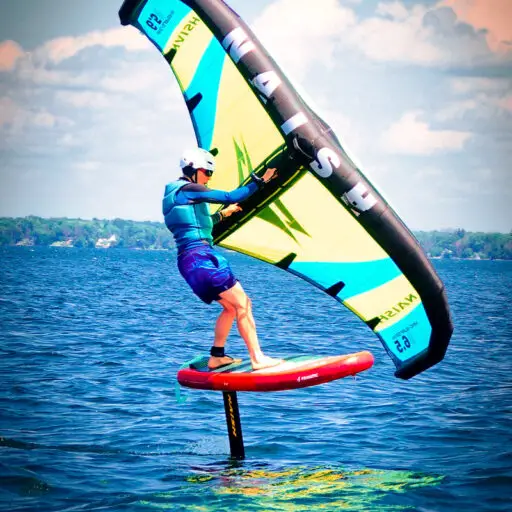
Wing foiling combines a handheld inflatable wing with a foil board. The wing provides propulsion; the foil lifts the board once you reach enough speed. It adds a second balancing task, so many learners first practice handling the wing on a stable board before attempting sustained flight. Duotone and F-ONE make wing-foiling equipment across ability levels.
Kite foiling and wake foiling
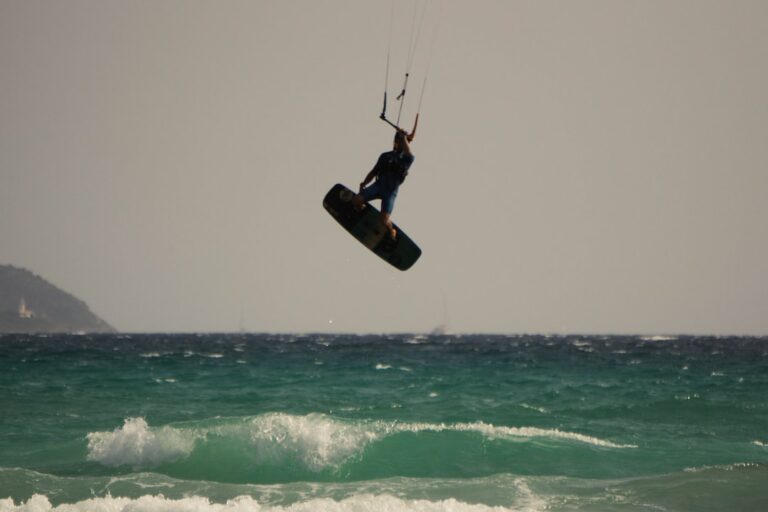
Kite foiling adds kite control to foil control, so it’s best approached with kiteboarding instruction and appropriate local conditions. Wake foiling uses a boat’s wake or a tow to generate speed; riders should follow boating rules, use a capable driver and spoter, and keep clear of the propeller and towline.
For either discipline, a foil’s speed and edge make separation from other water users essential. The U.S. Coast Guard offers general guidance on boating safety and responsible operation.
eFoil boards and powered hydrofoils
An eFoil uses an electric motor, battery, hand controller, and foil assembly. It can be ridden without waves or wind, which makes it appealing for lessons and controlled practice. It is still a high-powered watersports craft, not a floating amusement ride: riders need instruction, protective equipment, and a suitable, legal riding area.
Brands such as SiFly, Lift Foils, and Fliteboard offer powered foil systems. Compare their models, safety instructions, and service support directly; availability and specifications vary by region and model.
🧭 Choosing Your First Hydrofoil Setup
A good first setup should make mistakes less punishing, not simply look fast on the beach. Match board volume, wing size, mast length, and mounting system to your body weight, chosen discipline, local conditions, and instruction plan.
| Setup choice | More forgiving direction | Why it can help |
|---|---|---|
| Board | Stable, suitable volume and width | Easier starts and balance practice |
| Front wing | Larger area, moderate aspect ratio | Lower-speed lift and a less twitchy feel |
| Mast | Short-to-medium for early practice, as advised by instructor | Reduces height above water while learning |
| Foot straps | Optional, carefully fitted | Can help control but may complicate falls |
| Construction | Durable and serviceable | Better suited to repeated learning impacts |
Board volume, size, and stability
For wing foiling, beginners often benefit from a board with enough volume to float them comfortably and enough width to balance while kneling or standing. For surf foiling, board size and volume depend more heavily on whether you paddle, tow, or ride waves. There is no single volume formula that works for every sport and rider.
Ask a shop or instructor to consider:
- Your body weight and swimming ability.
- Whether you can start from the water or need a stable platform.
- The typical wind, waves, and water state at your launch.
- How easy it is to carry and relaunch the board.
A board that is too small may make every early minute a balance test. One that’s too large can be awkward in turns and transport. We recommend choosing for the first months of learning, not for the imaginary highlight reel.
Foil wings, mast length, and fuselage options
A larger front wing often lifts at lower speeds and glides steadily, but it can feel slower to turn and may create more lift than a new rider can manage. A smaller wing generally needs more speed and can feel more responsive. The right choice is a compromise, not a “bigger is always better” rule.
Mast length also changes the experience:
- Shorter mast: lower flight height and less intimidating early practice, but less clearance in chop.
- Longer mast: more room to ride over uneven water, but more height and leverage during a fall.
- Fuselage and stabilizer: influence pitch stability, glide, and turning; tune only with guidance and manufacturer instructions.
Materials, construction, and compatibility
Foil components are commonly made from aluminum, carbon fiber, or combinations of materials. Carbon can offer high stiffness and lower weight; aluminum may be robust and widely compatible. Actual performance depends on design and construction, not material name alone.
Before buying, verify:
- The board’s track or plate matches the foil mast base.
- The wings and fuselage belong to a compatible system.
- Replacement parts, hardware, and manufacturer support are available.
- The manufacturer’s instructions cover assembly, torque, and care.
Don’t force a bolt because it “almost fits.” That’s how a promising session becomes a hardware scavenger hunt.
Beginner-friendly brands and gear considerations
Brands including Armstrong Foils, Slingshot, F-ONE, Naish, and Duotone offer foil-related equipment. Their ranges differ, and not every product from a respected brand is beginner-appropriate.
👉 Shop brand and gear listings:
- Armstrong Foils: Amazon | Armstrong Official Website
- F-ONE: Amazon | F-ONE Official Website
- Slingshot: Amazon | Slingshot Official Website
- Naish: Amazon | Naish Official Website
- Duotone: Amazon | Duotone Official Website
Marketplace listings may mix current and discontinued models. Confirm the exact model, mounting standard, and warranty with the manufacturer or an authorized dealer before ordering.
🛡️ Hydrofoil Safety: Gear, Conditions, and Foil Awareness
A foil’s underwater position is easy to forget when you’re concentrating on balance. We don’t. Give the foil as much respect as you would a sharp fin or propeller, and build safety into every part of the session.
Helmet, impact vest, leash, and other protective equipment
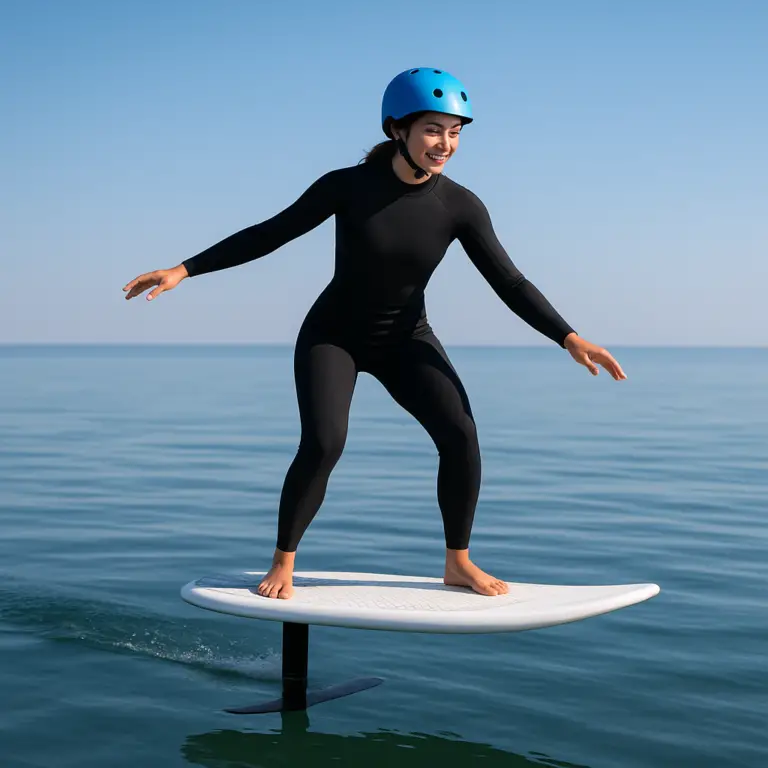
Consider a properly fitted watersports helmet, a suitable impact vest or flotation aid, and a leash appropriate to your discipline and local conditions. A leash can reduce the chance of losing your board, but it can also create an entanglement hazard; follow instructor and manufacturer guidance on whether and how to use one.
- Choose gear designed for the activity and fit it correctly.
- Inspect helmet shells, straps, and impact gear for damage.
- Follow local rules for personal flotation devices.
- Keep loose straps, lines, and clothing away from the foil.
The U.S. Coast Guard’s life jacket guidance explains life-jacket basics for recreational boaters. It is not a substitute for sport-specific coaching or local regulations.
Choosing safe water, weather, and traffic conditions
Practice away from swimmers, paddlers, boats, docks, rocks, and shallow obstacles. Pick a location with room to fall and enough depth for the entire mast and foil, even if the board rolls. Check wind, tide, current, forecast, and local access rules before leaving home.
Avoid learning in:
- Crowded surf zones or swimming areas.
- Strong offshore wind or fast-moving current.
- Water with hidden rocks, reefs, or submerged debris.
- Conditions beyond your swimming ability or equipment.
Foil handling, launch zones, and keeping your distance
Carry the board so the foil is controlled and clear of people. If you need help, ask someone to carry the foil assembly rather than passing it blindly through a crowd. Launch and land in a designated clear area, and keep space between yourself and other riders.
Before entering, agree on a simple plan with your buddy: where you’ll ride, where you’ll return, and what you’ll do if the board or motor fails. For powered boards, learn the emergency shutoff and controller behavior before entering the water.
What to do after a fall or equipment problem
Fall away from the board and foil when you can do so safely; don’t reach out toward the wings. Once in the water, pause, orient yourself, and check for traffic before approaching the board. If you feel hurt or disoriented, signal for help rather than immediately trying to continue.
For eFoils, follow the manufacturer’s procedure for stopping the motor and handling the battery. The SiFly eFoil learning guide emphasizes controlled progression; its core lesson is useful across foil disciplines: stay calm, make small adjustments, and don’t rush the next attempt.
📋 Before Your First Session: Skills, Setup, and Preparation
Your first session is easier when you arrive rested, prepared, and not trying to solve everything at once. We recommend setting aside time for land-based checks and basic board handling before chasing a ride.
Swimming ability, fitness, and useful board-sport experience
You should be comfortable swimming in the conditions where you plan to ride and able to get back to shore or a safe recovery point. Surfing, wakeboarding, kiteboarding, or SUP experience can help with balance and water awareness, but it does not replace foil-specific training.
If you’re new to water sports, choose a lesson in calm, controlled conditions. Tell the instructor about your swimming ability, relevant injuries, and board-sport experience.
Asembling and checking a hydrofoil
Follow the manufacturer’s manual for assembly; designs and fasteners vary. Before every session:
- Confirm the foil and board use compatible mounting hardware.
- Inspect the mast, wings, fuselage, and board for cracks or damage.
- Tighten fasteners as specified by the manufacturer, using the correct tools.
- Check that the foil is aligned and there is no movement at the connection.
- For eFoils, inspect battery connections, controller, and emergency-stop procedures.
- Carry the assembled board carefully, keeping foil edges away from people.
Don’t guess at torque values or lubricants. Use the brand’s documentation and ask a qualified technician when something feels wrong.
Learning with an instructor or experienced foiler
A coach can help you select the right gear, find a safe practice area, and spot errors before they become habits. This matters especially for kite foiling, wing foiling in challenging wind, and powered eFoiling.
Ask an instructor:
- Which board and foil are appropriate for your weight and discipline?
- What are the local launch rules and hazards?
- How should you fall and recover the board?
- What are the manufacturer’s safety instructions?
- What progression will you follow if you struggle with takeoff?
A friend’s help is valuable, but an experienced foiler is not automatically a qualified instructor. Check credentials and ask about their teaching approach.
🚀 How to Learn Hydrofoiling: From First Start to First Flight
The best learning plan separates tasks. Practice balance and control before adding speed, height, turns, and a second piece of equipment such as a wing or kite. The exact steps below vary by sport; follow your instructor and board manufacturer first.
The first SiFly eFoil guide presents a five-step progression from board familiarity to controlled upright flight. It recommends starting low, learning throttle response, and using gradual “touch and go” flights. Those principles translate well to eFoil practice, but powered-board instructions should not be copied blindly to unpowered foil sports.
Step 1: Practice balance and board control
Begin in a calm area, wearing the safety equipment your instructor recommends.
- Learn how to carry and place the board without swinging the foil into anyone.
- Practice getting onto the board from the side, staying clear of the foil and propeller on an eFoil.
- Find the board’s balance point while kneling or lying prone, depending on discipline.
- Practice steering with subtle shifts rather than abrupt movements.
- For powered boards, learn the controller’s power levels and emergency stop before attempting to rise.
On an eFoil, the SiFly guide recommends starting on all fours and becoming familiar with the motor’s thrust before progressing. That staged approach helps you understand what acceleration feels like before you add standing balance.
Step 2: Learn to generate speed and maintain a steady stance
For wing, kite, wake, or surf foiling, speed comes from the relevant wind, wave, or tow source. For eFoiling, power comes from the motor. Your goal is steady, controlled speed, not maximum speed.
- Keep your gaze up and shoulders relaxed.
- Keep your weight centered over the board.
- Avoid sudden turns while you’re still learning to hold a straight line.
- If you feel unstable, reduce speed or stop according to your discipline’s safe procedure.
On powered boards, use the manufacturer’s recommended beginner mode or settings where available. A board that feels “slow” at first is giving you useful time to react.
Step 3: Feel the foil lift without overcorrecting
As lift builds, the board may feel lighter. That is your cue to use very small pitch adjustments. Shift your hips slightly forward to lower the board; move them slightly back to invite lift. Don’t throw your shoulders backward or try to jump the board into the air.
The SiFly progression describes lifting gradually, then shifting forward again to settle back onto the water. Its “touch and go” idea is useful: brief, controlled flights teach more than one long, uncontrolled launch.
If the nose rises sharply:
- Move your weight forward smoothly.
- Reduce power if your setup allows and your instructor says to.
- Avoid stomping on the front of the board.
Step 4: Control pitch, roll, and turns
Pitch is nose-up or nose-down movement; roll is rail-to-rail tilt. You influence both through stance and weight transfer. Start with wide, gentle direction changes at low height.
- Keep your knees soft.
- Turn with your body and feet, not a sudden upper-body twist alone.
- Look where you want to go.
- Avoid leaning dramatically outside the board.
A common early mistake is treating a foil like a regular surfboard and making a big, forceful turn. Foils can respond quickly, and a sharp input may become a fast fall. For more technique, see our Advanced Hydrofoiling Techniques.
Step 5: Fall safely, reset, and try again
Falling is part of learning. When possible, move away from the board and foil rather than reaching for the equipment. Let the board settle, check your surroundings, and return only when it’s safe.
After each attempt, make one adjustment at a time:
- Was the lift too sudden?
- Did you shift weight too far back?
- Were you looking down?
- Did the board have enough speed?
- Did the conditions or foil setup contribute?
That quick review turns a fall into useful feedback instead of a repeated surprise.
🎯 Common Beginner Hydrofoiling Mistakes and How to Fix Them
| Mistake | Why it happens | Better response |
|---|---|---|
| Leaning too far back | Rider expects a conventional surfboard pop-up | Keep hips centered and use small pitch changes |
| Staring at the board | Fear and concentration pull the head down | Look ahead toward a clear route |
| Trying to fly immediately | Excitement outruns control | Practice steady board handling and short flights first |
| Using a foil that feels too twitchy | Setup may be advanced for the learner | Ask a coach about a more stable wing and board |
| Making abrupt turns | Rider overuses shoulders or heels | Start with wide arcs and subtle foot pressure |
| Practicing in crowded water | Easy access gets mistaken for a safe zone | Move to an uncrowded, legal area with room to fall |
| Ignoring loose hardware | Assembly checks get rushed | Inspect and tighten according to the manual every session |
We’ve watched new riders make the same mistake in different wetsuits: they sense lift and react as if the board is misbehaving. Often, it’s simply responding to a big weight shift. Stay relaxed and make the next correction smaller.
🔧 Hydrofoil Setup, Tuning, and Maintenance
The safest setup is one assembled correctly and checked regularly. Follow the specific manufacturer’s instructions for your board and foil; don’t mix parts or improvise repairs without confirming compatibility.
Foot position, straps, and stance adjustments
Foot position affects pitch, roll, and turning. Start with the manufacturer’s recommended setup or your coach’s guidance, then make small adjustments between sessions. Mark or note a successful position so you can return to it.
Foot straps can help some riders keep their feet positioned, but they can also affect how you separate from the board during a fall. Use straps only if they are suitable for your discipline, correctly fitted, and recommended by your instructor.
Foil alignment, fasteners, and pre-ride checks
Before launching, look for:
- Loose, missing, or damaged fasteners.
- Cracks, dents, or delamination in board and foil parts.
- Misaligned wings or movement at joints.
- Worn leash connections or damaged safety equipment.
- For eFoils, battery, controller, and motor issues.
Use the supplied tools and the manufacturer’s specified assembly procedure. If a part is bent, cracked, or unexpectedly loose, don’t ride until it has been assessed.
Rinsing, storage, and corrosion prevention
After saltwater sessions, rinse the board and foil with fresh water, then dry and store them according to the brand’s care instructions. Inspect hardware and interfaces regularly; salt, sand, and repeated assembly can wear components.
Transport foil wings and masts in protective bags or covers. Keep sharp edges away from car interiors, other gear, and bare feet. Manufacturer care resources from Armstrong Foils and Lift Foils are useful references, but use the instructions for your exact model.
🌦️ Reading Water Conditions and Planning a Foil Session
A good practice site gives you space to make mistakes without putting others at risk. Check the forecast and local conditions before you load the car; a convenient launch can become a poor learning spot when wind, current, or traffic changes.
Wind, swell, waves, and water depth
The right conditions depend on your discipline. Wing foiling needs suitable wind; surf foiling depends on waves and access; wake foiling depends on a safe tow setup; eFoiling is less dependent on wind but still requires adequate depth and a clear area.
Look for:
- Manageable conditions within your ability.
- Enough depth for the mast and foil throughout the riding area.
- A safe route away from swimmers and boat traffic.
- A forecast you understand, including wind direction and changes.
Tides, currents, and local access rules
Tides can uncover reefs or change water depth; currents can carry you away from your launch. Check local marine forecasts and access rules. In the United States, NOAA’s tides and currents resources can help with planning, though local knowledge remains essential.
Respect posted swim zones, wildlife closures, marine protected areas, and launch restrictions. If you’re uncertain whether foiling is allowed, ask the local authority or a responsible club before riding.
How to choose a beginner-friendly launch spot
A beginner-friendly spot has:
- Deep, relatively clear water.
- Low traffic and a wide recovery area.
- An easy way in and out without carrying the foil through crowds.
- Conditions suited to your sport and skill.
- A buddy or instructor nearby when possible.
Avoid sites where a fall would put you near rocks, swimmers, boat ramps, or shallow obstacles. If the launch feels rushed or crowded, choose another day or another spot.
📈 Progressing Beyond the Basics
Once you can ride with control, progress by changing one variable at a time. Keep the same board and foil while learning a new skill, or hold your technique steady while testing a setup change. Changing everything at once makes it hard to know what helped.
Improving takeoffs, glide, and pumping
Work on controlled starts and clean, steady flight before trying to pump. Pumping uses coordinated body movement to maintain or generate speed, and it takes timing and practice. It’s an advanced skill, not a shortcut around learning basic lift control.
Build your sessions around:
- Consistent starts.
- Longer, controlled low flights.
- Stable pitch over small surface changes.
- Smooth turns and safe returns.
- Rest breaks before fatigue affects judgment.
Our Advanced Hydrofoiling Techniques section covers skills to explore after you’re comfortable with basic flight.
Building confidence with turns and transitions
Start turns wide and predictable. Keep your eyes on the direction of travel and your knees relaxed. As control improves, work on linking turns, changing direction, and adapting to different water or wind states.
A useful self-check: Can you choose your line, hold it, and stop or return safely? If not, spend more time on control before increasing speed or trying tighter turns.
When to upgrade your board or foil
Consider an upgrade when your current setup is limiting a specific skill, not simply because a smaller board looks more exciting. Before buying, ask:
- Have I learned to ride the current setup consistently?
- Is the limitation my equipment or my technique?
- What exact change do I want: stability, speed, glide, or turning?
- Will the new parts fit my board and existing foil system?
- Can I test or demo the setup first?
A smaller board or more performance-focused wing may improve maneuverability for a skilled rider, but can make learning less forgiving. Get advice from a coach or specialist dealer and compare options in our Hydrofoil Equipment Reviews.
💡 Hydrofoil Basics: Quick Tips for Your First Rides
- Take a lesson before buying advanced gear or attempting powered foiling alone.
- Choose a quiet, deep-water location and check local rules.
- Wear appropriate protective equipment and inspect it regularly.
- Keep movements small. The foil reacts to subtle shifts.
- Learn to control the board on the water before focusing on flight.
- Fall away from the foil when possible and check your surroundings before recovering.
- Use the manufacturer’s manual for setup, fasteners, battery care, and maintenance.
- Stop when tired. Foil control gets worse when concentration fades.
- Ask for help early if equipment feels loose, damaged, or mismatched.
🔗 Recommended Links
- Hydrofoil Basics guides
- Hydrofoil Board Selection
- Hydrofoil Equipment Reviews
- Hydrofoil Brands Comparison
- Advanced Hydrofoiling Techniques
- U.S. Coast Guard recreational boating safety
- NOAA Tides and Currents
- International Hydrofoil Society
❓ FAQ: Hydrofoil Board Basics for New Riders
Is hydrofoiling hard to learn?
It can be challenging at first because you’re learning balance, speed, and foil pitch control together. A lesson and stable equipment can make the learning curve more manageable. Prior board-sport experience helps, but it doesn’t remove the need to learn how a foil responds to small movements.
Read more about “15 Hydrofoiling Tips to Fly Higher, Safer & Smother 🏄”
How long does it take to get up on a hydrofoil?
There isn’t a reliable universal timeline. Progress depends on the discipline, conditions, equipment, instruction, fitness, and how often you practice. Some eFoil learners may stand and ride in a controlled lesson sooner than a surf foiler can catch and foil a wave, because the sports have different starting demands. Focus on safe, repeatable control rather than a promised number of sessions.
Read more about “Is It Hard to Hydrofoil? What Beginners Should Know 🌊”
Can beginners learn on an eFoil?
Yes, with appropriate instruction and a suitable riding area. An eFoil lets a learner practice without needing wind or waves, but the motor adds throttle and emergency-stop skills. Follow the manufacturer’s guidance, wear appropriate protective gear, and progress gradually. The SiFly eFoil guide describes a staged route from board familiarity to controlled flight.
Read more about “🌊 What Is Hydrofoiling? How Foil Boards Fly”
What size hydrofoil wing should a beginner use?
There is no one-size-fits-all wing. Rider weight, sport, board, wind or wave conditions, and the foil’s design all affect the choice. Larger front wings often lift at lower speeds and can feel more stable, while smaller wings typically need more speed and may turn more quickly. Ask a coach or specialist shop to match the wing to your full setup rather than choosing by area alone.
Read more about “Hydrofoil Foiling for Fitness: 10 Benefits 🏄”
Is hydrofoiling safe for beginners?
It can be practiced more safely with a lesson, appropriate gear, a clear launch area, and conditions that match your skill. It still carries risk: a foil has hard edges, falls can cause injury, and powered equipment adds additional hazards. Keep away from swimmers and boats, learn how to fall and recover, and stop if you’re tired or conditions deteriorate. Review U.S. Coast Guard boating safety guidance and the instructions for your equipment.
Read more about “How Do You Get Up on a Hydrofoil? 8 Starts 🚀”
Can you hydrofoil in shallow water?
You should not ride where the foil can strike the bottom or where a fall could put you into submerged hazards. Required depth depends on mast length, water level, board, and conditions. Check the entire riding and recovery area, not just the launch point. If you can’t confidently maintain clearance, choose deeper water.
Read more about “Hydrofoil Windsurfing: Learn to Fly on Water 🪁”
Do you need waves or wind to hydrofoil?
Not always. Surf foiling uses waves; wing and kite foiling use wind; wake foiling uses a boat’s wake or tow; eFoiling uses a motor. The foil itself needs forward movement through water to generate lift, but the source of that movement varies by discipline.
Read more about “Can Beginners Learn to Hydrofoil Safely? 🌊”
How do you carry and transport a hydrofoil board?
Carry it with control, keeping the foil and wings clear of other people. Use protective covers for transport and secure the board so it cannot shift in a vehicle. Follow the manufacturer’s instructions for disassembly and storage; don’t carry an assembled foil through crowded spaces if you can avoid it.
Read more about “Hydrofoil Foil Board Weight: 9 Key Considerations ⚖️”