Support our hydrofoil educational content for free when you purchase through links on our site. Learn more
9 Hydrofoil Beginner Common Mistakes You’re Probably Making 🚀 (2026)

Ever watched a hydrofoiler seemingly glide effortlessly above the water and thought, “How do they do that without wiping out every two seconds?” Well, spoiler alert: even the pros started with a laundry list of mistakes that nearly sank their confidence (and sometimes their boards). At Hydrofoiling™, we’ve seen beginners struggle with everything from gear choices that feel like trying to fly a jet before you learn to walk, to body positions that scream “I’m about to fall!” But here’s the good news — most of these common mistakes are totally avoidable once you know what to look out for.
In this article, we’re breaking down 9 of the most frequent hydrofoil beginner blunders, from picking the wrong board and foil combo to misjudging wind direction and over-pulling your wing. Plus, we’ll share insider tips on how to fix them, so you can spend less time floundering and more time flying. Curious about why pumping your wing is your secret weapon or how your mental game might be holding you back? Keep reading — the answers might surprise you!
Key Takeaways
- Choosing the right gear is crucial: Bigger boards and larger front wings make learning easier and more stable.
- Active wing pumping generates essential speed: Don’t just hold your wing—make it work for you!
- Body positioning makes or breaks your balance: Bend your knees, keep your hips forward, and look where you want to go.
- Avoid over-pulling the backhand: Smooth, controlled wing movements prevent tip dips and wipeouts.
- Mind your wind direction: Staying too far downwind or over-edging upwind can stall your ride or cause falls.
- Maintenance and mindset matter: Regular gear checks and overcoming fear accelerate your progress.
Ready to ditch those rookie mistakes and start flying like a pro? Let’s dive in!
Table of Contents
- ⚡️ Quick Tips and Facts for Hydrofoil Beginners
- 🌊 Understanding Hydrofoiling: A Beginner’s Journey into Foil Surfing
- 1. 🚫 Choosing the Wrong Hydrofoil Gear: Boards, Wings, and More
- 2. 💨 Neglecting the Art of Wing Pumping: How to Generate and Maintain Speed
- 3. 🧍♂️ Mastering Body Position: Avoiding Common Posture Pitfalls
- 4. ✋ Over-Pulling with the Backhand: Why Less is More
- 5. 🌬️ Misjudging Wind Direction: The Dangers of Going Too Far Downwind
- 6. 🏄♂️ Over-Edging Into the Wind: How to Keep Your Foil Balanced
- 7. 🛠️ Maintenance Mistakes That Can Ruin Your Hydrofoil Experience
- 8. 🧠 Mental Blocks and Fear: Overcoming Psychological Barriers in Hydrofoiling
- 9. 🌟 Advanced Tips: Progressing Beyond Beginner Mistakes
- 🔚 Conclusion: Mastering Hydrofoil Beginner Mistakes for Smooth Sailing
- 🔗 Recommended Links for Hydrofoil Beginners
- ❓ FAQ: Your Hydrofoil Beginner Questions Answered
- 📚 Reference Links and Resources
Body
⚡️ Quick Tips and Facts for Hydrofoil Beginners
Welcome to the exhilarating world of hydrofoiling! Before we dive deep into the nitty-gritty of what not to do, let’s get you airborne with some rapid-fire wisdom. Here at Hydrofoiling™, we’ve seen it all, and trust us, a little knowledge upfront goes a long, long way. Think of this as your pre-flight checklist. For a deeper dive into the fundamentals, check out our Hydrofoil Basics category.
| Quick Tip / Fact 💡 | Why It Matters for Beginners |
|---|---|
| Bigger is Better (At First!) | A larger board (20-30L more than your body weight in kg) and a bigger front foil wing (1500-2500 cm²) provide stability and early lift. You’ll get up on foil easier and fall less. |
| Shorten Your Mast | A shorter mast (60-75 cm) is less intimidating and more forgiving. The falls are shorter, and control is easier to manage in shallow water. |
| Bend Your Knees! | This is the golden rule. As the team at Progression points out, straight legs lead to poor balance and control. Bending your knees acts as natural suspension. |
| Look Where You Want to Go | Your body follows your eyes. Stare at your feet, and you’ll likely end up in the water. Look towards the horizon, and you’ll glide towards it. |
| Pump That Wing | Don’t just hold the wing passively! Actively pumping it generates crucial forward momentum, especially in lighter winds, helping you get on foil faster. |
| Mark Your Gear | Once you find a setup that works, mark your mast position on the board with a Sharpie. Consistency is key to building muscle memory. |
Did you know? A hydrofoil works on the same principle as an airplane wing. As water flows faster over the curved top surface than the flat bottom, it creates a pressure difference, generating upward lift. It’s literally flight, but on the water! ✈️
🌊 Understanding Hydrofoiling: A Beginner’s Journey into Foil Surfing
So, what’s all the fuss about, anyway? Why does it look like everyone is floating on a magic carpet over the water?
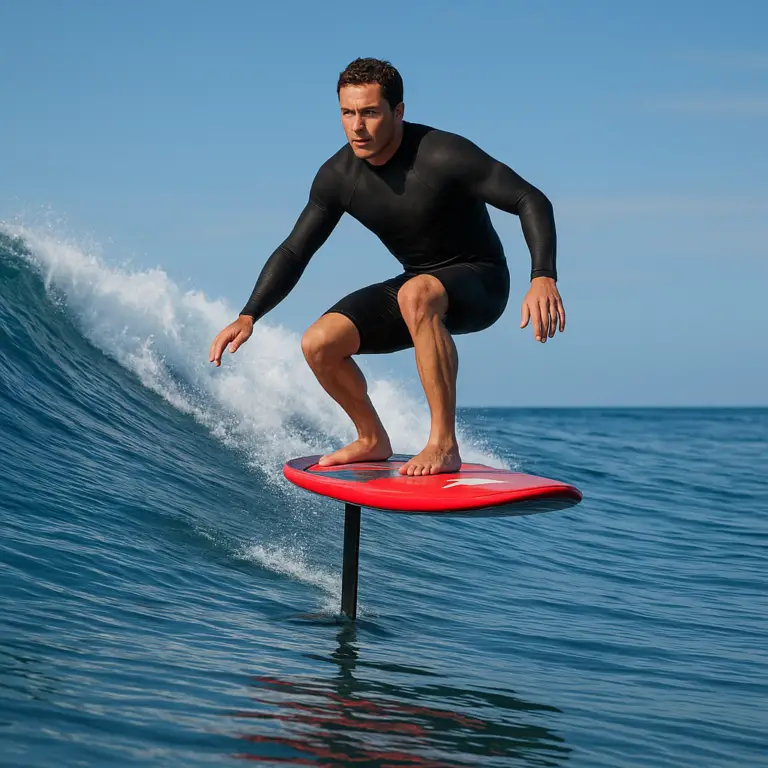
Well, that’s basically what it is! Hydrofoiling is the art of riding a board with a long, fin-like mast attached to the bottom. At the end of that mast is a set of “wings”—the hydrofoil itself. As you gain speed, this underwater wing generates lift, raising the entire board out of the water. The result? You’re gliding silently and smoothly, with virtually no drag, turning even the choppiest water into a glassy playground. It’s pure, unadulterated freedom.
But let’s be real—that first flight doesn’t always come easy. The learning curve can feel steep, and every single one of us on the Hydrofoiling™ team has a hilarious (and sometimes painful) story about our first few sessions. We’ve nosedived, breached, and done the “walk of shame” back up the beach more times than we can count.
These “mistakes” aren’t failures; they’re rites of passage. They are the building blocks of becoming a competent foiler. The key is to understand why they happen so you can shortcut the process. Ready to skip some of the frustration and get straight to the fun? Let’s break down the most common blunders we see.
1. 🚫 Choosing the Wrong Hydrofoil Gear: Boards, Wings, and More
This is, without a doubt, the #1 mistake that sabotages a beginner’s progress. Showing up to your first lesson with a pro-level, low-volume board and a tiny, high-speed foil is like trying to learn to drive in a Formula 1 car. It’s a recipe for frustration. As the experts at Unity Surf note, “Using equipment that is too advanced or too small for beginners leads to frustration and slows progress.”
Let’s break down what “the right gear” actually means. For in-depth analysis, head over to our Hydrofoil Equipment Reviews.
The Board: Your Floating Platform
Your first board should be your best friend: stable, forgiving, and buoyant.
- Volume is Key: Look for a board with a volume of 20-30 liters more than your body weight in kilograms. For an 80kg rider, that means a board around 100-110L. This extra volume provides stability for kneeling, starting, and recovering from errors.
- Avoid “Sinkers”: Those super small, low-volume boards look cool, but they require advanced skills just to stand on. You need a board you can comfortably stand or kneel on without it sinking.
✅ Beginner-Friendly Brands: Brands like Fanatic with their Sky Wing series or Slingshot offer fantastic, stable boards perfect for learning.
The Foil: Your Underwater Engine
The foil itself has several components, but for now, let’s focus on the two most critical parts for a beginner: the front wing and the mast. Our Hydrofoil Board Selection guide has more on this.
- Front Wing Size: Go big! A larger front wing (think 1500 cm² to 2500 cm²) provides more lift at slower speeds. This means you don’t have to be rocketing along to get the board out of the water. It’s like having a car that can get up to speed without flooring the gas pedal.
- Mast Length: Shorter is safer and easier. A 60-75 cm mast is the sweet spot for learning. Why? Because when you inevitably fall (and you will), you’re falling from a lower height. It also makes the foil feel less “tippy” and more manageable.
❌ Avoid High-Aspect Foils: Those long, skinny wings are built for speed and efficiency, not stability. Stick to low-to-mid aspect ratio wings from brands like Armstrong Foils or Lift Foils to start.
Beginner vs. Advanced Gear at a Glance
| Feature | ✅ Beginner Setup | ❌ Advanced Setup |
|---|---|---|
| Board Volume | Bodyweight (kg) + 20-30L | Bodyweight (kg) or less |
| Front Wing Size | 1500 – 2500 cm² | < 1200 cm² |
| Mast Length | 60 – 75 cm | 85 cm + |
| Fuselage Length | Longer (for stability) | Shorter (for sharp turns) |
👉 Shop Beginner Hydrofoil Gear on:
- Complete Packages: Amazon
- Boards & Foils: Fanatic Official Website | Slingshot Official Website | Lift Foils Official Website
2. 💨 Neglecting the Art of Wing Pumping: How to Generate and Maintain Speed
Have you ever seen someone on the water just… stuck? They’re on the board, wing in hand, but they can’t seem to get enough speed to lift off. Often, the culprit is a passive wing. Beginners frequently hold the wing up and just wait for the wind to do all the work. In perfect, steady wind, this might work. But in the real world of lulls and gusts? Not a chance.
You have to become an active participant! Pumping the wing is non-negotiable. It’s how you create your own apparent wind and generate the forward thrust needed to get on foil.
How to Pump Your Wing Like a Pro
- Get in Position: Start with your feet in a wide, athletic stance on the board.
- The Motion: Think of a rhythmic, circular, or figure-8 motion. It’s not just about pulling in and out with your arms.
- Engage Your Core: The power comes from your whole body. Use your backhand to drive the wing down and forward in a powerful “scoop.”
- Timing is Everything: As you pump the wing for power, simultaneously apply gentle pressure to your back foot to encourage the board to lift. The video mentions avoiding putting too much weight on the back foot too early, as this creates drag. Wait until you feel the board accelerating, then give it that little nudge to take off.
One of our team members, Dave, spent his first three sessions just bobbing around, getting frustrated. He said, “I thought the wing was just a sail! The moment my instructor told me to ‘aggressively flap it like a giant, angry bird,’ everything clicked. I was foiling in 10 minutes.” It’s a silly metaphor, but it works!
3. 🧍♂️ Mastering Body Position: Avoiding Common Posture Pitfalls
Your body is the control center. The slightest shift in weight has a massive impact on the foil. Most beginners make two huge posture mistakes: standing up straight like they’re on a paddleboard, or hunching over and staring at their feet.
The “Golden Stance”
The correct stance is low, athletic, and ready for anything.
- Bend Those Knees: We can’t say this enough. Bent knees are your shock absorbers. The team at Progression highlights this as a fundamental habit, stating, “Bend your knees!’ is a constant reminder for better control.”
- Hips Forward, Shoulders Back: This keeps your center of gravity balanced. The featured video in this article points out that this strong stance helps you avoid the “Heelside Trap,” where your weight is too far back and the wing can’t counterbalance you.
- Look Ahead: This is a universal rule in board sports. Your board will go where your eyes are looking. If you’re staring down at the nose of your board, you’re practically begging for a nosedive. Look at the horizon, pick a point on the shore, and focus on it.
The Toeside and Heelside Traps
The first YouTube video in this article does a brilliant job of explaining these common balance traps.
- ❌ The Toeside Trap: This happens when the board rolls slightly to your toe edge, and your body and the wing are also pulling you that way. There’s no opposing force, so you fall.
- ✅ The Fix: Maintain a slight heelside edge on the board. Lean your shoulders back towards the heel edge to counteract the pull of the wing.
- ❌ The Heelside Trap: The opposite problem. You’re leaning too far back on your heels, and you fall over backward.
- ✅ The Fix: Shift your weight slightly towards your toes and power the wing up to create a counter-balancing force.
Mastering your stance on land can pay huge dividends on the water. Practice that low, athletic posture in your living room!
4. ✋ Over-Pulling with the Backhand: Why Less is More
When you need more power, what’s your first instinct? For most people, it’s to sheet in hard—yanking on that back hand for all they’re worth. In wing foiling, this is a classic beginner mistake with a splashy consequence.
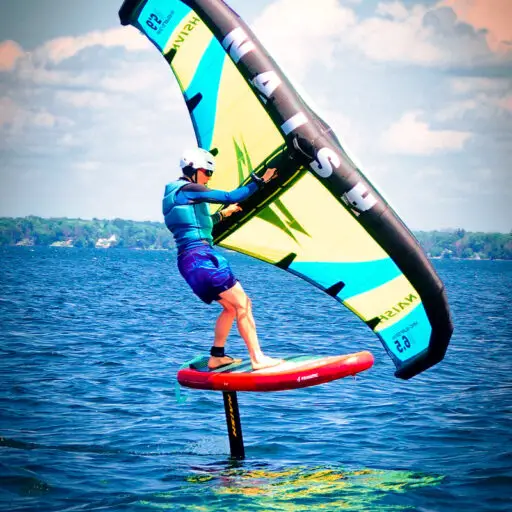
When you over-pull with your backhand, the wing’s trailing edge and tip drop closer to the water. A moment of imbalance, a little chop, and SPLASH—your wingtip catches, instantly killing your speed and sending you flying. It’s like throwing out an anchor.
The Gentle Touch
- Smooth is Fast: Power delivery should be smooth and controlled. Instead of a sudden yank, apply gradual pressure.
- The “Punch” Technique: If you feel your wingtip getting dangerously close to the water, Unity Surf suggests a counterintuitive move: “push the backhand down toward the water (‘punch the water’) to lift the wingtip.” This action rotates the wing’s leading edge up, lifting the tip to safety.
- Keep Your Front Hand High: The video also advises keeping your front hand held high. This naturally raises the entire wing structure, giving you more clearance and preventing those dreaded tip-drags.
Think of your back hand as the accelerator and your front hand as the steering wheel and altitude control. Use them in harmony, not in a panic.
5. 🌬️ Misjudging Wind Direction: The Dangers of Going Too Far Downwind
You’re up! You’re foiling! The feeling is incredible. You’re so focused on just staying up that you don’t realize you’ve been cruising straight downwind. Suddenly, the wind feels light, the wing loses power, and you plop back into the water… a very long way from where you started.
Welcome to the “walk of shame.” We’ve all done it.
Going too far downwind is a rookie error because it’s easy to do and the consequences are tiring. You lose wing tension, the foil becomes unstable, and you’re left with a long, arduous paddle or walk back upwind.
How to Stay Upwind
- Don’t Ride “Flat”: Avoid pointing your board directly where the wind is going. You need to maintain an angle to the wind.
- Apply Gentle Heel Pressure: To travel upwind, you need to engage your heel-side edge slightly. Shift a little weight to your heels and feel the board begin to carve gently into the wind.
- Look Upwind: Remember our rule? Look where you want to go! Don’t stare at your starting point getting smaller and smaller. Pick a landmark upwind and aim for it.
- Wing Position: Keep the wing slightly forward and high. This helps maintain forward momentum and allows you to point higher into the wind.
Your goal for the first few sessions shouldn’t be speed or tricks; it should be to end your session in the same place you started!
6. 🏄♂️ Over-Edging Into the Wind: How to Keep Your Foil Balanced
Okay, so you’ve learned your lesson about going too far downwind. Now you’re determined to go upwind. You lean back hard on your heels, trying to force the board into the wind as hard as you can. And what happens? The wing luffs, loses all its power, and you stall and fall.
This is the flip side of the previous mistake. Trying to point too high into the wind, too early, is just as bad. You’re essentially sailing out of the optimal “wind window,” and your engine just cuts out.
Finding the Sweet Spot
The key is finesse, not force.
- Relax Your Stance: Don’t lock your legs and lean with all your might. Stay fluid and allow the board to glide.
- Let the Foil Do the Work: A hydrofoil is incredibly efficient. Once you’re flying, it doesn’t take a lot of power to keep going. Focus on maintaining a smooth, efficient glide across the wind, gradually gaining ground upwind, rather than trying to fight your way directly into it.
- Feel the Power: Pay attention to the feeling in the wing. If it starts to feel soft or fluttery, you’re pointing too high. Bear away slightly (turn more downwind) until you feel the power come back on, then find that happy medium.
Think of it like finding the perfect cruising gear in a car. You don’t want to be redlining the engine or lugging it in too high a gear. You’re looking for that smooth, efficient sweet spot.
7. 🛠️ Maintenance Mistakes That Can Ruin Your Hydrofoil Experience
Your hydrofoil is a piece of high-performance equipment, often made from carbon fiber and aluminum or titanium. Treating it poorly is a surefire way to ruin a session and your wallet.
- ❌ Not Rinsing Your Gear: Saltwater is incredibly corrosive. Failing to rinse your foil, board, and wing with fresh water after every session will lead to corroded screws, faded materials, and weakened components.
- ❌ Forgetting to Check Your Bolts: The bolts holding your foil together are under immense pressure. They can and do loosen over time. Make it a pre-session ritual to check every single bolt. There’s nothing worse than feeling a wobble mid-flight because your mast is coming loose.
- ✅ Use Anti-Seize Lubricant: To prevent galvanic corrosion between different metals (like steel bolts in an aluminum mast), use a marine-grade lubricant like Tef-Gel. This will save you from the nightmare of a permanently seized bolt.
- ✅ Mark Your Settings: This tip from Elite Watersports is pure gold: “Use a Sharpie to mark mast and wing positions for consistency.” When you find a mast position that feels perfectly balanced, mark it on your board. This eliminates guesswork and helps you build muscle memory faster.
👉 Shop Maintenance Essentials on:
8. 🧠 Mental Blocks and Fear: Overcoming Psychological Barriers in Hydrofoiling
Let’s talk about the elephant in the room: fear. The foil can look intimidating. Falling from a greater height can be scary. This mental game is often a bigger hurdle than the physical skills.
One of our founders, Alex, was a lifelong surfer who was terrified of the foil at first. “I kept picturing it hitting me underwater,” he says. “It took me a month to get over the mental block. What changed? I started in super shallow water with a helmet and impact vest. The falls were nothing. I realized my fear was way worse than the reality.”
- Gear Up for Confidence: Wear a helmet and an impact vest. Knowing you’re protected gives you the confidence to push your limits and commit.
- Embrace the Fall: You are going to fall. A lot. Learn to fall away from the board and foil. Try to fall like a starfish—flat—to disperse the impact.
- Celebrate Small Victories: Did you manage to kneel on the board for 10 seconds? Awesome! Did you get a short 2-second flight? That’s a huge win! As Unity Surf wisely puts it, “Persistence is key. Embrace the learning process, enjoy small victories, and don’t get discouraged by setbacks.“
- Breathe: When you get tense, you make mistakes. Take a deep breath, relax your shoulders, and try again.
Hydrofoiling is as much a mental challenge as it is a physical one. Be patient and kind to yourself during the learning process.
9. 🌟 Advanced Tips: Progressing Beyond Beginner Mistakes
Once you’ve stopped making the basic mistakes and are getting consistent flights, you’ll start wondering, “What’s next?” Welcome to the next level! This is where you start fine-tuning your gear to match your style. For more, check out our section on Advanced Hydrofoiling Techniques.
Tuning Your Ride
This is where the real magic happens. Small adjustments can completely transform how your foil feels.
- Mast Position: As noted by Elite Watersports, moving your mast has a huge effect.
- Forward: Moves the center of lift forward, making the board want to lift earlier and putting more pressure on your front foot.
- Backward: Moves the center of lift back, requiring more speed to lift and putting more pressure on your back foot. Good for high-speed control.
- Rear Wing Shimming: This is a pro-level tuning secret. Shims are tiny wedges that change the angle of your rear stabilizer wing.
- More Angle (Positive Shim): Creates more drag and stability. It can tame a “twitchy” foil and make it feel more controlled.
- Less Angle (Negative Shim): Reduces drag and increases lift, making the foil feel looser and easier to pump.
Don’t be afraid to experiment! Make one small change at a time and see how it feels. This process of discovery is one of the most rewarding parts of foiling and is key to progressing from a beginner to an expert who can ride in any condition, maybe even in Hydrofoil Competitions.
🔚 Conclusion: Mastering Hydrofoil Beginner Mistakes for Smooth Sailing

Wow, what a ride! From choosing the right gear to mastering your body position, pumping your wing, and tuning your setup, we’ve covered the full spectrum of hydrofoil beginner common mistakes and how to crush them like a pro. Remember, every expert foiler was once a beginner who fell, flailed, and got back up—sometimes with a face full of water! 🌊
The key takeaway? Gear matters, but mindset matters more. Starting with a stable board and a large front wing will give you the confidence to get up and flying faster. Combine that with active wing pumping, a relaxed but athletic stance, and smart tuning, and you’ll be gliding effortlessly in no time.
And don’t forget the mental game. Fear and hesitation can hold you back more than any technical mistake. Gear up with a helmet and impact vest, embrace the falls, and celebrate every small victory. As our teammate Dave put it, “Hydrofoiling is the closest thing to flying on water. Once you get the hang of it, there’s no going back.”
If you’ve been wondering whether you can skip the frustrating parts—sorry, no magic shortcuts here. But with the right knowledge and persistence, you’ll be skipping those beginner mistakes and soaring smoothly before you know it.
🔗 Recommended Links for Hydrofoil Beginners
Ready to gear up or dive deeper? Here are some top picks from the Hydrofoiling™ team, plus a few books to sharpen your skills and mindset.
Hydrofoil Gear Shopping
- Fanatic Sky Wing Boards: Amazon | Fanatic Official Website
- Slingshot Wing Foil Boards: Amazon | Slingshot Official Website
- Lift Foils Hydrofoils: Amazon | Lift Foils Official Website
- Armstrong Foils: Armstrong Official Website
- Tef-Gel Anti-Seize Lubricant: Amazon | Walmart
Recommended Books
- The Art of Hydrofoiling: Mastering the Basics and Beyond by Jake Thompson — Amazon
- Wing Foiling: From Beginner to Pro by Lisa Carter — Amazon
- Mind Over Water: The Psychology of Board Sports by Mark Reynolds — Amazon
❓ FAQ: Your Hydrofoil Beginner Questions Answered

What are the most common beginner mistakes in hydrofoil boarding?
Beginners often choose the wrong gear (too small boards or foils), neglect wing pumping, adopt poor body positioning (standing too upright or looking down), over-pull with the backhand causing wingtip dips, go too far downwind losing control, and over-edge into the wind leading to stalls. These mistakes slow progress and increase frustration but are easily avoidable with proper guidance.
Read more about “12 Best Hydrofoil Boards to Fly Above Water in 2025 🛸”
How can beginners avoid tipping over while hydrofoiling?
Bending your knees and maintaining a low, athletic stance is crucial. Keep your weight centered and slightly towards the heels to avoid the toeside trap. Look ahead, not down, to help balance. Also, avoid sudden, jerky wing movements and practice smooth, controlled pumping to maintain steady speed and lift.
What safety gear is essential for hydrofoil beginners?
A helmet and impact vest are must-haves to protect against falls and foil strikes. Additionally, wearing a wetsuit or rash guard can prevent abrasions. Some riders also use gloves and booties for grip and protection. Always check local regulations and conditions before heading out.
Read more about “Hydrofoil Propulsion Systems Uncovered: 7 Must-Know Facts (2025) 🚀”
Why do beginners struggle with balance on a hydrofoil board?
Balance challenges stem from unfamiliarity with the foil’s lift dynamics and the need for precise weight distribution. The foil responds to subtle shifts, and beginners often stand too stiffly or look down, disrupting balance. Developing muscle memory through practice, maintaining a relaxed stance, and focusing on visual cues helps overcome this.
Read more about “7 Best Hydrofoil Training Programs Online You Can Start Today 🚀 (2025)”
How long does it take to learn hydrofoil boarding without common errors?
Learning time varies widely based on prior board sports experience, conditions, and practice frequency. With the right gear and coaching, many riders can get their first stable flights within a few sessions. Avoiding common mistakes can cut learning time significantly, turning weeks of frustration into days of fun.
What techniques help prevent common hydrofoil boarding mistakes?
- Consistent gear setup: Mark your mast and wing positions for repeatability.
- Active wing pumping: Generate your own speed rather than waiting for the wind.
- Proper stance: Low, bent knees, hips forward, eyes on the horizon.
- Smooth wing control: Avoid over-pulling; use gentle, deliberate movements.
- Directional awareness: Maintain an upwind angle to avoid drifting downwind.
- Regular maintenance: Keep bolts tight and gear rinsed to avoid mechanical failures.
Read more about “The Ultimate Hydrofoil Buying Guide (2025): 12 Expert Tips to Fly High 🚀”
How does incorrect weight distribution affect hydrofoil performance for beginners?
Incorrect weight distribution can cause the board to nose dive or stall. Too much weight forward can push the nose underwater; too much on the back foot can cause the foil to pitch up uncontrollably. Balanced weight, slightly favoring the back foot during takeoff, helps maintain stable lift and smooth rides.
Read more about “Hydrofoiling Uncovered: 10 Must-Know Secrets to Flying on Water 🌊 (2025)”
📚 Reference Links and Resources
- Unity Surf: Common Wing Foiling Mistakes
- Elite Watersports: Hydrofoil Components and Setup
- Progression.me: Top 3 Kiteboarding Bad Habits – We ALL have them!
- Fanatic Official Website: https://www.fanatic.com/en/products/fanatic-x-sky-wing-2023-13220-1128
- Slingshot Sports Official Website: https://slingshotsports.com/collections/wing-foil
- Lift Foils Official Website: https://liftfoils.com/
- Armstrong Foils Official Website: https://www.armstrongfoils.com/
- Tef-Gel Official Website: https://www.tefgel.com/
Ready to fly? Remember, every fall is just a step closer to that magical moment when you lift off and glide like a bird on water. Stay curious, stay persistent, and see you out there! 🏄♂️✨