Support our hydrofoil educational content for free when you purchase through links on our site. Learn more
The 10 Fastest Hydrofoil Boats That Fly Over Water in 2026 🚤

Imagine slicing through water at speeds over 60 mph, your boat effortlessly lifted above the waves by sleek underwater wings — that’s the magic of hydrofoil boats. These speed demons don’t just skim the surface; they fly over it, combining cutting-edge engineering with the thrill of flight on water. But which hydrofoil boats truly earn the title of the fastest? And how do they manage to defy the drag that slows down traditional boats?
In this comprehensive guide, we’ll take you on a high-speed tour of the top 10 fastest hydrofoil boats in the world, from historic pioneers like Alexander Graham Bell’s HD-4 to modern electric marvels like the Candela P-12. Along the way, you’ll discover the secrets behind their speed, the engineering breakthroughs that make hydrofoiling possible, and expert tips to help you choose the perfect hydrofoil boat for your needs. Curious why hydrofoils aren’t the absolute fastest boats on water? We’ll unravel that mystery too.
Ready to ride the wave of innovation and speed? Let’s dive in!
Key Takeaways
- Hydrofoil boats achieve high speeds by lifting their hulls out of the water, drastically reducing drag and increasing efficiency.
- The fastest hydrofoil boats typically reach speeds between 50 and 70+ mph, with some experimental models pushing beyond 100 mph.
- Electric hydrofoils like Candela’s P-12 combine speed with sustainability, offering zero emissions and quiet operation.
- Hydrofoils provide a smoother ride in calm waters but require advanced control systems to maintain stability at high speeds.
- Maintenance and water conditions play a crucial role in hydrofoil performance and longevity.
- For those seeking the fastest and most efficient hydrofoil boats, brands like Candela, Quadrofoil, and Manta5 lead the pack with innovative designs and proven technology.
Curious to explore the full list and learn how to pick your perfect hydrofoil speed machine? Keep reading!
Table of Contents
- ⚡️ Quick Tips and Facts About Fastest Hydrofoil Boats
- 🌊 The Evolution of Hydrofoil Boats: From Inception to Speed Machines
- 🚤 What Makes a Hydrofoil Boat Fast? Key Design and Engineering Factors
- 💨 Top 10 Fastest Hydrofoil Boats in the World: Speed Demons on Water
- 🔧 How Hydrofoil Technology Boosts Speed and Efficiency
- ⚙️ Comparing Hydrofoil Boats vs Traditional Boats: Speed, Stability, and Fuel Economy
- 🏆 Leading Brands and Models in High-Speed Hydrofoil Boats
- 🛠️ Maintenance Tips for Keeping Your Hydrofoil Boat at Peak Performance
- 🌐 The Future of Hydrofoil Boats: Innovations and Emerging Technologies
- 💡 How to Choose the Fastest Hydrofoil Boat for Your Needs
- 📊 Performance Metrics: Speed Records, Acceleration, and Handling
- 🧑 ✈️ Expert Tips from Hydrofoil Boat Pilots: Mastering Speed Safely
- 🌍 Environmental Impact of High-Speed Hydrofoil Boats
- 📚 Recommended Links for Hydrofoil Boat Enthusiasts
- ❓ Frequently Asked Questions About Fastest Hydrofoil Boats
- 🔗 Reference Links and Further Reading
⚡️ Quick Tips and Facts About Fastest Hydrofoil Boats
Welcome to the thrilling world of hydrofoil boats, where water meets wings and speed defies gravity! Before we dive deep, here are some quick facts and tips from your Hydrofoiling™ crew, seasoned pros in all things hydrofoil:
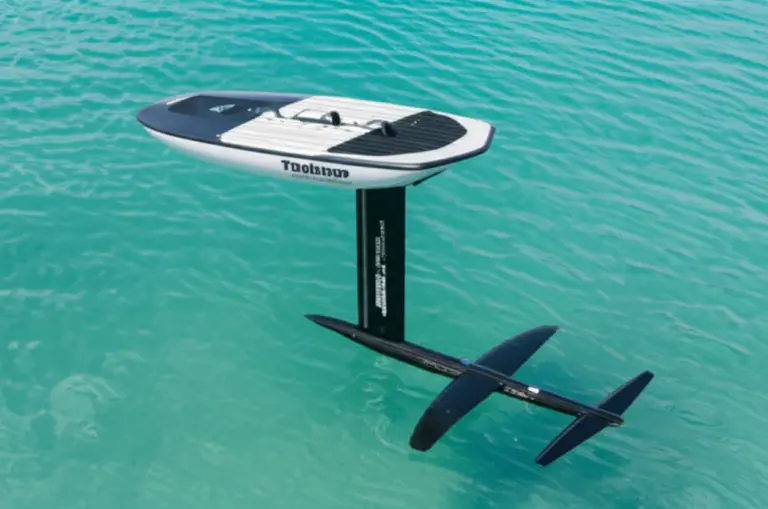
- Hydrofoil boats lift their hulls out of the water using underwater wings (foils), drastically reducing drag and enabling higher speeds than traditional boats. This is the secret sauce behind their speed magic.
- The fastest hydrofoil boats typically reach speeds between 50 and 70+ mph, with some experimental models pushing beyond 100 mph under ideal conditions.
- Cavitation (the formation of vapor bubbles on the foil at high speeds) is a major limiting factor for hydrofoil speed — it can cause loss of lift and foil damage.
- Electric hydrofoil boats like the Candela P-12 are revolutionizing the scene by combining speed with sustainability, slashing energy use by up to 80%!
- Hydrofoil boats excel in calm to moderate water conditions but can struggle with stability in rough seas compared to traditional hull designs.
- Maintenance is key: foils require regular inspection and care to keep performance optimal and avoid costly repairs.
- The world water speed record (318 mph) is held by a traditional hull boat (Spirit of Australia), not a hydrofoil, due to engineering and stability challenges at extreme speeds.
Curious how these facts play out in the real world? Stick around — we’ll unpack the history, tech, and the fastest hydrofoil boats you can get your hands on. Meanwhile, check out our related article on Hydrofoil Foil Drag Reduction: 10 Expert Hacks to Fly Faster in 2026 🚀 for pro tips on squeezing every knot of speed from your setup!
🌊 The Evolution of Hydrofoil Boats: From Inception to Speed Machines
Hydrofoil boats have a fascinating history that reads like a thrilling adventure novel — full of innovation, setbacks, and breakthroughs.
Early Pioneers and Breakthroughs
- Alexander Graham Bell’s HD-4 (1919) was the first hydrofoil to break significant speed barriers, hitting 71 mph (114 km/h) and holding the marine speed record for two decades. Bell’s work laid the foundation for hydrofoil technology, proving that lifting a hull out of the water could dramatically reduce drag and increase speed.
- Post-WWII, hydrofoil designs evolved with the introduction of surface-piercing foils and fully submerged foils, each with unique advantages in stability and speed.
Commercial and Military Use
- The 1950s and 60s saw hydrofoils enter commercial service with models like the PT10 “Freccia d’Oro”, ferrying passengers at speeds around 35 knots (~40 mph).
- Militaries worldwide adopted hydrofoils for their speed and maneuverability — the Soviet Meteor class and US Pegasus class boats reached speeds up to 50 knots (~58 mph), proving hydrofoils’ tactical value.
Modern Innovations
- Today, hydrofoil boats are a blend of cutting-edge materials, computer-aided design, and electric propulsion.
- The Hydroptère (France) set a sailcraft speed record at 51.36 knots (~59 mph) in 2009, while electric models like the Candela P-12 are pushing the envelope on sustainable, high-speed water transport.
This evolution shows that hydrofoils are not just speed machines but symbols of innovation, balancing engineering challenges with the thrill of flight on water.
🚤 What Makes a Hydrofoil Boat Fast? Key Design and Engineering Factors
Speed in hydrofoil boats isn’t just about slapping wings on a hull and flooring the throttle. It’s a sophisticated dance of physics, engineering, and materials science.
The Lift: Hydrofoil Wing Design
- Foil shape and size determine lift and drag. Surface-piercing foils are simpler but less stable; fully submerged foils offer smoother rides at high speeds but require active control systems.
- Aspect ratio (foil length vs. width) affects efficiency — higher aspect ratios reduce drag but can be structurally demanding.
Power-to-Weight Ratio
- The engine or motor must deliver enough thrust to overcome drag and lift the hull. Lightweight materials like carbon fiber composites help keep weight down without sacrificing strength.
- Electric motors, like those in Candela’s boats, offer instant torque and smooth power delivery, ideal for hydrofoiling.
Hull and Foil Integration
- The hull must be designed to minimize drag when the boat is on the foils but also provide stability during takeoff and landing phases.
- Foil placement and angle of attack are critical for balancing lift and control.
Control Systems and Stability
- Modern hydrofoils use active stabilization with sensors and actuators to adjust foil angles in real time, maintaining smooth flight and preventing crashes.
- Without these systems, hydrofoils can become unstable at high speeds or in choppy water.
Environmental Conditions
- Calm water allows hydrofoils to reach their top speeds; rough seas increase drag and risk of foil damage, limiting practical speed.
💨 Top 10 Fastest Hydrofoil Boats in the World: Speed Demons on Water
Ready for the ultimate speed showdown? Here’s our curated list of the fastest hydrofoil boats, blending historical legends with modern marvels.
| Rank | Boat/Model | Top Speed (mph) | Type | Notable Features |
|---|---|---|---|---|
| 1 | Bell HD-4 | 71 | Early Hydrofoil | Historic record holder, pioneering design |
| 2 | Hydroptère | 59 | Sailcraft Hydrofoil | Sail speed record, innovative wing design |
| 3 | Candela P-12 | ~50 | Electric Hydrofoil | Long range, zero emissions, active stabilization |
| 4 | Pegasus Class | 58 | Military Hydrofoil | Armed, fast, tactical use |
| 5 | Meteor Class | 58 | Military Hydrofoil | Soviet design, mass-produced |
| 6 | Quadrofoil Q2 | 25 | Electric Hydrofoil | Commercial e-foil, recreational use |
| 7 | Manta5 Hydrofoiler | 9 | E-bike Hydrofoil | Innovative personal hydrofoil bike |
| 8 | Flyak | 27 | Electric Hydrofoil | High-speed e-foil kayak |
| 9 | Candela C-Pod | ~45 | Electric Hydrofoil | Compact, efficient, urban water taxi |
| 10 | Spirit of Australia | 318 (Hull boat) | Traditional Hull | World water speed record (non-hydrofoil) |
Note: The Spirit of Australia is included for context — it’s the fastest boat ever but uses a traditional hull, not hydrofoils.
Why the Gap Between Hydrofoils and Hull Boats?
Hydrofoils excel at moderate to high speeds with efficiency and smooth rides, but they face engineering limits like cavitation and stability that prevent them from breaking the absolute speed records held by traditional hull boats with massive engines.
🔧 How Hydrofoil Technology Boosts Speed and Efficiency
Hydrofoil technology is a game-changer for watercraft, and here’s why:
Drag Reduction
- By lifting the hull out of the water, hydrofoils reduce wetted surface area by up to 90%, slashing drag and allowing boats to glide effortlessly.
- This effect is similar to how an airplane wing lifts a plane off the runway — but underwater!
Fuel and Energy Savings
- Less drag means less power needed to maintain speed. Electric hydrofoils like the Candela P-12 use this to achieve up to 80% energy savings compared to traditional boats.
- This translates to longer ranges and lower operating costs.
Smoother Ride
- Hydrofoils cut through waves rather than plowing through them, reducing slamming and vibration for passengers.
- This comfort factor is a big selling point for passenger ferries and private boats alike.
Environmental Benefits
- Reduced fuel consumption means fewer emissions.
- Electric hydrofoils produce zero emissions and minimal noise, protecting marine life and coastal communities.
⚙️ Comparing Hydrofoil Boats vs Traditional Boats: Speed, Stability, and Fuel Economy
| Feature | Hydrofoil Boats ✅ | Traditional Boats ❌ |
|---|---|---|
| Speed | High, efficient at moderate speeds | Can reach extreme speeds (>300 mph) |
| Stability | Sensitive to rough water, needs control systems | More stable in rough seas |
| Fuel Efficiency | Very efficient due to drag reduction | Less efficient, higher fuel burn |
| Maintenance | Complex foils require upkeep | Simpler hull maintenance |
| Noise and Emissions | Quiet, especially electric models | Noisier, fossil fuel dependent |
| Cost | Higher upfront due to tech complexity | Generally lower upfront cost |
Bottom line: Hydrofoils are the future for efficient, fast, and eco-friendly boating — but if you want absolute top speed and rugged stability, traditional hull boats still hold the crown.
🏆 Leading Brands and Models in High-Speed Hydrofoil Boats
Here’s where the pros shop for speed and innovation:
Candela
- The Swedish pioneer in electric hydrofoil boats, with models like the Candela P-12 ferry and Candela C-Pod.
- Known for long-range, zero-emission, and quiet operation.
- Active deployments in Norway, Maldives, and Thailand prove their tech’s real-world viability.
- Shop Candela on Amazon | Candela Official Website
Hydroptère
- French experimental sailcraft hydrofoil that set speed records.
- A symbol of pushing the limits of hydrofoil sailing.
Quadrofoil
- Electric hydrofoil boards and boats for recreational use.
- Great for those wanting to experience hydrofoiling at lower speeds.
- Shop Quadrofoil on Amazon | Quadrofoil Official Website
Manta5
- Makers of the Hydrofoiler XE-1 e-bike, combining cycling and hydrofoiling fun.
- Perfect for personal water adventures.
- Shop Manta5 on Amazon | Manta5 Official Website
🛠️ Maintenance Tips for Keeping Your Hydrofoil Boat at Peak Performance
Hydrofoils are precision machines — here’s how to keep yours flying high:
Regular Inspections
- Check foils for cracks, corrosion, or damage after every outing.
- Inspect mounting hardware and control linkages for tightness.
Cleaning
- Rinse with fresh water after saltwater use to prevent corrosion.
- Remove marine growth promptly to maintain foil efficiency.
Control Systems
- Calibrate sensors and actuators regularly if your boat has active stabilization.
- Update firmware/software for electronic controls as recommended.
Storage
- Store foils and hull in a dry, shaded area to prevent UV damage and corrosion.
- Use protective covers for foils during transport.
Professional Servicing
- Schedule annual professional inspections to catch issues early.
- Replace worn parts promptly to avoid cascading failures.
🌐 The Future of Hydrofoil Boats: Innovations and Emerging Technologies
The hydrofoil scene is evolving faster than a foiling board on a downwind run! Here’s what’s coming:
Electric and Hybrid Propulsion
- More manufacturers are embracing electric power for silent, zero-emission hydrofoils.
- Hybrid systems promise longer ranges and higher speeds with reduced environmental impact.
Advanced Materials
- Carbon fiber and graphene composites will make foils lighter, stronger, and more durable.
AI and Automation
- Smart control systems using AI will improve stability and safety, adapting instantly to changing water conditions.
Urban Water Mobility
- Hydrofoil ferries and taxis (like Candela’s P-12) will become common in congested cities, reducing road traffic and pollution.
Racing and Recreation
- Hydrofoil racing leagues and recreational boards will grow, fueled by advances in design and affordability.
💡 How to Choose the Fastest Hydrofoil Boat for Your Needs
Picking the right hydrofoil boat is like choosing your winged steed — it depends on your goals, budget, and waters.
Define Your Purpose
- Commuting or ferry service? Look for electric hydrofoils with range and passenger capacity, like the Candela P-12.
- Recreational foiling? Consider smaller, lighter models like Quadrofoil or Manta5.
- High-speed thrill-seeking? Military or experimental models offer speed but may be impractical or costly.
Consider Water Conditions
- Calm lakes and protected bays favor hydrofoils. Rough ocean waters may require more robust hull designs.
Budget and Maintenance
- Hydrofoils are an investment — factor in maintenance costs and availability of service.
Test Drive
- Whenever possible, demo different models to feel their handling and comfort.
Safety Features
- Look for active stabilization, emergency shutoffs, and reliable control systems.
📊 Performance Metrics: Speed Records, Acceleration, and Handling
Understanding how hydrofoil boats perform helps you appreciate the engineering marvel:
| Metric | Explanation | Typical Values for Fast Hydrofoils |
|---|---|---|
| Top Speed | Maximum achievable speed | 50-70 mph for power hydrofoils; up to 100+ mph experimental |
| Acceleration | Time to reach top speed | Rapid due to low drag; electric motors excel here |
| Lift Efficiency | Ratio of lift force to drag | High aspect ratio foils achieve 10:1 or better |
| Stability Index | Ability to maintain steady flight in waves | Active control systems improve this significantly |
| Range | Distance covered on a single charge or tank | Candela P-12: 50+ nautical miles on electric power |
| Noise Level | Decibels during operation | Electric hydrofoils: <60 dB, very quiet |
🧑 ✈️ Expert Tips from Hydrofoil Boat Pilots: Mastering Speed Safely
From our Hydrofoiling™ team’s personal experience, here’s how to fly fast without crashing:
- Start slow and build confidence — hydrofoils respond quickly and can be unforgiving at high speed.
- Watch water conditions — avoid rough or choppy water that can destabilize your foils.
- Use active stabilization if available — it’s a game-changer for smooth rides.
- Keep your eyes on the horizon — sudden waves or obstacles require quick reactions.
- Regularly check your equipment — a loose foil or faulty sensor can lead to wipeouts.
- Practice emergency maneuvers — know how to safely abort a foil ride if needed.
🌍 Environmental Impact of High-Speed Hydrofoil Boats
Hydrofoil boats are not just speed demons; they’re also eco-warriors in many cases.
Reduced Fuel Consumption
- By lifting the hull, hydrofoils use less energy to maintain speed, cutting fuel use and emissions.
Electric Propulsion
- Models like Candela’s P-12 produce zero emissions and minimal noise, protecting marine ecosystems and coastal communities.
Lower Wake and Shoreline Erosion
- Hydrofoils create smaller wakes than traditional boats, reducing shoreline erosion and disturbance to wildlife.
Challenges
- Manufacturing carbon fiber and batteries has an environmental footprint.
- Disposal and recycling of batteries remain concerns.
Overall, hydrofoils represent a significant step forward in sustainable boating.
📚 Recommended Links for Hydrofoil Boat Enthusiasts
- Hydrofoil Basics — Learn the fundamentals of hydrofoil technology.
- Hydrofoil Equipment Reviews — In-depth reviews of the latest hydrofoil gear.
- Advanced Hydrofoiling Techniques — Master your skills with pro tips.
- Hydrofoil Board Selection — Find the perfect board for your style.
- Hydrofoil Competitions — Stay updated on racing events and records.
❓ Frequently Asked Questions About Fastest Hydrofoil Boats
Q1: Why aren’t hydrofoil boats the fastest boats in the world?
Hydrofoils face engineering challenges like cavitation and stability at extreme speeds, making traditional hull boats with massive engines faster in absolute terms.
Q2: Can I buy a hydrofoil boat for personal use?
Yes! Brands like Quadrofoil and Manta5 offer recreational hydrofoil boards and e-bikes. For larger boats, Candela offers electric hydrofoil ferries and private boats.
Q3: How fast can hydrofoil boats go?
Typical top speeds range from 50 to 70 mph, with some experimental models exceeding 100 mph under ideal conditions.
Q4: Are hydrofoil boats environmentally friendly?
Electric hydrofoils are among the greenest boats, with zero emissions and high energy efficiency.
Q5: What maintenance do hydrofoil boats require?
Regular inspection of foils, cleaning, control system calibration, and professional servicing are essential to keep your hydrofoil in top shape.
🔗 Reference Links and Further Reading
- Hydrofoil – Wikipedia — Comprehensive overview of hydrofoil technology and history.
- Candela Official Website — Leading electric hydrofoil boat manufacturer.
- Quora Discussion on Fastest Boats — Insightful discussion on why hydrofoils aren’t the fastest boats.
- Hydrofoil Foil Drag Reduction: 10 Expert Hacks to Fly Faster in 2026 🚀 — Expert tips from Hydrofoiling™ on maximizing speed.
- Hydroptère Official Site — Information on the record-setting sailcraft hydrofoil.
Ready to see these speed machines in action? Don’t miss the featured video where the SP80 team gears up to shatter the world sailing speed record — it’s a masterclass in coordination and hydrofoil power!
Conclusion

After cruising through the exhilarating world of hydrofoil boats, it’s clear that these winged watercraft are masterpieces of engineering and innovation. They offer a unique blend of speed, efficiency, and eco-friendliness that traditional boats struggle to match. While hydrofoils don’t currently hold the absolute water speed records — those belong to powerful hull boats like the Spirit of Australia — they dominate the realm of efficient, smooth, and sustainable high-speed boating.
If you’re eyeing a hydrofoil boat, here’s the lowdown:
-
Positives:
- Dramatic drag reduction leads to higher speeds and better fuel economy.
- Electric models like the Candela P-12 combine speed with zero emissions and quiet operation.
- Smoother rides in calm waters and reduced wake protect the environment.
- Advanced control systems improve safety and stability.
-
Negatives:
- Hydrofoils require precise maintenance and can be sensitive to rough water conditions.
- Upfront costs and complexity are higher than traditional boats.
- Extreme speed limitations due to cavitation and structural challenges.
Our confident recommendation? For those seeking fast, efficient, and environmentally responsible boating, hydrofoil boats are the future. Whether you’re a commuter, a recreational rider, or a tech enthusiast, there’s a hydrofoil model tailored for you. Just remember to respect the learning curve and invest in proper maintenance — your hydrofoil will reward you with a flying experience like no other.
Still wondering how hydrofoils manage to lift boats out of water and why they aren’t the fastest overall? It all boils down to the delicate balance of physics, engineering limits, and water conditions — a fascinating dance that keeps pushing the boundaries of what’s possible on water.
Recommended Links
Ready to explore or buy? Here are some top picks and resources to fuel your hydrofoil passion:
Shop Hydrofoil Boats and Equipment
-
Candela P-12 Electric Hydrofoil Ferry:
Amazon Search: Candela Hydrofoil Boat | Candela Official Website -
Quadrofoil Q2 Electric Hydrofoil Board:
Amazon Search: Quadrofoil | Quadrofoil Official Website -
Manta5 Hydrofoiler XE-1 E-bike:
Amazon Search: Manta5 | Manta5 Official Website
Books for Hydrofoil Enthusiasts
-
Hydrofoils: Design, Build, Fly by John L. Adams — A comprehensive guide to hydrofoil design and operation.
Buy on Amazon -
High-Speed Marine Craft by Odd M. Faltinsen — Covers the hydrodynamics and engineering behind fast boats, including hydrofoils.
Buy on Amazon -
Electric Boats: The Future of Sustainable Watercraft by Gustav Hasselskog — Insights into electric hydrofoil technology and sustainable boating.
Buy on Amazon
❓ Frequently Asked Questions About Fastest Hydrofoil Boats
What is the fastest hydrofoil yacht?
The fastest hydrofoil yachts are typically experimental or custom-built vessels designed for speed and efficiency. While no commercial hydrofoil yacht currently holds a widely recognized speed record, prototypes like the Candela Seven aim to combine luxury with hydrofoil technology, reaching speeds around 30-40 knots (35-46 mph). These yachts use electric hydrofoil systems to offer smooth, quiet rides with minimal environmental impact. For now, hydrofoil yachts remain a niche but rapidly evolving segment, blending performance with sustainability.
What is the top speed of the fastest hydrofoil boats?
The top speeds of hydrofoil boats generally range from 50 to 70 mph, with some experimental models pushing beyond 100 mph under ideal conditions. Historical records include Alexander Graham Bell’s HD-4 at 71 mph in 1919 and the French Hydroptère sailcraft at approximately 59 mph. Modern electric hydrofoils like the Candela P-12 cruise comfortably around 50 mph while offering long range and zero emissions. However, hydrofoils face physical limits such as cavitation that restrict their maximum speed compared to traditional hull boats.
How do hydrofoil boats achieve higher speeds compared to traditional boats?
Hydrofoil boats achieve higher speeds by lifting their hulls out of the water using underwater wings called foils. This lift drastically reduces the wetted surface area, which is the primary source of drag in watercraft. Less drag means the boat requires less power to move faster. Additionally, hydrofoils cut through waves rather than plowing through them, resulting in smoother rides and less energy loss. Electric motors further enhance acceleration and efficiency by delivering instant torque and precise control.
What are the best hydrofoil boats for beginners and professionals?
-
Beginners:
- Electric hydrofoil boards like the Quadrofoil Q2 and Manta5 Hydrofoiler XE-1 are excellent entry points. They offer manageable speeds (up to 25-27 mph), stability, and user-friendly controls.
- Smaller, recreational hydrofoil boats with active stabilization are ideal for learning without overwhelming complexity.
-
Professionals:
- Experienced pilots and commercial operators often prefer models like the Candela P-12 ferry or military-grade hydrofoils such as the Pegasus class for their speed, range, and advanced control systems.
- Custom-built or experimental hydrofoils pushing speed boundaries are suited for elite racers and test pilots.
How does hydrofoil technology improve hydrofoil boarding performance?
Hydrofoil technology enhances hydrofoil boarding by:
- Reducing drag: The foil lifts the board above water, minimizing resistance and allowing higher speeds with less effort.
- Increasing stability: Properly designed foils provide smoother rides over choppy water, improving balance and control.
- Enhancing maneuverability: Foils enable sharper turns and quicker acceleration compared to traditional boards.
- Improving endurance: Less energy is wasted overcoming water resistance, letting riders foil longer and farther.
For more advanced techniques, check out our Advanced Hydrofoiling Techniques section.
What maintenance challenges do hydrofoil boats present?
Hydrofoil boats require regular inspection and upkeep due to their complex foil structures and control systems. Challenges include:
- Foil damage from debris or corrosion — especially in saltwater environments.
- Mechanical wear on moving parts like actuators and sensors in active stabilization systems.
- Calibration needs for electronic controls to maintain safe and efficient operation.
Proper maintenance ensures longevity and peak performance but demands more attention than traditional boats.
🔗 Reference Links and Further Reading
- Hydrofoil – Wikipedia — Comprehensive overview of hydrofoil technology, history, and types.
- Candela Official Website — Leading manufacturer of electric hydrofoil boats and ferries.
- Quora Discussion: Why isn’t the world’s fastest boat a hydrofoil? — Insightful perspectives on hydrofoil speed limitations.
- Hydroptère Official Site — Information on the record-setting French sailcraft hydrofoil.
- Hydrofoil Foil Drag Reduction: 10 Expert Hacks to Fly Faster in 2026 🚀 — Hydrofoiling™ expert tips to maximize your speed.
- Quadrofoil Official Website — Recreational electric hydrofoil boards.
- Manta5 Official Website — Innovative hydrofoil e-bikes.
Thanks for riding the wave of knowledge with us at Hydrofoiling™! Stay tuned for more expert insights and gear reviews to keep you flying fast and safe on the water.