Support our hydrofoil educational content for free when you purchase through links on our site. Learn more
Can You Foil a Regular Surfboard or Wakeboard? 🏄

Usually, no—not without a foil-rated mount, proper structural reinforcement, and confirmed compatibility. You can use a regular surfboard or wakeboard with a hydrofoil attachment only if its manufacturer approves the setup or a qualified board builder has professionally converted it.
The tricky part is that boards can look compatible when they aren’t. A fin box or wakeboard binding insert may seem like a convenient place to bolt something on, but a hydrofoil places substantial leverage on its mount. We’ve seen riders get excited by a setup that appears to fit, then discover that matching holes don’t mean the board is built to handle foil loads.
The safer choice is a foil-specific board or a board explicitly approved for the exact foil system. That answer may save you a damaged board—and an unpleasant surprise when the foil lifts.
Key Takeaways
- Most regular surfboards and wakeboards are not foil-ready. Standard fin boxes and binding inserts aren’t automatically suitable foil mounts.
- Compatibility depends on the whole setup: board construction, reinforcement, mount standard, hardware, foil, and intended riding style.
- Don’t rely on a DIY bolt-on or adapter. A qualified builder should assess and reinforce any conversion.
- When in doubt, choose a foil-specific board or get written compatibility confirmation from the board and foil manufacturers.
- Inspect the mount before every session and stop riding if you find cracks, looseness, soft spots, or water intrusion.
Table of Contents
- ⚡️ Quick Tips and Facts
- 🌊 Background: How Hydrofoil Attachments Work
- What a hydrofoil does beneath your board
- Surfboard, wakeboard, and foilboard: key differences
- 🏄 Can You Put a Hydrofoil on a Regular Surfboard?
- When a standard surfboard may be compatible
- Why most surfboards are not foil-ready
- 🚤 Can You Use a Wakeboard With a Hydrofoil Attachment?
- Wakeboard foil setups and foil-specific wakeboards
- Why a regular wakeboard usually will not work
- 🔩 Hydrofoil Board Mounting Systems Explained
- Track mounts, Tuttle boxes, and plate mounts
- Board construction, reinforcement, and load limits
- 🧭 How to Check Board and Foil Compatibility
- Compatibility checklist before you buy or install
- Questions to ask the board and foil manufacturers
- 🛠️ Can You Convert a Regular Board Into a Foilboard?
- Professional foil-mount installation
- DIY conversion risks and common mistakes
- ⚖️ Regular Board vs. Foil-Specific Board
- Performance, stability, and durability
- Cost, convenience, and long-term value
- 🌬️ Choosing the Right Hydrofoil Setup
- Foil type, mast length, and wing size
- Matching your setup to surfing, wakesurfing, or towing
- 🦺 Safety Tips for Foiling on a Surfboard or Wakeboard
- Protective gear and safe riding distances
- Beginer-friendly conditions and first-ride advice
- 🧰 Troubleshooting Common Board-and-Foil Problems
- Loose mounts, cracks, and water intrusion
- Unstable takeoffs, ventilation, and handling issues
- ✅ Final Compatibility Checklist
- Conclusion
- Recommended Links
- FAQ
- Reference Links
⚡️ Quick Tips and Facts
For the broader gear checklist, see our guide to what equipment you need for hydrofoiling. The short answer: sometimes—but don’t bolt a foil onto an ordinary board just because the holes appear to line up. The board, mounting system, reinforcement, and foil must all be designed to work together.
| Question | Quick answer |
|---|---|
| Can a regular surfboard take a hydrofoil? | Only if it has a compatible, foil-rated mount and adequate structural reinforcement. Most standard surfboards are not built for the concentrated loads a foil creates. |
| Can a regular wakeboard take a hydrofoil? | Usually not as a direct bolt-on. Wakeboards generally lack the right foil mount and reinforcement. A purpose-built wakefoil board and matching foil setup are the safer bet. |
| Does a foil attachment fit every board? | No. Mount standards, board construction, foil geometry, and manufacturer instructions all matter. |
| What should you use instead? | A foil-specific board or a board explicitly approved by its manufacturer for the exact foil system. |
| Is a DIY conversion possible? | Technically, a qualified board builder may be able to reinforce and install a mount. But a poorly executed conversion can fail suddenly, damaging gear and putting the rider at risk. |
| What’s the key safety point? | A hydrofoil has a rigid mast and sharp-edged wings. Learn in clear water, away from swimmers and other riders, with suitable protective gear. |
Our rule of thumb: If the board maker doesn’t confirm foil compatibility, treat the board as not foil-ready. Browse our hydrofoil board selection guides and hydrofoil basics before committing to a setup.
🌊 Background: How Hydrofoil Attachments Work

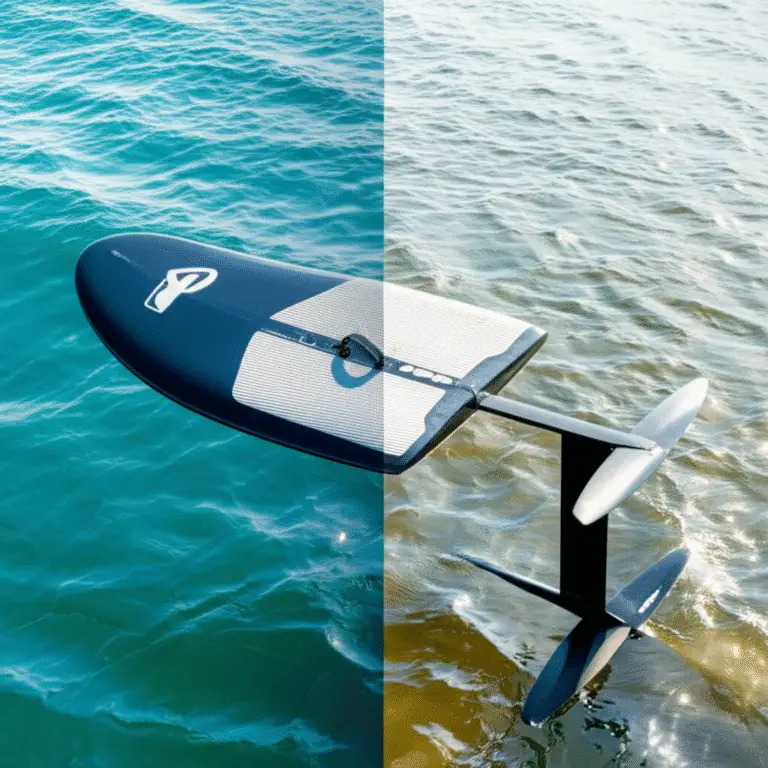
A hydrofoil is an underwater wing system attached to a board by a mast. As the board gains speed, water flowing over the foil’s wings creates lift. That lift raises the board above the surface, reducing the amount of board in contact with the water—and therefore reducing drag. The first YouTube video describes the foil wing as working much like an airplane wing and compares riding one to balancing a unicycle on water. The analogy is dramatic, but not entirely unfair: small shifts in weight can make a big difference.
What a hydrofoil does beneath your board
A typical setup includes:
- Front wing: Provides most of the lift and strongly influences takeoff speed, stability, and turning.
- Rear stabilizer: Helps control pitch and balance.
- Mast: Connects the underwater foil to the board.
- Fuselage: Joins the front wing, mast, and stabilizer.
- Board and mount: Transfer the rider’s weight and the foil’s forces into the water.
The lift principle is the same broad idea used by wings in flight, though a hydrofoil operates in water, which is much denser than air. For a plain-language overview of lift, see NASA’s explanation of how wings work. For board construction and setup topics, our hydrofoil equipment reviews can help you compare gear.
Surfboard, wakeboard, and foilboard: key differences
They may all be boards, but they aren’t built for the same job.
| Board type | Designed around | Typical foil-readiness | Common concern |
|---|---|---|---|
| Regular surfboard | Planing and wave riding on the surface | Usually low | No foil mount or reinforcement |
| Wakeboard | Being towed while riding on the surface | Usually low | Binding inserts are not foil mounts |
| Foil-specific surfboard | Surfing, towing, or foil-assisted riding | High, if matched to the system | Must still follow model-specific compatibility guidance |
| Wakefoil board | Riding behind a boat or on a suitable wake | High, if paired with the intended foil | Board and foil kit must match |
The distinction is structural, not cosmetic. A foil puts leverage through a narrow mast and into a small mounting area. Ordinary fin boxes and wakeboard binding inserts are not automatically suitable for that job.
🏄 Can You Put a Hydrofoil on a Regular Surfboard?
Sometimes, but only when the surfboard is designed or professionally converted to carry a hydrofoil. A conventional surfboard with standard fin boxes is generally not ready for a foil. The force from a foil mast can be much greater and differently directed than the loads a typical fin box is designed to handle.
Before buying anything, look for explicit compatibility information from the board maker and foil manufacturer. If you can’t verify it, don’t assume.
When a standard surfboard may be compatible
A surfboard may be suitable if:
- It has a foil-rated mounting system, such as reinforced tracks or another mount specified by its manufacturer.
- The mount is installed into a reinforced structure, not just the outer skin of the board.
- The foil mast and hardware match the board’s mounting standard.
- The board maker approves the intended foil use, rider weight range, and activity.
- The board is in sound condition, with no cracks, delamination, or soft spots around the mount.
Some boards sold for surf foiling resemble small surfboards, but they are purpose-built with foil use in mind. “Looks like a surfboard” is not the same as “built like a foilboard.”
Why most surfboards are not foil-ready
A regular surfboard’s fin system is meant for fins, not a long mast carrying a foil. A foil applies leverage through the mast, and the mount must resist forces from the rider’s weight, water movement, and hard touchdowns. A fin box that survives ordinary surfing may crack or pull out under foil loads.
Common failure points include:
- Fin boxes mistaken for foil mounts
- Insufficient reinforcement around a track or box
- Water intrusion after a crack or failed seal
- Delamination, where layers separate under repeated stress
- Incorrect hardware or fasteners that don’t match the foil system
If a board fails while riding, the foil can separate or shift unexpectedly. That’s not a “we’ll patch it after the session” kind of problem. For background on safe equipment use and injury prevention, review the U.S. Coast Guard’s boating safety resources.
🚤 Can You Use a Wakeboard With a Hydrofoil Attachment?
A standard wakeboard usually cannot accept a hydrofoil as a simple attachment. Wakeboards commonly have inserts for bindings, but binding inserts aren’t necessarily designed to take the mast’s concentrated loads. A wakefoil setup normally uses a board made or approved for foil use, with a compatible mount and foil kit.
Hyperlite’s wakefoil collection is a useful example of how brands distinguish foil equipment: it lists dedicated foil kits and foil boards, including the Shuttle, Starship, and Raptor setups. That product naming alone doesn’t establish that a regular wakeboard can be converted; for compatibility, rely on the board and kit’s own specifications.
Wakeboard foil setups and foil-specific wakeboards
A wakefoil setup is typically selected as a system:
- A foil-compatible board
- A compatible foil kit
- A mast, fuselage, and wings suited to the intended riding conditions
- Bindings or foot straps, if recommended for that board and riding style
- A suitable tow setup and a driver who understands wakefoiling
Hyperlite’s product range includes Raptor foil kits, MK foil components, and foil boards such as the Shuttle. These illustrate the variety of dedicated wakefoil gear, not universal interchangeability. Check the current manufacturer instructions for the exact combination you’re considering.
Why a regular wakeboard usually will not work
A wakeboard is shaped and reinforced for riding on the surface, with binding placement and construction aimed at that use. Its inserts may not align with a foil mount, and even if someone fabricates an adapter, the board may not have enough reinforcement beneath it.
Don’t confuse a screw pattern with structural compatibility. Matching holes do not prove that a board can safely handle a mast and foil. Ask the board maker whether that model is approved for hydrofoil use, then confirm that the foil maker approves the mount and hardware.
🔩 Hydrofoil Board Mounting Systems Explained
Mounting standards are a common source of confusion because different systems can look similar from above. What matters is not just whether a foil can be attached, but whether the board and mount can safely transmit the forces involved.
Track mounts, Tuttle boxes, and plate mounts
| Mount type | What it is | What to verify |
|---|---|---|
| Track mount | Longitudinal tracks let riders adjust foil position | Track standard, spacing, hardware size, and structural reinforcement |
| Tuttle-style box | A recessed mast fitting used in some foil and windsurf setups | Exact box standard, mast compatibility, and board-maker approval |
| Plate mount | A plate connects the mast assembly to the board | Bolt pattern, plate dimensions, fasteners, and board reinforcement |
| Fin box | A box intended for a surfboard fin | Not a foil mount unless explicitly designed and approved for foil loads |
A mount’s name does not guarantee universal compatibility. Confirm the exact standard and consult the equipment maker’s installation guidance. The Hydrofoiling™ board selection section covers the practical questions to ask when comparing boards.
Board construction, reinforcement, and load limits
Foil mounts must be supported by the board’s internal structure. Construction varies by model and may include foam cores, fiberglass, carbon fiber, reinforcement blocks, or other materials. Two boards with similar shapes can have very different strength around the mount.
Check for:
- The manufacturer’s stated foil-use approval
- The recommended rider weight or load range, if provided
- Any restrictions on tow speed, impact, or use conditions
- Inspection guidance for tracks, boxes, and surrounding laminate
- Approved fasteners and tightening instructions
Carbon fiber is not a magic word. Material choice alone doesn’t prove that a board is strong enough; design, layup, reinforcement, and installation matter too.
🧭 How to Check Board and Foil Compatibility
Treat compatibility like a checklist, not a hunch. When we’ve helped riders sort out mismatched setups, the issue is often not the foil itself—it’s a forgotten detail such as track spacing, screw length, or a board that was never approved for foil loads.
Compatibility checklist before you buy or install
- Identify the exact board model and year. Similar model names can have different construction or mounts.
- Find the manufacturer’s foil-use statement. Look for explicit approval, not vague wording like “high-performance” or “reinforced.”
- Identify the foil mount standard. Confirm track dimensions, plate pattern, box style, and hardware.
- Check foil-to-board compatibility. Verify with both manufacturers when the board and foil are from different brands.
- Confirm intended use. Surf foiling, wakefoiling, wing foiling, and e-foiling can impose different setup needs.
- Inspect the mount and surrounding board. Reject cracked, loose, soft, or water-damaged areas.
- Follow installation instructions. Use the specified hardware and tightening procedure.
- Recheck after initial sessions. Stop riding if hardware loosens or the board shows damage.
| Check | ✅ Good sign | ❌ Warning sign |
|---|---|---|
| Board approval | Manufacturer lists the model for foil use | No compatibility statement |
| Mount | Purpose-built, reinforced mount | Standard fin box or binding inserts |
| Hardware | Correct, manufacturer-approved fit | Improvised bolts, shims, or adapters |
| Board condition | Solid mount area, no damage | Cracks, soft spots, movement, or water ingress |
| Setup match | Board and foil makers confirm compatibility | “It seems to fit” is the only evidence |
Questions to ask the board and foil manufacturers
Send the manufacturers the exact model name, year, and photos of the mount. Ask:
- Is this board approved for hydrofoil use?
- Which foil mount standard does it use?
- Which mast, plate, or foil kits are compatible?
- Are there rider-weight, speed, or activity restrictions?
- Does using an adapter affect warranty coverage?
- What should I inspect after a hard touchdown?
If a reply is unclear, ask for written confirmation. A shop’s confident guess is useful context, but manufacturer guidance should settle the compatibility question.
🛠️ Can You Convert a Regular Board Into a Foilboard?
A conversion may be possible for a qualified board builder, but it is not a casual garage upgrade. The builder must choose an appropriate mount, reinforce the board internally, seal the installation, and verify the foil system’s compatibility. If the board’s construction or condition is unsuitable, conversion may not be sensible.
Professional foil-mount installation
A competent board builder should:
- Inspect the board’s materials, core, existing damage, and internal layout.
- Confirm the intended foil system and its mounting standard.
- Select a mount designed for the relevant foil loads.
- Add reinforcement appropriate to the board’s structure.
- Install and seal the mount to prevent water entry.
- Check alignment, hardware fit, and board integrity before use.
- Explain any limitations, maintenance needs, or warranty consequences.
Ask the builder about experience with foil-specific installations, not just routine fin-box repairs. Request a clear explanation of how the mount is supported inside the board.
DIY conversion risks and common mistakes
We understand the temptation: you’ve got an unused board and a foil kit, so surely a bracket will sort it out. But a bracket cannot fix a weak core or replace missing reinforcement.
Avoid:
- Bolting a plate through an unreinforced deck or bottom
- Using a regular fin box as a mast mount without explicit approval
- Guessing hardware length or thread type
- Over-tightening fasteners and crushing the board
- Relying on sealant alone to carry structural loads
- Riding a converted board without checking for movement or damage
A failed mount can cause sudden loss of control and expose you to the foil. If you can’t verify the structure, don’t ride the conversion. For skills and safe progression, see our advanced hydrofoiling techniques.
⚖️ Regular Board vs. Foil-Specific Board
A standard board may look like the cheaper or simpler route if you already own one, but the relevant comparison is not just purchase versus purchase. It’s verified compatibility, structural safety, performance, and the consequences of failure.
Performance, stability, and durability
| Factor | Regular surfboard or wakeboard | Foil-specific board |
|---|---|---|
| Mounting | Often absent or unsuitable | Designed for a compatible foil system |
| Reinforcement | May not support mast leverage | Built or reinforced for foil loads |
| Setup confidence | Depends on a verified professional conversion | Higher when used as directed |
| Performance | Shape may not suit foil takeoff or balance | Shape is selected for the intended foil discipline |
| Repair risk | Conversion can introduce weak points | Still needs routine inspection and correct use |
| Flexibility | May retain ordinary board use if unmodified | Usually optimized for foil riding |
Foil-specific does not mean indestructible or automatically compatible with every foil. It means the board is designed for a defined job; you still need to match the mount and follow the manual.
Cost, convenience, and long-term value
We won’t put a price tag on the decision, because models and markets change. Instead, consider the whole setup:
- Existing board: Could save on buying another board, but only if an expert confirms a safe conversion.
- Foil-ready board: Usually provides clearer compatibility and less guesswork.
- Warranty: An unapproved modification may affect coverage; check the manufacturer’s terms.
- Repairability: A failed mount can damage more than the mount itself.
- Progression: A board suited to your riding discipline may make learning easier and more predictable.
Our confident recommendation: choose a foil-specific or explicitly approved board unless a qualified builder confirms your current board can be safely converted. For side-by-side equipment advice, browse hydrofoil brand comparisons.
🌬️ Choosing the Right Hydrofoil Setup
Board compatibility is only half the puzzle. Foil wings, mast length, board volume, and riding environment all influence how the setup behaves. Hyperlite’s wakefoil lineup, for example, includes different foil kits and components, which is a reminder that “a foil” is not one universal shape or size.
Foil type, mast length, and wing size
| Component | What it affects | What to do |
|---|---|---|
| Front wing | Lift, takeoff behavior, turning, and speed range | Choose according to rider skill, conditions, and manufacturer recommendations |
| Stabilizer | Pitch balance and turning feel | Use a compatible stabilizer and setup |
| Mast | Clearance, leverage, and handling | Match it to the board, water depth, and riding discipline |
| Fuselage | Spacing and connection between foil components | Use the approved length and hardware for your system |
| Board volume and shape | Float, paddling, starts, and control | Match board design to the way you’ll launch and ride |
Beginners often benefit from a setup selected for predictable lift and stability, but “bigger is always easier” is not a safe universal rule. Ask an experienced foil shop or instructor to match components to your weight, conditions, and discipline.
Matching your setup to surfing, wakesurfing, or towing
- Surf foiling: Needs a board and foil suited to wave conditions, paddling or tow starts, and local depth.
- Wakefoiling: Uses a boat wake and a wakefoil-specific board and foil setup. The tow method and speed should follow expert instruction.
- Tow foiling: Demands careful attention tow equipment, driver communication, and a suitable open-water area.
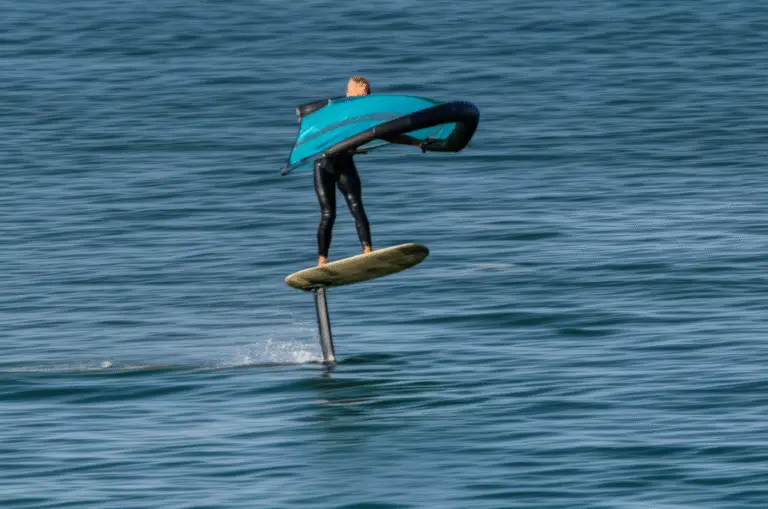
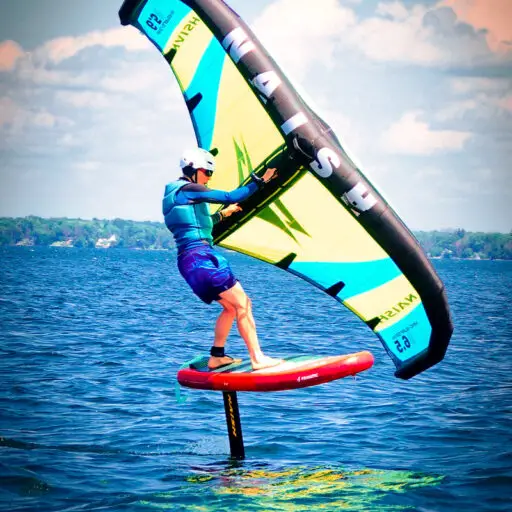
- Wing foiling: Requires a board and foil arrangement designed for wing-powered riding.
- Electric foiling: Uses an integrated powered system rather than a simple foil attachment. Fliteboard describes its electric hydrofoil boards as powered riding equipment; that is a different category from converting an ordinary surfboard or wakeboard.
Fliteboard also says that many people can learn with professional instruction in under an hour, but that is the company’s promotional guidance—not a guarantee for every rider, water condition, or prior experience. Their site lists a network of locations and learning options; contact an instructor directly to find an appropriate lesson.
🦺 Safety Tips for Foiling on a Surfboard or Wakeboard
The foil’s lift is thrilling; the mast and wings deserve respect. Before your first session, get instruction, inspect the equipment, and choose a location where you have room to fall without endangering others.
Protective gear and safe riding distances
Consider:
- A properly fitted helmet
- An appropriate impact vest or personal flotation device, depending on the activity and local rules
- A wetsuit or other protective clothing suited to the water temperature
- A leash only when recommended for the setup and conditions; leashes can create hazards if used incorrectly
- A spoter and clear communication for tow sports
Keep well away from swimmers, boats, docks, and other riders. The U.S. Coast Guard’s boating safety guidance covers broader water-safety practices, and local authorities may set additional requirements. Know the rules where you ride.
Beginer-friendly conditions and first-ride advice
For early sessions:
- Take a lesson from a qualified foil instructor if one is available.
- Choose a designated, uncrowded area with safe water depth.
- Check wind, waves, current, visibility, and local access rules.
- Learn how the foil behaves while stationary before trying to ride.
- Use equipment matched to your experience and riding discipline.
- Stop if you notice a loose mount, unusual noise, cracking, or board movement.
Foiling often feels less intuitive than surface riding. Keep your movements small and controlled; sudden shifts can send the board upward or drop it back to the water. Our hydrofoil basics provide more background on learning the equipment.
🧰 Troubleshooting Common Board-and-Foil Problems
If your setup feels wrong, don’t try to solve a structural problem by changing your riding style. First check the board, mount, hardware, and foil assembly on shore.
Loose mounts, cracks, and water intrusion
Stop riding immediately if you find:
- A loose or moving mast
- Cracks radiating from the mount
- A soft or compressed area around the tracks or box
- Separation, bubbling, or delamination
- Water entering through a damaged mount
- Missing, stripped, or visibly damaged fasteners
Don’t simply tighten harder. Over-tightening can damage the board, and sealant cannot restore a compromised structural mount. Contact the board maker, foil maker, or a qualified repairer.
Unstable takeoffs, ventilation, and handling issues
Not every handling issue means the board is incompatible, but a mismatch should be ruled out before you keep riding.
Possible causes include:
- Foil parts assembled in the wrong orientation
- Hardware that isn’t fully secured or correctly fitted
- A foil or board setup poorly matched to the conditions
- A mount positioned differently from the maker’s recommendation
- A damaged wing, mast, fuselage, or board
- Technique or tow speed outside the setup’s intended range
Check the manufacturer’s instructions and have an experienced instructor or shop inspect the setup. For more equipment comparisons and practical gear advice, visit Hydrofoil Equipment Reviews.