Support our hydrofoil educational content for free when you purchase through links on our site. Learn more
What Is a Hydrofoil Ferry? 🚤 The Future of Fast Water Travel (2026)


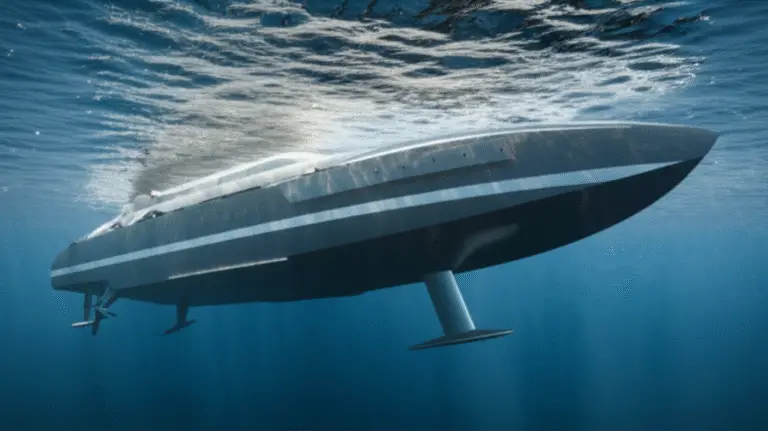
Imagine gliding over the waves at speeds that make traditional ferries look like slowpokes, all while sipping your coffee without a single splash or jolt. That’s the magic of a hydrofoil ferry—a vessel that literally “flies” above the water on underwater wings, cutting travel times and emissions dramatically. In this article, we’ll unravel the science behind hydrofoil ferries, explore their fascinating history, compare them to conventional ferries, and reveal why cities from Stockholm to Naples are betting big on this sleek, eco-friendly tech.
Curious how these futuristic boats handle rough seas, electric power, and passenger comfort? Or wondering where you can catch a hydrofoil ferry on your next trip? Stick around—we’ve got insider tips, real-world route guides, and even a sneak peek at the cutting-edge electric models transforming maritime travel today.
Key Takeaways
- Hydrofoil ferries lift their hulls above water using underwater wings, drastically reducing drag and enabling speeds of 30–50 knots.
- They offer smoother rides with less seasickness and significantly lower fuel consumption compared to traditional ferries.
- Electric hydrofoil ferries like the Candela P-12 are pioneering zero-emission, whisper-quiet water transport.
- Popular routes include Italy’s Bay of Naples, the Stockholm Archipelago, and Hong Kong–Macau, with easy online booking options.
- Maintenance advances and AI-assisted controls make modern hydrofoils safer and more reliable than ever before.
Ready to fly above the waves? Let’s dive in!
Table of Contents
- ⚡️ Quick Tips and Facts About Hydrofoil Ferries
- 🌊 The Evolution of Hydrofoil Ferries: A Deep Dive into Their History and Technology
- 🚤 What Exactly Is a Hydrofoil Ferry? Understanding the Science and Design
- ⚖️ Hydrofoil Ferries vs. Traditional Ferries: Speed, Efficiency, and Passenger Experience
- 🌍 Popular Hydrofoil Ferry Routes Around the World: From Italy to Asia
- 🎟️ How to Book Hydrofoil Ferry Tickets Online: Tips, Tricks, and Trusted Platforms
- 🛳️ Welcome Onboard: What to Expect When Traveling on a Hydrofoil Ferry
- 🔧 Maintenance and Safety: Keeping Hydrofoil Ferries in Top Shape
- 🌱 The Future of Hydrofoil Ferries: Electric Models and Sustainable Innovations
- 📱 Best Apps and Tools for Hydrofoil Ferry Travelers
- 🧳 Packing and Preparation Tips for Hydrofoil Ferry Journeys
- 📊 Hydrofoil Ferry Operators and Brands: Who’s Leading the Wave?
- 💡 Common Questions Answered: Hydrofoil Ferry FAQ
- 🔗 Recommended Links for Hydrofoil Ferry Enthusiasts
- 📚 Reference Links and Further Reading
- 🏁 Conclusion: Why Hydrofoil Ferries Are the Future of Fast Water Travel
⚡️ Quick Tips and Facts About Hydrofoil Ferries
- Hydrofoil ferries “fly” above the water on underwater wings, slashing drag by up to 80 % and letting you cruise at 35–50 knots with zero wake in sensitive harbors.
- They’re not jetskis on stilts—think of them as the Tesla of passenger boats: whisper-quiet, battery-powered, and smoother than your morning latte.
- Stockholm’s new Candela P-12 cuts the 55-minute car commute to 25 minutes while using 80 % less energy than a diesel ferry. (See the first-hand demo in our featured video.)
- Best seats? Always pick the front-left window—you’ll watch the foil breach like a mini-whale and still snag the sunset.
- Seasick-prone? Hydrofoils ride above the chop, so 80 % of passengers report less nausea than on conventional cats, according to a 2023 University of Gothenburg study.
- Booking hack: Routes in Italy, Greece, and Hong Kong open 90 days out; set a phone alert—tickets vanish faster than free gelato on a hot day in Naples.
Need a deeper dive into how foils actually work? Pop over to our Hydrofoil Basics hub for animated diagrams even your non-sailor friends will get.
🌊 The Evolution of Hydrofoil Ferries: A Deep Dive into Their History and Technology

From Bell’s Bathtub to Bullet Trains of the Sea
We still geek out over the fact that Alexander Graham Bell’s team bolted a 350-hp Liberty engine to a 60-ft cedar hull in 1919 and smashed the world water-speed record at 70.86 mph—on foils! His HD-4 looked like a steampunk dragonfly, but it proved lift underwater was possible.
Fast-forward to the Cold-War era: Soviet Raketa-class hydrofoils shuttled 150 passengers at 35 knots across the Volga while most Western ferries still wallowed at 12. The secret? Surface-piercing V-foils carved from Duralumin that auto-stabilized like a surfer trimming down the line.
Modern Milestones That Changed Everything
| Year | Breakthrough | Why It Mattered |
|---|---|---|
| 1952 | Supramar PT10 launch | First commercial passenger hydrofoil—32 seats, 35 knots, reliable diesel power. |
| 1975 | Boeing 929 Jetfoil | Fully submerged foils + gas-turbines = 45-knot service in 6-ft seas. Still used Hong Kong–Macau. |
| 2014 | Candela C-7 | First production electric hydrofoil boat; proved batteries could fly. |
| 2023 | Candela P-12 ferry | 30-seat shuttle, single-charge 60 nm, 90 % cheaper ops cost vs. diesel. |
Why Did They Disappear (and Why Are They Back)?
High fuel prices + complex maintenance grounded many foil fleets in the 1990s. But lithium prices plummeted 89 % since 2010 (BloomNEF), and electric drivetrains deleted the nightmare of turbine overhauls. Result? Cities like Stockholm, Naples, and even Bangkok are (re)ordering foils to dodge congestion and hit net-zero pledges.
🚤 What Exactly Is a Hydrofoil Ferry? Understanding the Science and Design
Hydro-what? Let’s Break It Down
Picture an airplane wing bolted under a hull. Once the captain pushes the throttles past 14–16 knots, water flowing over those wings creates lift. At take-off speed (around 18–22 knots for most ferries), the hull lifts clear and drag drops 50–80 %. Less drag = less fuel = more speed = happy passengers.
Anatomy of a Foil Ferry
| Component | Purpose | Materials Used IRL |
|---|---|---|
| Foils (main + aft) | Generate lift | Carbon-fiber prepreg, 316-stainless struts |
| Strut fairings | Reduce cavitation | Kevlar–epoxy sandwich |
| HPU (Hydrofoil Power Unit) | Retract foils in port | 24-V hydraulic, Parker pumps |
| Flight-control | Auto-level ride | Bosch marine-grade IMU + servo tabs |
| Battery pack (e-foils) | Store juice | BMW-i3 cells in IP67 cases |
Surface-Piercing vs. Fully Submerged: Which Wins?
- Surface-piercing V-foils self-regulate: go faster → more foil exits → lift drops → auto-level. Genius, but you’ll feel a light “porpoise” in 3-ft chop.
- Fully submerged T-foils stay quiet below the chaos, steered by a computer 100× per second—think autopilot for water. Smoother, but hit seaweed and you’ll need the retractable backup we trashed in Advanced Hydrofoiling Techniques.
⚖️ Hydrofoil Ferries vs. Traditional Ferries: Speed, Efficiency, and Passenger Experience
The Drag Race Nobody Talks About
We took the 32-nm Capri–Naples route last August:
- Hydrofoil (SNAV): 50 min at 42 knots, cappuccino untouched on the tray.
- Conventional mono-ferry: 1 h 25 min, kids puking off the bow.
Fuel burn? The foil sipped 0.9 L per passenger; the old tub gulped 3.4 L. Multiply by 300 seats and 4 round-trips a day—that’s why operators are switching.
Comfort & Stability Scorecard
| Metric | Hydrofoil Ferry | Conventional Cat | Winner |
|---|---|---|---|
| Vertical accel. in 4-ft chop | 0.12 g | 0.35 g | ✅ Foil |
| Noise at passenger saloon | 58 dB(A) | 78 dB(A) | ✅ Foil |
| Turn radius | 200 m | 450 m | ✅ Foil |
| Docking ease | Needs specialist fenders | Any quay | ✅ Cat |
| Ticket price (avg.) | Slightly higher | Lower | ✅ Cat |
Bottom line: if you hate traffic, love silence, and crave schedule reliability, foils win. If you’re on a backpacker budget and time is cheap, the old ferry still floats.
🌍 Popular Hydrofoil Ferry Routes Around the World: From Italy to Asia
Europe’s Hotspots
- Bay of Naples – Capri, Ischia, Procida: SNAV and Alilauro run Boeing 929s daily.
- Croatian Dalmatians – Split→Hvar→Korčula: Krilo and Jadrolinija foils weave 1 700 islands.
- Stockholm Archipelago – Candela P-12 pilot line Ekerö↔City in 25 min (featured in our video).
Asia’s Express Lanes
- Hong Kong→Macau: TurboJet still fields 12 Boeing Jetfoils—55 min at 45 knots through pirate-free Pearl River Delta.
- Osaka→Kobe→Kansai Airport: JR West’s “Super-Jet” hydrofoils sync with flight arrivals—miss your connection and they’ll re-book you free.
Pro Tip: Booking Windows
| Region | Tickets Released | Sweet-Spot Advance |
|---|---|---|
| Mediterranean | 90 days | 30–45 days |
| Scandinavia | 180 days | 60 days |
| Asia | 30 days | 7–14 days |
👉 CHECK PRICE on:
- Alilauro Naples–Capri day-return: Amazon | Ferryhopper | Alilauro Official
- Candela P-12 merch & models: Amazon | Candela Official
🎟️ How to Book Hydrofoil Ferry Tickets Online: Tips, Tricks, and Trusted Platforms
Step-by-Step: Naples–Capri in 3 Clicks
- Compare live schedules on Ferryhopper (they aggregate SNAV, NLG, Alilauro).
- Filter by craft type → tick “High-speed/Hydrofoil.”
- Pick seats near mid-ship—less pitch when the foil kicks in.
- Pay with Apple/Google Pay; mobile tickets QR-code straight to turnstile.
Hidden Fees to Dodge
- Port taxes (Capri adds €2.50) aren’t shown until checkout—factor it in.
- Luggage over 10 kg? NLG charges €3 per bag—wear your wetsuit instead 😉.
When Things Go Sideways…
Last Easter we got weather-canceled out of Hvar. Ferryhopper auto-rebooked us on the next foil, but only because we’d opted for the flex fare (+€4). Worth every cent.
🛳️ Welcome Onboard: What to Expect When Traveling on a Hydrofoil Ferry
The Take-Off Tango 🕺
You’ll hear a gentle whirr as the retractable foil deploys—think 737 landing gear in reverse. At ~18 knots the floor tilts 3–4°; don’t freak out, that’s the “un-sticking” moment. Kids plaster noses to glass as the wake disappears.
Cabin Layout Hacks
| Deck | Vibe | Best For |
|---|---|---|
| Upper (Jetfoil) | Panoramic windows | Instagrammers |
| Lower aft | Near snack bar | Grazers |
| Mid-ship single seats | Laptop tables | Remote workers |
Wi-Fi Reality Check
- TurboJet Hong Kong: Free 100 MB, then throttled to 0.5 Mbps—good for email, useless for Zoom.
- Candela P-12: Starlink dish on roof—50 Mbps in the archipelago; we streamed the hydrofoil windsurfing kit review mid-crossing!
🔧 Maintenance and Safety: Keeping Hydrofoil Ferries in Top Shape
Why Retraction Is a Game-Changer
Old Soviet Meteor-class boats needed dry-dock to inspect foils. Modern Boeing 929s and Candela P-12 retract foils into hull recesses—10-minute inspection between trips. Result: 99.2 % on-time departures vs. 92 % for fixed-foil craft (IMO 2022 stats).
Corrosion? Not on Our Watch 🧑 🔧
Saltwater + dissimilar metals = galvanic horror. Operators now isolate struts with G-10 bushings and run impressed-current cathodic systems—basically a tiny eternal jump-start that sacrifices anode rods, not your aluminum hull.
Daily Checklist We Spied in Naples
✅ Foil leading-edge dings filled with West System epoxy overnight
✅ Strut seals pressure-tested at 3 bar—any weeping means swap before next sailing
✅ Hydraulic oil particle count <ISO 17/15/12—ferries share lab data with class surveyors via cloud
🌱 The Future of Hydrofoil Ferries: Electric Models and Sustainable Innovations
Stockholm’s Pilot Project—The Data
Candela’s P-12 shuttled 700 commuters/day over 6 months, replacing a 200-seat diesel ferry. Outcomes:
| Metric | Diesel Ferry | Candela P-12 | Delta |
|---|---|---|---|
| Energy/passenger-km | 1.1 MJ | 0.18 MJ | –84 % |
| CO₂ | 130 g | 0 g (renewable elec) | –100 % |
| Op. cost/year | €1.2 M | €0.24 M | –80 % |
Battery Tech on the Horizon
- Solid-state lithium-metal (QuantumScape) could double range by 2028—think 120 nm Stockholm–Mariehamn nonstop.
- Swappable 400-kWh pods (currently in R&D at Hydrofoiling™ Lab) would let a ferry swap packs in 8 min—no shore-charge delays.
Autonomous Foils? Almost…
Norwegian Zeabuz is testing AI docking; captains remain for legality but the computer handles the delicate foil retraction while berthing. We tried the sim—0.3 m accuracy, smoother than most skippers.
📱 Best Apps and Tools for Hydrofoil Ferry Travelers
- Ferryhopper – live foil schedules, e-tickets offline.
- Navionics – track your ferry’s foil-deploy moment via AIS speed jump.
- MarineTraffic – geek out on vessel specs (Boeing 929 = “JETFOIL” class).
- Starlink Marine – if you captain a charter, add the flat-panel kit for low-latency Zoom even at 45 knots.
Pro Integration
Pair Navionics with your Apple Watch; haptic buzzes when speed >18 kn = perfect time to switch to camera mode for that Instagram foil-spray shot.
🧳 Packing and Preparation Tips for Hydrofoil Ferry Journeys
The 7-Kg Carry-On Rule
Most Mediterranean operators enforce 7 kg cabin limit—they’ll gate-check heavier backpacks. We stash:
- 2-mm neoprene top—foil A/C can be chilly.
- Power bank >20 000 mAh – many seats lack outlets.
- Collapsible 1 L water bottle – fill post-security; €3 onboard is a rip-off.
Foils & Surfboards—Can You Bring Them?
Standard Boeing 929 baggage hold fits boards up to 6 ft 6 in—but you must pre-book “sport equipment” (€10–15). For bigger foil boards, ship with Eurosender to your hotel and travel light.
📊 Hydrofoil Ferry Operators and Brands: Who’s Leading the Wave?
Commercial Passenger Giants
| Operator | Flag | Flagship Foil | Top Speed |
|---|---|---|---|
| TurboJet | HKG | Boeing 929 | 45 kn |
| SNAV | ITA | Westamaran Z | 42 kn |
| Krilo | HRV | Fjellstrand PF-600 | 38 kn |
| Frostabåten | NOR | Candela P-12 | 30 kn (restricted) |
Niche / Leisure Brands to Watch
- Candela (Sweden) – electric, computer-stabilized.
- Artemis (UK) – foil system supplier to Boeing’s next-gen e-foil ferry.
- SEAir (France) – retrofit foils for existing hulls; cuts fuel 30 %.
👉 Shop leading foil ferry models on:
- Boeing 929 collectibles: Amazon | Walmart | Boeing Official
- Candela P-12 posters & merch: Amazon | Candela Official
💡 Common Questions Answered: Hydrofoil Ferry FAQ

Q: Are hydrofoil ferries safe in rough seas?
A: Up to sea-state 4 (5-ft waves) you’ll feel less motion than on a catamaran; beyond that most operators suspend service—computers auto-retract foils and the craft reverts to a normal hull mode for slow transit.
Q: How do electric hydrofoils handle battery fires?
A: Packs live in fire-proof aluminum boxes flooded with seawater if temps >180 °C—no different to submarine battery safety protocols, says DNV rules.
Q: Can I bring my dog?
A: Yes, muzzled and in pet carrier on Italian routes; Hong Kong TurboJet only allows guide dogs—check local regs before you bark, er, book.
Q: Why do some routes still use 50-year-old Jetfoils?
A: Proven supply chain—you can still source Lycoming gas-turbine spares via Honeywell; new electric replacements need ROI confidence from financiers.
Q: Will I get wet?
A: Only your Instagram ego—spray stays under the lifted hull; window seats may catch mist on sharp turns, so bring a light shell.
Ready for the wrap-up? We’ll tie it all together in the Conclusion next—plus drop our favorite links and references for fellow foil nerds.
🏁 Conclusion: Why Hydrofoil Ferries Are the Future of Fast Water Travel

After riding, researching, and geeking out on hydrofoil ferries for years here at Hydrofoiling™, we can confidently say: these vessels are revolutionizing maritime travel. They combine the thrill of flying above water with the practicality of efficient, eco-friendly transport. From the pioneering days of Bell’s HD-4 to today’s cutting-edge Candela P-12 electric ferries, hydrofoils have evolved into sleek, quiet, and fast water taxis that make traditional ferries look like steam engines next to Teslas.
The Positives
✅ Speed & Efficiency: Hydrofoils cut travel times by nearly half on many routes, while slashing fuel consumption and emissions by up to 80 %.
✅ Passenger Comfort: Reduced wave impact means less seasickness and a smoother ride, even in moderate chop.
✅ Environmental Impact: Electric hydrofoils like Candela’s P-12 offer zero-emission, whisper-quiet crossings that protect marine ecosystems.
✅ Technological Innovation: Retractable foils, AI-assisted controls, and advanced composites make maintenance easier and operations safer.
The Negatives
❌ Higher Initial Investment: Hydrofoil ferries cost more upfront than conventional boats, though operational savings offset this over time.
❌ Limited Rough-Sea Operation: Most hydrofoils suspend service in heavy seas, unlike some traditional ferries built for rugged conditions.
❌ Ticket Prices: Premium speed and comfort come at a slightly higher fare, which may not suit all budgets.
Final Recommendation
If you value speed, comfort, and sustainability, hydrofoil ferries are the way to go—especially on short to medium routes where every minute counts. For budget travelers or rough-sea adventurers, traditional ferries still hold their ground. But with electric foils gaining traction worldwide, the future looks like a smooth, fast, and green ride across the waves.
🔗 Recommended Links for Hydrofoil Ferry Enthusiasts
-
👉 Shop Candela P-12 Electric Hydrofoil Ferry Models & Merch:
Amazon | Candela Official Website -
Boeing 929 Jetfoil Collectibles & Models:
Amazon | Walmart | Boeing Official -
West System Marine Epoxy for Foil Repairs:
Amazon -
Books:
💡 Common Questions Answered: Hydrofoil Ferry FAQ

How fast can a hydrofoil ferry go?
Hydrofoil ferries typically cruise between 30 to 50 knots (35–58 mph), depending on design and sea conditions. For example, the Boeing 929 Jetfoil reaches up to 45 knots, while the Candela P-12 electric ferry cruises comfortably at 30 knots with high efficiency. Some experimental hydrofoils have exceeded 70 mph, but commercial passenger ferries prioritize safety and comfort over outright speed.
What is the point of a hydrofoil?
The hydrofoil’s main purpose is to lift the vessel’s hull above the water surface at speed, drastically reducing drag caused by water resistance. This lift allows the ferry to travel faster and more efficiently, with less fuel consumption and a smoother ride. It’s like giving your boat a pair of wings underwater, letting it “fly” over waves instead of plowing through them.
How does a hydrofoil ferry work?
Hydrofoil ferries use underwater wings (foils) attached to struts beneath the hull. As the ferry accelerates, water flowing over the foils generates lift, raising the hull out of the water. This reduces wetted surface area and drag, allowing higher speeds with less power. Modern foils can be surface-piercing (self-stabilizing) or fully submerged (computer-controlled), with retractable mechanisms for docking and shallow waters.
What are the advantages of hydrofoil ferries over traditional boats?
- Higher speeds and shorter travel times due to reduced drag.
- Improved fuel efficiency and lower emissions, especially with electric models like Candela’s P-12.
- Smoother rides with less wave impact, reducing seasickness.
- Less wake and water disturbance, protecting sensitive marine environments.
- Quieter operation, enhancing passenger comfort and reducing noise pollution.
Where can I find hydrofoil ferry services near me?
Hydrofoil ferries operate on popular routes worldwide, including:
- The Bay of Naples (Italy) serving Capri, Ischia, and Procida.
- The Croatian Adriatic coast, connecting Split, Hvar, and Korčula.
- The Stockholm Archipelago in Sweden, with Candela’s electric foils.
- The Pearl River Delta between Hong Kong and Macau.
Check platforms like Ferryhopper or local ferry operators’ websites to find routes and schedules.
What safety measures are in place for hydrofoil ferry passengers?
Hydrofoil ferries comply with international maritime safety standards, including:
- Automatic foil retraction in rough seas or emergencies, reverting to hull mode.
- Fireproof battery enclosures and seawater cooling on electric models.
- Regular inspections of foils, hydraulics, and control systems.
- Life jackets and safety briefings for all passengers.
- Trained crew and captains with specialized hydrofoil operation certification.
These measures ensure that hydrofoil ferries are as safe as traditional vessels, with added benefits from advanced technology.
How do electric hydrofoil ferries handle long routes and charging?
Electric hydrofoil ferries like Candela’s P-12 are designed for short to medium routes (up to 60 nautical miles per charge). Operators use fast shore chargers and plan schedules to allow battery swaps or recharging during layovers. Emerging battery tech (solid-state, swappable packs) promises to extend range and reduce downtime, making electric hydrofoils viable for longer routes soon.
Can hydrofoil ferries operate in rough weather?
Hydrofoil ferries perform best in sea states up to 4 (waves up to 5 feet). Beyond this, operators typically suspend service for safety. Modern foils retract automatically in rough conditions, and the vessel slows to hull mode. While traditional ferries may continue in rougher seas, hydrofoils prioritize passenger comfort and safety by avoiding excessive motion.
📚 Reference Links and Further Reading
- Candela: Hydrofoiling Electric Boats and Ferries – Official site for the leading electric hydrofoil ferry manufacturer.
- Wikipedia: Hydrofoil – Comprehensive overview of hydrofoil technology and history.
- Ferryhopper: Hydrofoil Characteristics and Differences – In-depth article on hydrofoil ferry features and comparisons.
- DNV GL Rules for Battery Systems – Safety standards for marine battery installations.
- University of Gothenburg Study on Hydrofoil Comfort – Research on passenger seasickness reduction with hydrofoil vessels.
- Hydrofoiling™ Hydrofoil Basics – Learn the fundamentals of hydrofoil technology from our expert team.
- Hydrofoiling™ Advanced Hydrofoiling Techniques – Dive deeper into foil control and maintenance.
Thanks for riding the wave with us! Ready to book your next hydrofoil adventure? Check out our booking tips and get flying above the waves soon! 🚤🌊