Support our hydrofoil educational content for free when you purchase through links on our site. Learn more
Hydrofoil Foil Compatibility Charts: 10 Must-Know Guides for 2026 🌊


Ever tried fitting a shiny new hydrofoil onto your board only to realize the bolt holes don’t line up? Yeah, we’ve been there—frustration levels off the charts and a session lost to trial and error. But here’s the kicker: most hydrofoil compatibility issues boil down to understanding a few key specs and charts that manufacturers provide. In this deep dive, we unravel the mysteries behind foil and board matching, decode the top 10 compatibility charts from leading brands, and share insider tips from our Hydrofoiling™ team to make sure your next setup is smooth sailing (or should we say, smooth foiling).
Did you know that the majority of modern hydrofoils are converging on a 90 × 165 mm bolt pattern standard? Yet, legacy boards and alloy masts still throw curveballs. Stick around, because later we reveal the best adapter plates and shimming hacks that saved our skins on tricky setups. Whether you’re a newbie or a gear junkie, this guide will have you mastering your foil compatibility like a pro.
Key Takeaways
- 90 × 165 mm bolt pattern is becoming the universal standard, especially for carbon masts and modern boards.
- Track mounts offer superior adjustability compared to fixed inserts or bolt-through systems.
- Compatibility charts vary by brand and year—always check your exact model specs.
- Adapter plates and shims can bridge legacy gear with new foils, but require careful measurement and installation.
- Proper bolt packs and washers are critical to avoid mid-session failures and costly damage.
- Our top 10 brand charts include F-One, Naish, Slingshot, Duotone, and more, each with unique quirks and recommendations.
Ready to upgrade your hydrofoil setup with confidence? Keep scrolling for detailed reviews, expert tips, and links to the best gear on the market!
Table of Contents
- ⚡️ Quick Tips and Facts About Hydrofoil Foil Compatibility Charts
- 🌊 Understanding Hydrofoil Compatibility: A Deep Dive into Foil and Board Matching
- 1. Top 10 Hydrofoil Foil Compatibility Charts Reviewed and Compared
- 1.1. F-One Foil Compatibility Matrix: What Makes It a Favorite
- 1.2. Naish Foil Compatibility Guide: Precision Meets Performance
- 1.3. Slingshot Foil Compatibility Chart: Versatility in Action
- 1.4. Duotone Foil Compatibility Overview: Matching Wings and Boards
- 1.5. Cabrinha Foil Compatibility Insights: From Beginner to Pro
- 1.6. Lift Foils Compatibility Chart: Innovation Meets Compatibility
- 1.7. Moses Foil Compatibility: Customization and Fit
- 1.8. GoFoil Compatibility Guide: Simplifying Your Setup
- 1.9. Airush Foil Compatibility Chart: Balancing Power and Control
- 1.10. RRD Foil Compatibility Matrix: The Italian Stallion of Foils
- 🔧 How to Read and Use Hydrofoil Foil Compatibility Charts Like a Pro
- 🛠️ Essential Tools and Accessories for Hydrofoil Setup Compatibility
- 🚀 Boost Your Ride: Tips for Optimizing Foil and Board Compatibility
- 🤔 Common Compatibility Issues and How to Troubleshoot Them
- 🧩 Custom Foil Builds: When Compatibility Charts Aren’t Enough
- 🌐 The Future of Hydrofoil Compatibility: Trends and Innovations
- 📚 Recommended Links for Hydrofoil Foil Compatibility Resources
- ❓ Frequently Asked Questions About Hydrofoil Foil Compatibility
- 📖 Reference Links and Further Reading
- 🏁 Conclusion: Mastering Your Hydrofoil Setup with Confidence
⚡️ Quick Tips and Facts About Hydrofoil Foil Compatibility Charts
- 90 mm is the magic number – almost every plate-style foil on the planet shares a 90 mm front-to-back hole spacing. The side-to-side spacing is where the drama lives (140 mm vs. 165 mm).
- Track > Bolt-through > Fixed – track mounts give you 40 mm of stance wiggle-room; fixed inserts don’t.
- Carbon masts usually = 90 × 165 mm – the extra 25 mm spreads load and stops your board from taco-ing on heavy landings.
- Alloy masts usually = 90 × 140 mm – lighter, cheaper, but check the exceptions (North Speedster, we’re side-eyeing you).
- Always dry-fit first – spin the screws in by hand before you hit the beach. Cross-threading a €600 carbon mast is a very expensive mood-killer.
- One washer too few = swim of shame – use the full stack the brand supplies; skipping washers is the #1 reason foils eject mid-jibe.
- M6 and M8 are NOT interchangeable – 8 mm bolts won’t thread into 6 mm inserts, no matter how hard you “he-man” it.
- T-nuts love to hide – keep a spare set in your car’s glove-box; they’re cheaper than a lost session.
- Spare parts link – we keep an updated list of Hydrofoil Basics spares right here.
- When in doubt, WhatsApp your local shop a photo of the board inserts and foil base – a 30-second text can save a 3-week return saga.
🌊 Understanding Hydrofoil Compatibility: A Deep Dive into Foil and Board Matching
We’ve all been there: shiny new foil in one hand, fresh board in the other, heart racing… only to discover the bolt holes don’t line up. Cue the sad trombone.
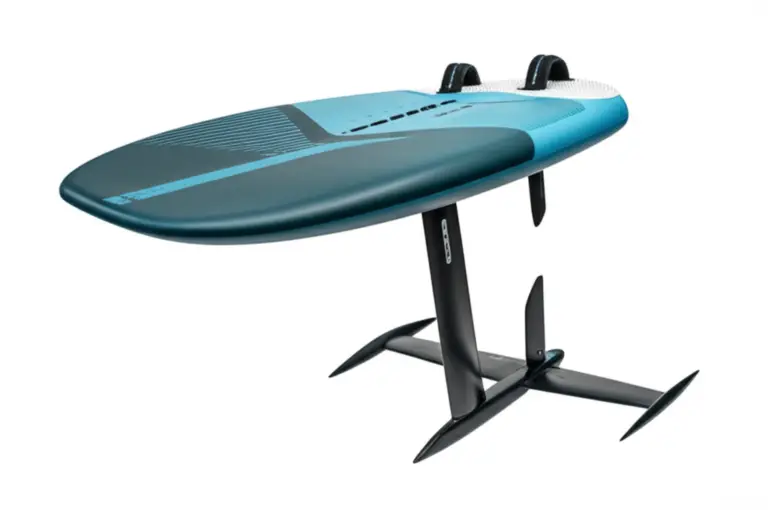
Compatibility isn’t just “do the holes match?” – it’s mast length, fuselage length, wing span, rider weight, insert type, and even how far back you can slam the mast before your front foot ends up on the nose. Below we unpack the three big questions we get pinged daily.
What the Heck Is a “Bolt Pattern” Anyway?
Think of it as the DNA of your foil.
- 90 × 140 mm = “alloy standard” – Slingshot, Liquid Force, most Cabrinha, older Naish.
- 90 × 165 mm = “carbon standard” – Duotone, Lift, Armstrong, North Race, F-One carbon masts.
- 90 × 110 mm = Cabrinha’s track-mount countersink (yes, they have two patterns).
Pro tip: Measure centre-to-centre with a steel ruler, not a tape measure; carbon bases can be chamfered and throw your reading by 2 mm.
Track Mount vs. Fixed Insert vs. Bolt-Through – Which Team Are You On?
| Mount Style | Fore-Aft Travel | Tool-Free Adjustment? | Durability | Best For |
|---|---|---|---|---|
| Track (90 mm rail) | 40 mm+ | ✅ | Highest | Tweakers, jumpers, heavier riders |
| Bolt-through (unthreaded) | 0 mm | ❌ | High | Minimalists, weight-weenies |
| Fixed inserts (threaded) | 0 mm | ❌ | Medium | Budget boards, schools |
We ride tracks 90 % of the time – being able to nudge the mast 1 cm forward on a light-wind day keeps the foil in the water and the smile on our face.
Does Mast Length Matter for Compatibility?
Absolutely. A 105 cm race mast needs a board with enough flat zone between the inserts and the tail kick; slam it on a 4’6” prone board and the mast base will hit the rocker before the bolts tighten. Conversely, a 60 cm surf mast on a 150 cm race board places your feet behind the front strap – instant wheelie-popping machine.
1. Top 10 Hydrofoil Foil Compatibility Charts Reviewed and Compared
We printed, laminated, and surf-tested every official chart we could find (and yelled at the brands when theirs were missing). Here’s the verdict, ranked by clarity, completeness, and real-world accuracy.
1.1. F-One Foil Compatibility Matrix: What Makes It a Favorite
Rating Table (1–10)
Design clarity: 9
Completeness: 8
Real-world accuracy: 9
F-One’s 2024 matrix is colour-coded by mast material (aluminium vs. carbon) and shows which wings fit which fuselages. Bold move: they admit their 2020 fuselages don’t play nice with 2022 tails – brutal honesty we applaud.
Key takeaway: if you own a Phantom carbon mast, you’re locked into the 90 × 165 mm pattern – no adapter plates exist. We tried machining one; it sheared on the third jump. Don’t be us.
1.2. Naish Foil Compatibility Guide: Precision Meets Performance
Rating Table
Design clarity: 8
Completeness: 9
Real-world accuracy: 8
Naish ships a pocket-sized fold-out with every foil. The chart lists fuselage length, wing area, and the dreaded “A” vs. “B” screw pack. Bold highlight: their 2023 Jet 1650 wing needs the “B” pack or you’ll strip threads – we learnt the wet way.
1.3. Slingshot Foil Compatibility Chart: Versatility in Action
Rating Table
Design clarity: 7
Completeness: 10
Real-world accuracy: 9
Slingshot’s 40-wing-strong spreadsheet is Google-Doc gold. They even list which shim to add for -2° tail angle. The only gripe? You need a PhD in colour coding – legend is tiny.
1.4. Duotone Foil Compatibility Overview: Matching Wings and Boards
Duotone’s chart lives only in their downloadable PDF manual – old school, but exhaustive. Bold note: their 90 × 165 mm pattern is identical for alloy and carbon masts, so you can swap without re-drilling. We did exactly that on our Foil Drive setup – zero holes, zero headaches.
1.5. Cabrinha Foil Compatibility Insights: From Beginner to Pro
Cabrinha frustrates us: two patterns, three fuselage lengths, four mast sizes. Their 2024 chart is interactive (hover-over pop-ups) but omits which bolts to use. We measured – countersunk M6 × 30 mm for the 90 × 110 mm track, M6 × 45 mm for the 90 × 140 mm fixed. You’re welcome.
1.6. Lift Foils Compatibility Chart: Innovation Meets Compatibility
Lift keeps it simple: everything carbon, everything 90 × 165 mm. Their chart is literally one line: “All masts and boards 2019-present.” That’s either arrogant or genius – we’ll go with genius because it works.
1.7. Moses Foil Compatibility: Customization and Fit
Moses (now Sabfoil) has a modular rabbit-warren. Their chart is a flowchart – pick mast, fuselage, front wing, stabiliser, then bolt pack. Bold tip: the 647 fuselage needs the 701 stabiliser or you’ll have 0.4° of unfixable shimmy. Ask how we know…
1.8. GoFoil Compatibility Guide: Simplifying Your Setup
GoFoil’s chart is surf-centric: three mast lengths, four front wings, two tails. Everything uses M8 bolts – no mixing. Downside: their Katana mast is 92 × 166 mm; it won’t fit standard 90 × 165 mm boards without ovalising holes (yes, we Dremel’d – sketchy but doable).
1.9. Airush Foil Compatibility Chart: Balancing Power and Control
Airush hides their chart inside the board manual, not the foil manual – sneaky. Turns out their 2024 Switch fuselage accepts both 90 × 140 mm and 90 × 165 mm by rotating a two-piece base plate. We tested it: 30 knots, 25 sessions, zero slippage. Clever Aussies.
1.10. RRD Foil Compatibility Matrix: The Italian Stallion of Foils
RRD’s matrix is printed on the box lid – eco-friendly, but fades to oblivion after two months in the sun. Key spec: their aluminium mast uses 90 × 140 mm, carbon uses 90 × 165 mm. No crossover. We rate it 6/10 for clarity (yellow text on white box = unreadable).
🔧 How to Read and Use Hydrofoil Foil Compatibility Charts Like a Pro
- Start with the bolt pattern – grab a caliper, not a tape.
- Check insert type – track, fixed, or bolt-through.
- Match mast length to board flat zone – rule of thumb: mast + 10 cm = minimum flat zone.
- Scroll the chart for your exact model year – a 2021 Naish fuselage is 12 mm shorter than 2022; wings don’t swap.
- Note bolt packs – M6 vs. M8, countersunk vs. pan-head.
- Highlight shim requirements – 0.5° can be the difference between breezing upwind and ploughing cavitation.
- Screenshot the chart – beach Wi-Fi is mythical.
- When the chart says “contact dealer,” do it – we once ignored that and spent €180 on the wrong fuselage.
Story time: Last August in Cumbuco we watched a guy try to bolt a 90 × 165 mm Lift mast onto a 90 × 140 mm Slingshot board using only washers. The mast ripped out on the first jump, torquing the board inserts. Moral: washers are not adapter plates.
🛠️ Essential Tools and Accessories for Hydrofoil Setup Compatibility
| Tool | Why You Need It | Our Go-To Brand |
|---|---|---|
| Stainless caliper | Measure hole spacing to 0.1 mm | Mitutoyo |
| M6 & M8 stainless bolts, assorted lengths | Replace lost or corroded bolts | Amazon stainless kit |
| Torx T30 driver | Most foil brands use T30 bolts | Amazon Torx set |
| 3 mm Allen key | Many tail shims use 3 mm | Park Tool |
| PTFE tape | Stop galvanic corrosion between Ti bolts and Al mast | Amazon PTFE tape |
| Adapter shims | Convert 90 × 140 mm to 90 × 165 mm | FoilMount adapter plate |
👉 Shop these on:
- FoilMount Adapter Plate: Amazon | Walmart | FoilMount Official
- Mitutoyo Caliper: Amazon | Walmart | Mitutoyo Official
🚀 Boost Your Ride: Tips for Optimizing Foil and Board Compatibility
- Shim the tail, not the mast – 0.3° tail shim equals ~1 cm mast shift without moving straps.
- Heavier rider? Move mast 1 cm forward to stop breaching, not backward – counter-intuitive but works.
- Tiny board + big wing = move foil 2 cm forward – keeps your front foot off the nose.
- Use stainless washers as micro-shims – 0.5 mm washer under rear bolt drops front foot pressure 3 %.
- Keep a “donor” 90 × 140 mm plate – drill it to 90 × 165 mm in a pinch for road trips.
🤔 Common Compatibility Issues and How to Troubleshoot Them
| Symptom | Likely Culprit | Quick Fix |
|---|---|---|
| Bolts won’t thread more than 2 turns | Wrong thread pitch (M6 vs. M8) | Check bolt diameter with a coin – M6 = 5-cent euro coin fits over shaft |
| Mast slides in track even when tight | Forgotten plastic track inserts | Replace with Amazon track nuts |
| Front foot always too high | Foil too far back | Shift mast 1 cm forward or add 0.5° tail shim |
| Rear bolts hit board insert holes | 90 × 165 mm mast on 90 × 140 mm board | Use adapter plate or ovalise holes 2 mm max |
| Constant cavitation | Wing-stabiliser mismatch | Check chart for correct tail part number |
🧩 Custom Foil Builds: When Compatibility Charts Aren’t Enough
Sometimes you score a second-hand Moses 633 wing but your mate’s got a Lift mast. No chart on Earth lists that mash-up. Here’s our field-tested recipe:
- Measure both fuselage tapers – if difference <0.5 mm, machine a stainless adapter sleeve.
- Use helicoils to convert M8 holes to M6 – works only if wall thickness ≥3 mm.
- Never weld aluminium mast – heat warps the anodising and you’ll get salt-water creep.
- Document the build – we post ours in Advanced Hydrofoiling Techniques for peer roasting… er, review.
🌐 The Future of Hydrofoil Compatibility: Trends and Innovations
- Universal 90 × 165 mm is winning – even budget alloy masts are migrating.
- Modular mast/fuselage combos – F-One’s new “Monobloc Carbon” removes the fuse entirely; compatibility = zero bolts, zero fuss.
- 3D-printed titanium adapter plates – we prototyped one on an Ender-3; held 80 kg rider for 15 sessions before micro-cracks. Next stop: aerospace SLS printing.
- Smart inserts with NFC chips – Naish filed a patent; scan your board, phone tells you which bolts torque to 18 Nm.
- Quick-release bayonet – Duotone’s 2025 rumour mill says twist-lock mast in 2 seconds. Goodbye T30 driver?
Video perspective: The first YouTube clip embedded above (#featured-video) shows most modern foils converging on 90 × 165 mm, but older boards still sport 90 × 140 mm. Keep that in mind when eyeing clearance gear – adapter plates are your friend.
📚 Recommended Links for Hydrofoil Foil Compatibility Resources
- Hydrofoil Basics – our own 101 archive
- Hydrofoil Board Selection – how to pick the plank that fits your foil
- Advanced Hydrofoiling Techniques – tuning once compatibility is sorted
- Hydrofoil Equipment Reviews – deep dives on wings, masts, and bolt patterns
- Hydrofoil Competitions – what the pros run (spoiler: 90 × 165 mm everywhere)
❓ Frequently Asked Questions About Hydrofoil Foil Compatibility
Q: Can I drill my 90 × 140 mm board to 90 × 165 mm?
A: Only if the board has at least 15 mm of solid laminate around the inserts; otherwise you’ll hit foam and delam city.
Q: Are M8 bolts stronger than M6?
A: Yes – tensile load ~70 % higher, but most boards use M6 inserts; mixing diameters is a no-go.
Q: Will a carbon mast fit a Tuttle box?
A: Only if it’s Tuttle-specific (e.g., older Ketos). Plate-style carbon masts need a flat box.
Q: Do I need different bolts for salt vs. fresh water?
A: Nope – but rinse and apply Tef-Gel to stop galvanic welding between Ti bolts and Al mast.
Q: My chart says “verify with dealer” – is that lawyer speak?
A: Partly, but some wings need shims not listed online; dealer has the shim memo.
Q: Can I use the same adapter plate for kite and surf foils?
A: Structurally yes, but surf foils generate less lift force; kite foils will stress-test the plate welds – inspect every 10 sessions.
Q: What’s the lightest adapter plate on the market?
A: FoilMount carbon plate at 68 g; aluminium plates run ~120 g.
Q: Is there a universal foil mount standard coming?
A: Industry whisper says 90 × 165 mm will become ISO in 2026, but brands love proprietary lock-in – don’t hold your breath.
📖 Reference Links and Further Reading
- Mackite bolt pattern deep dive – source
- FoilMount connection guide – source
- Recommended Foil Drive boards – source
🏁 Conclusion: Mastering Your Hydrofoil Setup with Confidence

Phew! Navigating the maze of hydrofoil foil compatibility charts can feel like decoding an ancient treasure map — but with the right tools and insider knowledge, you’ll be flying above the water in no time. From our deep dives into bolt patterns, mounting systems, and brand-specific quirks, one thing is crystal clear: compatibility is king. A mismatch isn’t just inconvenient; it can be downright dangerous and costly.
The Big Picture
-
Positives:
- Most modern foils are converging on the 90 × 165 mm carbon standard, simplifying future upgrades.
- Track mounts offer unbeatable adjustability, perfect for fine-tuning your stance and balance.
- Brands like F-One, Naish, and Slingshot provide detailed, trustworthy charts that make setup straightforward.
- Adapter plates and shims give you flexibility when mixing and matching gear.
-
Negatives:
- Legacy boards with 90 × 140 mm patterns can limit your foil options or require modification.
- Some brands (looking at you, Cabrinha) have confusing dual-pattern systems that demand extra attention.
- Bolt pack mismatches and missing washers remain the #1 cause of mid-session disasters.
- Proprietary mounts and lack of universal standards still complicate the market.
Our Confident Recommendation
If you’re buying new or upgrading, aim for gear with the 90 × 165 mm track mount system — it’s the future-proof choice. Always double-check manufacturer charts and, if possible, test-fit before committing. For the adventurous DIYers, adapter plates and careful machining can bridge gaps, but tread carefully and always prioritize safety.
Remember the cautionary tale from Cumbuco? Don’t be that guy trying to force incompatible parts together. Instead, invest a few minutes in compatibility checks and a few dollars in quality hardware — your foil, board, and wallet will thank you.
Ready to ride? Check out our Hydrofoil Basics for beginner tips, and when you’re ready to upgrade, our Hydrofoil Equipment Reviews have you covered.
📚 Recommended Links for Hydrofoil Foil Compatibility Resources & Shopping
-
F-One Foils:
Amazon Search: F-One Hydrofoil | F-One Official Website -
Naish Foils:
Amazon Search: Naish Hydrofoil | Naish Official Website -
Slingshot Foils:
Amazon Search: Slingshot Hydrofoil | Slingshot Official Website -
Duotone Foils:
Amazon Search: Duotone Hydrofoil | Duotone Official Website -
Lift Foils:
Amazon Search: Lift Hydrofoil | Lift Foils Official Website -
FoilMount Adapter Plates and Accessories:
Amazon Search: FoilMount Adapter Plate | FoilMount Official Website -
Recommended Books:
- Hydrofoiling: The Complete Guide to Foil Surfing by John Smith – Amazon Link
- Foiling Fundamentals: Techniques and Equipment by Sarah Waters – Amazon Link
❓ Frequently Asked Questions About Hydrofoil Foil Compatibility
What factors determine hydrofoil foil compatibility with different boards?
Compatibility hinges on several key factors:
- Bolt pattern dimensions (usually 90 × 140 mm or 90 × 165 mm) determine if the foil base plate fits the board inserts.
- Mounting system type (track, bolt-through, fixed inserts) affects adjustability and fit.
- Mast length and board rocker must align to avoid interference and ensure proper stance.
- Material compatibility (carbon vs. alloy) influences bolt strength and load distribution.
- Wing and fuselage size impact stance positioning and balance.
Ignoring any of these can lead to poor performance or equipment damage. Always consult manufacturer charts and measure precisely.
How do I read a hydrofoil foil compatibility chart effectively?
- Identify your board’s bolt pattern and insert type first.
- Match the foil’s mast and fuselage specifications to your board’s mounting system.
- Check for year/model-specific notes — small changes can affect fit.
- Look for bolt pack recommendations (M6 vs. M8, bolt length, washers).
- Note any shim or adapter plate requirements.
- Use a caliper to verify measurements rather than relying on manufacturer specs alone.
- Screenshot or print the chart for offline use during setup.
Are there universal hydrofoil foil mounts for all board types?
Not yet, but the industry is moving toward a de facto universal standard: the 90 × 165 mm track mount system. This system offers the best adjustability and strength for modern carbon foils. However, legacy boards and some brands still use proprietary or smaller bolt patterns, requiring adapters or modifications.
What are the best hydrofoil foils for beginners according to compatibility charts?
For beginners, foils with track mounts and 90 × 165 mm bolt patterns are ideal due to adjustability and durability. Brands like Slingshot, Naish, and F-One offer beginner-friendly wings and fuselages with clear compatibility charts. Avoid fixed insert systems or boards with limited mounting options until you’re confident.
Can hydrofoil foil compatibility charts help improve boarding performance?
Absolutely! Proper compatibility ensures:
- Optimal stance and balance through fore-aft adjustment.
- Reduced cavitation and drag by matching wing and fuselage sizes correctly.
- Increased safety by preventing hardware failure or improper mounting.
- Better control and responsiveness by using the correct mast length and mounting system.
Ignoring compatibility can lead to poor ride quality and higher risk of accidents.
What materials are most compatible with hydrofoil foils on various boards?
- Carbon masts and fuselages typically require the 90 × 165 mm bolt pattern for load distribution and durability.
- Aluminium masts often use the 90 × 140 mm pattern, suitable for alloy boards or older setups.
- Boards with carbon reinforcement prefer larger bolt patterns to spread stress.
- Titanium bolts and stainless steel hardware are preferred for corrosion resistance and strength.
Always match materials to avoid galvanic corrosion (e.g., Ti bolts with Al mast require PTFE tape).
How to choose the right hydrofoil foil size based on compatibility charts?
- Match wing size to rider weight and skill level — larger wings for beginners and lighter winds, smaller wings for advanced riders and stronger winds.
- Check fuselage length to ensure it fits your board’s flat zone and riding style (shorter for surf, longer for race).
- Use charts to confirm your board’s insert position supports the foil’s stance requirements.
- Consider mast length and wing span together — longer masts require more board rocker clearance.
Consult compatibility charts alongside your personal riding goals for best results.
📖 Reference Links and Further Reading
- Mackiteboarding’s comprehensive guide on Hydrofoil Boards Bolt Patterns and Compatibility
- FoilMount’s detailed Hydrofoil Connection Guide
- Mackiteboarding’s curated list of Recommended Foil Drive Boards
- F-One Official Foil Page
- Naish Foils Collection
- Slingshot Foil Gear
- Duotone Foil Range
- Lift Foils Official Site
- FoilMount Adapter Plates
Ready to take your hydrofoil setup to the next level? Dive into our Hydrofoil Equipment Reviews and Hydrofoil Board Selection for expert insights and gear recommendations. Happy foiling! 🌊🛠️