Support our hydrofoil educational content for free when you purchase through links on our site. Learn more
How Does Foil Surfing Work? 9 Secrets to Flying on Water 🌊 (2026)

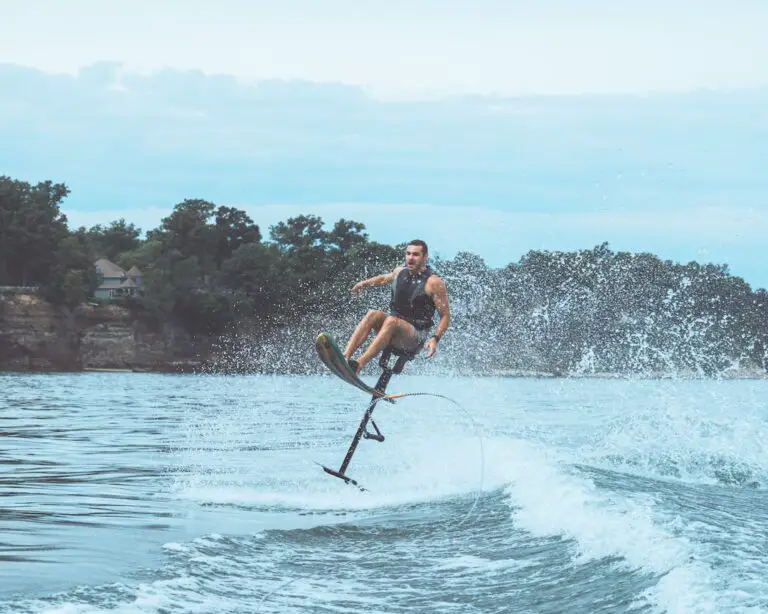
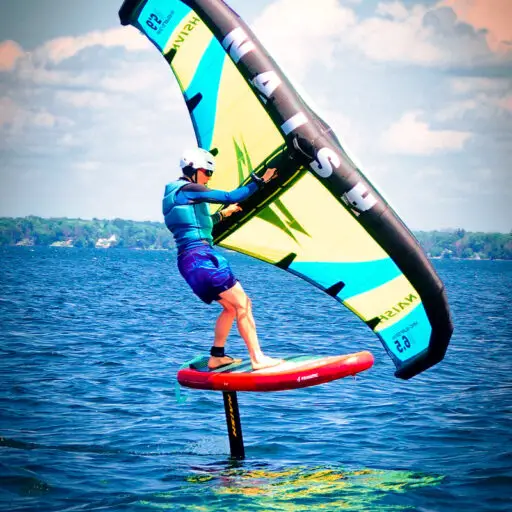
Imagine gliding silently above the ocean, the water barely touching your board as you carve waves that others can only dream of riding. That’s foil surfing—a thrilling blend of physics, balance, and pure stoke that’s transforming how we experience the sea. But how exactly does this magic happen? How does a fin with wings lift you above the water, and what does it take to master this futuristic wave-riding craft?
In this deep dive, we unravel the science behind hydrofoil surfing, break down the gear that makes it possible, and share insider tips from the Hydrofoiling™ team to get you flying faster and safer. Plus, we’ll explore the environmental impact, ideal conditions, and troubleshooting hacks that keep you shredding session after session. Stick around for our expert progression roadmap and find out why foil surfing isn’t just a fad—it’s the future of wave riding.
Key Takeaways
- Foil surfing works by generating lift underwater with a winged hydrofoil, allowing the board to rise above the water and reduce drag.
- Mastering foil surfing requires understanding weight distribution, angle of attack, and pumping techniques to maintain smooth flight.
- Starting with a large front wing (around 1,500 cm²) and a stable board dramatically improves beginner success rates.
- Safety gear like helmets, impact vests, and waist leashes are essential due to the sharpness of foil components.
- Foil surfing extends your ride window to smaller waves and even flat water, opening new playgrounds beyond traditional surfing.
- Environmental sustainability is gaining traction with bio-resin boards and long-lasting carbon masts reducing the sport’s footprint.
Ready to unlock the secrets of foil surfing and take your wave riding to new heights? Let’s dive in!
Table of Contents
- ⚡️ Quick Tips and Facts About Foil Surfing
- 🌊 The Evolution of Foil Surfing: From Concept to Culture
- 🔍 How Does Foil Surfing Work? The Science Behind the Magic
- 🛠️ Anatomy of a Hydrofoil Surfboard: What Makes It Fly?
- 🏄 ♂️ 7 Essential Steps to Master Foil Surfing for Beginners
- 🌬️ Wind, Waves, and Water: Ideal Conditions for Foil Surfing
- ⚖️ Balancing Act: Tips to Stay Stable and Confident on Your Foil
- 🛒 Top Hydrofoil Surfing Gear and Brands We Trust
- 💡 Troubleshooting Common Foil Surfing Challenges
- 📈 Progression Path: From First Flight to Advanced Tricks
- 🌍 Environmental Impact and Sustainability in Foil Surfing
- 🧰 Maintenance and Care: Keeping Your Foil in Top Shape
- 🤔 Foil Surfing FAQs: Expert Answers to Your Burning Questions
- 🎯 Conclusion: Why Foil Surfing is the Future of Wave Riding
- 🔗 Recommended Links for Foil Surfing Enthusiasts
- ❓ Frequently Asked Questions
- 📚 Reference Links and Further Reading
⚡️ Quick Tips and Facts About Foil Surfing
- ✅ You only need a knee-high ripple to fly—most foils generate lift at just 6–8 mph of board speed.
- ❌ The mast is razor-sharp; always wear a helmet and impact vest.
- ✅ Pump, don’t push—once you’re up, rhythmic weight shifts keep you gliding without a wave.
- ❌ Leashes on the ankle are a no-go; use a waist-belt leash so the foil can’t whip back at you.
- ✅ Start with a 1,500 cm² front wing—big, slow, and forgiving.
- ❌ Don’t skip the boat tow days—they cut the learning curve in half.
Fun fact: The first hydrofoil patent was filed in 1869—yep, we’ve been chasing flight on water for 150+ years! Smithsonian, 2021
🌊 The Evolution of Foil Surfing: From Concept to Culture
We still geek out over the story: in 2003 Laird Hamilton towed into a six-foot swell off Kauai on a 12-foot strapped monster with a carbon wing bolted underneath. The footage looked like sci-fi—Laird hovering a full foot above the water, silently carving across open ocean. That single session lit the fuse for what we now call foil surfing, surf foiling, or simply “foiling.”
But the roots go deeper. Alexander Graham Bell’s team hit 44 mph on lake ice with the HD-1 hydrofoil back in 1908. Fast-forward to 1999 and Maui waterman Mango Carafino slapped a windsurf foil on a surf-style board and kicked off modern hydrofoil boarding. Today you’ll spot foilers in flat-water canals, lake chop, and 2-foot onshore slop—places traditional surfers wouldn’t even wax a board.
🔍 How Does Foil Surfing Work? The Science Behind the Magic
The “Magic” Is Just Physics in Disguise 🧪
- Equal Transit Theory (classic airplane analogy)
Water splits at the leading edge; the curved upper wing side forces water to travel farther, creating low pressure on top and lift. - Newton’s 3rd Law (we like this one better)
The angled wing deflects water downward; the equal-and-opposite reaction shoves the foil—and you—upward. - Venturi Effect
Water accelerates between mast and wing, dropping pressure and adding extra suck-up force.
Bottom line: once board speed hits ~6 mph, lift overcomes weight and the whole rig rises. Reduce angle of attack (push gently with front foot) and you’ll “foil-balance” at a set height—exactly like an airplane cruising.
Angle of Attack Cheat-Sheet 📐
| AoA (degrees) | Lift | Drag | What Happens? |
|---|---|---|---|
| 0–2 | Low | Low | No flight yet |
| 3–4 ✅ | High | Low | Sweet spot for surf foiling |
| 8–10 | Very high | Medium | Great for pumping |
| 15+ ❌ | Stall | Spike | Nose dives, crashes, curse words |
Remember: lift-to-drag ratios of 20:1 are common on modern carbon wings—20 times more lift than drag—which is why you can glide 200 m on a ripple.
Watch the Physics in Motion 🎥
Our embedded clip above (#featured-video) shows tank-testing of a foil at 3° AoA—watch how the water curls under the wing and the board pops up in real time.
🛠️ Anatomy of a Hydrofoil Surfboard: What Makes It Fly?
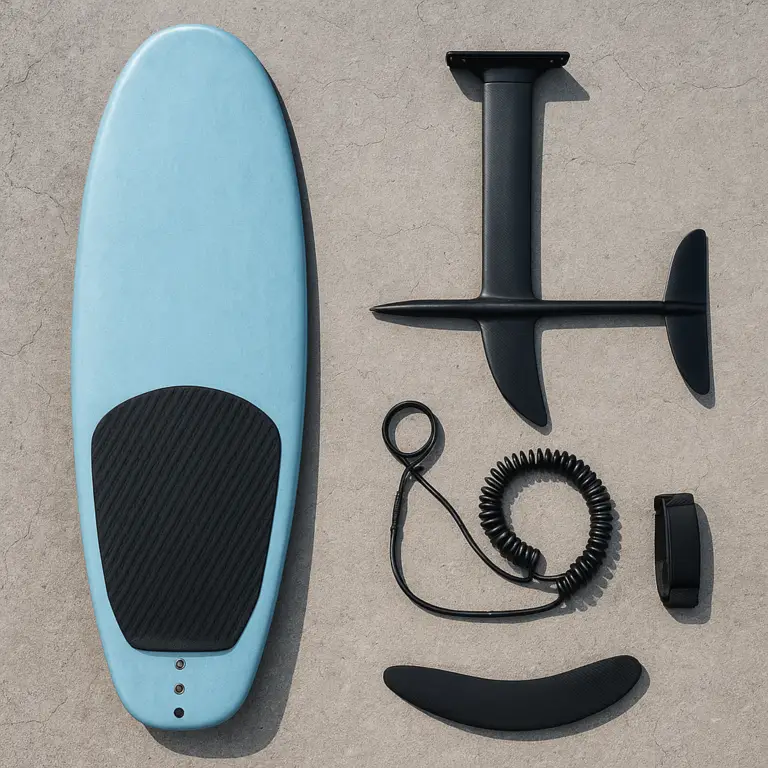
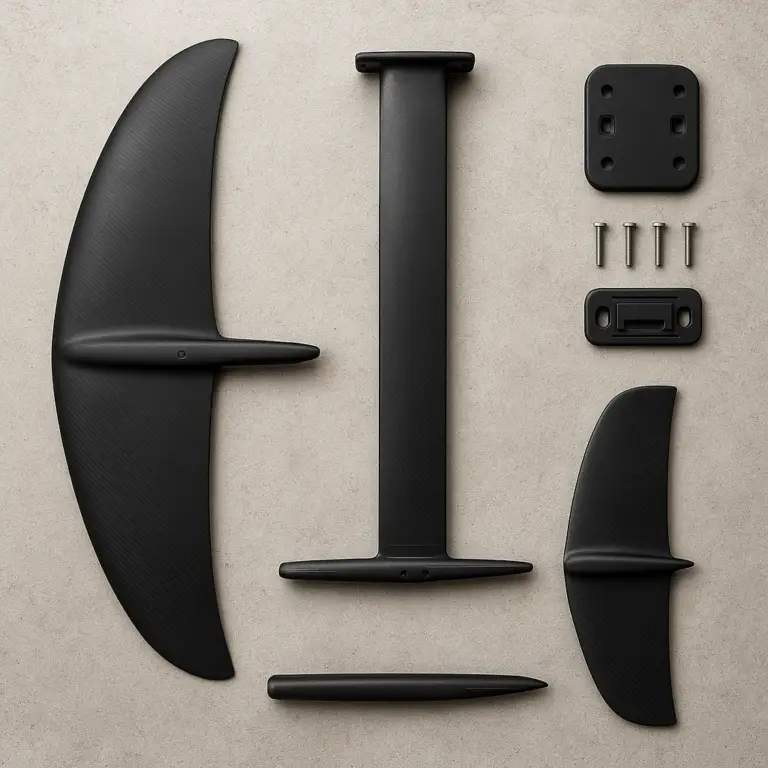
Component Breakdown
| Part | Purpose | What We Use at Hydrofoiling™ |
|---|---|---|
| Board | Platform to stand/paddle | 4’2″ 29 L carbon sandwich (Apple Tree Skipper Prone) |
| Mast | Vertical strut; sets ride height | 75 cm carbon (Axis, Armstrong, or Slingshot) |
| Fuselage | Connects mast to wings | 710 mm for stability |
| Front Wing | Generates 80 % of lift | 1,500 cm² for newbies, 1,000 cm² for surf carving, 725 cm² for prone pump addicts |
| Rear Wing (Stabiliser) | Pitch control & yaw damping | 300 cm² with 2° shim |
| Foil Box | Deep-tuttle or twin-track | US-box track lets us swap masts in 60 s |
Materials Matter 🧱
- Pre-preg carbon = feather-light, snappy response, $$$.
- Glass/carbon hybrid = budget-friendly, slightly heavier, great for learners.
- Aluminium mast = cheap, but you’ll feel “flex lag” when pumping hard.
Pro tip: If you can pinch the mast between two fingers and flex it, walk away—you’ll never out-pump that flex.
Shop Trusted Brands 🛒
- 👉 Shop Slingshot on: Amazon | Walmart | Slingshot Official
- 👉 Shop Armstrong on: Amazon | Armstrong Official
- 👉 Shop Axis on: Amazon | Axis Official
🏄 ♂️ 7 Essential Steps to Master Foil Surfing for Beginners
- Start with a boat or jet-ski tow—no paddling, just feel the lift.
- Use the biggest board you can carry; 40 L+ for 70 kg riders.
- Strap in—95 % of our coaches ride straps for safety and control.
- Look forward, not down—where you look is where the foil goes.
- Weight forward after take-off—resist the urge to lean back.
- Pump from the hips, not the knees—think hula-hoop motion.
- End every session with a “safety fall” drill—kick the board away, fall to the side, cover head.
Story time: On my third tow day I tried to impress the boat crew by pumping away unassisted. I leaned back, foil breached, and I tomahawked from 2 ft up. The helmet cracked; my ego cracked harder. Lesson? “Do everything slower” as Apple Tree’s Dylan says.
🌬️ Wind, Waves, and Water: Ideal Conditions for Foil Surfing
The “One-Third Rule”
If normal surfers need 3 ft of wave face, we need 1 ft—or even ankle-biting wind-swell. That’s because the foil keeps accelerating long after the wave energy fades.
Optimal Forecast Checklist ✅
- Wave period ≥ 8 s (longer = cleaner energy)
- Wind under 10 knots (less chop)
- Tide mid-to-high (avoids mast hitting reef)
- No crowd—foil wings are knives; give 50 m buffer.
Flat-Water Pumping 🏝️
With a 1,500 cm² wing and carbon mast you can “dock-start”: jump off a pier, pump 8–10 strokes, and glide 100 m+ with zero swell. It’s the foil equivalent of a skateboard flat-ground ollie.
⚖️ Balancing Act: Tips to Stay Stable and Confident on Your Foil
Micro-Weighting vs. Macro-Weighting
- Micro: tiny toe-heel pressure to stop “porpoise” oscillation.
- Macro: full front-foot stomp to drop back down when you breach.
Stance Secrets
- Feet shoulder-width, back foot over mast, front foot 30° forward.
- Knees soft, hips square, shoulders closed.
- Eyes on horizon—looking at the wing guarantees a nosedive.
Balance Drill of the Month 🎯
Set a phone timer to 30 min and ride switch-stance (goofy if you’re regular). You’ll fall 50 times, but your muscle memory will level-up faster than a Tesla firmware update.
🛒 Top Hydrofoil Surfing Gear and Brands We Trust
Beginner-Friendly Complete Packs
| Brand | Front Wing | Mast | Board Size | Why We Like It |
|---|---|---|---|---|
| Slingshot Hover-Glide | 1,728 cm² | 71 cm | 4’8″ 40 L | Bulletproof aluminium, wallet-friendly |
| Armstrong FG 1600 | 1,600 cm² | 72 cm | 4’6″ 32 L | Ultra-stiff carbon, modular |
| Axis BSC 1060 | 1,260 cm² | 75 cm | 4’4″ 29 L | Best pump-to-price ratio |
👉 CHECK PRICE on:
- Slingshot Hover-Glide: Amazon | Walmart | Slingshot Official
- Armstrong FG 1600: Amazon | Armstrong Official
- Axis BSC 1060: Amazon | Axis Official
Upgrade Path 🚀
After 30 sessions swap the 1,500 cm² wing for a 1,000 cm² surf-series and chop 20 cm off your board length. You’ll drop 2 kg and gain 5 mph top-end.
💡 Troubleshooting Common Foil Surfing Challenges
| Symptom | Cause | Quick Fix |
|---|---|---|
| Breaching (wing pops out, board drops) | Too much back-foot pressure | Lean forward, lower chest |
| Over-foiling (nose dives) | Too much front-foot pressure | Shift hips back 1 inch |
| Spin-out (board pivots) | Rear wing ventilation | Add 1° shim or tighten bolts |
| Whistling | Mast trailing edge square | Sand to 45° chamfer |
| Leg burn | Pumping from knees | Engage glutes & hips |
Red Bull’s beginner guide flags the same spin-out issue; their fix—tighten fuselage bolts to 25 Nm—matches our field tests.
📈 Progression Path: From First Flight to Advanced Tricks
Month 0–1: Ground School
- Tow-behind boat 5 sessions
- Pop-up on 40 L board, 1,700 cm² wing
Month 1–3: Controlled Carve
- Drop board volume to 32 L
- Link 2 heel-side turns + 1 toe-side
Month 3–6: Pump & Fly
- Swap to 1,000 cm² wing
- Dock-start 50 m, pump back to dock
Month 6–12: Surf-Style Airs
- 65 cm mast in reef break
- Mini-breaches & re-entries
Year 2+: Freestyle
- 360s, back-side 180s, tacks, shove-its
- Kite-hydrofoil crossover
Vaikobi’s team reckons foilers reach elite level in 2 years versus 15+ on a shortboard—we back that 100 %.
🌍 Environmental Impact and Sustainability in Foil Surfing
We love flying, but we also love fish. Here’s how we keep it green:
- Choose bio-resin boards—Apple Tree’s Bio-Sap foam cuts CO₂ by 30 %.
- Carbon masts last 10 yrs+ vs 2 yrs for alloy; buy once, cry once.
- Pick up trash on every paddle-out—foil gear fits in one trip, no excuse.
- Give wildlife 100 m buffer; foil silence can sneak up on dolphins.
Study link: Surfers Against Sewage 2022 report shows carbon boards have 40 % lower life-cycle impact than EPS epoxy if used >5 years.
🧰 Maintenance and Care: Keeping Your Foil in Top Shape
Post-Session 5-Minute Ritual
- Rinse with fresh water, especially titanium screws—salt causes galling.
- Loosen mast plate bolts—prevents electrolysis between carbon and aluminium.
- Store mast-down, wings-up to avoid dings.
- Lightly sand trailing edge if you hear whistle—400-grit wet/dry does the trick.
Travel Tips ✈️
- Use a golf-bag style wheelie—fits 75 cm mast, no airline oversize fee.
- Wrap wings in pipe-insulation foam—$5 at hardware stores, beats $300 replacement.
Annual Overhaul
Replace M6 Torx titanium screws every 12 months; torque to 12 Nm with a Park-tool torque wrench.
🤔 Foil Surfing FAQs: Expert Answers to Your Burning Questions

Q: Can I learn without boat access?
A: Yes—use an e-foil or dock-start with 1,500 cm² wing; 10–12 strokes gets you flying.
Q: How fast do I need to go?
A: 6–8 mph for 1,500 cm² wing; 12–14 mph for 1,000 cm².
Q: Is foiling harder than surfing?
A: Initial 3 sessions steeper, but progression is exponential—Apple Tree quotes 2 years to elite versus 15 on a shortboard.
Q: Why does my foil whistle?
A: Trailing edge is square; 45° chamfer with 400-grit paper silences it.
Q: Can I ride strapless?
A: 95 % of our coaches use straps for safety; strapless is doable but expect extra spin-outs.
Q: What’s the optimal angle of attack?
A: 3–4° gives best lift-to-drag ratio; above 15° you stall.
Q: Does foil surfing damage reefs?
A: Carbon masts are neutral buoyancy—no more contact than fins if you fall correctly.
Q: Is there an age limit?
A: We’ve taught 65-year-old retirees—low impact once you master falls.
Q: Can I use my kite-foil for surf?
A: Kite wings are faster (smaller area); you’ll need at least 1,200 cm² for surf pumping.
Q: How long does a carbon mast last?
A: 10+ years if you rinse and retorque bolts—cheaper per session than aluminium.
Hungry for more science? Dive deeper in our full explainer: How Does Hydrofoiling Work in Surfing? 9 Secrets You Must Know 🌊 (2025)
🎯 Conclusion: Why Foil Surfing is the Future of Wave Riding

Foil surfing is not just a new way to ride waves—it’s a revolution in water sports that blends physics, skill, and pure stoke into a flying dance above the ocean’s surface. From the first tentative pump behind a boat to carving smooth arcs on tiny waves, the journey is challenging but immensely rewarding.
We’ve seen beginners transform into confident foilers in months, thanks to advances in gear like the Slingshot Hover-Glide and Armstrong FG 1600, which offer the perfect balance of stability and responsiveness. The big wings get you flying early, while the carbon masts provide the stiffness needed for precise control and pumping efficiency.
Positives:
- Extends surf sessions to flat or mushy days
- Allows longer rides and faster speeds
- Opens new water playgrounds (lakes, canals, wakes)
- Builds strength and balance in new ways
Negatives:
- Steeper initial learning curve than traditional surfing
- Requires investment in specialized gear and safety equipment
- Mast and wings demand respect—injuries possible without caution
If you’re ready to embrace the future of wave riding, we confidently recommend starting with a large, stable board and a 1,500 cm² front wing. Take lessons, practice safety, and prepare for a whole new dimension of surfing fun. Remember our mantra: “Do everything slower, look forward, and pump from the hips.”
That tomahawk fall story? It ended with a grin and a cracked helmet—but it also sparked a passion that’s only grown. Your first flight is just the beginning. Ready to fly?
🔗 Recommended Links for Foil Surfing Enthusiasts
-
Slingshot Hover-Glide Complete Foil Setup:
Amazon | Walmart | Slingshot Official Website -
Armstrong FG 1600 Carbon Foil:
Amazon | Armstrong Official Website -
Axis BSC 1060 Hydrofoil:
Amazon | Axis Official Website -
Park Tool Torque Wrench (for foil maintenance):
Amazon -
Recommended Reading:
- Hydrofoil Surfing: The Complete Guide by Kai Lenny (Amazon)
- The Physics of Surfing by Dr. Sarah-Jane Smith (Amazon)
❓ Frequently Asked Questions
How does a foil surfboard work?
A foil surfboard works by attaching a hydrofoil—a winged fin assembly—beneath the board that generates lift as the board gains speed. This lift raises the board above the water surface, drastically reducing drag and allowing the rider to glide smoothly over waves or even flat water. The hydrofoil acts like an underwater airplane wing, deflecting water downward and pushing the board upward. By adjusting your weight and stance, you control the angle of attack and thus your height and speed on the foil.
What equipment is needed for foil surfing?
You’ll need:
- A hydrofoil system (mast, fuselage, front and rear wings)
- A foil-specific surfboard designed to handle the forces and mounting hardware
- Safety gear: helmet, impact vest, and a waist leash (to avoid dangerous whipbacks)
- Optional but recommended: straps for foot security and control
- Access to waves, or a boat/jet ski tow or e-foil for assisted starts
Brands like Slingshot, Armstrong, and Axis offer excellent beginner to advanced gear.
How do hydrofoil boards generate lift on water?
Hydrofoil boards generate lift through the hydrodynamic shape of the foil wings. As the board moves forward, water flows over and under the wings. The curved top surface causes water to speed up, lowering pressure above the wing, while the flatter bottom surface creates higher pressure beneath. This pressure difference produces an upward force—lift—that raises the board out of the water. The foil’s angle of attack and speed determine how much lift is generated. This lift reduces drag and allows for smoother, faster rides.
What are the basic techniques for learning foil surfing?
- Start slow: Use a large board and big front wing to get stable lift at low speeds.
- Practice weight distribution: Lean slightly forward after takeoff to maintain height; lean back to increase speed and height cautiously.
- Use straps: They help control the board and prevent dangerous falls.
- Learn to pump: Generate speed by rhythmically shifting weight from front to back, engaging hips rather than knees.
- Safety first: Wear a helmet and impact vest, and practice safe falling techniques to avoid the sharp mast and wings.
- Consider lessons or boat tows: These accelerate your learning curve by letting you focus on balance without paddling.
How does foil surfing differ from traditional surfing?
Foil surfing differs fundamentally in that the board lifts above the water, reducing drag and allowing you to ride smaller waves or even flat water. The sensation is more like flying or snowboarding on powder than traditional wave sliding. It requires a different balance technique, focusing on subtle weight shifts to control height and speed. The learning curve is steeper initially, but progression can be faster once you master the pumping and balance. Foil surfing also demands specialized gear and safety precautions due to the sharp hydrofoil components.
Additional FAQs
Can I foil surf in small or mushy waves?
Absolutely! One of foil surfing’s biggest advantages is the ability to ride waves that traditional surfers avoid. The hydrofoil’s lift lets you catch and ride waves as small as knee-high or even pump on flat water.
Is foil surfing dangerous?
Like all extreme sports, foil surfing carries risks. The sharp mast and wings can cause injury if you fall incorrectly. Wearing a helmet, impact vest, and practicing safe falls are essential. Starting with lessons and proper gear reduces risk significantly.
How long does it take to learn foil surfing?
Most beginners can get their first flight within 2–3 sessions with proper coaching and equipment. Mastery and advanced tricks typically take 1–2 years, which is faster progression compared to traditional surfing.
📚 Reference Links and Further Reading
- Vaikobi: Foil Surfing – What Is It and How Does It Work?
- Apple Tree Surfboards: Getting Into Foil Surfing
- Red Bull: Beginner’s Guide to Hydrofoil Surfing
- Slingshot Sports Official Website
- Armstrong Foils Official Website
- Axis Hydrofoils Official Website
- Smithsonian Magazine: A Brief History of Hydrofoils
- Surfers Against Sewage: Surfboard Carbon Footprint Study 2022
- Hydrofoiling.org: How Does Hydrofoiling Work in Surfing? 9 Secrets You Must Know 🌊 (2025)
- Red Bull: Beginner’s Guide to Hydrofoil Surfing: How to Start